Vitamin D Rich Foods in India: What to Eat and What to Check
Fish, eggs, a milk label and a closer look at mushrooms: a practical guide to where vitamin D actually comes from.
Table of Contents
Vitamin D rich foods in India include fish such as hilsa and sardines, egg yolks, and foods fortified with vitamin D. For vegetarians, labelled fortified milk, some fortified plant drinks and UV-treated mushrooms are options. Ordinary milk, paneer, fruit and nuts should not be assumed to provide substantial vitamin D. Check the product and serving size: a glass of fortified milk contributes vitamin D, but it does not cover the full adult reference intake.
ICMR-NIN’s 2020 recommended dietary allowance for adult men and women is 600 IU, or 15 micrograms, a day. This is a reference for nutrition planning, not an instruction to take that amount as a supplement. Individual advice depends on age, health and vitamin D status.
Fortification means a nutrient has been added. Under FSSAI standards, 250 ml of milk fortified with vitamin D supplies about 50–75 IU. The +F logo helps identify fortified staples, but check which nutrients were added: fortified atta or rice does not automatically contain vitamin D.
Sunlight also helps the skin make vitamin D. There is no single exposure time that guarantees enough for everyone, and ordinary sun protection still matters. Food choices can contribute without becoming a prescription for sunbathing or supplements.
If vitamin D deficiency has been diagnosed, follow the clinician’s treatment plan rather than trying to correct it with one food. Routine testing is not recommended for every healthy adult. Start with the foods you eat, read labels, and ask for individual advice when a health concern needs it.
The sunshine vitamin has a slightly misleading nickname when you are standing in the supermarket. You cannot put sunshine in your basket, and there is no long list of everyday foods that reliably supplies plenty of vitamin D.
There are useful food sources, though. The trick is to be specific about the fish, the packet and the preparation, rather than assuming that every food in a category contributes the same amount.
Indian food data make this distinction quite clear. The Indian Food Composition Tables (IFCT) 2017 report the following vitamin D3 values for these fish:
| Fish | Vitamin D3 per 100 g raw edible portion | Equivalent in IU |
| Hilsa (ilish) | 4.96 µg | About 198 IU |
| Indian sardine | 3.51 µg | About 140 IU |
| Rohu | 0.84 µg | About 34 IU |
These figures come from IFCT’s vitamin D3 column; other vitamin D forms are reported separately. They describe 100 g of raw edible fish, not 100 g of finished fish curry or a serving weighed with bones. Cooking and the proportion of fish in a dish change what a bowl represents.
If fish is already part of your meals, this gives you a reason to look beyond “fish contains vitamin D”. Rohu remains a familiar, useful food; it simply contributes less vitamin D3 in this table than hilsa or sardines.
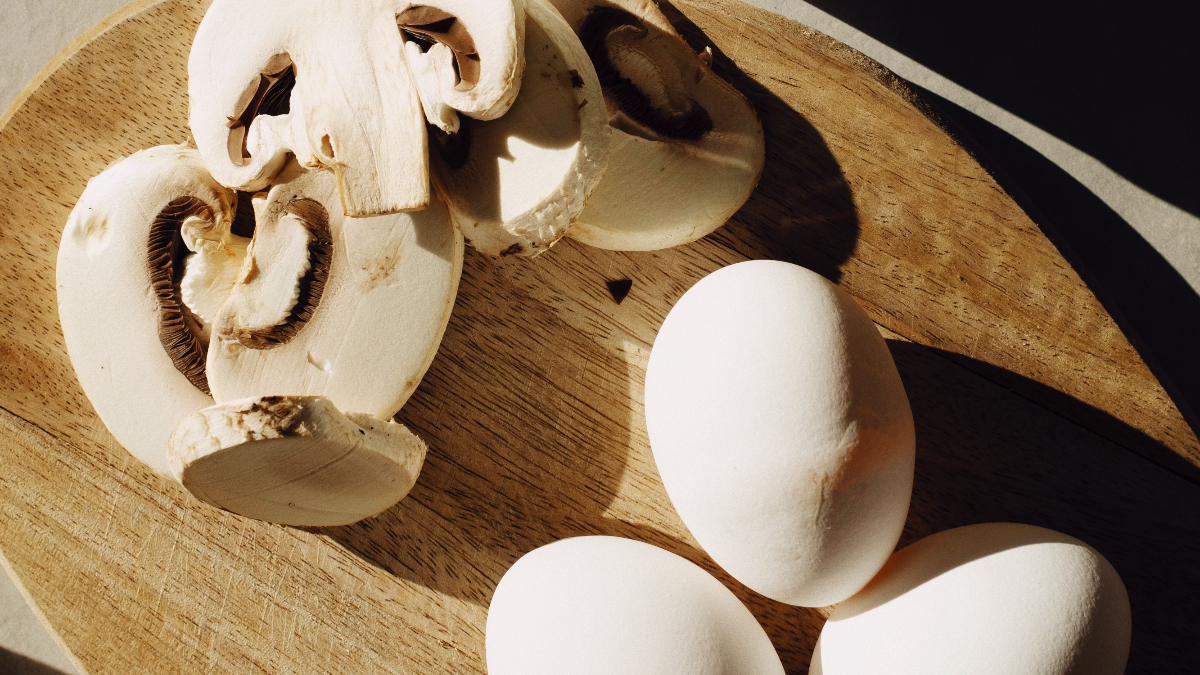
An egg’s vitamin D is mainly in its yolk. Bhurji, an omelette or an egg curry can therefore make a contribution if you eat eggs. That does not mean two or three eggs automatically meet half your daily requirement.
Keep eggs in their ordinary role in a varied meal. There is no need to build an egg quota around vitamin D.
For a vegetarian household, the useful question is often less “Which new food should I buy?” and more “Is the milk or oil we already use fortified?”
Fortification means nutrients have been added to a food. It is worth distinguishing this from the nutrients a food naturally contains. A milk packet with added vitamin D and an unfortified packet are not interchangeable for this purpose.
FSSAI’s fortification standards specify vitamin D levels of 5–7.5 µg per litre of fortified milk and 0.11–0.16 µg per gram of fortified edible oil. Here is what those levels mean in the kitchen:
| Fortified food | Amount used for this calculation | Vitamin D contribution |
| Milk fortified with vitamin D | 250 ml | About 50–75 IU |
| Edible oil fortified with vitamin D | 14 g | About 62–90 IU in that total quantity of oil |
These are calculations from the fortification standards, not measurements of every product on sale. Not all milk or oil is fortified. Check the pack’s nutrient information and serving size.
The oil calculation is particularly easy to misread. If 14 g goes into a sabzi shared by four people, the whole recipe’s vitamin D is not each person’s intake. Use the oil you need for cooking; adding extra oil is not a sensible way to chase a vitamin.
The +F logo identifies fortified staples, but the added nutrients depend on the food. For example, fortified atta and rice can contain iron, folic acid and vitamin B12 rather than vitamin D. Look for vitamin D itself on the label.
Mushrooms can produce vitamin D2 when exposed to ultraviolet light. Research supports UV-treated mushrooms as a potential food source, but the amount depends on the mushroom and its exposure.
If a pack identifies the mushrooms as vitamin D-enriched or UV-treated, look for a stated nutrient amount. A label makes a mushroom sabzi’s contribution easier to assess than a general claim about mushrooms.
Leaving mushrooms in the sun at home does not produce a predictable dose. Do not rely on a home sunning method to correct a low blood level or replace prescribed supplements.
Some soya, almond or oat drinks and breakfast cereals contain added vitamin D; others do not. Compare the nutrition panels rather than assuming that the category is fortified.
The amount listed might be per 100 ml, per 100 g or per serving. Calculate it for what you actually consume. One microgram (µg) of vitamin D equals 40 IU, so the two units on different labels can be compared.
ICMR-NIN’s 2020 adult RDA is 600 IU, or 15 µg, a day for adult men and women. An RDA is a reference for planning nutrition for healthy people. It is not a personalised supplement dose or a treatment schedule for deficiency.
Food sources, sunlight exposure and individual health all matter. A labelled fortified product can help you understand one part of the picture; it cannot tell you your blood vitamin D level.
Children, pregnancy, older age and specific health conditions need advice appropriate to those circumstances. Avoid borrowing a relative’s prescription because you eat similar meals.
Vitamin D helps the intestine absorb calcium. It is also fat-soluble: some fat in a meal can improve vitamin D absorption, although absorption can occur without it. The oil in your usual fish curry or mushroom sabzi can supply that fat; there is no need to add extra ghee specifically for vitamin D.
Some conditions that impair fat absorption, including some cases of coeliac disease or Crohn’s disease, can affect vitamin D absorption too. That is a reason for individual clinical advice, rather than simply eating larger portions of a vitamin D-containing food.
Sunlight can help the skin make vitamin D, but the amount varies with location, season, skin tone, age, clothing and exposed skin. Sitting beside a closed window is not equivalent to direct outdoor exposure: glass blocks the UVB needed for vitamin D production.
A fixed “15 minutes for everyone” rule is therefore unreliable. Keep your usual sun protection and avoid burning; the American Academy of Dermatology advises against unprotected sun exposure as a way to obtain vitamin D.
You do not need a special menu to start making more informed choices. Use this quick check:
| Your usual food pattern | A useful next step |
| You eat fish or eggs | Include suitable foods in varied meals. Remember that fish species differ and egg yolks make a modest contribution. |
| You eat dairy but no fish or eggs | Check whether your regular milk and cooking oil contain added vitamin D. Read amounts for your actual serving. |
| You avoid all animal foods | Look for plant drinks or other foods explicitly fortified with vitamin D, and labelled UV-treated mushrooms where available. |
| You have a diagnosed deficiency or an absorption problem | Follow the clinician’s plan. Food choices can complement care; they do not determine the treatment dose. |
Dal, roti, sabzi, fruit and nuts still belong in a varied diet. They do not all have to be vitamin D sources to earn their place on the plate.
For help organising food choices, try Happy Tummy GPT with this prompt: “Help me plan vegetarian Indian meals using the fortified foods I already buy. I’ll share the vitamin D amounts and serving sizes from their labels.” Keep decisions about blood tests and supplement doses with your clinician.
Being vegetarian or working indoors does not automatically mean every healthy adult needs a vitamin D blood test. The Endocrine Society’s 2024 guideline advises against routine screening in otherwise healthy adults.
If a health concern or a condition affecting absorption makes you wonder about deficiency, ask a clinician whether testing is appropriate. The usual blood marker is 25-hydroxyvitamin D, often written as 25(OH)D.
If you already have a prescription, follow its dose and duration. The NIH lists 4,000 IU a day as the adult upper limit for total oral intake from food, drinks and supplements. This is a safety ceiling, not a target; a clinician may prescribe a different treatment dose under supervision.
Cod liver oil needs particular care. It can supply vitamin D, but also preformed vitamin A, and products differ. Do not treat it as an interchangeable vitamin D supplement. In pregnancy, avoid cod liver oil and supplements containing retinol; discuss suitable options with your clinician.
Disclaimer: This article provides general nutrition information for adults and is not a diagnosis or treatment plan. Seek individual advice about suspected deficiency, conditions affecting absorption, pregnancy and supplement use.
Fish such as hilsa and sardines, egg yolks, foods explicitly fortified with vitamin D, and some UV-treated mushrooms contribute it. The amounts depend on the food and portion.
Vitamin D foods for vegetarians include fortified milk, labelled fortified plant drinks and UV-treated mushrooms. Amounts vary, so use the nutrition panel to check each serving.
ICMR-NIN’s adult RDA is 600 IU, or 15 µg, daily. This is a nutrition reference, not a requirement to obtain the entire amount from one food or supplement.
Food and sunlight can both contribute to vitamin D status. A fixed sun exposure time cannot guarantee enough for everyone; food choices and individual advice remain useful.
Vitamin D deficiency needs an individual treatment plan. Food choices may contribute, but do not replace prescribed care. Ask your clinician about the appropriate dose and duration.