Quick Answer: Is motichoor ladoo healthy?
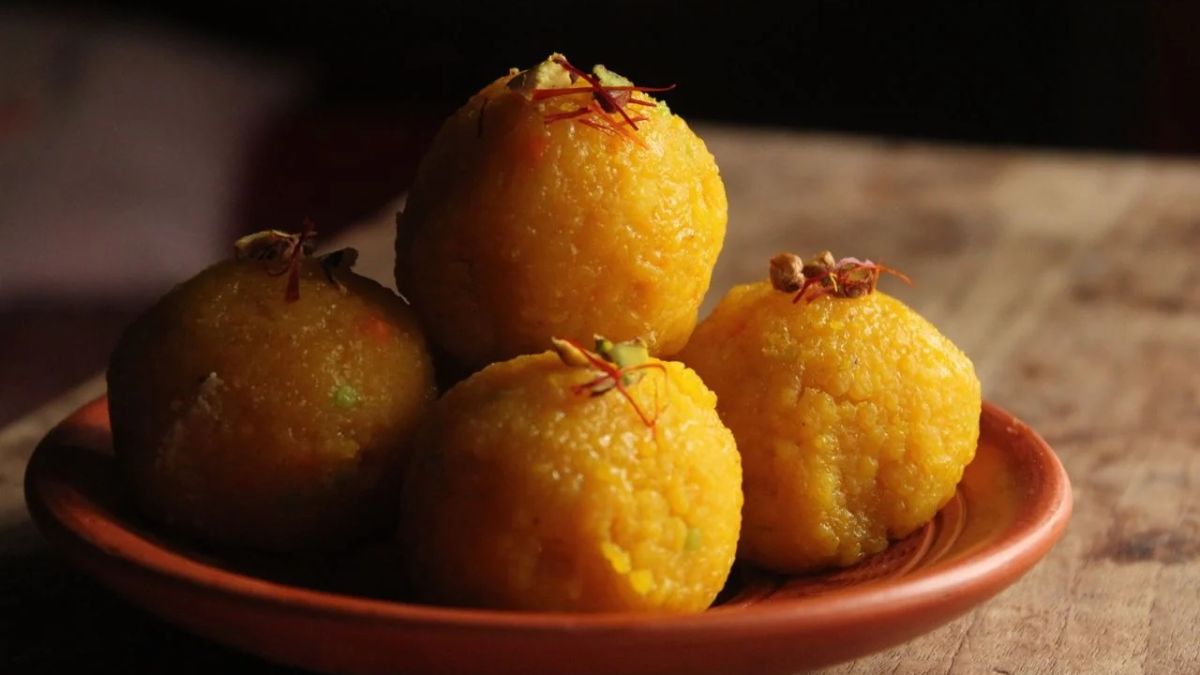
Motichoor ladoo is a rich festive sweet, made from tiny drops of besan (gram flour) batter that are fried in ghee or oil, soaked in sugar syrup and shaped into soft balls. The fine boondi gives it a delicate, almost melt-in-the-mouth texture. Saffron or food colour, cardamom and magaz (melon seeds) are common additions.
It is made primarily from besan, not maida. The classic preparation does not need milk, but recipes and sweet-shop methods vary. Some use milk to prepare or clarify the syrup, or add milk or other dairy ingredients to help the ladoos bind. Ghee is also dairy-derived. If you avoid milk, check the ingredients with the person making or selling them rather than assuming every motichoor ladoo is dairy-free.
Is it good for your gut? That depends on your portion and how you respond to its ingredients. The ladoo is fried and soaked in sugar syrup, so a couple after a large meal can feel heavy. Besan comes from chickpeas, which contain fermentable carbohydrates that may cause gas in some people, particularly those with IBS who are sensitive to FODMAPs. But tolerance varies, and one small ladoo is not automatically a problem.
If you experience acidity, fatty foods can be a trigger. Try a smaller portion and avoid eating it close to bedtime. People with diabetes should follow their doctor’s or dietitian’s advice on portions.
A small ladoo, or half of a larger one, is a sensible prasad-sized serving. You do not need to skip your next meal to compensate for having one. Enjoy it, return to your usual eating pattern, and keep the rest of the festive day balanced.
What is motichoor ladoo made of?
So, motichoor laddu kaise banate hain? It starts with a smooth, pourable batter of besan and water. Some recipes add saffron, cardamom or a little semolina. The batter is passed through a perforated ladle or boondi maker into hot ghee or oil, where it sets into tiny pearls of boondi.
The pearls are fried until cooked, rather than made crisp, so they can absorb the sugar syrup. They are then soaked in syrup, often cooked to a one-thread consistency, and mixed with cardamom and additions such as magaz or chopped nuts. The mixture is gently broken down if needed and shaped into balls while still warm.
So yes, motichoor ladoo is made from besan. The name gives you a clue to its appearance: moti means pearl and choor means crushed. In English, it is often described as a crushed-pearl laddu.
The exact recipe differs from one sweet maker to another. Some use ghee, others use oil; some add nuts or seeds, and some use a little milk in the preparation. The familiar saffron-gold colour may come from saffron, while commercial versions may use permitted food colours.
Does motichoor ladoo have milk?
Usually, milk is not essential to the basic besan-and-syrup recipe. But it is too broad to say that every traditional or shop-bought motichoor ladoo is milk-free. Some recipes use milk in the batter or syrup, and some sweet makers add dairy ingredients to help the mixture bind.
Ghee is another point to consider. It is clarified butter, so it is dairy-derived, even though it contains very little lactose compared with milk. If you have lactose intolerance, ask whether milk, khoya or milk powder is used. If you have a milk allergy or follow a vegan diet, check for ghee as well as milk ingredients and possible cross-contact.
Is motichoor ladoo the same as boondi ladoo?
Almost. Both are made from besan batter, fried into boondi and soaked in sugar syrup. The difference is the size of the boondi.
Motichoor uses much finer drops, which give the ladoo its soft, fine-grained texture. Boondi ladoo uses larger pearls that remain more distinct when you bite into them. The two are close cousins, and recipes can overlap.
Boondi itself has different regional names. It is also known as nukti in parts of Rajasthan and Sindh, and bundiya in Bengal.
For your gut, the distinction is not especially important: both are typically made from fried besan pearls and sugar syrup. The recipe and portion size matter more than the name.
Why is motichoor ladoo a puja favourite?
Laddus have a long association with Indian festivals and religious offerings, particularly those connected with Ganesha. Temple sweets are often offered to deities and then shared with devotees as prasad. Motichoor ladoo is one of the familiar sweets people look for during celebrations such as Ganesh Chaturthi.
That is also why searches for motichoor ladoo for Ganesh Chaturthi or Hanuman ji are common. Customs and preferred offerings vary by temple, region and family, so there is no single rule about which ladoo belongs on every puja thali.
And when it comes to the portion, think prasad-sized: one small ladoo or half of a larger one.
How does motichoor ladoo sit on your gut?
It can feel heavy if you have more than one, especially after a large festive meal. The boondi is deep-fried and the ladoo is soaked in sugar syrup. Fat and sugar can make a larger portion feel more filling, although individual responses vary.
If you are prone to acidity or heartburn, it is worth paying attention to the portion and timing. The NHS lists fatty foods among possible heartburn triggers and advises people with heartburn to avoid eating in the three to four hours before bed. That does not mean motichoor ladoo will trigger symptoms in everyone; your own triggers matter.
The besan matters too. Gram flour comes from chickpeas. Chickpeas contain fermentable carbohydrates called galacto-oligosaccharides (GOS), which are part of the FODMAP group. Some people with irritable bowel syndrome (IBS) are sensitive to these carbohydrates and may experience gas or bloating, particularly with larger portions. But FODMAP tolerance is individual, and a small amount of besan does not automatically cause symptoms.
There is no need to villainise pulses. Chickpeas and other pulses can be useful parts of an everyday diet. If you know they trigger symptoms for you, keep the portion small and pay attention to how the rest of your meal adds up.
If you are lactose intolerant, motichoor may be easier to manage than a milk-based sweet, provided the recipe does not contain milk, khoya or milk powder. But check the ingredients: ghee is dairy-derived, and shop recipes vary.
How does motichoor ladoo compare with other sweets?
The ingredients and preparation make these sweets different, but there is no universal health ranking. Recipes and portion sizes vary.
- Motichoor ladoo vs besan ladoo: Both use gram flour, but besan ladoo is usually made by roasting besan in ghee and mixing it with sugar. Motichoor is fried as tiny boondi pearls and soaked in syrup. Besan ladoo does not usually have the extra syrup, but it is still rich in ghee and sugar.
- Motichoor ladoo vs boondi ladoo: They are very similar. Motichoor uses finer boondi, giving it a softer texture; boondi ladoo has larger pearls.
- Motichoor ladoo vs jalebi: Both are fried and sweetened with syrup. Jalebi is commonly made from a fermented refined-flour batter, while motichoor uses besan. That ingredient difference does not make motichoor a protein food; it is still a sweet.
- Motichoor ladoo vs gulab jamun: Both are fried and soaked in sugar syrup. Gulab jamun is usually made with khoya or milk solids, while motichoor is primarily besan-based. Recipes vary, so neither is automatically the lighter option.
- Motichoor ladoo vs kaju katli: Kaju katli is not fried or soaked in syrup, but it is made with cashews and sugar and can be rich too. Portion size matters more than assuming one is always the better choice.
Whichever you choose, how much you have matters more than which one.
How do I choose and store motichoor ladoo?
A few practical checks can help when buying and storing it.
Ask about the ingredients. If you avoid dairy, ask whether the ladoo contains milk, khoya, milk powder or ghee. If you follow a vegan diet, check that it is made with plant oil rather than ghee, and ask about cross-contact with other sweets.
Do not judge safety by colour alone. Motichoor ladoo may be saffron-coloured or made with permitted food colours. A bright orange ladoo is not, by itself, proof of adulteration, just as a muted colour does not guarantee safe ingredients. If you are concerned, ask the sweet shop what colouring it uses.
Choose a shop that handles sweets hygienically. Look for covered display counters, clean handling and sensible storage. A busy shop is not automatically a safer shop, and appearance alone cannot tell you whether frying oil has been overused.
FSSAI has set a maximum limit of 25% total polar compounds (TPC) for used frying oil; oil above that limit must not be used for food preparation. This is a standard food businesses are expected to monitor, not something a customer can reliably assess by looking at a ladoo.
Ask when it was made and how it should be stored. FSSAI’s indicative shelf-life list gives ordinary boondi ladoo a four-day category, but it does not separately specify a shelf life for motichoor ladoo. Do not assume the same period applies to every motichoor recipe. Follow the sweet shop’s storage advice and any date it provides.
Store it carefully at home. Keep the ladoos in a clean, airtight container and away from heat and moisture. If the shop advises refrigeration, follow that instruction. Ghee-based ladoos can firm up in the fridge, so allow one to come closer to room temperature before eating. If it smells stale or rancid, looks unusual or shows signs of spoilage, discard it.
How can I enjoy motichoor ladoo more lightly?
- Go prasad-sized. Half a large ladoo or one small one is a sensible serving.
- Have it after a meal if that suits you. Avoid eating a large portion on an empty stomach, particularly if you know rich sweets trigger discomfort.
- Keep the timing in mind. If you experience heartburn, avoid having it close to bedtime.
- Making it at home? Roll smaller ladoos, use fresh oil or ghee, and add colour sparingly. You can adjust the sugar in the recipe, though the texture may change.
- Check sugar-free versions carefully. Some use sugar alcohols such as maltitol. Larger amounts of these sweeteners can cause gas, bloating or loose stools in some people.
Had one too many at the puja?
It happens, especially when the prasad keeps coming round. There is no need to skip your next meal to make up for it. Return to your usual eating pattern instead: have a regular meal with dal, sabzi and roti, or another combination that suits your digestion. Drink water through the day and take a short walk after eating if you feel comfortable.
If you tend to get acidity, leave a few hours between your last ladoo and lying down. Tomorrow is an ordinary day; there is no need to compensate for one festive sweet by restricting food.
Should anyone go easy on motichoor ladoo?
If you have diabetes, motichoor ladoo contains added sugar and is usually fried, so follow your doctor’s or dietitian’s guidance on whether and how much to have.
If you experience acidity or heartburn, keep the portion small and avoid eating it close to bedtime if that is a trigger for you.
If chickpeas or besan tend to cause gas or set off your IBS symptoms, consider your tolerance and keep the portion modest. You do not need to avoid all pulses unless your healthcare professional has advised you to do so.
Sudden weight loss, blood in stool, severe or persistent pain, or difficulty swallowing need prompt medical attention. If symptoms continue, are severe, or keep coming back, it is worth speaking to a doctor.
This is general information. For children, during pregnancy, or for older adults, follow a doctor’s guidance before making changes.
Sources
Disclaimer
This article is for general information only and is not a substitute for medical advice, diagnosis or treatment. If you have diabetes, acid reflux, IBS, lactose intolerance or another digestive condition, follow your doctor’s or registered dietitian’s guidance. Food ingredients and preparation methods vary between recipes and sweet shops; check with the maker if you need to avoid a particular ingredient.
FAQs
Is motichoor ladoo healthy?
It is a rich sweet made from fried besan pearls soaked in sugar syrup. It can be enjoyed occasionally; a small ladoo after a meal is a sensible festive portion.
Is motichoor ladoo made of besan?
Yes. It is made from besan batter, which is fried into tiny boondi pearls, soaked in sugar syrup and shaped into ladoos.
Does motichoor ladoo have milk?
Milk is not essential to the basic recipe, but some recipes and sweet shops use milk or other dairy ingredients. Ghee is also dairy-derived, so check if you avoid dairy.
Are motichoor ladoo and boondi ladoo the same?
They are similar. Both use fried besan boondi soaked in sugar syrup, but motichoor is made with much finer pearls and has a softer texture.
Which is healthier, motichoor ladoo or besan ladoo?
Besan ladoo is usually roasted in ghee rather than made from fried boondi soaked in syrup. But both contain sugar and fat, so portion size matters more than a blanket health ranking.
How long does motichoor ladoo last?
FSSAI lists boondi ladoo in its four-day indicative shelf-life category, but does not give a separate duration for motichoor ladoo. Ask the shop when it was made and follow its storage advice.
Is motichoor ladoo vegan?
It can be made vegan if it uses plant oil instead of ghee and contains no milk or other dairy ingredients. Ask about the recipe and possible cross-contact before buying.
Can people with diabetes eat motichoor ladoo?
It contains added sugar and is usually fried. People with diabetes should follow their doctor’s or dietitian’s advice on whether and how much to have.