Kashmiri Wazwan Explained: Traditional Dishes And The Meaning Of The Feast
From the shared trami to rista and gushtaba, explore the dishes, customs and specialist cooks behind Kashmir’s celebratory Wazwan feast.
Table of Contents
Kashmiri Wazwan is a traditional multi-course feast associated with Kashmiri Muslim weddings and important celebrations. Specialist cooks called wazas prepare the dishes, which are traditionally shared from a copper platter called a trami.
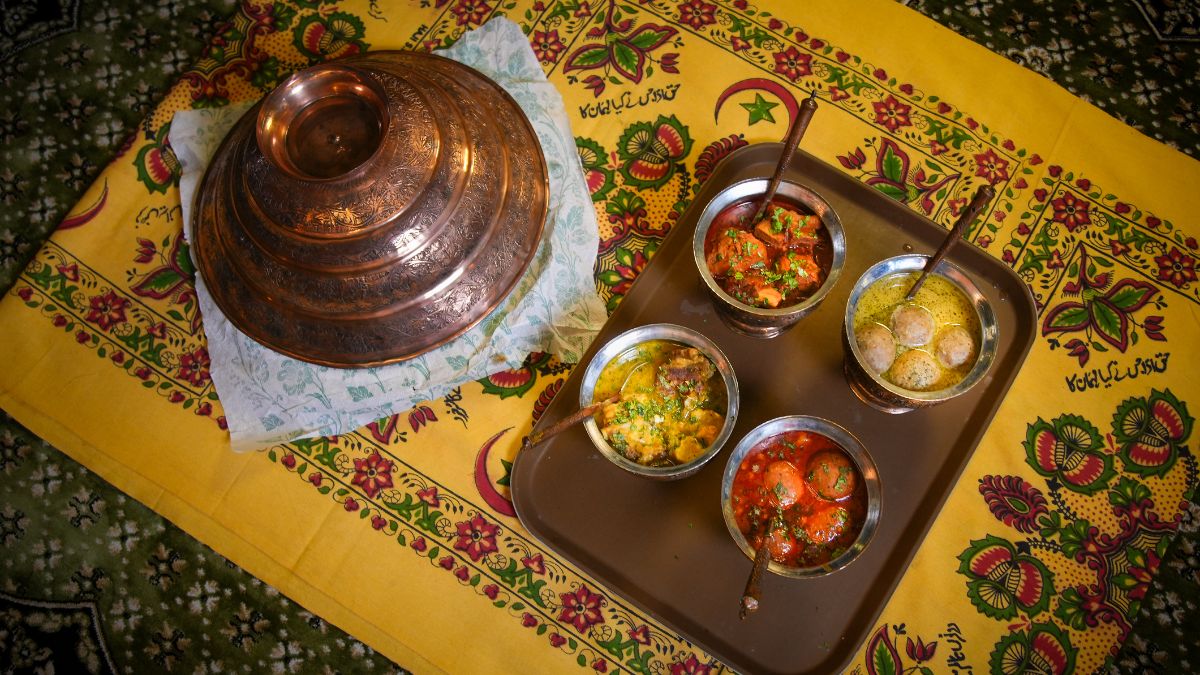
In Kashmir, weddings are not just joyous occasions that bring families together. They are also occasions to honour guests. Few culinary traditions honour a wedding as distinctly as Wazwan does. This elaborate multi-course banquet is the culinary centrepiece of many a Kashmiri Muslim wedding. The banquet expresses the host’s hospitality, the culinary expertise of generations of cooks, and the tradition of sharing food from a large platter. The trami, a large copper plate traditionally shared by four guests, is perhaps the most recognisable component of the traditional Wazwan spread. It is placed on the dastarkhwan, or cloth spread for the meal, with a generous helping of rice forming the base. The first dishes are arranged over or around the rice, and more dishes are served as the feast progresses.
Specialist chefs called wazas select the right cuts of meat and prepare a variety of pastes and gravies. Large cooking vessels simmer for hours on end, and each dish is prepared in its own way. Fennel, dried ginger, cardamom and Kashmiri chillies contribute different combinations of flavour to the feast. The dishes are served in a particular sequence. A formal Wazwan requires the skills of a team of experienced chefs, who are called to cater for important family gatherings and special occasions, including weddings.
The term Wazwan is commonly explained as the cook’s shop or place of work. In Kashmiri, waz refers to a cook or cooking, while wan means shop. In culinary tradition, Wazwan is more than a meal prepared at home. A formal banquet requires a team of specialist cooks to prepare the feast and serve guests. Its history reflects Central Asian and Persian food traditions that reached Kashmir through centuries of movement and cultural exchange. A review of Kashmiri Wazwan meat preparations discusses these influences, while the names of several dishes also point to Persian, Turkish and Arabic connections.
Accounts of skilled cooks arriving in Kashmir form part of this culinary history. Over time, the tradition developed within the local food culture and became an integral part of Kashmiri hospitality. The dishes are prepared by a team of wazas led by the vasta waza, the chief cook of the feast.
A great deal of thought, time and care goes into the preparation of each dish. Meat is sorted according to the cut and preparation required, spices are measured and ground, and gravies are prepared while large vessels simmer for hours. A waza’s skill is judged by flavour as well as the texture and presentation of each dish.
The large copper trami is the most recognisable feature of a traditional Wazwan feast. It is placed on the dastarkhwan, the cloth spread for the meal, with rice forming the base. The initial dishes are laid around or on top of the rice, and subsequent dishes are added as the meal progresses. Four people traditionally eat from one trami, making the meal a shared experience.
Washing hands with a basin and jug called the tash-t-naer is an essential prelude to the meal. Some meals also begin with a religious invocation, with the practice reflecting the household’s tradition. Although Wazwan is often described as a 36-dish feast, the menu and number of dishes vary. One review describes Wazwan as comprising between seven and 36 dishes.
ALSO READ | Rajasthani Winter Cuisine: Dal Baati Churma, Bajre Ki Roti and More
Menus vary, but Wazwan is eaten from a large copper platter called the trami, placed at the centre of the dastarkhwan. Rice forms the base of the meal, with the opening preparations arranged over or around it. These can include seekh kebab, tabakh maaz (twice-cooked lamb ribs) and other meat or chicken dishes, depending on the occasion and the cook. The wazas then bring the remaining preparations to the platter in stages. Rista, rogan josh, aab gosh, and daniwal korma are among the familiar gravy courses. Gushtaba traditionally comes last among the savoury meat dishes, signalling to guests and appetites alike that the main part of the feast is drawing to a close. Dessert follows in quick succession, with the choice sometimes reflecting the season, such as a hot sweet in winter or a chilled preparation in warmer months.
Tabakh Maaz is prepared from sections of lamb ribs, which are first simmered with spices until they become tender and then fried or browned in ghee. That two-stage preparation gives the dish its ultimate appeal, as the meat softens during the initial cooking, while the final browning creates a rich, crisp-edged exterior. Plus, the dish features a substantial, fatty cut, which is quite different from the smoother minced-meat preparations that follow. Often served among the opening dishes, tabakh maaz is one of the clearest demonstrations of how a waza can transform a single cut of meat through experience and proper technique.
Wazwan seekh kebabs are made of finely minced meat that is seasoned and shaped around skewers before being cooked to perfection. Their texture depends on more than just the spice mixture. Traditionally, the meat is pounded or worked until it becomes cohesive enough to hold its shape despite remaining tender and melt-in-the-mouth. The result should not resemble a coarse, loosely packed kebab, but offer a finer, more compact bite, with the flavour of the meat and its seasoning shining through rather than being masked by fillers and accompaniments. Seekh kebab is commonly served as part of the first trami presentation.
Rista is recognised by its rounded meatballs and vibrant red gravy. The meat is pounded until fine and smooth before being shaped, giving the cooked balls a delightful, springy texture rather than the graininess of ordinary minced-meat koftas. Its colour is traditionally associated with mowal, or dried cockscomb flowers, which give the gravy a striking deep crimson hue. The gravy is beautifully aromatic, with spices such as fennel and dried ginger contributing plenty of depth.
Rogan Josh is perhaps the best-known Kashmiri dish beyond the Valley, but its identity is often reduced to its bright red hue and indulgent, yet zesty flavour profile. In a traditional Wazwan context, the dish is about the relationship between tender mutton, a patiently developed gravy, and the fragrance of Kashmiri spices. Dried ginger, fennel and chilli contribute warmth and aroma, while the cooking allows the meat to soften without losing its shape. The red colour usually comes from Kashmiri chillies and, in some preparations, additional traditional colouring ingredients like mowal. A well-made rogan josh should be nuanced and deeply flavoursome rather than just sweat-inducing and fiery.
Aab Gosh offers a contrast to the more intensely coloured and spicy gravies. In this preparation, mutton is cooked slowly with milk and aromatic spices, often including fennel and cardamom. As the liquid reduces, it creates a pale, well-rounded sauce that coats the tender meat without the sharper chilli-led character of rogan josh or rista. The dish’s appeal lies in its balance and restraint, as spices are present, but the mild dairy richness and the flavour of the meat remain at the forefront.
Daniwal korma takes its name from daniwal, aka the Kashmiri word for coriander. Fresh coriander gives this regional preparation its iconic herbal character, setting it apart from the other richer, more heavily spiced meat gravies. To make this, mutton is cooked with aromatics and a gravy that may include yoghurt and onion, depending on the waza or cook’s method. The coriander is not merely a garnish added for colour and a pop of freshness; instead, it is responsible for shaping the dish’s aroma and giving the rich meat a fresher finish.
Mutton is pounded to a fine paste, formed into large meatballs and slowly cooked in a yoghurt-based gravy. The most important aspect of gushtaba is the texture of the meat, which should be worked until it is cohesive and tender, with an almost silky bite. The pale, slightly tangy gravy offers a contrast to the more intensely spiced preparations served earlier. Gushtaba is generally served towards the end of the savoury courses, with sweet dishes following afterwards.
The dishes listed on a menu may look familiar, but their preparation is labour-intensive and demands a broad range of specialist skills. The cuts used for individual dishes are reserved for specific reasons: ribs for tabakh maaz, suitable boneless meat for the meatball dishes rista and gushtaba, and other cuts for slow-cooked curries. These choices reflect the experienced chef’s understanding of how meat behaves when pounded, fried, braised or slowly simmered. The preparation of Wazwan food traditionally takes place in large copper vessels, such as daigs or degchas. These cooking pots are often placed over wood fires and used to cook large quantities of food. The wazas work in teams under the guidance of the head cook. Their skills are passed down through generations of specialist cooking families, making Wazwan part of their knowledge and heritage.
Kashmiri Wazwan is a traditional multi-course feast associated with Kashmiri Muslim weddings and important celebrations. Specialist cooks called wazas prepare the dishes, which are traditionally shared from a copper platter called a trami.
Familiar Wazwan dishes include tabakh maaz, seekh kebab, rista, rogan josh, aab gosh, daniwal korma and gushtaba. The menu varies with the occasion and the cooks preparing the feast.
No. Wazwan is often described as a 36-dish feast, but the number of dishes varies. Published descriptions include menus with between seven and 36 dishes.
Both are made from finely pounded meat shaped into meatballs. Rista is served in a red, spiced gravy, while gushtaba has a pale yoghurt-based gravy and traditionally concludes the savoury meat courses.
A traditional trami is shared by four guests. Rice forms the base, with opening dishes arranged over or around it and further preparations served as the feast progresses.