Quick Answer: Is jalebi healthy?
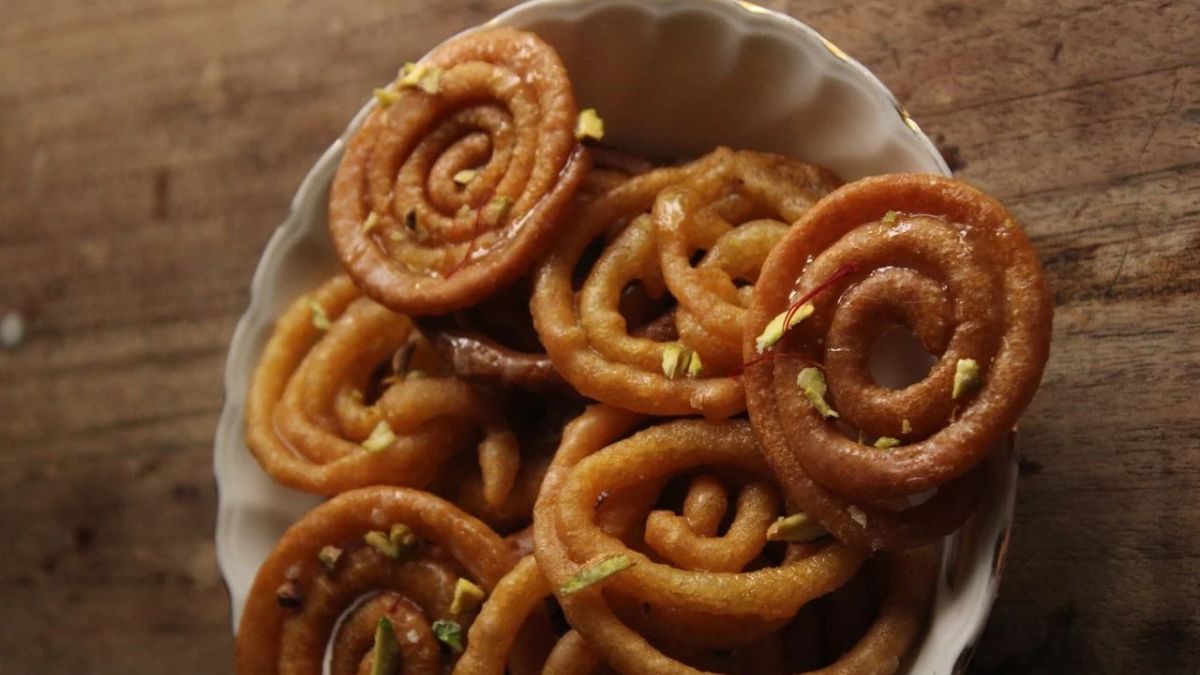
Jalebi is best enjoyed as an occasional sweet rather than an everyday food. It is usually made with maida (refined wheat flour), sometimes with besan, and may be fermented before being piped into spirals, deep-fried and soaked in sugar syrup. The result is a sweet that is high in added sugar and contains fat from frying, with relatively little fibre or protein.
Traditional jalebi batter may be fermented for several hours, but that does not make the finished sweet a probiotic food. Frying is a heat-processing step, and fermented foods do not necessarily contain live microbes when eaten. Jalebi should not be relied on to improve gut health.
If you have acidity or reflux, fatty foods can trigger symptoms in some people. Wheat-based foods also contain fructans, a type of FODMAP that may cause discomfort for some people with irritable bowel syndrome (IBS). Individual tolerance varies, so a small portion may suit one person and bother another.
Jalebi does not treat migraine, cough, diarrhoea or constipation. Warm milk may feel soothing when you have a cough, but the jalebi itself offers no treatment. During diarrhoea, fried and fatty foods are best avoided. For constipation, evidence-based dietary approaches include specific foods such as kiwifruit and prunes, as well as psyllium.
You can enjoy jalebi as part of a meal if it suits you. Keep the portion modest, pay attention to how you feel, and remember that no sweet needs to be labelled completely off-limits for everyone.
What is jalebi made of?
So, is jalebi made of maida? Usually, yes. A traditional batter commonly uses maida, a little besan, water and a raising agent. Some recipes include curd, while others rely on fermentation for the batter’s tangy flavour.
The batter is left to ferment, sometimes for 12–24 hours depending on the recipe and the temperature. It is then piped into spirals in hot oil or ghee, fried until crisp and dipped in warm sugar syrup. Saffron, cardamom or other flavourings may be added to the syrup. Some recipes use turmeric for colour.
Instant versions skip the long fermentation. They may use a raising agent or ingredients such as curd or lemon juice to add some tang.
Is fermented jalebi good for the gut?
Not in the way curd or other foods containing live cultures can be. Fermentation changes the batter’s flavour and texture, but fermented foods do not necessarily retain live microorganisms after cooking or other processing.
The International Scientific Association for Probiotics and Prebiotics (ISAPP) explains that foods such as bread are fermented but then baked, which means they are not sources of live microbes. Jalebi is fried after fermentation, so it should not be treated as a source of live cultures either.
The fermentation contributes to the taste and texture. It does not turn jalebi into a gut-health food.
Where does jalebi come from?
Jalebi has a history that reaches beyond the Indian subcontinent. Food historians trace its antecedents to West Asian sweets known by names such as zulabiya or zolbiya. One of the earliest known recipes for a related sweet appears in the 10th-century Arabic cookbook Kitab al-Tabikh, which describes shaped fritters cooked and coated with honey.
The sweet became part of food culture in the Indian subcontinent over the centuries. A Jain text associated with the writer Jinasura, composed around 1450 CE, mentions jalebi being served at a merchant’s gathering. A Sanskrit work, Gunyagunabodhini, dated before 1600, also records a recipe resembling the jalebi made today.
So, is jalebi Indian? It has West Asian antecedents, but it has been adopted, adapted and enjoyed across India for centuries. Its many regional forms are now firmly part of the country’s food culture.
Is jalebi the national sweet of India?
No. India does not have an officially designated national sweet. Jalebi is sometimes described as the country’s national sweet in popular conversation, but that is an affectionate label rather than an official designation.
India did announce a National Microbe in 2012: Lactobacillus delbrueckii subsp. bulgaricus, a bacterium used in yoghurt production. That is a separate designation and does not make jalebi a national symbol.
How does jalebi affect digestion?
Jalebi is deep-fried and soaked in sugar syrup. The combination can feel rich, particularly if you eat several pieces or have it after an already substantial meal. Its sugar content is high, while it provides little fibre.
If you are prone to acidity or heartburn, pay attention to how you respond to fried foods. The NHS lists fatty foods among common heartburn triggers and advises avoiding food within three to four hours of bedtime. A late-night serving may therefore be worth skipping if it tends to bring on symptoms.
There is another consideration for people with IBS. Wheat contains fructans, a type of fermentable carbohydrate classified as a FODMAP. These can trigger bloating, gas or other digestive symptoms in some people with IBS. That does not mean everyone with IBS must avoid jalebi or all wheat-based foods. Portion size and individual tolerance matter.
Many people may be able to enjoy a small portion without discomfort. If you notice symptoms after eating it, reduce the portion or avoid it when your gut is already unsettled.
Does jalebi help with migraine, cough or loose motions?
Jalebi is sometimes recommended in home remedies or searched for alongside common health complaints. Here is what the available guidance actually supports.
Migraine: There is no established evidence that jalebi treats migraine. Skipping meals or eating irregularly can trigger migraine in some people, and the NHS advises regular meals. A proper breakfast may help you avoid going too long without food, but it does not need to include jalebi.
Cough or cold (jalebi with hot milk): Warm drinks can feel soothing when you have a cough, and the NHS recommends fluids and suggests a warm drink such as hot lemon and honey. Warm milk may also feel comforting, but there is no evidence that adding jalebi treats a cough. See a doctor if a cough lasts more than three weeks, or seek advice sooner if it is severe or accompanied by worrying symptoms.
Loose motions: Jalebi is not a good choice while you have diarrhoea. Fried and very fatty foods can be difficult to tolerate, so prioritise fluids and oral rehydration if needed. Simple foods such as khichdi may be easier to manage as your appetite returns. Seek medical advice if you cannot keep fluids down, show signs of dehydration or your symptoms are not improving. Diarrhoea commonly settles within five to seven days, but you should not wait that long if symptoms are severe or you are concerned.
Constipation: Jalebi is not a remedy for constipation. The British Dietetic Association’s 2025 evidence-based guidelines discuss dietary approaches for adults with chronic constipation, including kiwifruit, prunes, rye bread and psyllium. These recommendations are specific to constipation management; they are not a reason to self-treat persistent symptoms without advice.
Is jalebi with curd a good combination?
Plain curd can contribute protein and calcium to a meal, and its tanginess can complement the sweetness of jalebi. Having the two together may make for a more balanced plate than eating jalebi on its own, but curd does not cancel out the sugar or fat in the sweet.
If you enjoy the combination, keep the jalebi portion modest and choose plain curd rather than a sweetened yoghurt.
What is the best way to eat jalebi?
Jalebi is often enjoyed alongside something savoury. In Indore, poha-jalebi is a popular breakfast combination. In Gujarat, fafda and jalebi are a familiar pairing, particularly around Dussehra.
These combinations bring different flavours and textures to the plate, but they do not make jalebi nutritionally lighter. Fafda is fried too, so the combination can be quite rich. If you want a more balanced meal, pair a modest serving of jalebi with a savoury dish that provides other food groups.
Jalebi with rabri is another popular combination. Rabri is made by reducing milk and is often sweetened, making this an especially rich dessert. Enjoy it in a smaller portion if you are watching your overall sugar intake.
Jalebi vs imarti, gulab jamun and other sweets
Jalebi vs imarti or jangiri: Imarti, also known as jangiri in some regions, is generally made with urad dal batter, shaped into a flower-like pattern, fried and soaked in syrup. Jalebi is usually made with a wheat-flour batter and formed into spirals. Both are fried sweets soaked in sugar syrup. Their texture and sweetness vary by recipe.
Jalebi vs gulab jamun: Both are fried and soaked in sugar syrup. Gulab jamun is commonly made with khoya or milk solids, while jalebi is usually made from a flour-based batter. Neither is automatically the lighter choice; portion size matters.
Jalebi vs rasgulla: Rasgulla is made from chhena and cooked in sugar syrup rather than deep-fried. It does not have the same frying component as jalebi, but it is still a sugar-syrup sweet.
Jalebi vs kaju katli or soan papdi: These sweets are not typically deep-fried and soaked in syrup like jalebi. However, they can still be energy-dense and rich in sugar or fat. Choosing one over another does not automatically make it a light option.
The best choice depends on your preferences, portion size and how a particular sweet sits with you.
How do you choose and store jalebi?
Look beyond the colour
Bright orange colour alone cannot tell you whether a jalebi is safe or unsafe. Saffron and turmeric are used in some recipes, while food colours vary between makers. If you prefer to avoid added colour, ask the shop whether it can provide an uncoloured version.
An Indian survey published in 2013 analysed 2,409 samples of sweets and savouries and found that some samples contained non-permitted colours or exceeded permitted limits. However, the study was not a current assessment of sweet shops, nor does it establish that jalebi from a particular shop contains an unauthorised colour. It should not be used to judge a sweet by appearance alone.
What about the frying oil?
FSSAI sets a maximum limit of 25% total polar compounds (TPC) in cooking oil. From 1 July 2018, food business operators have been required to monitor oil quality during frying and stop using oil once it exceeds this limit.
TPC levels cannot be reliably judged by customers looking at a kadai. Darkening, excessive smoking or foaming may be warning signs of degraded oil, but appearance is not a substitute for proper monitoring. Choose a shop that appears to handle food hygienically, and do not assume that colour or crispness alone tells you how the oil has been managed.
Eat it fresh
Jalebi is at its crispest soon after frying. As it sits, the syrup softens the outer layer and changes the texture. If you have leftovers, follow the seller’s storage advice. At home, refrigerate them in a clean, covered container rather than leaving them out for an extended period, particularly in warm weather. There is no reliable universal shelf-life figure for every jalebi recipe and storage condition.
A best-before date is optional, rather than mandatory, for containers or trays of loose sweets under the FSSAI direction issued in November 2023. If a shop provides a date or storage guidance, follow it.
Who should be careful with jalebi?
If you have diabetes, remember that jalebi is a sugar-rich sweet. Whether and how much you can include depends on your overall meal plan, medication and individual blood-glucose response. Follow your doctor’s or dietitian’s advice rather than relying on a universal portion recommendation.
If you experience heartburn or reflux, fatty foods may trigger symptoms. Keep track of your own triggers, avoid large portions and leave enough time between eating and going to bed.
If you have IBS, wheat-based foods may cause symptoms because of their fructan content. Your tolerance will depend on the portion and your individual response. If you have diarrhoea or an unsettled stomach, it is sensible to wait until you have recovered before eating a fried, syrup-soaked sweet.
Seek medical advice for blood in your stool, unexplained weight loss, severe or persistent abdominal pain, difficulty swallowing, or digestive symptoms that keep returning. This is particularly important if symptoms are new, worsening or affecting your daily life.
Sources
Disclaimer
This article is for general information only and is not a substitute for medical advice, diagnosis or treatment. If you have diabetes, acid reflux, IBS, migraine or another health condition, consult your doctor or registered dietitian about dietary choices. Seek medical advice for persistent, severe or recurring symptoms.
FAQs
Is jalebi healthy?
Jalebi is a fried sweet soaked in sugar syrup, so it is best enjoyed occasionally and in a modest portion. It is not a significant source of fibre or protein.
Is jalebi made of maida?
Usually, yes. Jalebi batter is commonly made with maida, sometimes with besan, water and a raising agent. Some recipes also use curd.
Is jalebi good for migraine?
There is no established evidence that jalebi treats migraine. Regular meals may help people who find that skipping meals triggers their migraine, but jalebi is not necessary.
Is jalebi with hot milk good for a cough?
Warm drinks may feel soothing when you have a cough. Hot milk may be comforting, but jalebi does not treat the cough and adds sugar.
Is jalebi good for loose motions?
No. Fried and fatty foods are best avoided while you have diarrhoea. Focus on fluids and foods you can tolerate until you recover.
Is jalebi vegan?
It can be vegan if the batter contains no curd or other dairy and it is fried in plant-based oil rather than ghee. Recipes and shop practices vary, so ask the maker. Cross-contact with dairy products may also be possible.
Is jalebi the national sweet of India?
No. India has no officially designated national sweet. Jalebi is popular across the country, but calling it the national sweet is an informal description.
Can people with diabetes eat jalebi?
Jalebi is high in sugar. People with diabetes should follow their doctor’s or dietitian’s advice on whether and how much to include in their meal plan.