Quick Answer: Is kaju katli healthy?
Kaju katli can be a reasonable sweet to enjoy in moderation, but it is still a sugar-rich mithai. The traditional recipe is made mainly with ground cashews, sugar and a little ghee. Unlike gulab jamun, it is not deep-fried or soaked in sugar syrup. Cashews contribute protein, fibre, magnesium and mostly unsaturated fats, but they also make the sweet energy-dense. The added sugar matters too, particularly if you have diabetes or are managing your blood glucose.
The classic version usually contains no milk or milk solids, although recipes vary and some shops add dairy ingredients. That may make it a more suitable option than certain milk-based sweets for people who are lactose intolerant, but it is worth checking the ingredients. Ghee is still a dairy ingredient, even though it contains very little lactose.
There is another consideration if you have irritable bowel syndrome (IBS): cashews are high in FODMAPs, fermentable carbohydrates that can trigger symptoms in some people. Kaju katli is also unsuitable for anyone with a cashew or tree-nut allergy.
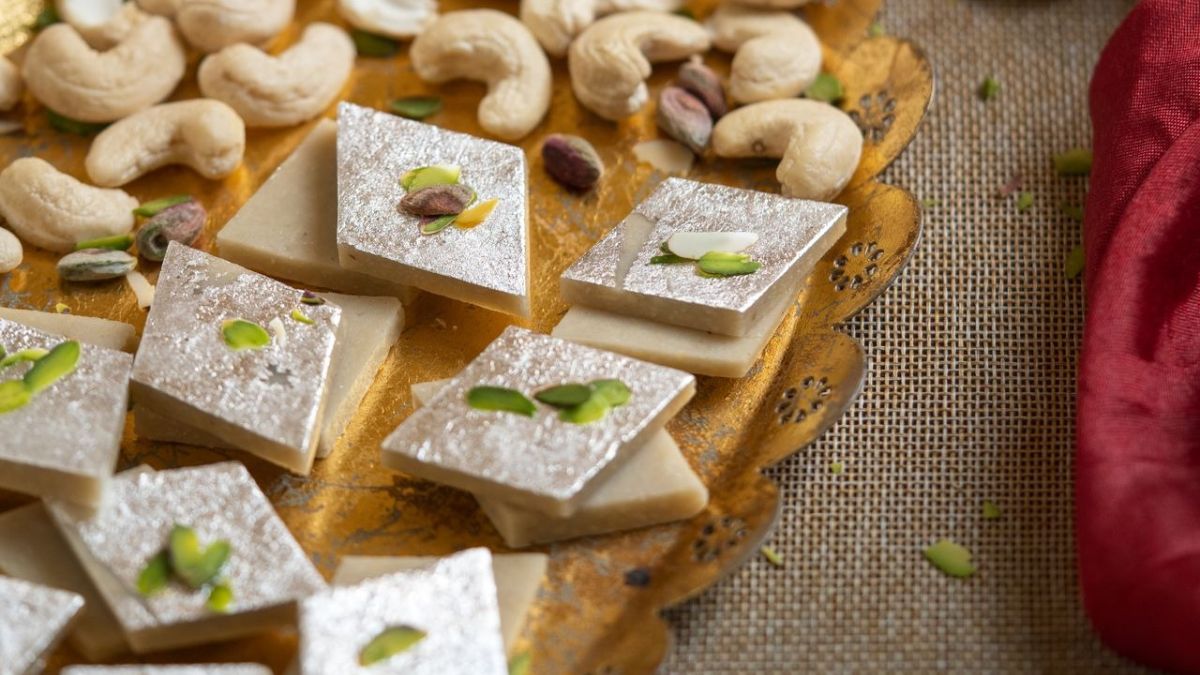
The silver leaf on top is called chandi ka varq. FSSAI standards specify food-grade silver of at least 99.9% purity and prohibit the use of animal-origin material at any stage of its manufacture. You can also buy the sweet without varq.
FSSAI’s illustrative shelf-life guidance lists kaju katli at seven days from manufacture. That is not a guarantee for every recipe or storage condition, so follow the shop’s advice and any date displayed. A small piece enjoyed mindfully can be part of a festive meal; it does not need to be treated as a health food.
What is kaju katli made of?
So, kaju katli kaise banate hain? The name gives you the main ingredient: kaju means cashew, and katli means slice. Cashews are ground and combined with sugar syrup to make a soft dough. Depending on the recipe, the nuts may be ground dry into a powder or soaked and blended into a paste. A little ghee is often added to bring the mixture together.
The dough is rolled into a thin sheet, sometimes topped with silver leaf, and cut into diamonds once it cools. Some recipes add cardamom, saffron or rose water.
The ingredients are relatively simple, but the proportions matter. Kaju katli is made from a combination of nuts and added sugar; the exact amount varies from one recipe or sweet shop to another. It is not a low-sugar snack simply because its main ingredient is a nut.
Cashews do bring useful nutrients to the recipe. They provide protein, fibre, magnesium and other minerals, along with predominantly unsaturated fats. That is a nutritional contribution, but it does not cancel out the sugar in the sweet.
Where does kaju katli come from?
The exact origin of kaju katli is not well documented. There are popular stories linking it to royal kitchens, including Mughal and Maratha courts, but neither account has been firmly established. They make for good food lore, not settled history.
What we do know is that the cashew itself is native to Brazil. The Indian Council of Agricultural Research (ICAR) notes that Portuguese travellers introduced the crop to India through Goa in the early 16th century. It was initially planted for purposes such as soil conservation before becoming an important commercial crop.
That gives us a broad timeline for the arrival of cashews in India, but it does not tell us when or where someone first made kaju katli. The sweet’s precise culinary beginnings remain uncertain.
What is the silver on kaju katli made of?
The shiny coating is called chandi ka varq: real silver beaten into extremely thin sheets. It is used as a decorative finish on several Indian sweets.
The way it was traditionally made has raised questions about whether the silver leaf is vegetarian. Older manufacturing methods involved placing silver between layers of animal intestine and hammering it into sheets. In 2016, FSSAI issued a notification prohibiting the use of material of animal origin at any stage of making food-grade silver leaf. The notification was challenged, temporarily stayed by the Delhi High Court in 2017, and the stay was later vacated.
FSSAI’s standard specifies that food-grade silver leaf must have a minimum purity of 999 parts per thousand (99.9%) and weigh no more than 2.8g per square metre. The requirements are set out in its food products standards regulations.
A 2005 study, cited in an FSSAI-hosted report in 2018, found that only 46% of 178 silver-leaf samples met the 99.9% purity standard. This is an older finding, not a measure of the quality of silver leaf currently being sold.
If you are unsure about the varq, buy from a sweet shop you trust, ask about its sourcing, or choose plain kaju katli. The silver is decorative; the sweet does not need it.
How does kaju katli affect your gut?
For many people, a small piece is easy enough to enjoy. Kaju katli is not deep-fried or soaked in syrup, but it is still a rich sweet. Cashews and ghee contribute fat, and a larger portion can feel filling, particularly after an already substantial festive meal.
There is also the question of milk. Traditional kaju katli is generally made without milk or khoya, unlike sweets such as kalakand, peda and rasmalai. This may make it easier to fit into the diet of someone with lactose intolerance. However, recipes differ: some versions contain milk solids, so check with the shop rather than assuming every piece is dairy-free. Ghee is also a dairy ingredient, even though it is generally very low in lactose.
For people with IBS, cashews are worth a closer look. They are classified as high-FODMAP foods by Monash University, which means their fermentable carbohydrates can trigger bloating, gas or changes in bowel habits in some people. Pistachios, sometimes used as a garnish, are also high in FODMAPs. Individual tolerance and portion size matter; a high-FODMAP ingredient does not mean everyone with IBS will react to every amount.
Cashews are tree nuts and a recognised food allergen. If you have a cashew or tree-nut allergy, avoid kaju katli. With mixed mithai boxes, take care about possible contact between different sweets.
Kaju katli vs other Indian sweets: how do they compare?
The ingredients and preparation methods can help you understand what you are choosing, but they do not establish a universal health ranking. Portion size and recipe make a difference.
- Kaju katli vs kaju barfi: The names are often used for the same cashew sweet. Some shops make kaju barfi thicker or add milk solids, so check the ingredients if dairy is a concern.
- Kaju katli vs badam katli: The method is similar, but almonds replace cashews. Both versions contain nuts and added sugar; neither is automatically a low-sugar option.
- Kaju katli vs milk cake, peda and kalakand: These are generally milk-based sweets made with khoya or reduced milk. Their dairy content may be relevant if you are lactose intolerant.
- Kaju katli vs rasmalai: Rasmalai is made with chhena or paneer discs served in sweetened milk. It is a dairy-based dessert and needs refrigeration.
- Kaju katli vs gulab jamun: Gulab jamun is deep-fried and soaked in sugar syrup. Kaju katli is prepared differently, but both contain added sugar and can be rich.
- Kaju katli vs soan papdi: Soan papdi has a flaky, airy texture, while kaju katli is denser. Neither should be mistaken for a low-sugar food.
The useful question is less about finding a winner and more about what goes into each sweet, how it is made and how much you are eating.
How long does kaju katli last?
FSSAI’s Guidance Note on Safety and Quality of Traditional Milk Products includes kaju katli in its illustrative seven-day shelf-life category for sweets made with ghee and dry fruits. The guidance says these sweets should be consumed within seven days of manufacture.
This is an indicative guide, not a guarantee that every batch will stay fresh for a week. Ingredients, preparation, hygiene, packaging and storage conditions all affect shelf life. Follow the sweet shop’s storage advice and any best-before date it provides. FSSAI withdrew the earlier mandatory best-before display direction for loose sweets in November 2023; shops may now display the date voluntarily.
At home, keep kaju katli in a clean, airtight container and follow the seller’s storage instructions. In hot or humid weather, refrigeration may be advisable. If the sweet develops an unusual smell, taste, appearance or texture, do not eat it.
How can you enjoy kaju katli without overdoing it?
You do not need to avoid kaju katli to eat well during Diwali. A few practical choices can help you enjoy it without turning the festive week into a constant mithai marathon.
- Choose a portion before you start. Put a piece or two on a plate rather than repeatedly reaching into an open box.
- Have it after a meal if that suits you. This can make it easier to enjoy a planned portion rather than grazing on sweets throughout the day.
- Try a homemade version. You can adjust the sugar to your taste and leave out the silver leaf. Recipes vary, so reducing sugar may also change the texture.
- Read the label on sugar-free kaju katli. Some products use sugar alcohols or polyols such as maltitol. These sweeteners can cause gas, bloating or loose stools, particularly in larger amounts. FSSAI’s labelling regulations require packaged foods containing 10% or more polyols to carry the declaration: “Polyols may have laxative effect.”
Who should be careful with kaju katli?
If you have diabetes, remember that kaju katli still contains added sugar. Cashews provide protein and fat, but that does not make the sweet sugar-free or remove the need to consider your overall carbohydrate intake. Follow your doctor or dietitian’s advice on portions.
If you have IBS, cashews and pistachios may trigger symptoms because they are high in FODMAPs. Your tolerance will depend on the amount you eat and your individual response. A dietitian can help you understand whether these foods need to be limited.
If you have a tree-nut allergy, avoid kaju katli and take care with assorted sweet boxes where ingredients may come into contact.
Sudden weight loss, blood in stool, severe or persistent pain, or difficulty swallowing need prompt medical attention. If symptoms continue, are severe, or keep coming back, it is worth speaking to a doctor.
For children, during pregnancy, or for older adults, follow a doctor’s guidance before making changes.
Sources
Disclaimer
This article is for general information only and is not a substitute for medical advice, diagnosis or treatment. If you have diabetes, IBS, a food allergy, lactose intolerance or another digestive condition, speak to your doctor or dietitian about what is suitable for you. Do not make significant dietary changes based only on this article.
FAQs
Is kaju katli healthy?
Kaju katli contains cashews, which provide protein, fibre and unsaturated fats. It also contains added sugar, so enjoy it as a sweet rather than a health food.
Are kaju katli and kaju barfi the same?
Usually, yes. The names are often used for the same cashew sweet, although recipes, thickness and added ingredients can vary between shops.
Is kaju katli made with milk?
Traditional recipes generally use cashews, sugar and ghee, without milk or khoya. Some versions add milk solids, so check with the shop if you are lactose intolerant.
Is kaju katli vegan?
Usually not, because ghee is made from dairy. A version made with plant-based fat and no other animal-derived ingredients may be vegan; check the recipe.
What is the silver paper on kaju katli made of?
It is called chandi ka varq and is made from very thin sheets of food-grade silver. FSSAI standards prohibit animal-origin materials at any stage of its manufacture.
How long does kaju katli last?
FSSAI's illustrative guidance lists kaju katli in a seven-day shelf-life category from manufacture. Follow the shop's storage advice and any date it provides.
What is kaju katli called in English?
The literal meaning is “cashew slice”. It is also commonly described as cashew fudge or cashew barfi.
Can people with diabetes eat kaju katli?
It contains added sugar, so people with diabetes should consider their overall carbohydrate intake and follow their doctor's or dietitian's advice on portions.