Rasmalai: What It’s Made Of, How It Affects Your Gut and How Long It Lasts
What is rasmalai made of? Learn about its chhena and milk base, lactose and sugar content, digestive effects, Bengali origins and fridge life.
Table of Contents
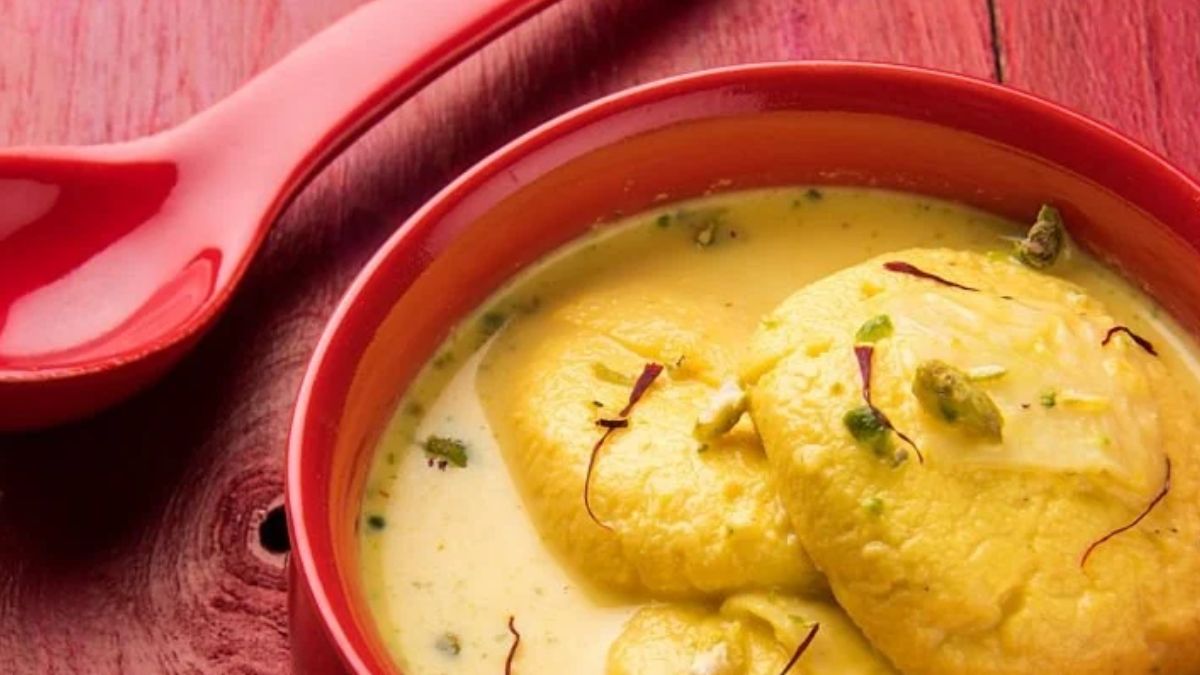
Rasmalai is a traditional South Asian milk-based sweet made with soft discs of chhena (fresh curd cheese). The discs are first cooked in sugar syrup, then soaked in sweetened, reduced milk flavoured with saffron and cardamom. Almonds and pistachios are common additions. It is usually served chilled.
Rasmalai is made with chhena rather than paneer, although the two begin in much the same way: milk is curdled and the whey is drained. Chhena is kneaded into a soft, smooth dough, while paneer is pressed into a firm block. Classic rasmalai does not need maida, though some recipes use a little flour or semolina as a binder.
The sweet is associated with Bengal, and both Kolkata and Comilla, in present-day Bangladesh, have claims to its history. Its exact origins are not firmly established.
From a digestive point of view, the main consideration is dairy. Rasmalai contains lactose in both its chhena and the milk it is served with. People with lactose intolerance may experience bloating, gas, cramps or diarrhoea within a few hours of eating it. A smaller portion may be easier to tolerate, but individual responses vary.
Rasmalai also contains added sugar in the syrup and the milk. The chhena and milk provide some protein and calcium, but that does not make the dessert a health food. If you have diabetes, follow your doctor’s or dietitian’s advice on portions.
For food safety, FSSAI’s indicative guidance places rasmalai in the two-day refrigerated category: keep it at 1–4°C and consume it within two days of manufacture. Buy it fresh, keep it chilled and avoid leaving it out for long.
Cold, creamy and fragrant with saffron, rasmalai is the sweet many people save for last. It is made with soft discs of chhena, cooked in sugar syrup and then soaked in milk simmered down to about half, with saffron and cardamom. It isn’t fried, and the chhena and milk bring protein and calcium. But the milk is sweetened and concentrated, so the dessert also contains sugar, fat and lactose. One piece can be a lovely end to a festive meal; the portion is worth keeping in mind.
So, rasmalai kaise banti hai? It starts with chhena. Milk is curdled with a little lemon juice or another food acid, the whey is drained off, and the chhena is kneaded into a smooth dough. It is shaped into balls and flattened into thick discs before being cooked in sugar syrup.
Meanwhile, full-fat milk is simmered until it reduces to roughly half its volume. It is then sweetened and flavoured with saffron, cardamom, almonds and pistachios. The discs are gently squeezed to remove excess syrup, simmered in the milk for two or three minutes, finished with a little rose or kewra water, and chilled.
The name says much about the dessert: Bengali rosh means sap or juice, while malai is a Hindustani word for clotted cream.
Two questions come up often. Is rasmalai made of paneer? Almost. Chhena and paneer both begin with milk that has been curdled and drained. The difference is in how they are handled: chhena is kneaded while still warm into a soft, smooth dough, while paneer is pressed into a firmer block.
Is rasmalai made of maida? Not in the classic recipe. Its discs are made from chhena. Some cooks use a little semolina or flour as a binder, depending on the recipe.
Rasmalai is closely associated with the Bengal region of the Indian subcontinent, but its precise origin is disputed. In Kolkata, the K.C. Das family credits confectioner Krishna Chandra Das with developing the sweet. In Comilla, now in Bangladesh, Matri Bhandar and the Sen family are associated with another origin story. Comilla’s roshmalai has since received geographical indication recognition in Bangladesh.
These accounts are best understood as competing claims rather than a settled history. What is clearer is that rasmalai grew out of Bengal’s long tradition of chhena and milk sweets, and became popular well beyond the region. Today, it appears in festive sweet boxes, as well as in newer versions such as rasmalai cakes and kulfis.
It depends on the person and the portion. Rasmalai is not fried, and its chhena discs are soft. But it is still a rich, dairy-based dessert. The milk, creaminess and sugar can make a larger serving feel filling.
Milk and milk products are sources of protein and calcium, as ICMR-NIN’s dietary guidance notes. That is useful nutritional context, but it does not cancel out the added sugar or make rasmalai a substitute for a balanced meal.
The main digestive consideration is lactose. Rasmalai contains milk in two forms: the chhena and the reduced milk it is soaked in. If you have lactose intolerance, your body may not digest all this lactose comfortably. Symptoms can include bloating, gas, abdominal cramps and diarrhoea, and may begin within a few hours of eating it.
The amount matters. Some people with lactose intolerance can manage small amounts of dairy, while others are more sensitive. A small piece with less of the sweetened milk may be easier to tolerate, but it is not a guarantee. If dairy regularly causes symptoms, speak to a doctor or dietitian rather than repeatedly testing your tolerance.
There is sugar in both parts too: the syrup used to cook the discs and the milk they are served in. The sweetened milk adds a substantial share of the sugar and lactose, while the discs may retain some syrup. A second helping can therefore add more sugar and leave you feeling fuller than expected.
The differences are mainly in ingredients and preparation. Recipes and portion sizes vary, so these are broad comparisons rather than a nutritional ranking.
Whichever you choose, the portion you eat matters more than a simple ranking of sweets.
Not long. FSSAI’s Guidance Note on Safety and Quality of Traditional Milk Products lists rasmalai under sweets with a short shelf life of two days. It advises that these products be refrigerated and consumed within two days of manufacture, with refrigeration at 1–4°C.
That is a useful guide when buying from a sweet shop, but it is not a reason to ignore the shop’s own storage instructions or the condition of the sweet. Buy rasmalai close to when you plan to eat it. At home, keep it covered in the fridge, serve only what you need, and return the rest promptly. Avoid leaving the bowl on the table through a long evening of guests.
If the milk smells sour, looks unusually split or grainy, or the discs have turned slimy, do not eat it. When in doubt, throw it out.
A few simple checks can help:
If you are lactose intolerant, rasmalai may trigger symptoms because it contains dairy in both the chhena and the sweetened milk. Whether you can tolerate a small portion depends on your individual sensitivity.
If you have diabetes, remember that the discs are cooked in sugar syrup and the milk is sweetened too. You do not necessarily have to avoid every festive sweet, but portion size and how it fits into your overall eating plan matter. Follow your doctor’s or dietitian’s advice.
Because rasmalai is a perishable milk-based sweet, it should be kept properly chilled and eaten within its recommended shelf life. This is particularly important when serving it to children, older adults, pregnant people or anyone more vulnerable to food-borne illness.
Severe or persistent abdominal pain, repeated vomiting, signs of dehydration, blood in the stool or unexplained weight loss should not be put down to a sweet or assumed to be lactose intolerance. Seek medical advice, especially if symptoms continue or keep returning.
This article is for general information only and is not a substitute for medical advice, diagnosis or treatment. If you have lactose intolerance, diabetes or another digestive or metabolic condition, consult your doctor or registered dietitian for advice suited to your needs. Food-safety guidance is general; always follow the storage instructions provided by the seller and do not consume food that appears spoiled.
Rasmalai provides some protein and calcium from its milk and chhena, but it also contains added sugar and fat. Enjoy it as a dessert, keeping the portion in mind.
It is made with chhena, which starts much like paneer. Chhena is kneaded into a soft dough, while paneer is pressed into a firm block.
Not in the classic recipe. The discs are made from chhena, although some recipes use a little flour or semolina as a binder.
It is closely associated with Bengal. Kolkata and Comilla, in present-day Bangladesh, both have claims to its history, but its exact origin is disputed.
Rasgulla is served in sugar syrup rather than sweetened milk, so it may contain less dairy in the serving. However, both are made with chhena and can contain lactose. Individual tolerance varies.
It may cause bloating, gas, cramps or diarrhoea. Some people tolerate small amounts of dairy, but a smaller portion is not guaranteed to prevent symptoms.
FSSAI’s indicative guidance lists rasmalai in the two-day refrigerated category. Keep it at 1–4°C and consume it within two days of manufacture.
Rasmalai contains added sugar in both the syrup and the milk. People with diabetes should follow their doctor’s or dietitian’s advice on whether and how much to have.