Can You Eat Fruit After Roti? What Actually Matters
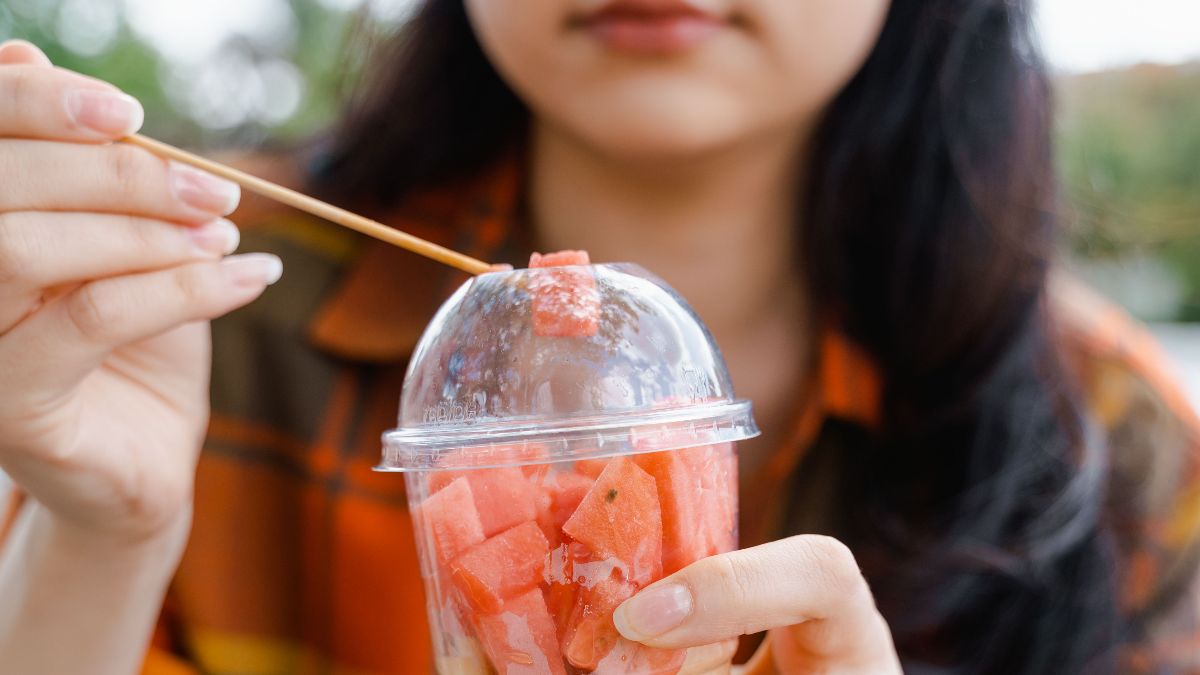
Yes — fruit does not need a separate digestive time slot. What matters more is the portion, the whole meal, and whether eating fruit immediately afterwards actually feels comfortable for you.
Table of Contents
Yes — fruit does not need a separate digestive time slot. What matters more is the portion, the whole meal, and whether eating fruit immediately afterwards actually feels comfortable for you.
Most of us have been told at some point that fruit is the healthy thing to reach for after a meal. A few slices of papaya, a bowl of watermelon, maybe some mango if you’re feeling indulgent. It sounds sensible enough. But the question of when exactly you eat fruit has also accumulated an extraordinary number of rules over the years: fruit before food, fruit only on an empty stomach, fruit never straight after lunch, fruit at least an hour away from everything else.
Fortunately, the digestive system is considerably less fussy than the rulebook.
Khapli wheat, also known as emmer wheat, is one of the older cultivated wheat species and has been making its way back into Indian kitchens over the last few years. Aashirvaad Namma Chakki 100% Khapli Atta is a whole-grain wheat flour with a product-specific protein content of 14.7g per 100g and roughly 10–11g of dietary fibre per 100g, according to the brand’s current public nutrition information. So when someone who has switched to Khapli roti asks whether they can still enjoy fruit after lunch or dinner, it is a fair question.
The answer is yes. The more interesting part is why the rules surrounding fruit timing are mostly more dramatic than the evidence.
After a roti meal, your digestive system is doing exactly what it is designed to do: handling several nutrients and foods at once. The stomach mixes the meal gradually before its contents move into the small intestine, where carbohydrates, proteins and fats are digested and absorbed at different rates.
Khapli atta contributes whole-grain wheat and dietary fibre to that meal. What I would avoid is assigning every Khapli roti a universal glycaemic index or promising that it will automatically produce a flatter blood-sugar curve than every ordinary whole-wheat roti. The composition and structure of the flour matter, but so do the size of the roti, milling, cooking and what else is eaten with it.
GOOD TO KNOW | Does Adding Ajwain to Khapli Atta Make It Easier to Digest?
It is worth remembering that regular whole-wheat atta is already a whole-grain flour too. Aashirvaad’s own current comparison lists dietary fibre at approximately 10.7g per 100g for its Khapli atta and 10.8g for its regular whole-wheat atta — essentially comparable figures.
So what does this mean when you reach for a banana after lunch? Mostly that your stomach simply has one more food to process. For most healthy people, that is not a problem.
There is a widely circulated idea that fruit should only be eaten on an empty stomach because otherwise it gets “stuck” behind slower-digesting food and begins to ferment.
That is not how normal digestion works.
Food does not queue in the stomach in neat layers, waiting for the roti ahead of it to receive clearance. The stomach mixes its contents and releases them gradually into the small intestine. Fruit eaten as part of or after a mixed meal therefore does not sit around fermenting simply because dal and roti arrived first.
The question of meal sequence is more interesting. Small controlled studies suggest that the order in which carbohydrates, vegetables, protein or fruit are eaten can sometimes alter the immediate glucose response to a meal. But this is very different from saying fruit becomes harmful if eaten afterwards, and there is no universal rule requiring healthy people to separate fruit from meals.
In one small Indian crossover study, adding fruit and nuts to a cereal-and-milk breakfast changed several post-meal metabolic and satiety responses compared with the other test meals. The important point for everyday eating is that the digestive system was perfectly capable of handling fruit as part of a mixed meal.
Almost any whole fruit you enjoy can fit here. There is no medically privileged post-roti fruit.
Papaya is soft, refreshing and easy to portion after lunch. It contains the enzyme papain, which has generated a sizeable digestive-health reputation, although evidence that an ordinary bowl of fresh papaya taken after a meal actively improves digestion is much thinner than the popular claim suggests. A small placebo-controlled study found some symptom improvement with a commercial fermented papaya preparation, but that is not the same intervention as eating fresh papaya after roti.
Berries, jamun, guava and citrus fruits bring their own fibre, vitamins and plant compounds. They are all perfectly sensible additions to a varied diet, whether you eat them after lunch or at another point in the day.
You do not need to treat them as the naughty fruits.
Mango, banana and chikoo contain naturally occurring sugars, as all sweet fruit does, but whole fruit also comes packaged with water, fibre and a very different physical structure from a glass of sugar-sweetened drink or a dessert made primarily from added sugar.
If you are managing diabetes or closely monitoring post-meal glucose, portion and the carbohydrate content of the whole meal become more important. That may mean a smaller serving of mango after a large roti meal rather than an entire mango simply because “fruit is healthy”.
For everybody else, the useful rule is considerably less anxious: enjoy the fruit you actually like, in a portion that fits your appetite.
No specific 30-, 45- or 60-minute waiting period has been established as necessary.
If you have just finished a large meal and feel completely full, you may naturally enjoy fruit more if you wait until later. If a few slices of fruit immediately after lunch feel pleasant and comfortably finish the meal, there is no digestive reason to start a stopwatch.
This is one of those cases where a perfectly ordinary body signal is more useful than a universal nutrition rule.
Full? Wait.
Comfortable and still want the fruit? Eat it.
For people with reflux, IBS, diabetes or another condition in which meal size or carbohydrate timing matters individually, the advice may need to be more specific. But that comes from the condition, not from a general law that fruit and roti cannot meet in the same stomach.
Any food containing digestible carbohydrate can contribute to the post-meal glucose response. But that response cannot be predicted simply by saying, “the roti was carbohydrate and now the mango is carbohydrate too”.
The complete meal matters.
Human feeding studies show that adding whole fruit to carbohydrate-containing meals can produce quite different glucose and insulin patterns depending on the fruit and meal. Berries eaten with sugar, for example, have produced a slower and more favourable post-meal glycaemic profile than the sugar control in crossover research. Another recent trial in people with well-controlled type 2 diabetes found no significant difference in overall acute glucose or insulin responses when whole orange, orange juice or a sugar-matched drink accompanied the same high-carbohydrate breakfast, illustrating again that real mixed-meal responses are not always obvious from the ingredient list alone.
GOOD TO KNOW | Khapli Roti With Aloo Sabzi: Is It Too Many Carbs?
So I would not say that the fibre in Khapli creates a special “buffer” that neutralises fruit sugar. What is defensible is that fruit is being eaten as one component of a mixed meal, and the meal’s total composition, quantity and the individual eating it determine the eventual response.
This is perhaps the most useful correction to the original question.
There is no known Khapli-specific reason why fruit after the meal should behave differently from fruit after another whole-grain wheat meal.
Khapli contributes whole-grain wheat, fibre and protein. Those are useful nutritional properties. But they do not give the stomach a special fruit-processing mode, nor do they mean a mango eaten after Khapli is fundamentally different from a mango eaten after another balanced whole-grain meal.
What Khapli can do is occupy the grain slot in a perfectly ordinary mixed plate: Khapli roti + dal + sabzi + curd + a little fruit afterwards. That meal does not become metabolically chaotic because several foods have arrived together. That is what meals are.
| Common claim | What’s more accurate |
|---|---|
| Fruit ferments if eaten after food | Not in a normally functioning digestive system |
| Fruit must be eaten on an empty stomach | No general requirement |
| You must wait 30–45 minutes after lunch | No established universal interval |
| Low-sugar fruit is always better | Not necessarily; whole fruit, portion and the overall diet matter |
| Khapli makes fruit sugar harmless | No — the complete meal and individual response still matter |
| Fruit after a meal is unhealthy | No; whole fruit can fit perfectly well into or after a meal |
This is where personal experience deserves attention.
If you consistently notice that a large serving of fruit immediately after an already substantial lunch leaves you uncomfortable, the simplest experiment is to move the fruit later or reduce the portion. That is not proof that the fruit was “fermenting”; it may simply mean the overall meal was larger than your stomach found comfortable.
Some people with IBS or sensitivity to particular fermentable carbohydrates may also tolerate certain fruits better than others. That becomes an individual digestive question rather than a rule everybody needs to adopt.
Persistent bloating, pain or major changes in bowel habits deserve proper medical attention rather than increasingly elaborate food-combining rules.
Yes, you can eat fruit after a Khapli roti meal.
Papaya, berries, jamun, guava, orange, watermelon, banana, mango or chikoo can all have a place, depending on the season, your appetite and what you actually enjoy. If you have finished a very large meal, you may prefer to wait until later simply because you are full. If you genuinely want a little fruit immediately afterwards, there is no universal digestive reason not to have it.
Khapli does not need to be given special powers in this equation. It is a whole-grain wheat that can form part of a balanced meal; the fruit is another whole plant food added to the same day’s diet. Neither needs a complicated timing ritual to justify its place.
Eating well does not have to mean scheduling foods around one another as if they have interpersonal conflicts. More often, it means understanding the broad principles, noticing what your own body tolerates comfortably, and leaving enough room for mango when mango season arrives.
That combination, happily, holds up rather well.
Yes. For most healthy people, there is no requirement to wait after a roti meal before eating whole fruit. If the meal has left you very full, waiting may simply feel more comfortable.
No. A healthy stomach continuously mixes food and empties its contents into the small intestine. Fruit does not sit separately and begin fermenting because other foods were eaten first.
There is no universally superior time. Some meal-sequence research suggests that eating certain plant foods before carbohydrate-rich foods can alter the immediate glucose response, but that does not mean fruit eaten afterwards is unhealthy.
There is no single best fruit. Choose whole fruit you enjoy and tolerate well. Portion may matter more if you have just eaten a large meal or are managing blood glucose.
Yes. Mango can fit after a roti meal. If you are managing diabetes or monitoring carbohydrate intake, consider the serving in the context of the whole meal rather than avoiding mango solely because it tastes sweet.
Papaya contains papain, but there is limited evidence that eating ordinary fresh papaya specifically after a meal improves digestion. Enjoy it as a nutritious fruit rather than as a digestive treatment.
There is no evidence showing that fruit behaves uniquely after Khapli. Khapli and regular whole-wheat atta are both whole-grain wheat options; the full meal and the individual response matter more.
Some brand materials describe Khapli as low-GI, but glycaemic response depends on the specific flour, processing, preparation and complete meal. I would not assign all Khapli rotis a universal GI number without a validated product-specific test.
Disclaimer: This article provides general food and nutrition information and is not a substitute for personalised medical advice. People managing diabetes, IBS or another condition that affects food tolerance or carbohydrate intake should follow guidance appropriate to their individual needs.