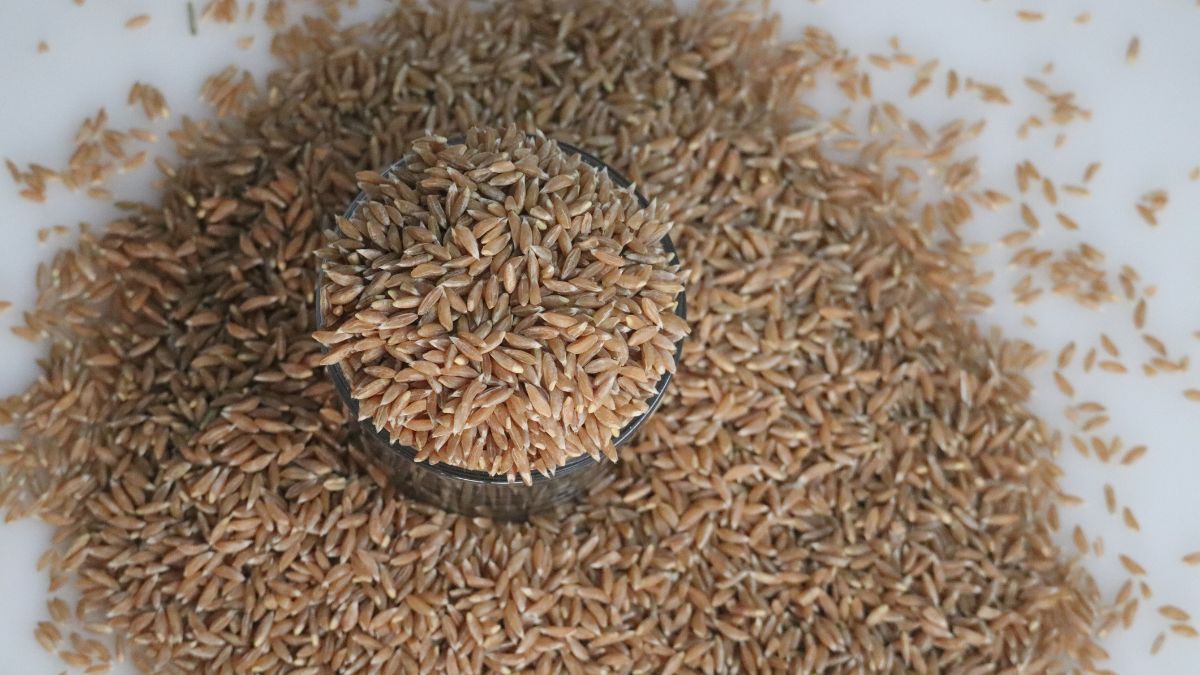
Once pushed to the margins by higher-yielding wheats, Khapli survived in pockets of peninsular India. Farmer persistence, climate pressures and renewed interest in ancient grains are now bringing emmer back into the conversation.
Ever noticed how some of the best things quietly vanish before anyone thinks to miss them? Emmer wheat, known across parts of Maharashtra and Karnataka as khapli, came surprisingly close to being one of those things. A grain that had been part of South Asian agriculture for thousands of years was pushed to a tiny corner of India’s wheat landscape over the course of a few decades. The story of how that happened, and how emmer is finding its way back, is worth knowing.
This isn’t just agricultural history. It connects directly to what ends up on your plate, how your roti is made, and why a grain that had become almost invisible outside the regions that continued to grow it is suddenly appearing in atta conversations again.
A Grain That Goes Back Thousands of Years
Emmer is one of the oldest cultivated wheats on earth. Its domestication goes back roughly 10,000 years to the Fertile Crescent, and archaeological evidence places emmer in South Asia thousands of years ago. Finds from Pre-Harappan and Harappan sites confirm that Triticum dicoccum was among the wheats grown on the subcontinent long before anything resembling modern wheat breeding existed.
ALSO READ | What Is Khapli Wheat… And Why Does Your Everyday Roti Deserve It?
Over time, emmer remained particularly associated with parts of peninsular India. Even today, ICAR identifies Triticum dicoccum as one of the wheat species cultivated in the Peninsular Zone, alongside bread wheat and durum, with Maharashtra and Karnataka among its traditional growing regions.
In Maharashtra’s Kolhapur district, families like the Danawades kept cultivating Khapli across generations, not because they thought of themselves as preservationists, but because it was their wheat. Isakaso Danawade, a farmer from Jambhali village, told FoodUnfolded that his family had grown the grain for generations and that he continued with it through the 1970s even as most neighbouring farmers were moving to the newer high-yield wheats.
It was woven into how they farmed and how they cooked. Until, increasingly, it wasn’t what the market wanted.
What the Green Revolution Changed
The 1960s and 70s brought sweeping changes to Indian agriculture. Wheat sat at the centre of the Green Revolution, with semi-dwarf, high-yielding varieties such as Kalyan Sona and Sonalika transforming production. India’s coordinated wheat-improvement programme began in 1965, and the productivity gains that followed were enormously important to national food security.
For a lower-yielding, hulled wheat like emmer, though, the economics became increasingly difficult. The newer wheats produced substantially more grain and were easier to thresh and harvest at scale. Emmer’s grain remains enclosed in a hull after harvesting, which means an additional de-hulling step before it can be milled.
The Danawades’ experience captures the trade-off particularly well. Isakaso told FoodUnfolded that neighbouring farmers growing the newer varieties were reporting roughly 1,200–1,500 kilograms per acre, while his Khapli harvests could be three-quarters or even half of that. Those are one farmer’s local recollections rather than national yield data, but the broader yield gap is well established: modern bread-wheat varieties generally out-yield emmer, and lower yield remains one of the major constraints on its cultivation.
GOOD TO KNOW | Does a Khapli Roti Count as a Whole-Grain Food?
The economics were blunt. Smaller harvests and a more labour-intensive grain meant smaller returns unless someone was willing to pay more for Khapli. As markets shifted towards the newer wheats, emmer lost visibility as well as acreage. Farmers who kept growing it were, in some places, treated as though they had simply failed to move with the times.
Many stopped because, economically, it was difficult not to.
ⓘ Khapli’s Journey, at a Glance
Around 10,000 years ago: Emmer is domesticated in the Fertile Crescent.
By prehistoric South Asia: Archaeological evidence shows emmer being cultivated on the subcontinent.
1960s–70s: India’s Green Revolution rapidly expands higher-yielding semi-dwarf wheat varieties.
1970s onwards: Khapli becomes increasingly marginal, surviving in pockets of peninsular India and through farmers who continue cultivating it.
2015: ICAR releases Nilgiri Khapli (HW 1098), a modern semi-dwarf dicoccum variety bred for higher yield and rust resistance.
2019 onwards: Extreme weather in western Maharashtra renews attention around resilient traditional crops; the Danawades report new enquiries for Khapli seed after major floods.
Today: Consumer interest in whole grains, heritage crops and lower-input agriculture is giving Khapli a new market beyond its traditional growing regions.
The Floods That Changed the Conversation
Then the climate began making the old crop newly interesting.
Western Maharashtra suffered devastating flooding in 2019, including extensive damage across Kolhapur district. In Jambhali, the Danawades’ experience became part of a larger conversation about what traditional crop varieties might have to offer in increasingly unpredictable conditions.
Isakaso told FoodUnfolded that after severe floods damaged surrounding crops, more people began approaching him for Khapli seed in 2020. He described many modern wheat, sorghum and maize crops as failing badly during extreme conditions while traditional varieties, although affected too, were not always total losses.
That is an important farmer observation, but it should not be turned into the claim that all emmer is flood-proof. Waterlogging tolerance in wheat is complex and varies substantially between genotypes and environments; wheat as a crop can be seriously damaged by prolonged waterlogging.
What science does support more broadly is that emmer contains valuable genetic diversity for resistance to diseases and tolerance to several environmental stresses, which is one reason wheat breeders continue to study it. Cultivated emmer has also shown potential under low-input conditions, although performance varies enormously with variety and environment.
The lesson is therefore a little less cinematic than “the ancient wheat survived the flood while the modern wheat drowned”, but arguably more useful: efficiency and resilience are not always the same thing, and genetic diversity becomes more valuable when growing conditions become less predictable.
Why Emmer Is Built Differently
Part of what makes emmer interesting is its biology. It is a hulled tetraploid wheat, meaning the harvested grain remains tightly enclosed within protective husks and requires de-hulling before milling. That adds work after harvest, but hulled wheats also carry traits that have kept them interesting to researchers working on disease resistance, stress tolerance and low-input cultivation.
What we should not say is that Khapli has remained completely untouched by modern plant breeding. Traditional landraces certainly survive, but Indian researchers have continued improving dicoccum wheat too. In 2015, for instance, ICAR released Nilgiri Khapli (HW 1098), a semi-dwarf emmer variety with an average yield of 4.55 tonnes per hectare and resistance to stem, leaf and yellow rust.
That makes the story more interesting rather than less. Khapli’s future does not have to involve freezing the grain exactly as it existed centuries ago. Traditional diversity can be preserved while breeders also work on yield, disease resistance and suitability for present-day farms.
Emmer can also fit lower-input production systems. Research on cultivated emmer describes useful resistance to pests and diseases and tolerance to abiotic stresses, while more recent field work in Europe has found emmer particularly promising for organic and low-input farming, albeit often with a substantial yield penalty under favourable high-productivity conditions.
So there is a trade-off here, just as there was in the 1970s. Khapli can ask less of certain production systems, but it may also give fewer kilograms of grain back.
The Nutrition Story That Followed
At roughly the same time as farmers and agricultural researchers were reconsidering emmer’s resilience and genetic value, a different conversation was beginning in cities. People were looking more closely at whole grains, fibre, protein and the provenance of the atta they bought, and suddenly Khapli had an audience it had not enjoyed for decades.
Emmer can have a strong nutritional profile, particularly for protein and certain micronutrients and plant compounds, but ancient wheats are not nutritionally superior in every category by default. Composition varies substantially between varieties, growing conditions and processing methods. In large comparative datasets, for example, emmer has not consistently contained more fibre than modern wheat.
For Aashirvaad Namma Chakki 100% Khapli Atta specifically, current product information lists 14.7g protein per 100g and positions the flour as high in protein and fibre. Its fibre figure should be taken from the current approved pack or quality certificate before publication, because current Aashirvaad web materials show slightly different values in different places.
The gluten story also needs one firm clarification. Khapli contains gluten and should not be described as reliably “low-gluten”. Research comparing ancient wheats with modern bread wheat has found that emmer can contain as much or more total gluten, even though its gluten-protein composition differs. Anyone with coeliac disease should not eat it.
None of that diminishes the revival story. In fact, it makes it cleaner. Khapli does not need to be easier for every stomach, dramatically higher in every nutrient or metabolically magical to be worth rediscovering. It is a whole-grain wheat with its own nutritional and culinary character, and demand for that difference has helped create a market for farmers who once had very little reason to keep growing it.
From Field to Flour: What Quality Looks Like Now
One reason Khapli can return to kitchens more easily today is that processing and quality control have become much more standardised than the romantic idea of an “ancient grain” sometimes suggests.
Milling matters because it changes flour behaviour. Research comparing wheat flours produced by different milling systems has found differences in damaged starch, water absorption and chapati characteristics. Stone- and disc-milled atta can contain more damaged starch than roller-milled flour, and damaged starch is associated with greater water absorption; hydration, protein and milling all contribute to how the final dough and roti behave.
Aashirvaad Namma Chakki 100% Khapli Atta uses the brand’s Chakki Jaisi Pisai process and sources its wheat from farmers in Karnataka and Maharashtra. The company says each batch undergoes more than 40 quality checks and that packs carry a quality certificate traceable to the grain source and specific batch.
That does not mean stone-grinding magically makes every Khapli roti soft; dough hydration, resting and cooking still matter enormously. What standardised milling and testing can do is make an uncommon grain less unpredictable for the person opening the packet at home.
For a crop trying to move from heritage curiosity back towards everyday food, that matters.
A Quiet, Considered Return
Emmer’s comeback is not one single story. It is the Danawades holding on to seed when other farmers moved away. It is agricultural researchers continuing to work with dicoccum even after bread wheat became dominant. It is farmers reconsidering older crops as heat, rain and input costs make agriculture less predictable. And it is consumers in cities becoming curious about a grain their grandparents may have known perfectly well.
The return is still modest. Khapli remains a niche part of India’s wheat landscape, partly because the lower yield and extra de-hulling step that made it commercially inconvenient decades ago have not vanished.
But its survival means there is something to return to.
That it nearly vanished from many Indian fields is a loss we barely noticed while it was happening. That it didn’t — that farmers held on, that researchers kept breeding it, that climate pressures have made agricultural diversity feel urgent again, and that kitchens are rediscovering the grain — feels like something worth being glad about.
Not because every old crop is automatically better than a new one.
Because once agricultural diversity disappears, we do not get to decide later that we would quite like it back.
FAQs
What is Khapli wheat?
Khapli is an Indian name used for emmer wheat, Triticum dicoccum, a hulled tetraploid wheat with a long history of cultivation in South Asia and other parts of the world.
How old is emmer wheat?
Emmer was domesticated in the Fertile Crescent roughly 10,000 years ago. Archaeological evidence shows it was being cultivated in South Asia thousands of years ago.
Why did Khapli wheat decline in India?
Higher-yielding, easier-to-process wheat varieties expanded rapidly during and after the Green Revolution. Emmer’s lower yields and extra de-hulling requirements made it less economically attractive to many farmers.
Did the Green Revolution eliminate Khapli wheat?
No. Its cultivation shrank considerably, but it continued in parts of peninsular India, including Maharashtra and Karnataka, and dicoccum wheat is still cultivated and bred in India today.
Is Khapli wheat more climate-resilient?
Emmer carries useful genetic diversity for several biotic and abiotic stresses and can perform well in some low-input or stressful environments. It should not, however, be described as universally drought-proof or flood-proof; resilience varies by genotype and growing conditions.
Why is Khapli wheat becoming popular again?
Several forces are converging: renewed consumer interest in whole grains and heritage crops, concern about agricultural resilience and input costs, continuing research and breeding, and farmers maintaining traditional seed stocks that might otherwise have disappeared.
Is Khapli wheat gluten-free?
No. Khapli is wheat and contains gluten, so it is not suitable for people with coeliac disease.
Sources
- ICAR/IARI — Wheat and the Green Revolution in India
- ICAR — Nilgiri Khapli (HW 1098)
- ICAR-IIWBR — Peninsular wheat-growing zone
- FoodUnfolded/EIT Food — The Indian Farmers Battling Climate Change With 10,000-year-old Emmer Wheat
- Zaharieva et al. — Cultivated Emmer Wheat: An Old Crop With Promising Future
- Biró et al. (2025) — Return of Ancient Wheats, Emmer and Einkorn