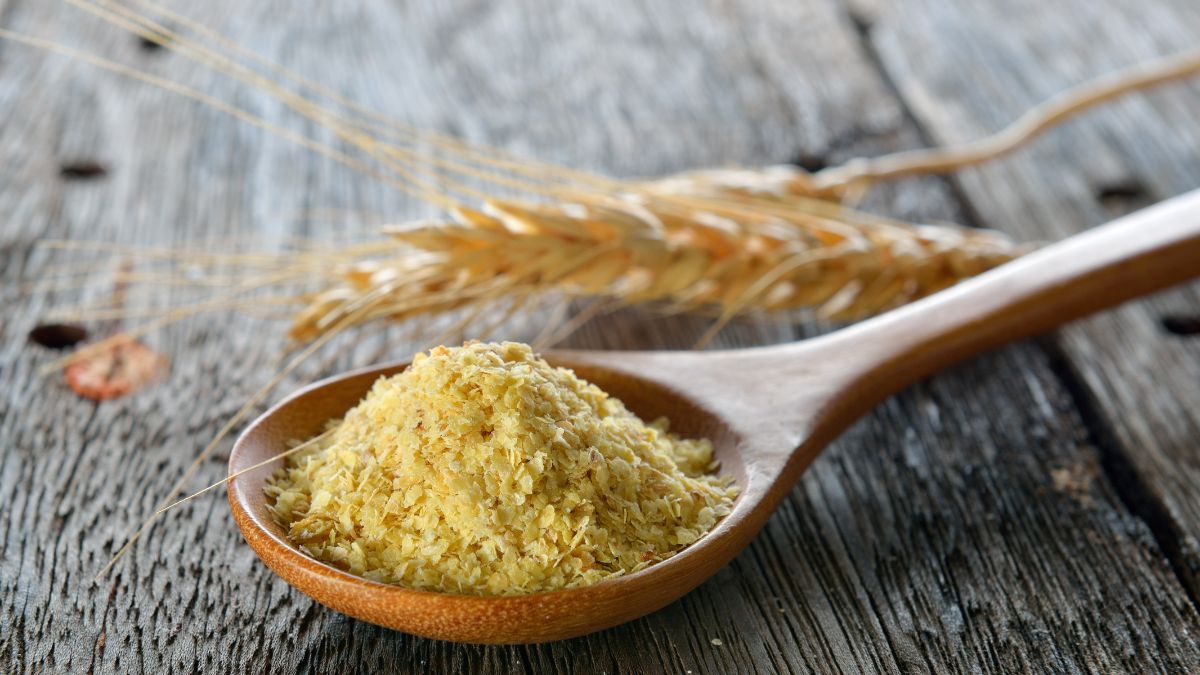
What Is Wheat Germ? What Happens When It Is Removed
Wheat germ is only a tiny part of the grain, but it carries a concentrated share of its vitamins, minerals, fats and plant compounds. Here’s what happens when refining removes it.
Table of Contents
Wheat germ is only a tiny part of the grain, but it carries a concentrated share of its vitamins, minerals, fats and plant compounds. Here’s what happens when refining removes it.
Most of us have grown up thinking of maida and atta as simply “refined” versus “whole” flour. One is white and smooth and one is brown and rough.
But that explanation skips something genuinely interesting: there are specific parts of the wheat grain that are removed during refining, and once you understand what those parts actually do, the difference between the two flours starts making a lot more sense than any comparison chart ever could.
If you are stuck with what you already know, this article may change how you think about the flour in your kitchen.
A single wheat grain looks like a tiny, oval capsule. Inside that capsule, nature has packed three very different parts, each with its own job.
The bran, a rough, fibrous outer layer, protects what lies inside. Then there is the endosperm, which makes up roughly 80–85% of the kernel and stores most of the grain’s starch along with much of its protein. Finally, tucked at one end of the grain, is the smallest part: the germ, or embryo. Wheat germ accounts for only around 2–3% of the kernel, but its chemical composition is very different from the much larger starchy endosperm.
The germ is the part that would grow into a new wheat plant if the seed were given the right conditions. Because of that biological job, it contains a concentrated mixture of protein, fats, vitamins, minerals, enzymes and other plant compounds needed by the developing seed.
For us, the point is simpler: when the germ is removed during refining, those compounds leave with it.
Wheat germ is particularly nutrient-dense for its size. Research on wheat composition puts germ at roughly 8–13% fat and around 25% protein, with comparatively high concentrations of minerals and a lipid fraction rich in tocopherols, including vitamin E. B vitamins such as thiamine are also concentrated in the bran and germ rather than the starchy centre of the grain.
That does not mean the germ contains most of the wheat kernel’s total protein — remember, it is only a tiny part of the grain — but gram for gram, it is protein-rich. It also contains unsaturated fats, magnesium, zinc, phosphorus and other micronutrients in varying amounts.
Vitamin E is particularly associated with the germ because the germ’s oils require protection from oxidation. Studies of wheat flour have found much higher vitamin E concentrations when the germ-containing fractions of the grain are retained.
Here is why that matters practically: when you eat a roti made from genuine whole-wheat atta, the flour contains the bran, germ and endosperm in the proportions required for it to count as whole grain. The grain has not been reduced to only its starchy centre. That is also the standard definition of whole wheat used in food guidance: the bran, germ and endosperm all remain part of the flour.
The wheat germ, for all its nutritional value, creates one very practical problem for flour manufacturers: it contains fat, and fat can go rancid.
Whole-wheat flour has poorer lipid stability than refined white flour because the germ and bran bring both fats and naturally occurring enzymes such as lipase into the flour. Research suggests whole-grain wheat flour generally has a shorter shelf life than white flour, although the actual storage period depends on milling, treatment, packaging, temperature and humidity rather than one fixed number of weeks.
EDITOR’S PICK | Khapli Wheat in India: How Emmer Disappeared…and Returned
Refining solves that problem rather neatly. During conventional white-flour milling, the bran and germ are separated away and the flour is produced predominantly from the endosperm. What remains is pale, fine and highly predictable in baking, with a longer storage life than flour containing all the original grain fractions.
That is exactly why refined wheat flour works so well for commercially produced breads, cakes, biscuits and pastry.
The trade-off is that refining also removes much of what was concentrated outside the endosperm. The bran takes most of the grain’s fibre with it; the germ and outer layers take substantial amounts of vitamin E, B vitamins, minerals and other plant compounds. Refined flour is not “nothing but starch” — the endosperm still contains protein as well as carbohydrate — but it contains considerably less fibre and lower concentrations of several micronutrients than the whole grain.
This is where the atta-versus-maida story becomes more useful than the old shorthand of “brown flour good, white flour bad”.
Whole wheat keeps the complete grain in the food. Refined flour does not.
That means whole-wheat atta naturally retains the fibre concentrated in the bran, along with the vitamins, minerals, fats and other compounds distributed through the bran and germ. Maida retains predominantly the endosperm.
The digestive consequences are slightly more nuanced than saying whole wheat always digests slowly and maida always creates a rapid glucose spike. Processing and physical structure matter enormously. A systematic review comparing whole-grain wheat with refined wheat found that finely ground wholemeal wheat did not consistently produce a significantly lower immediate glucose response than refined wheat, even though whole-grain diets overall have shown modest benefits for post-meal glucose and insulin responses across larger collections of trials.
In other words, keeping the bran and germ is nutritionally useful, but a grain does not become metabolically slow merely because the word whole appears on the packet. Particle size, milling, recipe, cooking method and the rest of the meal all matter.
Where the difference is much clearer is fibre and micronutrient retention. Whole wheat simply gives you more of the original grain.
No — and this distinction is useful.
Most of wheat’s dietary fibre is concentrated in the bran, not the germ. The germ contributes some fibre, but its more distinctive nutritional contribution comes from its protein, unsaturated fats, vitamin E, B vitamins, minerals and other plant compounds.
So when refining removes the bran and germ, two different things happen at once. You lose much of the fibre because the bran has gone, and you lose many of the germ-associated nutrients because the embryo has gone too.
It is the loss of both parts, rather than the germ acting alone, that makes refined flour nutritionally different from whole-wheat flour.
Traditional chakki-ground atta retains the whole wheat kernel, which is why the bran and germ remain part of the flour rather than being deliberately separated out to produce a refined white flour.
What needs a little myth-clearing is the idea that stone grinding is automatically nutritionally superior because it is “gentler” or produces less heat.
Stone mills can actually generate considerable heat during grinding. More importantly, research comparing whole-grain flours made by stone milling with whole-grain flours produced by roller milling and then properly recombined has found little or no overall compositional difference in protein, fibre, lipids and several bioactive compounds. The much bigger nutritional distinction is whether all parts of the grain ultimately remain in the flour.
That is worth remembering because “stoneground” and “whole grain” describe two different things. One tells you how the grain was milled. The other tells you whether the bran, germ and endosperm are still represented in the food.
For your everyday roti, the second question is particularly important.
If the germ contains unstable fats, you might reasonably wonder why the atta dabba is not turning rancid before you finish the packet.
Because rancidity is not instantaneous. It is influenced by oxygen, temperature, moisture, flour particle size, the activity of enzymes such as lipase and the way the flour is processed and stored. Whole-wheat flour is more susceptible to lipid deterioration than refined flour, but modern packaging, storage and processing can slow that process considerably.
It is still sensible to store whole-wheat atta tightly sealed, away from heat and moisture, and to notice if it develops an unusually stale, bitter or rancid smell.
The germ is nutritious. It is also biologically active. Those two facts are related.
Not at all.
Maida makes exceptional biscuits, flaky pastry and soft cakes in a way whole-wheat flour often cannot reproduce exactly. Removing the bran and germ changes how flour behaves as well as what it contains nutritionally; without coarse bran particles interrupting the dough structure, refined flour can produce particularly fine, light and tender textures.
There is room for that in a balanced kitchen.
The more useful question is which flour is doing most of the everyday work. Your daily roti is not the same dietary decision as the occasional festive biscuit. When a food is eaten repeatedly as a staple, what that staple contains becomes much more relevant than when it appears occasionally because somebody has made an excellent batch of nankhatai.
GOOD TO KNOW | Khapli Atta vs Dalia vs Whole Grain: What’s the Difference?
Understanding wheat germ is therefore really about understanding what was always inside the grain. The germ is tiny, but it carries a concentration of nutrients very different from the large, starchy endosperm around it. Refining removes it because doing so gives flour useful practical qualities — paler colour, finer texture, longer storage and predictable baking behaviour.
Those benefits are real. So is what gets left behind.
Wheat germ is the embryo of the wheat kernel — the small part that can grow into a new plant. It makes up only around 2–3% of the kernel but is rich in protein, unsaturated fats, vitamin E, B vitamins, minerals and other bioactive compounds.
No. They are two separate parts of the grain. Bran is the fibrous outer layer; germ is the small embryo located at one end of the kernel. Both are separated from much of the endosperm during the production of refined white flour.
Yes, genuine whole-wheat flour contains the bran, germ and endosperm in the proportions found in the original grain.
Refined wheat flour is produced mainly from the endosperm, with the bran and germ removed during milling. As a result, it contains much less of the nutrients concentrated in those grain fractions.
Removing the germ contributes to a paler, more stable flour with a longer shelf life and particular baking properties. Germ contains fats and active enzymes that make whole-grain flour more susceptible to rancidity during storage.
You can buy wheat germ as a separate food ingredient and add it to porridge, yoghurt, dough or baked foods. But adding germ alone does not turn maida back into whole-wheat flour because the bran — including much of the grain’s fibre — is still missing.
Not necessarily. If both flours genuinely retain the complete grain, studies have found their overall composition can be very similar. Stone and roller milling can produce differences in particle size and technological behaviour, but stone grinding by itself does not guarantee greater nutritional value.
For an everyday grain staple, whole-wheat atta retains substantially more of the original wheat kernel, including its fibre and many of the vitamins, minerals and plant compounds concentrated in the bran and germ. Maida still has useful culinary properties and can fit into a varied diet; the distinction is about what refining removes, not about labelling one flour forbidden.
Wheat germ is tiny enough to be almost invisible in the grain, which is probably why most of us never think about it. But it is the living embryo of the wheat kernel, carrying concentrated protein, unsaturated fats, vitamin E, B vitamins and minerals in preparation for a plant that may never get the chance to grow.
Whole-wheat atta keeps that germ as part of the flour, along with the fibre-rich bran and the starchy endosperm. Maida is made largely from the endosperm after the other two have been separated away. That does not make refined flour useless. It explains what refining is actually doing. Once you understand that, “whole versus refined” stops being a vague health label. You can quite literally see where the difference came from.
Disclaimer: This article provides general food and nutrition information and is not a substitute for personalised medical or dietary advice.