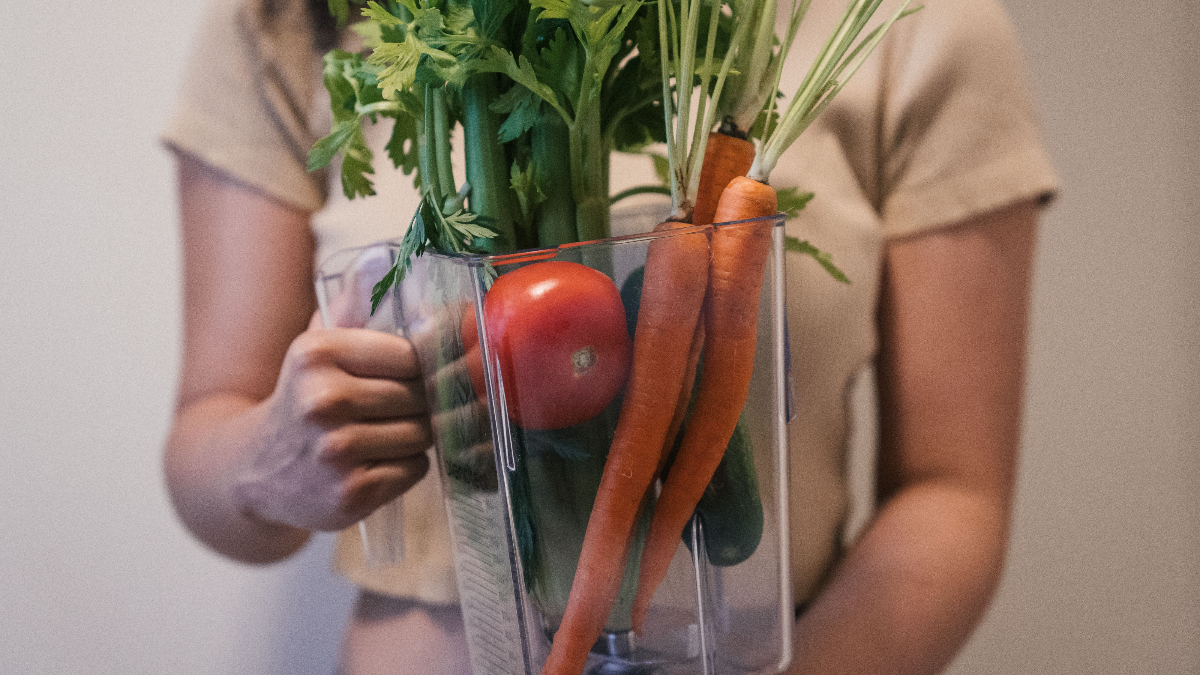
30 Plants a Week: A Nutritionist Explains
Is 30 plants a week a diet—or a useful habit? Poulomi Mukherjee unpacks the evidence, the counting rules and the everyday Indian foods that can widen your plate.
Table of Contents
‘30 plants a week’ is a way to notice how many different plant foods you eat, rather than a complete diet or a proven minimum for gut health. It grew out of observational microbiome research linking greater plant variety with greater microbial diversity. Whole grains, pulses, vegetables, fruit, nuts, seeds, herbs and spices all bring variety, but a spice pinch isn’t nutritionally equivalent to a serving of vegetables.
Not a diet, so there’s no inventor to credit in the usual sense. The idea grew out of the American Gut Project, launched in 2012 as a collaboration between the Earth Microbiome Project and the Human Food Project. Its first major findings were published in mSystems in 2018.
There’s no meal structure, no macronutrient target and no list of foods to avoid. Just a habit you can layer onto how you already eat: noticing your range of plant foods and making it a little wider.
It isn’t, and I think that’s worth clarifying before anything else, since it gets lumped in with eating patterns constantly. There’s no meal plan here, no macronutrient ratio, no list of foods to avoid. It’s a research finding turned into a number people can track: a wider variety of plant foods across a week was associated with a more diverse gut microbiome.
You could follow this principle inside a Mediterranean diet, a vegetarian diet or a fairly ordinary Indian home-cooked diet. It’s an add-on habit, not a competing philosophy. It also doesn’t replace eating enough, getting suitable protein or following any specific dietary advice you’ve been given.
From a large piece of research called the American Gut Project. By May 2017, it included microbial sequence data from 15,096 samples contributed by 11,336 people, mainly from the US, UK and Australia. Those weren’t all stool samples: the project included other body sites too, and different analyses used different subsets of participants.
It’s citizen science in the sense that ordinary volunteers contributed samples and information about their lives, including diet. The analysis and publication went through peer review. But participants selected themselves into the project, and the dietary information was self-reported. It wasn’t a controlled trial assigning people to eat a particular number of plants.
Honestly, the specific number deserves a bit more scrutiny than it usually gets. Researchers compared people reporting high and low plant variety, including those eating more than 30 types a week and those reporting ten or fewer. Greater variety was associated with greater gut microbial diversity. That doesn’t establish an exact threshold at which a benefit switches on.
The paper also used smaller groups for follow-up analyses. One comparison of microbial and molecular diversity involved 42 high-variety and 43 low-variety participants. Those numbers don’t describe every analysis in the wider project, and the total of more than 11,000 participants shouldn’t be treated as the sample size for every finding either.
So I’d treat 30 as a useful prompt, rather than a pass mark. The study doesn’t tell us that 29 is inadequate, or that moving from 15 to 20 achieves the same effect as moving from 20 to 30. The useful direction is more variety within what suits you, rather than chasing a precise, proven dose.
Different plants bring different mixtures of fibre and other compounds, and gut microbes differ in the structures they can break down. Think of the microbiome as a specialised ecosystem, rather than one food feeding one bacterium. A wider range of foods can provide a wider range of material for that ecosystem to work with.
Whole grains, for example, provide fibres such as arabinoxylans and beta-glucans in differing amounts. Polyphenols are another family of plant compounds that can interact with microbes; they aren’t themselves a type of carbohydrate fibre. The useful idea is a variety of substrates, not a one-to-one map in which a particular vegetable keeps only one bacterial species alive.
Microbial fermentation can produce short-chain fatty acids, including acetate, propionate and butyrate. Butyrate helps fuel the cells lining the colon and supports gut-barrier function. The American Gut analysis also linked higher plant variety with some putative SCFA-producing microbes, including Faecalibacterium prausnitzii.
That’s a plausible explanation for the interest in variety, rather than proof that counting plants will repair your gut lining or reduce inflammation. Nor does the study prove that many tiny portions always outperform adequate amounts of a smaller range. Variety and quantity both deserve a place on the plate.
One of the most useful findings was that a dietary label didn’t tell the whole story. In this study, self-reported categories such as vegan, vegetarian or omnivore didn’t explain microbiome patterns as clearly as the plant-variety information did.
A vegetarian eating a narrow rotation isn’t automatically eating a more varied plant diet than an omnivore who includes many different plants alongside meat or fish. But that’s a point about the limits of labels, not a prediction about which individual has the healthier gut. Microbial diversity is one measurement, not a complete health report.
It’s a different emphasis from advice that focuses mainly on which foods to cut. This habit asks you to notice what you could add.
Herbs and spices genuinely add variety, and that’s one of the practically useful details in an Indian kitchen. Coriander, mint, ginger, turmeric and cumin bring different plant compounds into the cooking. So do different dals, fruits, nuts and seeds.
But I wouldn’t give a pinch of turmeric the same nutritional job as a serving of vegetables. Some popular plant-point guides give herbs and spices a quarter-point rather than a full point. That’s a practical counting convention developed from the idea, not a dosing system validated by the original study.
For an everyday approach, count each distinct food once across the week and prioritise variety in the foods you eat in meaningful amounts. Eating moong on three days doesn’t make three new plants. Bread and roti made from the same wheat don’t become different foods for the tally just because their shapes have changed. Keep herbs and spices in the picture without using them to replace the main food groups.
An Indian kitchen can be well suited to this idea. A mixed dal, a sabzi, a coriander-and-coconut chutney, a tempering of mustard seeds and curry leaves, and rice or roti already give you a range of ingredients to notice. You may have more variety in your ordinary meals than the word ‘plants’ initially brings to mind.
But I’d stop short of claiming Indian diets automatically hit 30, or outperform a typical Western diet. That would need a direct comparison. Plenty of modern eating, in India and elsewhere, has drifted towards fewer, more repetitive ingredients. The useful advantage is the range of familiar foods available to build on, not a guaranteed score based on nationality.
Whole grains belong here too. Whole-grain Khapli wheat, including Aashirvaad Chakki 100% Khapli Atta, can contribute fibre and plant protein. Khapli is emmer wheat, also known as Triticum dicoccum. It’s one option among familiar grains, rather than something you need to buy to make the habit count. Changing flour can improve the quality of a staple without automatically earning another plant point.
Keep a simple running list for a week rather than planning one elaborate meal to hit the number all at once. Add a different dal, an extra vegetable in your sabzi, a new fruit or a spoon of seeds to something you already enjoy. It’s meant to be a habit you build on top of how you eat, not a new set of rules to follow instead.
A practical way to start: jot down foods as you eat them, rather than trying to remember everything on Sunday night. Use the first week to notice your current rotation. If you find 12 or 18 foods on the list, that’s a starting point, not a failed week.
If you’re increasing fibre from a low starting point, build up gradually and keep fluids adequate. Our guide to increasing fibre in an Indian diet gives you familiar places to start. Specific medical instructions take precedence over the count.
Not a meal plan, just an illustration of 30 different foods you could spread across a week. This example reaches 30 without relying on tiny amounts of herbs and spices to do most of the counting. It isn’t a claim that every household already eats this way, or needs to buy everything on the list.
| Food Group | Foods Across the Week | Number |
| Whole grains | Brown rice, wheat, jowar | 3 |
| Pulses and beans | Moong, chana, rajma, masoor, urad | 5 |
| Vegetables | Spinach, bhindi, cabbage, potato, tomato, onion, cauliflower, brinjal, carrot, pumpkin | 10 |
| Fruit | Banana, apple, orange, guava, papaya, pomegranate | 6 |
| Nuts and seeds | Almonds, cashews, peanuts, walnuts, sesame, flaxseed | 6 |
| Total | Different foods across five groups | 30 |
The wheat entry could be whole-wheat rotis made with regular atta or a whole-grain Khapli option such as Aashirvaad Chakki 100% Khapli Atta. Herbs and spices—coriander, mint, garlic, ginger, turmeric, cumin, mustard seeds, curry leaves, hing, black pepper and cardamom—can add further variety and flavour. You don’t need to use every one of them, or make the arithmetic the point of the meal.
| This Might Suit You | This Might Need More Planning |
| You already cook varied meals and want a simple way to notice that variety. | You’d find any kind of food tracking tedious, even a loose weekly tally. |
| You like small habits more than rigid diet rules. | You eat repetitively by preference, so small changes would be easier than a sudden overhaul. |
| You cook with pulses, grains, vegetables and spices already. | You want a structured meal plan rather than a self-directed habit. |
| You want something to layer onto an existing eating pattern. | You have a prescribed low-fibre, low-FODMAP or other therapeutic diet that needs individual guidance. |
There’s a fitting symmetry to ending here. Mediterranean, Nordic, Okinawan, Planetary Health and DASH each have their own food lists and their own evidence, some stronger than others, some contested. This last idea offers a habit you can carry into any of them.
Not a competition to pick the right named diet, or a claim that one number settles gut health. Just, genuinely, boringly, eating a wider variety of plants than you may already do, whichever diet you’re technically following—or not following—while you do it.
Disclaimer: This article provides general nutrition information and is not a personalised dietary plan or treatment for a digestive condition. If you have a medical condition, food allergy or intolerance, or have been prescribed a low-fibre, low-FODMAP or other therapeutic diet, follow your doctor’s or qualified dietitian’s advice before making substantial changes. Khapli is wheat and contains gluten, so it is unsuitable for people with coeliac disease or wheat allergy. If digestive symptoms continue, are severe or keep coming back, seek medical advice.
No. The target grew out of observational research, not a trial establishing an exact weekly requirement. A gradual increase from your current variety is a more useful starting point than treating 30 as a pass mark.
Vegetables, fruit, whole grains, pulses, beans, nuts, seeds, herbs and spices can all contribute. Focus on a range of foods you eat in meaningful amounts, rather than collecting points from tiny ingredients alone.
Counting guides differ; some use a quarter-point for herbs and spices. The original study didn’t validate a universal points system, and a pinch of spice isn’t nutritionally equivalent to a serving of vegetables.
For a simple weekly variety tally, count each food once. Moong eaten on Monday and Thursday is still one food; wheat used in both bread and roti doesn’t become two separate entries.
Increase fibre gradually, keep fluids adequate and choose foods you tolerate. Follow any prescribed therapeutic diet. If symptoms are severe, persist or keep returning, seek medical advice rather than pushing through to reach a number.