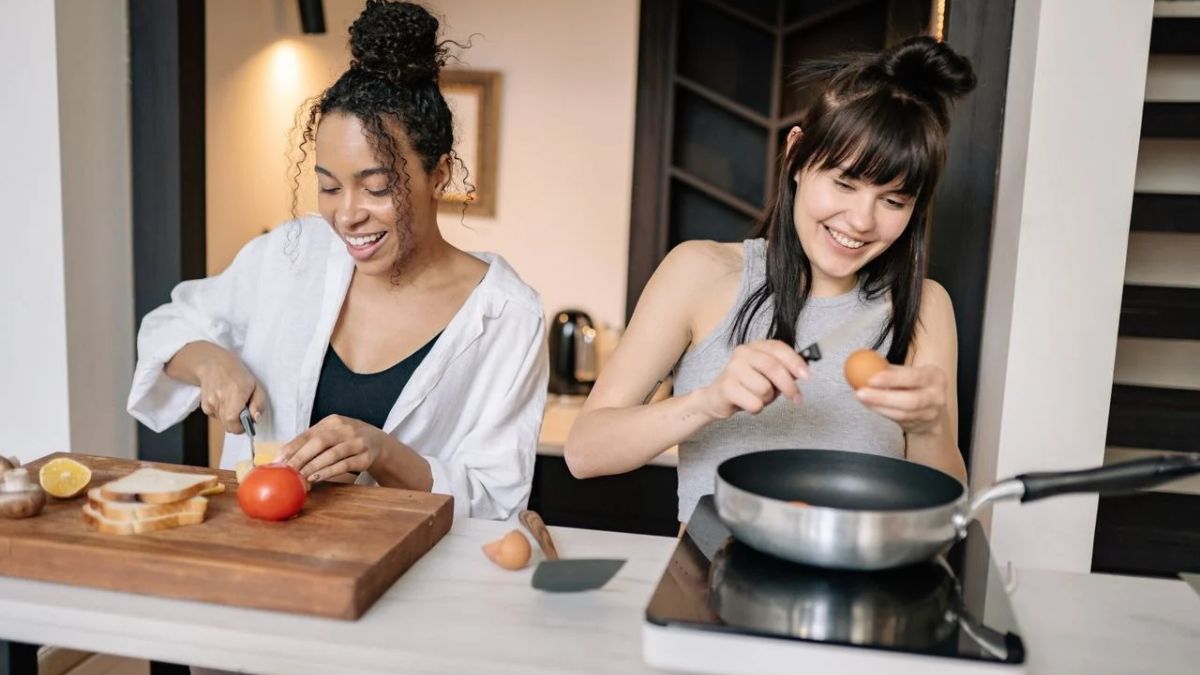
Hostel and PG Cooking With One Induction Plate: Easy, Balanced Meals
One burner, one pan and a small Indian pantry go further than instant noodles.
Table of Contents
You can cook Indian meals in a hostel or paying guest accommodation with one induction plate. Start with dishes such as vegetable moong dal khichdi, poha with peas and peanuts, besan chilla, dal with lauki or egg curry. Combine a staple, a protein source and vegetables, with fruit or curd alongside when available and suitable.
Use induction-compatible cookware with a flat, magnetic base that fits your appliance. A saucepan or deep pan with a lid handles many meals; a tawa makes rotis possible. Cook accompaniments in sequence rather than expecting everything to happen at once.
Keep a pantry of rice, atta, poha, dal, besan, spices and oil. Buy vegetables and perishables in quantities you can store safely. If you have no reliable fridge, cook for the meal you are about to eat. Do not save dal, rice, eggs or dairy dishes at room temperature for later.
Refrigerate perishable leftovers promptly, within two hours, or within one hour when the room is hotter than 32°C. Cool rice quickly, ideally within an hour, refrigerate it and eat within 24 hours. Reheat only once until steaming hot throughout.
Dried rajma needs proper soaking and boiling; a low simmer alone is not enough. Keep an eye on cooking rather than leaving it unattended.
Add fibre gradually through dal, vegetables and whole grains, and drink adequate fluid. Your budget, appetite, dietary needs and storage access matter more than following a perfect meal plan. Small, repeatable meals are a place to start with hostel cooking.
There is a particular moment in hostel life when the excitement of moving in collides with the reality of making dinner. Nobody asks if you want more dal. The kitchen is tiny, the budget is tight, the nearest decent meal is a fifteen-minute walk or a thirty-minute delivery away, and your entire cooking equipment is one induction plate.
It can be a surprisingly capable little kitchen, with meals that fit the space, equipment and time you actually have.
Choose recipes that use the same vessel from start to finish. A saucepan handles moong dal with spinach, rasam or egg curry. A deep pan with a lid can be your rice cooker, sabzi pan and noodle station on different days.
Use induction-compatible cookware with a flat, magnetic base sized for your appliance. A magnet sticking to the base is a useful check; follow your cooktop’s instructions. A suitable flat tawa makes rotis and chillas possible too.
This cuts down on washing up, which matters when six people share one sink. For rice with a curry, cook in sequence and serve promptly. Allow time for both.
Cook an extra portion only with reliable fridge space and prompt cooling and storage. Without that, cook for immediate eating.
Start with cumin, turmeric, chilli powder, coriander powder and perhaps mustard seeds, plus salt and cooking oil.
Build around rice, atta, poha, dalia, dal, besan and peanuts, with manageable amounts of vegetables. Keep dried rajma or chana for days when you have preparation time.
Choose a whole-grain atta that fits your budget. Aashirvaad’s Khapli atta is one option; ordinary whole wheat atta also contributes fibre. No particular flour is essential.
Whole onions, potatoes, carrots, cabbage and gourds can be practical choices; buy delicate greens in smaller amounts. Refrigerate cut produce. Keep frozen peas only with reliable freezer storage.
Buy chilled foods such as paneer and curd only when you can refrigerate them as directed or eat them promptly after purchase. Follow egg-storage instructions too.
Besan with salt, turmeric and grated vegetables becomes a chilla. Or make besan pithla, the Maharashtrian dish of seasoned gram flour cooked thick, with roti or rice.
If you eat eggs, try bhurji, egg curry or a masala omelette. Egg fried rice works if the rice was cooled and refrigerated safely.
Let vegetables become part of the main dish: lauki in dal, spinach in khichdi, carrot and beans in pulao or peas in upma. Cook vegetables until just tender to keep their texture and colour.
An assignment deadline can turn biscuits into breakfast and namkeen into lunch. The occasional convenience meal is no disaster. A few dependable meals make it easier to eat regularly.
Try a staple, a protein source and vegetables, with fruit or curd alongside when suitable. Dal, besan, eggs, paneer and curd contribute protein; choose according to your needs and storage access.
WHO describes adequacy, balance, moderation and diversity as the core principles of a healthy diet. ICMR-NIN’s daily plate framework draws on at least eight food groups across the day, with vegetables, fruit, leafy greens, roots and tubers forming essentially half the daily plate. It also recommends at least half of cereals and other grains as whole grains.
Aim for variety across the day rather than every food group in every bowl.
| Day | Main dish | What to add |
| Monday | Moong dal khichdi with spinach | Curd, if safely stored, or a seasonal fruit |
| Tuesday | Vegetable pulao with peas | Cucumber raita, made with safely chilled curd |
| Wednesday | Egg curry or besan pithla | Rice or roti, cooked in sequence; cucumber |
| Thursday | Poha with peas and peanuts | A seasonal fruit; curd or an egg if wanted |
| Friday | Dal with lauki | Rice or roti, cooked in sequence |
| Saturday | Besan chilla with grated vegetables | Curd if available and suitable |
| Sunday | Properly cooked rajma or chana | Rice, cooked separately, and freshly prepared onion salad |
Adjust amounts to your appetite. Without curd storage, buy a single portion for immediate eating or choose another protein. Khichdi avoids cooking an accompaniment separately.
Raw or undercooked kidney beans contain a toxin that can cause vomiting and diarrhoea. The FDA’s consumer guidance advises soaking dried kidney beans for at least five hours, discarding the soaking water, then boiling in fresh water for at least thirty minutes. Continue cooking until completely tender.
Do not substitute a low simmer or slow-cooker setting for that boiling step. Commercially cooked, canned beans are an alternative; follow their instructions. Cook chana until completely tender too. Stay nearby while food cooks.
Warm conditions can increase storage risks. Handling, water quality and refrigeration matter too.
Refrigerate perishable leftovers promptly in small, shallow containers, within two hours. If the surrounding temperature is above 32°C, use a one-hour limit. Discard perishable food left out beyond those limits; reheating is not a way to rescue unsafe storage.
WHO advises keeping food hot above 60°C or refrigerated below 5°C. An unheated pan, a switched-off cooktop or a warm shared fridge does not meet those conditions.
Use safely refrigerated leftovers within 48 hours, or sooner if the label requires. Rice needs a shorter window: cool it quickly, ideally within one hour, refrigerate it and eat within 24 hours. Reheat once until steaming hot throughout. This includes rice-based pulao and khichdi.
Without a reliable fridge, cook and eat promptly. Do not keep perishable cooked food in the room for later, even on the same day. Smell and appearance cannot establish safety.
When ordering in, check FSSAI’s Hygiene Rating where available. Its scale runs from one star, requiring urgent improvement, to five stars, excellent. It provides information about assessed hygiene standards; it is not a guarantee for every meal.
Dal, vegetables, fruit and whole-grain rotis or dalia add fibre without making cooking complicated.
WHO recommends at least 25g of naturally occurring dietary fibre daily for adults. That is general population guidance; medical needs can differ. Increase fibre gradually rather than trying to change everything in a day, because a sudden increase can cause gas and bloating.
Keep a bottle where you study. Around six to eight cups or glasses of fluid a day is an NHS general guide, not a universal minimum. Water and other drinks count, and food supplies water too. Needs vary with heat, activity and health.
Adequate fluid helps fibre work properly. Follow any prescribed fluid restriction, and check with your clinician before increasing fibre if you have been advised to follow a low-fibre diet.
Think one meal ahead. Safely refrigerated dal can become the next meal’s wrap filling. Without a fridge, tomorrow’s plan can be an unopened packet of besan, a whole onion and a chilla cooked fresh.
Start with a meal you like enough to make again. That is a useful skill to take beyond the hostel.
Persistent or recurring digestive symptoms need assessment rather than repeated food changes. Blood in stool, unexplained weight loss, persistent abdominal pain or difficulty swallowing need prompt medical attention. Seek urgent help for severe abdominal pain, especially with vomiting or an inability to pass stool or gas. Repeated vomiting or diarrhoea, inability to keep fluids down or signs of dehydration also need medical advice.
This article provides general cooking, food-safety and nutrition information for adults, not personalised medical advice. Adjust meals for allergies and prescribed dietary, fibre or fluid restrictions. Follow appliance manuals, food labels and reliable recipe instructions. Seek medical advice for persistent or severe digestive symptoms or suspected food poisoning.
Choose simple dishes such as vegetable moong dal khichdi, besan chilla or dal with lauki. Include a staple, a protein source and vegetables, and cook only what you can eat or refrigerate safely.
Dal, khichdi, pulao, poha, upma, egg curry, bhurji, pithla and sabzis all work in suitable cookware. Use an induction-compatible tawa for rotis or chillas. Cook accompaniments in sequence.
Freshly cooked khichdi, vegetable poha, pithla or besan chilla can work. Keep dry staples and buy manageable amounts of whole produce. Avoid saving perishable cooked food at room temperature for later.
Refrigerate perishable food within two hours, or one hour above 32°C. These are outer limits, not targets for leaving food out. Cool rice quickly, ideally within one hour. Without safe refrigeration, cook for immediate eating.
Use a mix of dal, vegetables, fruit and whole grains. WHO recommends at least 25g of naturally occurring fibre daily for adults, but individual needs vary. Build up gradually and drink adequate fluid.
Around six to eight cups or glasses of total fluid is a general guide. Needs may rise in hot conditions or with activity. Use safe drinking water and follow medical advice if your fluid intake is restricted.