Kathal, Echor, Chakka: Raw vs Ripe Jackfruit for Your Gut
A nutritionist compares raw and ripe jackfruit, shares how her family enjoys it, and explains its fibre, seeds, protein limits and flour research.
Table of Contents
Raw and ripe jackfruit are almost two different foods in the kitchen. Raw jackfruit—meaning the unripe fruit, cooked as a vegetable—is far less sweet and works like a sabzi in a meal. The Indian Food Composition Tables list it as higher in fibre and lower in available carbohydrate than ripe jackfruit, weight for weight. Ripe jackfruit is a sweet fruit that also provides fibre. Neither flesh is a concentrated protein source, despite raw jackfruit’s reputation as a meat substitute. The seeds are a nutritious bonus, as long as they’re cooked. And the much-publicised flour needs a closer look at the research behind it.
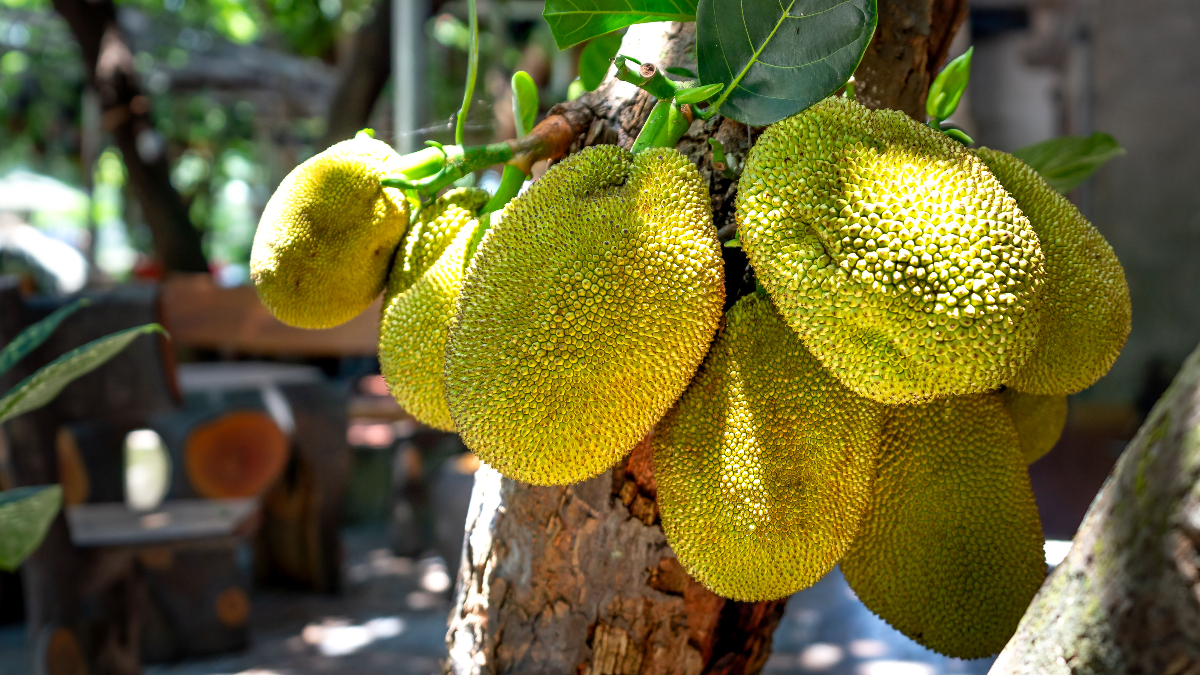
Few foods lead a double life as completely as jackfruit. Picked green, it’s cooked as a vegetable: kathal ki sabzi across the North, echorer dalna in Bengal, where raw jackfruit is so meaty in texture it’s sometimes called gachh-pantha, the tree goat. Left to ripen, the same fruit becomes intensely sweet and fragrant, eaten fresh, turned into chakka varatti in Kerala, or folded into sweet idlis and payasam along the Konkan and Karnataka coast.
It matters culturally too. In Tamil tradition, jackfruit is one of the mukkani, the three fruits, alongside mango and banana. Kerala declared it its official state fruit in 2018. And because the two stages are so different, the gut-health story is really two stories.
Jackfruit is something we in South India enjoy in various forms during the season. I personally like to eat ripe jackfruit as a fruit, but in my house we relish it as palya (sabzi), curry and chips. We don’t discard the seeds; we either boil or roast them and eat them as a snack.
Picked before it ripens, jackfruit is much less sweet. That makes it comfortable in savoury dishes alongside dal and roti or rice. Its texture is part of the appeal: firm, fibrous and able to soak up masala the way a good sabzi should. An echorer dalna can hold its own as the centrepiece of a vegetarian meal.
For your gut, raw jackfruit brings fibre and another plant to the plate. Variety matters more than looking to any single food for all the answers, and a seasonal vegetable you might eat only a few times a year is a welcome addition. A kathal sabzi or echorer dalna is a good, filling dish in its season. If you’re working on getting more fibre into everyday Indian meals, this is one way to add variety.
| Nutrient | Amount |
| Energy | 110 kJ (about 26 kcal) |
| Protein | 1.98 g |
| Fat | 0.35 g |
| Available carbohydrate | 3.48 g |
| Total dietary fibre | 7.69 g |
| Water | 85.52 g |
Source: ICMR–NIN, Indian Food Composition Tables 2017, entry D051. Values are for 100 g of edible unripe flesh before cooking. “Available carbohydrate” excludes fibre. Variety, maturity and cooking affect composition; a finished sabzi will have different values.
As jackfruit ripens, sugars accumulate and it becomes sweet and fragrant. Most of its available carbohydrate is sugar, but it also provides fibre and some vitamin C. That doesn’t make it a food to avoid. It’s a seasonal fruit with real pleasure attached, and the naturally occurring sugars in fresh whole fruit are not included in WHO’s definition of free sugars.
It does make portion worth thinking about. Many households have long treated ripe jackfruit as something to enjoy in moderation, a few bulbs rather than a bowlful. Bulbs vary in size, so that’s a practical image rather than a fixed serving rule. If a large amount leaves you bloated or heavy, try a smaller portion and notice what suits you.
| Nutrient | Amount |
| Energy | 302 kJ (about 72 kcal) |
| Protein | 2.74 g |
| Fat | 0.15 g |
| Available carbohydrate | 14.01 g |
| Total dietary fibre | 3.62 g |
| Water | 78.56 g |
Source: ICMR–NIN, Indian Food Composition Tables 2017, entry E030. Values are for 100 g of edible ripe flesh, excluding seeds, before cooking or adding other ingredients.
| Feature | Raw or green jackfruit | Ripe jackfruit |
| Eaten as | A vegetable: sabzi, dalna, biryani, cutlets | A fruit: fresh, in payasam, varatti, sweet idli |
| Sweetness | Barely sweet | Very sweet and fragrant |
| Available carbohydrate per 100 g | 3.48 g in the IFCT entry | 14.01 g in the IFCT entry |
| Fibre per 100 g | 7.69 g | 3.62 g |
| Role on the plate | A cooked vegetable dish in a meal | A fruit or an ingredient in dessert |
| Protein | Not a concentrated source | Not a concentrated source |
| Worth knowing | Sticky sap when cutting; cook before eating | Portion size and individual tolerance matter |
The nutrient comparison uses uncooked edible portions from IFCT 2017; it does not compare two finished dishes.
Raw jackfruit has become famous abroad as a plant-based substitute for pulled meat, and its shredded texture works for that. It’s worth being clear about what it substitutes for, though. Jackfruit doesn’t replace the protein you would get from meat, paneer or dal, so a jackfruit “pulled pork” or kathal biryani needs another protein source in the meal.
The Lucknowi-style kathal biryani is a wonderful dish in its own right. Just pair it with dal, raita or another protein source if it’s the centre of a meal. If you’re choosing between other vegetarian proteins, this tofu and paneer comparison looks at what each brings to the plate.
Ripe jackfruit has more available carbohydrate than raw jackfruit in the IFCT entries above. The difference helps explain interest in green jackfruit products. Glycaemic index, or GI, needs more care: it measures how a carbohydrate-containing food affects blood glucose and cannot be read off its carbohydrate content. Ripeness and preparation can affect GI. A 2026 laboratory study estimated lower GI in immature than in more mature jackfruit samples, but those were not GI measurements in people. A fixed raw-versus-ripe GI ranking would go beyond that evidence.
Green jackfruit flour is made by drying and milling unripe jackfruit. In a 2021 randomised, double-blind, placebo-controlled trial in India, 40 adults with type 2 diabetes took 30 g a day of a specific flour, replacing an equal volume of rice or wheat flour, for 12 weeks. They continued their medicines. Average HbA1c, a measure of longer-term blood sugar, fell by 0.25 percentage points, compared with a rise of 0.02 points in the control group.
It’s worth reading that honestly. It was a small, manufacturer-funded study of one commercial product, with an inventor and company executive among the authors. The effect was modest and cannot be assumed for other flours or fresh jackfruit. If you’re managing diabetes, discuss substitutions with your doctor or dietitian and keep following prescribed treatment.
Jackfruit seeds are one of the best parts of the fruit and one of the most often discarded. In Kerala and across the South, chakkakuru is boiled, roasted or cooked into curries and thorans, and it has a pleasant, nutty, chestnut-like texture. The seeds are a substantial food in their own right, with starch, fibre and more protein per 100 g than the flesh in the IFCT entries.
One practical rule: cook them thoroughly, until tender. Raw jackfruit seeds contain compounds such as trypsin inhibitors that can interfere with protein digestion. Research on processing jackfruit seeds found that boiling reduced these inhibitors, while boiling and roasting reduced tannins. Enjoy them boiled, roasted or cooked into a dish.
| Nutrient | Amount |
| Energy | 322 kJ (about 77 kcal) |
| Protein | 5.79 g |
| Fat | 0.44 g |
| Available carbohydrate | 11.81 g |
| Total dietary fibre | 8.63 g |
| Water | 72.32 g |
Source: ICMR–NIN, Indian Food Composition Tables 2017, entry D052. Values are for 100 g of edible mature seeds before cooking, not a recommendation to eat them raw. Cooking changes their water content and values per 100 g.
Jackfruit is a warm-weather crop, often available in spring and summer, though the season varies by region and variety. Outside that season, it turns up in other forms. A few practical notes:
For cut fruit and cooked dishes, refrigerate promptly at 4°C or below—within two hours, or one hour when the temperature is above 32°C. If food has been left out beyond those limits, discard it. The same habits apply to storing other cooked Indian foods safely.
Anyone who has cut a raw jackfruit knows the sap: thick, sticky and determined to cling to hands and knives. A little cooking oil on clean hands and the knife blade can help; keep the handle dry and your grip secure. Work on a clean, stable, food-safe board or tray. Many households buy raw jackfruit already cut from the vendor for exactly this reason.
A small note on allergy: reactions to jackfruit have been reported, including in people with latex or birch-pollen allergy. That doesn’t mean everyone with those allergies will react. If you have one and haven’t eaten jackfruit before, check with your doctor or allergist before trying it. Breathing difficulty or swelling of the mouth or throat after eating needs urgent medical help.
Raw jackfruit is a seasonal vegetable worth making room for: filling, fibrous and one more plant in a varied week. Ripe jackfruit is a sweet, fragrant fruit to enjoy in portions that suit you. Neither flesh is a concentrated protein source, the seeds deserve rescuing from the bin, and the flour research deserves careful reading. Enjoy both in their season, the way so many Indian kitchens have long done.
Disclaimer: This article provides general information and is not a substitute for personalised medical advice, diagnosis or treatment. If you’re managing diabetes, food allergies or another medical condition, follow your doctor’s or registered dietitian’s guidance on portions and dietary changes. Do not change prescribed medication because of claims about jackfruit or jackfruit flour. If digestive symptoms continue, are severe, or keep coming back, speak to a doctor.
They do different jobs. Raw jackfruit, cooked as a vegetable, is high in fibre and contains more fibre per 100 g than ripe jackfruit in IFCT 2017. Ripe jackfruit is a sweet fruit that also provides fibre. Both can fit a varied diet; portion and preparation matter.
Jackfruit can fit an individual diabetes meal plan. Ripe jackfruit has more available carbohydrate per 100 g than raw jackfruit in IFCT, and both contribute carbohydrate. Ask your doctor or dietitian about a portion that fits your meals and treatment; jackfruit is not a replacement for diabetes medication.
A small 2021 trial found a modest HbA1c reduction when a specific green jackfruit flour replaced an equal volume of rice or wheat flour. It was manufacturer-funded, and the result cannot be assumed for every flour. Keep following prescribed diabetes treatment.
Raw jackfruit works well for a shredded, meaty texture, but it doesn’t provide comparable protein. Pair jackfruit dishes with dal, paneer, tofu or another protein source.
Yes, and they provide fibre, starch and some protein. Always cook them thoroughly until tender, by boiling, roasting or cooking them into a dish. Don’t eat them raw.