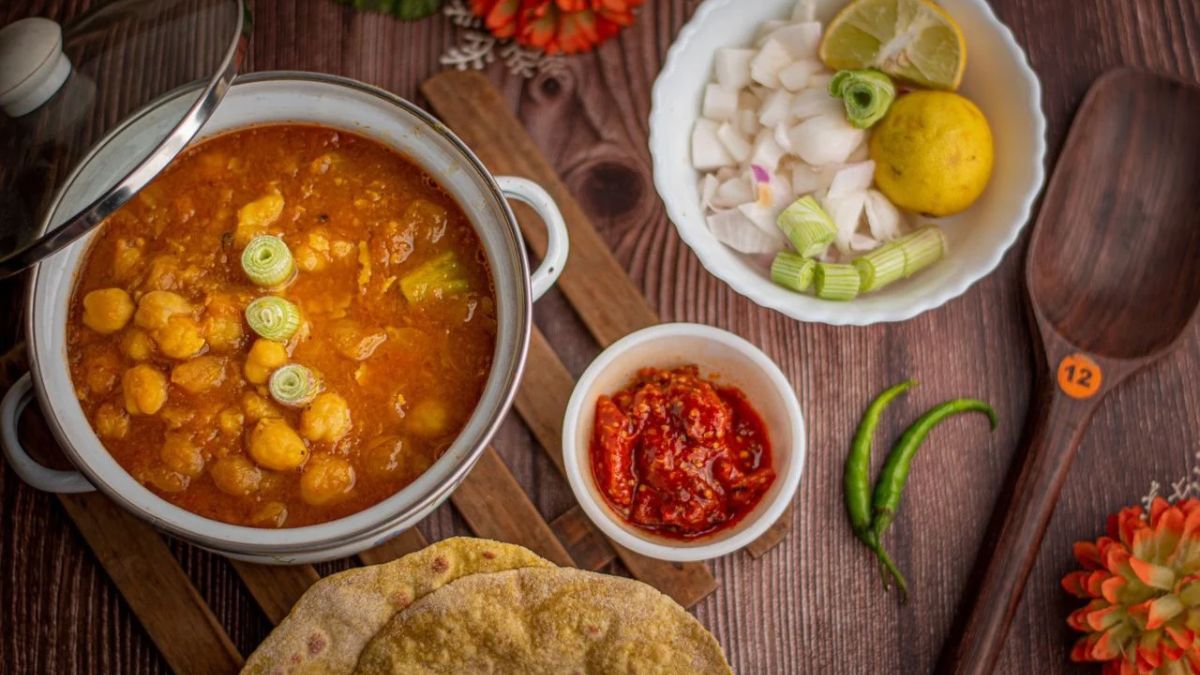
Indian Side Dishes: What Chutney, Pickle and Salad Add to Your Plate
The fibre sitting on the side of your plate.
Table of Contents
Chutneys and salads can add vegetables, herbs, pulses, nuts and seeds to an everyday meal, bringing variety and some fibre. Pickle has a different role: enjoy it as a small flavour accent, rather than counting it as your vegetable serving or a digestive remedy.
For higher fibre side dishes, start with a salad containing thoroughly cooked kala chana or moong, mixed vegetables and sesame or peanuts. A coriander, tomato, amla or seed chutney can contribute too, but the amount depends on the ingredients and how much you eat. A nutrient value for 100g of an ingredient does not describe a spoonful of chutney. Dry chana figures also cannot be applied directly to cooked salad.
Keep the main meal in view. Whole grains, dal, sabzi and fruit remain useful sources of fibre. Sides complement them; they do not have to do the whole job. Add fibre gradually and drink adequate fluid, especially if your diet has been low in fibre.
Many pickles contain added salt and oil, and some chutneys contain added sugar. A small spoonful can fit a meal for many people; follow medical advice if you need to limit salt. Fermented does not automatically mean probiotic, and not every pickle contains live cultures.
Wash produce using safe running water, keep fresh sides chilled and cook sprouts thoroughly. Children, pregnant people, older adults and people with weakened immunity should avoid raw sprouts. For children, fruit and vegetable amounts vary with age. Choose suitable portions, textures and ingredients your household enjoys.
Most Indian households will debate the dal, worry about whether the rotis are soft enough and discuss the rice, then treat the bowl of chutney or the heap of sliced cucumber as decoration. It deserves a second look. The sides are where a meal can quietly pick up extra vegetables, herbs, seeds and pulses.
They contribute in different ways. A mixed salad can provide a substantial helping of plant foods. Chutney usually comes by the spoonful. Pickle is a strongly flavoured accent. None needs to replace the dal or sabzi to earn a place on the plate.
The Indian Food Composition Tables, 2017 list the following values for specific ingredients and food states:
| Ingredient and basis | Dietary fibre per 100g edible portion | IFCT entry |
| Whole Bengal gram, or chana, dry and uncooked | 25.22g | B002 |
| White sesame seeds, as listed in IFCT | 16.99g | H011 |
| White-flesh guava, raw | 8.59g | E028 |
| Amla, or Indian gooseberry, raw | 7.75g | E021 |
These are ingredient values, not figures for finished chutneys or salads. The chana entry is for dry, uncooked whole Bengal gram; do not apply it directly to 100g of cooked kala chana salad. Soaking and cooking change the food’s water content and weight.
The sesame figure refers to the named white-seed entry, rather than every hulled, roasted or packaged sesame product. Check the label for the product you use.
A chutney’s fibre contribution depends on its recipe, the amount of each ingredient and the portion served. A spoonful of amla chutney is not a spoonful of pure amla. Several small additions can contribute across a day, but the numbers should stay attached to the food they describe.
Different plant foods provide different mixtures of fibre and other nutrients. There is no need to find one superior ingredient or make the same chutney every day.
WHO describes adequacy, balance, moderation and diversity as the core principles of a healthy diet. ICMR-NIN’s daily plate framework draws on at least eight food groups across the day, with vegetables, fruit, leafy greens, roots and tubers forming essentially half the daily plate.
Its 2,000 kcal reference plate includes about 400g of vegetables and 100g of fruit. That is a reference pattern, not a personal prescription for every age, appetite or medical situation. A small condiment portion does not replace those larger food contributions.
For adults, WHO recommends at least 25g of naturally occurring dietary fibre daily. Whole grains, pulses, vegetables and fruit can contribute alongside nuts and seeds. Chutney and salad give you more ways to include them.
A coriander-mint chutney can bring together coriander, mint, chilli, lemon, ginger and roasted cumin. Coconut, peanut, sesame, tomato, amla and raw mango chutneys each offer a different mix. A spoonful is a familiar way of adding flavour and variety without cooking another main dish.
There is a practical advantage too. Someone who dislikes a large serving of vegetables may enjoy tomato-onion chutney with dosa. Thoroughly cooked moong can be tossed with a coriander-peanut dressing. A familiar dip can offer another way to try an ingredient, although it will not work for everyone.
For children, aim for a variety of fruit and vegetables in amounts and textures suited to their age. A small dip can sit alongside other vegetables, with milder seasoning if preferred.
Recipes matter. Sweet fruit chutneys may contain added sugar, and generous salt or tempering oil changes what a serving contributes. Enjoy them as condiments rather than assuming every chutney is a high-fibre food.
Mango, lime, amla, carrot, chilli, gongura, garlic and mixed-vegetable pickles are all part of the Indian table. They can make a simple meal more appealing, but many contain substantial added salt and oil.
A small spoonful can fit alongside a meal for many people. It does not count as an unlimited helping of vegetables. If you have been advised to limit salt, follow that advice and check packaged products’ labels.
Fermented does not automatically mean probiotic. As the International Scientific Association for Probiotics and Prebiotics explains, a probiotic needs live, identified microorganisms with evidence of a health benefit in an adequate amount. Fermentation alone does not establish that.
Pickle recipes and processing vary, and not every pickle contains live cultures when eaten. Enjoy it for flavour; do not assume it treats constipation, bloating or another digestive problem.
Think grated carrot with sesame, cabbage with coriander and peanuts, cooked beetroot with coconut, radish with dill, thoroughly cooked moong with tomato and lime, or boiled kala chana tossed with onion and coriander.
Adding cooked legumes can increase the fibre contribution compared with a few cucumber slices. The amount still depends on the ingredients and portion. Cook chana and other pulses until completely tender before adding them to a salad.
Raw vegetables are one option. Cooked vegetables count too, and you can choose a mix that suits your taste and tolerance.
Regional sides already offer plenty of ideas: Maharashtrian cucumber koshimbir, Gujarati papaya sambharo or a South Indian cabbage poriyal with coconut. These are different preparations, rather than interchangeable names for raw salad, but each offers another way to put vegetables alongside a meal.
Let the side follow what you are already cooking.
| If the meal is | Try this alongside |
| Idli or dosa | Coconut-peanut chutney or tomato chutney |
| Dal and rice | Cucumber, carrot and roasted-peanut salad |
| Parathas | Grated radish with coriander and lemon, plus plain curd if suitable |
| Millet rotis | Cooked brinjal chutney or cabbage poriyal |
Keep the main meal in view. Whole-grain rotis, dal, sabzi and fruit can all contribute fibre. If you prefer Aashirvaad’s Khapli atta, it is one option; ordinary whole wheat atta contributes fibre too. Choose according to taste, suitability and budget. No particular atta is required for a varied diet.
If you are increasing fibre, build up gradually over a few weeks. A sudden increase can cause gas and bloating. Drink adequate fluid, and follow any prescribed fluid restriction. If a clinician has advised a low-fibre diet, check before adding more pulses, seeds or raw vegetables.
If digestive symptoms persist, are severe or keep returning, speak to a doctor rather than repeatedly changing sides or cutting out foods. A dietitian can help adapt meals for a medical condition, a prescribed diet or a child’s individual needs.
This article provides general food and nutrition information, not personalised medical advice. Ingredient composition values are not measurements of finished dishes or individual servings. Adjust foods and portions for allergies, age and medical needs, and follow prescribed salt, fibre or fluid restrictions. For persistent or severe digestive symptoms, seek medical assessment. Children and people with medical conditions may need individual guidance from a qualified professional.
Chutney can add flavour and some plant ingredients to a varied diet. Its contribution depends on the recipe and serving size, including added salt, sugar and oil. A spoonful is usually a modest fibre contribution.
Treat pickle as a flavour accent, not a digestive remedy. Many pickles are salty or oily, and fermentation does not automatically make a food probiotic. Keep portions modest and follow any salt restriction.
It depends on the ingredients and amount. Mixed vegetables with thoroughly cooked chana or moong can contribute more fibre than a few cucumber slices. Cook sprouts thoroughly rather than relying on washing alone.
ICMR-NIN’s daily plate framework draws on at least eight food groups. This means variety across the day, not eight different foods at every meal. Fruit, vegetables, leafy greens, roots and tubers form essentially half its daily plate illustration.
Start with familiar whole grains, dal, seasonal sabzi and fruit. Add a vegetable chutney, cooked-legume salad or seed topping where it suits the meal. Increase fibre gradually and drink adequate fluid.