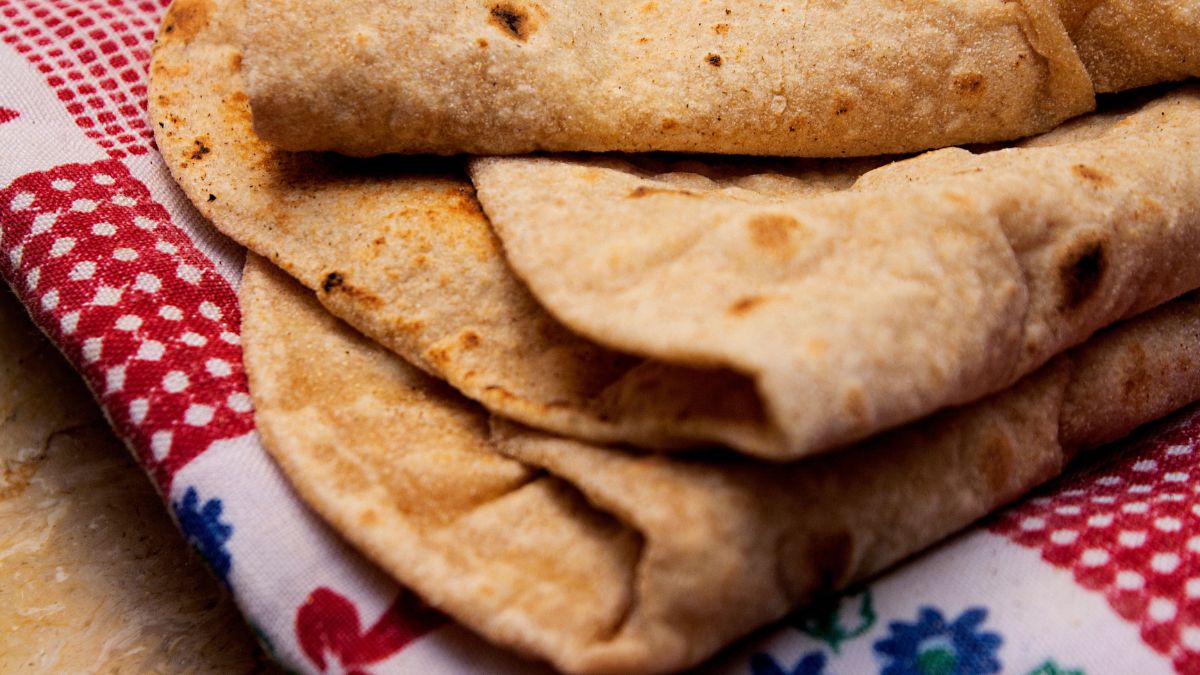
Leftover Roti: How to Store It Safely and What to Make With It
Why the roti left on the table is worth a second look, and when it isn’t.
Table of Contents
Leftover roti can become another meal if it was cooled and stored safely. Refrigerate rotis promptly, within two hours of cooking, or within one hour when the surrounding temperature is above 32°C. Keep them in a clean, covered container in a fridge below 5°C. A cloth on the counter does not provide safe overnight storage.
Use the UK Food Standards Agency’s general household leftover guidance: eat refrigerated leftovers within 48 hours, or freeze them promptly for later. This is a general limit, not a shelf life established for every roti recipe. Discard rotis left out overnight or with an uncertain storage history. Smell and appearance alone cannot confirm safety.
Reheat only the portion you will eat, once, until piping hot throughout. A tawa or covered pan can work; heat both sides and check the centre. Reheat leftover fillings thoroughly too. Do not assume reheating rescues food that was stored badly.
For reuse, try tempered roti, a vegetable or egg roll, crispy roti chaat, a little churma, or a curd roti bowl. For the curd bowl, reheat the roti, let it cool briefly, then combine with chilled curd and eat promptly.
A day-old roti is not automatically healthier than a fresh one. Cooling can change resistant starch, but limited research does not establish a digestive benefit or justify unsafe storage. The flour and the rest of the meal still matter.
To reduce waste, make rotis around what your household eats, allowing for changing appetites rather than following a fixed number.
Picture the end of dinner. The sabzi is finished, the dal has been scraped out of the katori, and three rotis sit wrapped in a cloth. Someone sighs, “Nobody will eat these tomorrow.” By breakfast they are dry, by lunch they are forgotten, and by evening they are in the bin.
It is worth asking whether that has to be the ending. But the answer begins with storage, before anyone gets to the chutney, tempering or filling.
It can be, if it was handled and stored properly. For homemade rotis, use a cautious general-leftover approach: cool and refrigerate promptly rather than leaving them wrapped on the counter overnight.
WHO’s Five Keys to Safer Food advise not leaving cooked food at room temperature for more than two hours, keeping hot food above 60°C and refrigerating perishable food below 5°C. FoodSafety.gov gives a shorter, one-hour limit when the surrounding temperature is above 32°C.
The practical lesson is simple: do not leave rotis beside the stove until morning and hope reheating will make them safe.
If freezing, separate portions so you can take out only what you need. Defrost in the fridge and use within 24 hours of fully thawing, following the same thorough-reheating approach.
Discard rotis left at room temperature overnight, or when you cannot establish how they were stored. Mould or an unusual smell is also a reason to discard them, but normal smell and appearance do not prove safety. Do not taste a questionable roti to test it, or remove visible mould and eat the rest.
Dryness is mainly a texture issue; storage history still decides whether the roti should be reused. Reheating cannot reliably rescue food that has spent too long outside safe storage conditions.
Without a reliable fridge, cook for the meal you are about to eat. Keeping leftovers for another meal on the same day is not automatically safe either.
A tawa or covered pan can work. Turn the roti so both sides heat, and check that the middle is piping hot rather than just warming the surface. A light sprinkle of safe drinking water can help soften a dry roti during heating.
For thicker rolls or filled preparations, the filling matters too. Reheat any leftover sabzi, dal, egg or paneer filling thoroughly before assembling, and serve promptly. Fresh washed salad, chutney or chilled curd can be added afterwards.
Yesterday’s safely stored roti is a ready-made base. These five ideas use familiar Indian ingredients; begin with roti that meets the storage guidance above.
| Idea | How to put it together |
| Tempered roti | Tear the roti into pieces. Cook onion with a tempering of mustard seeds, curry leaves and chilli, then toss in the roti and heat thoroughly. Finish with lemon. Preparations such as phodnichi poli and vaghareli rotli use this general idea. |
| Roti roll | Reheat the roti and any leftover vegetable, paneer or egg filling until piping hot. Assemble with freshly prepared onion or other salad and serve promptly. |
| Crispy roti chaat | Cut roti into strips and heat thoroughly until crisp. Add freshly chopped onion, tomato, coriander, lemon and safely stored chutney just before eating. |
| Roti churma | Crumble and heat the roti in a little ghee, then mix with jaggery and cardamom. It is a sweet preparation; keep the portion suited to your meal. |
| Curd roti bowl | Reheat the roti thoroughly, let it cool briefly, then combine with chilled plain curd, roasted cumin and coriander. Eat promptly. Do not leave roti soaking in curd or milk at room temperature overnight. |
Adding vegetables and a protein source such as curd, paneer, egg or thoroughly cooked chana makes the meal more varied. If using sprouts, cook them thoroughly. Raw and lightly cooked sprouts are unsuitable for children, pregnant people, older adults and people with weakened immunity.
Plain curd can be one dairy option if it suits you. ICMR-NIN’s daily plate framework includes milk or curd; it does not require curd with every roti meal.
A roti’s nutritional value depends on the flour, preparation and the meal around it. Whole-grain atta contributes fibre whether the roti is freshly cooked or safely reused the next day. That does not mean its starch stays chemically unchanged in storage.
If you prefer Aashirvaad’s Khapli atta, it is one option; ordinary whole wheat atta also contributes fibre. Khapli is not automatically a higher-fibre choice. Compare the products you buy on the same per-100g basis and choose according to taste, suitability and budget.
Pair roti with dal, vegetables and other foods you enjoy. Drink adequate fluid alongside a gradual increase in fibre. If you have been prescribed a low-fibre diet or a fluid restriction, follow your clinician’s advice.
Cooling can change resistant-starch content. Resistant starch escapes digestion in the small intestine and is included within dietary fibre definitions such as EFSA’s. It would therefore be too absolute to say storage cannot affect fibre at all.
A 2023 study by Kaur and colleagues compared fresh wheat products, 24-hour storage at 20–22°C or 4°C, and reheating after refrigeration. Refrigerated chapati had more resistant starch in laboratory analysis; reheating reduced it relative to the cold sample.
Only ten healthy people participated, and they did not consume the refrigerated, unreheated chapati. There were also rat experiments. The findings do not establish digestive or long-term health benefits for leftover roti.
The room-temperature experiment is not a home-storage recommendation. Follow food-safety guidance rather than deliberately ageing roti for a promised gut benefit.
The easiest way to cut leftover roti is to make fewer. If four people are eating, someone makes fifteen because someone might be hungry. Then two people choose rice, another is full after two rotis, and the rest sit untouched.
Notice what your household actually eats over a few meals. You may find six rotis usually disappear, while eight are made by reflex. Adjust for guests and changing appetites rather than treating one number as a rule.
An occasional surplus is nothing to feel guilty about. A child is unexpectedly hungry, someone skips dinner or a relative arrives with biryani. A little flexibility belongs in household cooking.
If rotis remain, decide which meal they can become and refrigerate them promptly. Two may become breakfast; four may be the base of lunch. The question changes from “What do I do with this unwanted food?” to “Which meal’s base is already ready?”
Preventing waste also saves some of the land, water, energy and labour used to produce food. The useful habit starts before the extra roti reaches the plate.
Speak to a doctor if digestive symptoms persist or keep returning. Seek urgent medical advice for bloody diarrhoea, repeated vomiting with an inability to keep fluids down, or dehydration. Sudden, severe abdominal pain needs emergency assessment. Do not rely on changing foods alone when someone is unwell.
This article provides general food-safety and nutrition information, not personalised medical advice. The storage limits use general household-leftover guidance and are not shelf-life validation for every roti recipe, filling or storage setup. Follow food labels and professional advice about allergies and prescribed diets. Persistent or severe symptoms, or suspected food poisoning, need medical assessment. Children, pregnant people, older adults and people with weakened immunity may need additional precautions.
It can be, if refrigerated promptly, kept below 5°C and reheated thoroughly. Use the general 48-hour household-leftover limit and discard anything with an uncertain storage history.
Discard it. This guide applies the general cooked-food limit of two hours at room temperature, shortened to one hour above 32°C. Reheating does not reliably make badly stored food safe.
Use within 48 hours of cooking under the general household-leftover guidance, provided it was cooled and refrigerated promptly. This is not a universal tested shelf life for every roti. Freeze promptly for longer storage; discard sooner if storage was unsafe or uncertain.
Try tempered roti, a roll, crispy chaat, churma or a curd roti bowl. Use safely stored roti, heat it thoroughly and reheat leftover fillings too. Add fresh or chilled toppings just before serving.
Not automatically. Storage can alter resistant starch, but the limited study discussed here does not establish a general digestive benefit. The flour, portion, accompaniments and safe handling still matter.
Base the number on what your household usually eats, allowing for rice, other dishes, guests and appetite changes. There is no universal number for every family or person.