Okinawa Diet: Is Longevity About Food or Genetics?
Is Okinawan longevity about food or genetics? Poulomi Mukherjee examines the historical diet, the gut research and the habits an Indian kitchen can borrow.
Table of Contents
The traditional Okinawa diet centres on sweet potatoes, vegetables and soy foods, with smaller amounts of animal foods. It offers useful ideas for eating more plants and paying attention to portions. But diet alone cannot explain Okinawan longevity, and studies of an adapted diet don’t prove that copying the food list will make you live longer.
This wasn’t a diet someone designed on paper. Closer to the Mediterranean’s story than the Nordic’s, Okinawa’s traditional eating pattern grew out of agricultural necessity and what could reliably grow locally. Hardy sweet potatoes became the staple.
It became widely known through the Okinawa Centenarian Study, established in 1975 by Makoto Suzuki. The research has examined diet, exercise, genetics and social habits among the region’s oldest residents, rather than looking for a food explanation alone.
Honestly, both deserve attention, and it would be dishonest to claim it’s purely one or the other. There’s real genetic research, particularly around variants of a gene called FOXO3, that have been associated with exceptional longevity. A well-known 2008 study examined Japanese-American men living in Hawaii, rather than testing an Okinawan diet. The distinction matters: a genetic association doesn’t tell us what eating sweet potatoes will do.
That’s a real factor beyond what’s on the plate. But the traditional diet itself is also distinctive, with a strong emphasis on plant foods and fibre. Genetics, diet, physical activity and the wider circumstances of someone’s life all belong in the explanation. We can’t neatly divide the credit between food and genes, or turn calorie restriction into a proven human longevity prescription.
Sweet potatoes were overwhelmingly the staple, and it’s a bigger share than people expect. Historical dietary records discussed in a 2014 review describe them supplying more than half of daily calories. That’s a description of an older eating pattern, not a target for your plate today. The same review includes food records from 1949, so calling all this evidence ‘pre-war’ would be misleading.
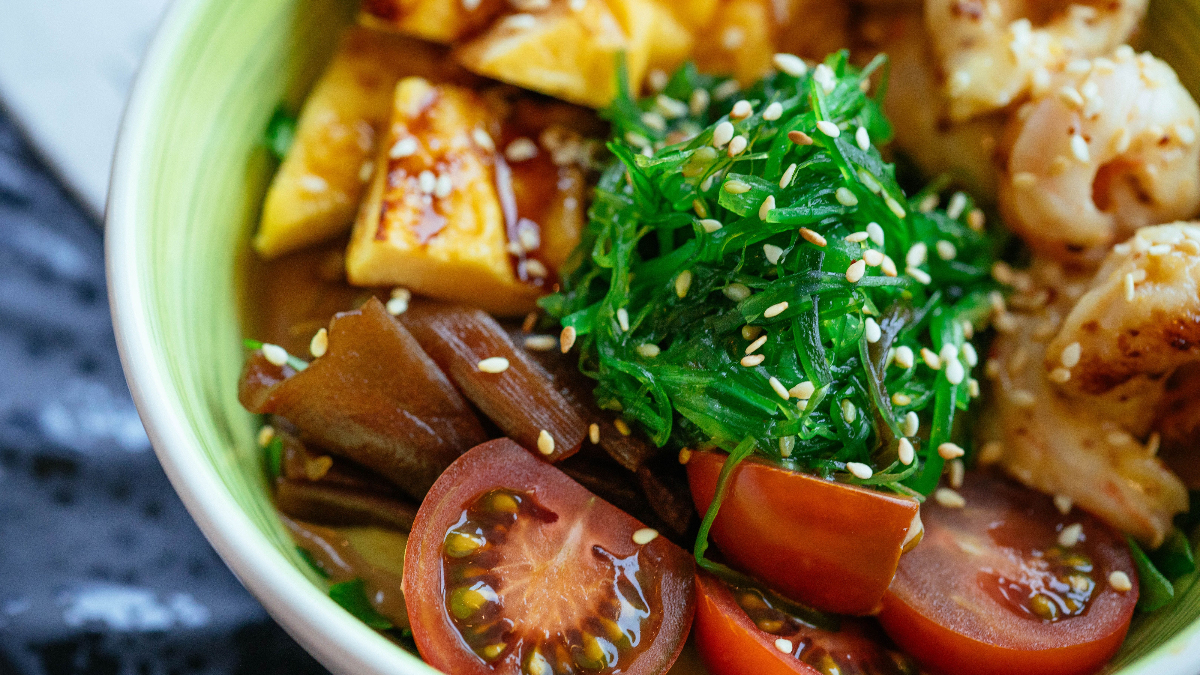
Beyond that: bitter melon, seaweed, soy foods like tofu and miso, turmeric, and smaller amounts of fish and meat, with little dairy. The pattern was heavily plant-based, rather than strictly vegetarian.
There’s also a behavioural piece worth knowing: hara hachi bu, usually described as eating until about 80% full. Think of it as a reminder to pause before becoming overfull, rather than a percentage you can measure or an instruction to leave yourself hungry.
That sweet-potato dominance is worth sitting with for a moment, because it’s unusual. Most diets in this series treat their staple grain or tuber as one component among several. Traditional Okinawan eating built much of the day around a single root vegetable. It brought fibre to the plate through an everyday staple, rather than through a nutritional strategy anyone designed on purpose.
There’s a specific study worth knowing about here. Researchers in Sweden adapted Okinawan principles for a Nordic population. A 2023 analysis followed 30 adults with type 2 diabetes who received the adapted diet for 12 weeks. It found changes in gut microbiota alongside improvements in weight, blood-glucose measures and blood lipids.
But the participants served as their own controls; there was no separate comparison group. The adapted menu also had a different balance of carbohydrate, protein and fat from the historical Okinawan diet. So this is a measured but indirect link, rather than a direct study of traditional Okinawan eating or proof of a longer life.
The microbial findings need care too. The study did not find an increase in Bifidobacterium or Faecalibacterium prausnitzii. An earlier analysis of the same intervention also did not establish that the metabolic improvements were linked to increased short-chain fatty acid concentrations.
The fermentation explanation is still worth understanding. Gut microbes can turn fermentable fibre and resistant starch into short-chain fatty acids, or SCFAs, including butyrate. Butyrate is an important fuel for colonocytes, the cells lining the colon, and helps support the gut barrier and immune regulation. Plant compounds such as polyphenols can interact with gut microbes too. These mechanisms help explain the interest in plant-rich diets; they don’t establish that this particular diet reduces age-related inflammation or extends human life.
This is the part I think is most important to say plainly, and it doesn’t get said often enough. Okinawa’s longevity advantage relative to the rest of Japan weakened, especially among men. That is different from saying life expectancy simply fell after the Second World War: a 2024 demographic analysis describes rising life expectancy over the decades, but slower gains than elsewhere in Japan.
Over the post-war period, rice increasingly replaced sweet potato, and imported, energy-dense foods became more common. Physical activity and other aspects of life changed too. Those population trends don’t prove that one food swap caused the change in longevity.
The ‘Okinawa diet’ most people reference is really the historical pattern associated with older generations, not a description of what everyone in Okinawa eats today.
That doesn’t make the traditional pattern any less worth examining. It just means ‘eat like Okinawans’ needs a clarifying question attached: which Okinawans, and which decade?
It’s a useful reminder for reading about any long-lived population, really. The traditional diet and the modern reality of a place can drift apart faster than the marketing keeps up with.
More of one than you’d think, provided you build it around familiar, fibre-containing foods. Sweet potato is already at home in Indian kitchens, and bitter melon is karela, the same vegetable. Dal can fill a similar plant-protein role to soy, while tofu remains an option if you enjoy it.
Whole grains can be part of that Indian adaptation too. If you’re replacing refined-flour foods, whole-wheat atta, including whole-grain Khapli options such as Aashirvaad Chakki 100% Khapli Atta, can contribute fibre and plant protein. Khapli is emmer wheat, also known as Triticum dicoccum; it isn’t a millet. It’s an option, rather than a requirement for an Okinawan-style plate, and it doesn’t guarantee a particular blood-glucose response or longevity benefit.
Seaweed doesn’t have a neat everyday substitute in many Indian kitchens. I wouldn’t make importing kelp the test of whether you’ve understood the pattern. The realistic version is sweet potato and karela appearing more often, dal doing the protein work, and portions that leave you comfortably satisfied. That applies the principles without claiming the adapted Indian menu has the same research behind it.
Swap some rice or another refined staple for a fibre-containing tuber like sweet potato a few times a week, and pay attention to portion size the way hara hachi bu suggests: stopping at comfortably satisfied rather than overfull. Those two changes, one about what’s on the plate and one about how you eat it, are more practical than trying to replicate the full traditional Okinawan pantry.
Keep dal, tofu or another suitable protein source alongside it. Sweet potato is still a carbohydrate food, and portions and preparation matter, especially if you’re managing diabetes. If you’re increasing fibre from a low starting point, do it gradually and keep fluids adequate. Our guide to increasing fibre in an Indian diet offers everyday places to start.
Not a prescription, just an illustration, built around Indian adaptations of the Okinawan staples. Portions need to suit your appetite, energy needs and any medical advice; this isn’t a calorie-restriction plan.
Dal and tofu keep the emphasis on plant protein; paneer is an Indian adaptation rather than a traditional Okinawan staple. If you’re choosing between the latter two, our tofu and paneer comparison looks at their nutrition and digestive tolerance.
Portion practice matters here too. Hara hachi bu doesn’t require counting anything. It’s a habit of pausing before automatically finishing what’s in front of you, and asking whether you’re comfortably satisfied. That’s arguably easier to adopt long-term than any specific food swap in this piece. It shouldn’t mean cutting back when you need more nourishment.
| Might Genuinely Suit You | Might Need More Planning |
| You’re comfortable with a mostly plant-based, low-meat way of eating. | Meat or fish is central to your meals, so adapting the pattern would mean planning other protein sources. |
| You like portion awareness more than calorie counting. | You need specific energy or nutrient targets, so a general fullness cue isn’t enough. |
| Sweet potato and karela are already familiar, likeable foods for you. | You’re hoping to recreate every traditional ingredient, seaweed included. |
| You’re interested in what a historical eating pattern can teach you. | You want a description of how Okinawans eat today, or expect the name alone to guarantee longevity. |
Disclaimer: This article provides general nutrition information and is not a personalised dietary plan, a recommendation to restrict calories or a treatment for a digestive condition. If you’re managing a medical condition, have food allergies or intolerances, or have been prescribed a therapeutic diet, consult your doctor or qualified dietitian before making substantial changes. Khapli is wheat and contains gluten, so it is unsuitable for people with coeliac disease or wheat allergy. If digestive symptoms continue, are severe or keep coming back, seek medical advice.
They usually mean a historical pattern centred on sweet potatoes, vegetables and soy foods, with smaller amounts of animal foods. It isn’t a description of how everyone in Okinawa eats today, and it wasn’t strictly vegetarian.
That can’t be promised. Okinawan longevity research considers genetics, food, activity and wider living conditions. Historical observations and studies of adapted diets don’t establish that copying the food list will extend an individual’s life.
It’s commonly described as eating until about 80% full. Use it as a cue to pause before becoming overfull, rather than a measurable percentage or an instruction to eat too little. Your nourishment and any individual medical advice still matter.
Sweet potato, karela, dal or tofu, vegetables and suitable whole grains offer familiar places to start. You don’t need to import seaweed to understand the plant-rich idea. The adapted plate hasn’t been shown to reproduce every outcome associated with traditional Okinawan eating.
The historical records aren’t a modern meal prescription. Keep suitable protein sources, other vegetables and a balanced range of foods alongside your staple. Sweet potato still contains carbohydrate, and portions and preparation matter, especially if you’re managing diabetes.