

Table of Contents
In India, “source of fibre” and “high in fibre” are defined nutrition claims. And the finished food, not one headline ingredient, has to meet the relevant criteria.
A recipe contains Khapli atta. Does that mean you can automatically call it “high-fibre”?
No.
Khapli wheat contains dietary fibre, but “contains fibre” and “high in fibre” are not interchangeable statements. In India, phrases such as “source of dietary fibre” and “high” or “rich in dietary fibre” are defined nutrition claims. Whether a finished food qualifies depends on its actual fibre content — not simply on whether one fibre-containing ingredient appears in the recipe.
That distinction matters because claim creep happens very easily.
A whole-grain flour becomes a “high-fibre paratha”. Add some of it to a cookie and suddenly you have “high-fibre cookies”. Put it into a pizza base and the entire recipe inherits the health language of the flour.
The logic quietly becomes: made with whole grain → contains fibre → high-fibre food
The first two ideas can be true. The third still has to be demonstrated.
Fibre Is a Nutrient. ‘High-Fibre’ Is a Claim.
Dietary fibre is a component of food. It can be measured in grams and comes from many different foods, including whole grains, pulses, vegetables, fruits, nuts and seeds.
“High-fibre”, on the other hand, describes the level of fibre in the food.
Under India’s Food Safety and Standards (Advertising and Claims) Regulations, nutrient-content claims such as “source of”, “high” and “rich” have specified conditions. Claims used on food labels and in advertising or marketing communications are expected to be truthful, meaningful, scientifically substantiated and consistent with those conditions.
So adding a fibre-containing ingredient does not automatically transfer a “high-fibre” claim to everything made from it.
Put simply:
An ingredient can contain fibre without the finished recipe qualifying as high-fibre.
What Does FSSAI Mean by ‘Source of Fibre’ and ‘High in Fibre’?
For dietary fibre, FSSAI sets different thresholds for the two claims.
| Fibre claim | For solid foods |
|---|---|
| Source of dietary fibre | At least 3g fibre per 100g, or 1.5g per 100 kcal |
| High / rich in dietary fibre | At least 6g fibre per 100g, or 3g per 100 kcal |
There are separate criteria for liquids.
This distinction is useful because “source of fibre” and “high in fibre” are not simply different ways of saying the same thing.
“High” or “rich” requires twice the fibre level specified for a “source” claim under both of the solid-food criteria above.
And importantly, the number applies to the finished food being described.
Not merely to its healthiest-sounding ingredient.
Why One Ingredient Does Not Tell You the Whole Story
Imagine two recipes.
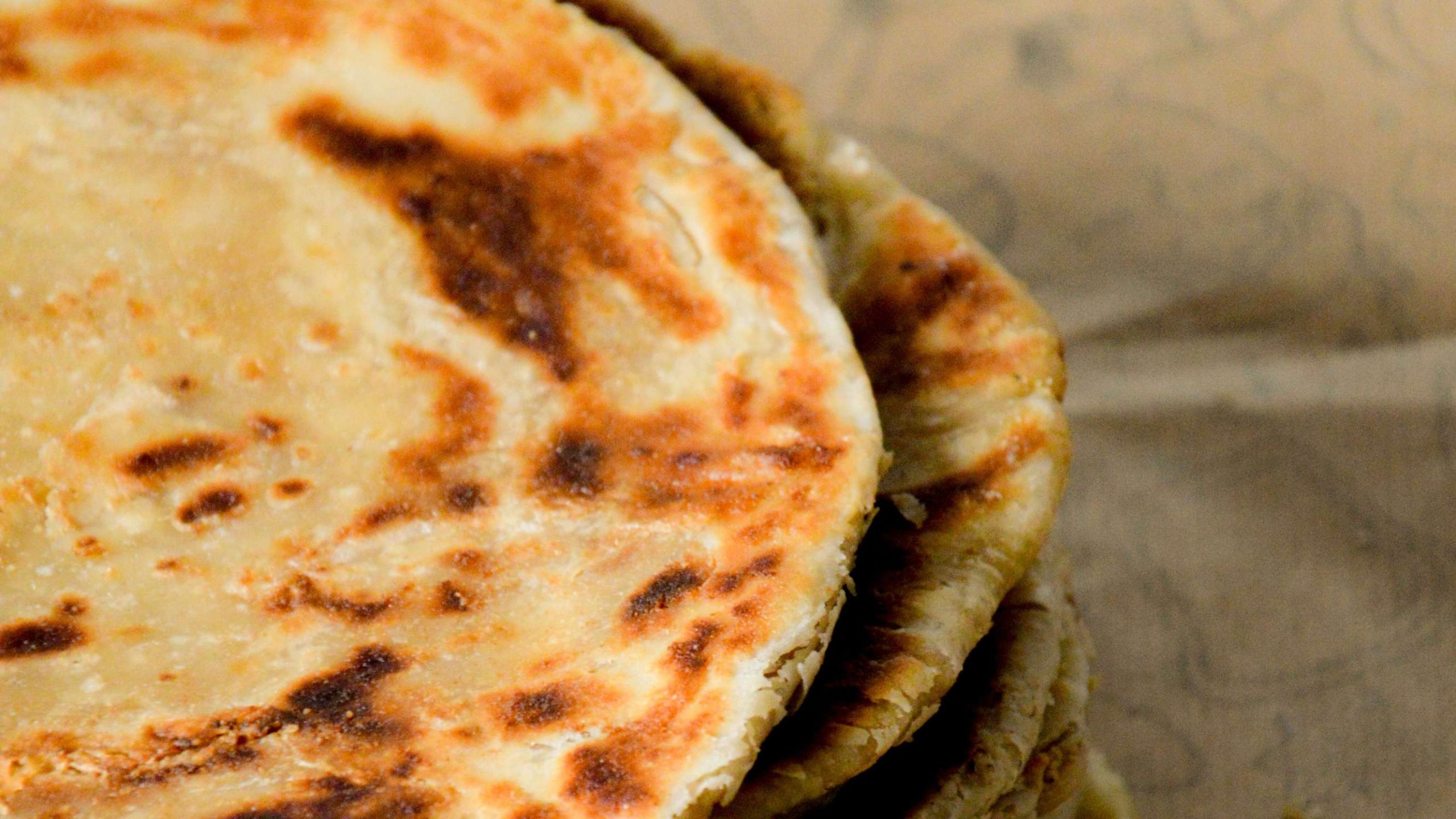
The first is a simple Khapli roti made mostly from Khapli atta and water.
The second is a cookie containing some Khapli atta along with other flours, fat, sugar and additional ingredients.
Both recipes contain Khapli wheat.
That tells you something about their ingredients.
It does not tell you, by itself, whether either finished food meets a regulated fibre-content claim.
Why?
Because once other ingredients, water and cooking processes enter the recipe, the composition of the finished food changes.
The relevant question becomes:
How much dietary fibre does the finished food contain per 100g or per 100 kcal?
That requires information about the whole recipe rather than one ingredient in isolation.
Where Does Khapli Atta Fit?
Khapli wheat — also known as emmer wheat or Triticum dicoccum — naturally contains dietary fibre.
Aashirvaad Chakki 100% Khapli Atta provides about 11.4g of dietary fibre per 100g, according to the current approved product nutrition information used for this article.
That tells us that the atta itself contains fibre.
It does not mean that every roti, paratha, biscuit, pizza or dessert containing the atta automatically contains 11.4g fibre per 100g of finished food.
The recipe changes the denominator.
That is the part nutrition language often skips.
Why the Fibre Number Changes Once You Start Cooking
Suppose you begin with 100g of a fibre-containing flour.
Once you add water, oil, dairy, vegetables, sugar, another flour or any other ingredient, you have increased the total weight and changed the nutrient composition of the recipe.
Cooking can change that weight again, particularly through water gain or loss.
The original fibre in the flour has not magically disappeared simply because you added other ingredients.
But its concentration in every 100g of finished food may change.
That is why copying a per-100g nutrition number from an ingredient packet and assigning it to 100g of the cooked recipe is not a valid shortcut.
Can a Plain Khapli Roti Be Called High-Fibre?
Not automatically on the basis of the flour label alone.
A simple Khapli roti may be a strong candidate because Khapli atta contributes dietary fibre and the recipe contains relatively few other ingredients.
But the regulated claim refers to the finished food.
To establish that a particular roti qualifies as “high in fibre”, you would need sufficient information about the finished recipe to show that it meets at least one applicable criterion — for example, 6g fibre per 100g or 3g per 100 kcal.
So the accurate statement is:
Khapli roti contains dietary fibre from Khapli atta.
Calling the finished roti “high-fibre” requires the finished food to meet the relevant claim criteria.
What Happens With Parathas, Cookies and Pizza Bases?
The principle stays exactly the same.
| Recipe | Uses Khapli atta? | Automatically high-fibre? |
| Plain Khapli roti | Yes | No. The finished roti must meet an applicable claim criterion. |
| Khapli paratha | Yes | No. Filling, fat and other ingredients change the final composition. |
| Khapli cookie | Yes | No. The flour alone does not establish the fibre level of the finished cookie. |
| Khapli pizza base | Yes | No. The finished base must qualify on its own composition. |
| Khapli + vegetable preparation | Yes | Not automatically. Vegetables may contribute additional fibre, but the complete recipe still determines the claim. |
This does not mean these foods contain no fibre.
It means ingredient choice and nutrition claims are related, but they are not the same thing.
Does Adding Vegetables Make a Recipe High-Fibre?
Vegetables can certainly contribute more dietary fibre to a recipe.
So can pulses, nuts, seeds and other fibre-containing foods.
But once again, the word “high-fibre” is not awarded according to how many nutritious ingredients a recipe seems to contain.
The fibre content of the finished food has to qualify.
A vegetable-stuffed Khapli paratha could contain more fibre than a plain version.
That still does not justify the regulated claim without the numbers to support it.
A Quick Fibre-Claim Check
Before using “high-fibre” in a recipe title, product description or promotional claim, ask:
1. Am I describing the ingredient or the finished food?
“Made with Khapli atta” describes an ingredient choice. “High in dietary fibre” makes a nutrient-content claim about the food. Those are different statements.
2. Do I know the fibre content of the finished recipe?
A flour’s nutrition panel does not automatically provide the nutrition values of the cooked food.
3. Which claim am I actually making?
Contains fibre, source of fibre and high/rich in fibre should not be treated as interchangeable language.
4. Does the finished food meet the relevant FSSAI criterion?
For a solid food, a source of fibre claim requires at least 3g/100g or 1.5g/100 kcal. A high/rich in fibre claim requires at least 6g/100g or 3g/100 kcal.
5. Can I substantiate the claim?
If the answer is unclear, describe the ingredients accurately rather than upgrading the language. “Made with Khapli atta and vegetables” can still be useful information. Not every food needs a nutrition claim in its headline.
Why Claim Literacy Matters
There is a reason words such as “high-fibre”, “high-protein”, “low-fat” and “source of calcium” sound authoritative. They sound measured.
When correctly used as nutrient-content claims, that is exactly what they are supposed to be.
Problems begin when the language becomes shorthand for: “This ingredient has a healthy reputation, therefore the entire food inherits the claim.” That shortcut makes food labels and recipe titles harder to interpret.
Claim literacy is simply the ability to separate what an ingredient is from what has actually been demonstrated about the finished food. That makes readers harder to mislead — including by perfectly well-intentioned recipe writers.
Does a Recipe Need to Be ‘High-Fibre’ to Be Worth Eating?
Absolutely not.
This is perhaps the most useful part of the whole discussion: A food can contribute dietary fibre without qualifying for a “high-fibre” claim. And a single recipe does not have to carry your entire day’s fibre intake.
ALSO READ | Do You Still Need Veggies If Your Khapli Roti Has Fibre?
A meal containing Khapli roti, dal, seasonal vegetables and salad draws fibre from several foods. Fruit, nuts, seeds, pulses and whole grains eaten at other meals add to the total again.
That broader pattern matters far more to everyday eating than forcing every recipe to earn a nutrient claim.
A Better Way to Describe Fibre-Containing Recipes
Where the fibre level of the finished recipe has not been established, use language that says what you actually know.
Instead of: High-Fibre Khapli Vegetable Paratha, consider: Khapli Vegetable Paratha With Whole-Grain Atta. Instead of: High-Fibre Khapli Cookies, consider: Cookies Made With Khapli Atta, Oats and Nuts. Instead of reaching automatically for a regulated nutritional adjective, tell the reader what is genuinely in the food.
Precision does not make a recipe sound less appealing. It makes the information more trustworthy.
FAQs About High-Fibre Claims and Khapli Recipes
What does ‘high-fibre’ mean in India?
Under FSSAI’s nutrient-content claim criteria, a solid food can qualify as “high” or “rich in dietary fibre” if it contains at least 6g fibre per 100g or 3g fibre per 100 kcal.
What does ‘source of fibre’ mean?
For solid foods, FSSAI defines a “source of dietary fibre” as containing at least 3g fibre per 100g or 1.5g per 100 kcal.
Can every recipe made with Khapli atta be called high-fibre?
No. Using Khapli atta does not automatically qualify the finished recipe for a “high-fibre” claim. The complete food must meet an applicable fibre-content criterion.
Is Khapli atta a source of dietary fibre?
Khapli wheat naturally contains dietary fibre. Aashirvaad Chakki 100% Khapli Atta provides about 11.4g of dietary fibre per 100g according to the approved product information used for this article.
Is a plain Khapli roti automatically high-fibre?
Not automatically as a regulated claim. Its fibre content has to be considered in the finished roti, not inferred solely from the dry atta value.
Does adding vegetables make a Khapli recipe high-fibre?
Vegetables may increase the recipe’s fibre content, but the finished food still needs to meet the applicable criteria before a regulated “high-fibre” claim is used.
Is ‘contains fibre’ the same as ‘source of fibre’?
No. Simply saying a food contains some dietary fibre is not the same as making the defined nutrient-content claim “source of dietary fibre”.
Is Khapli wheat the same as emmer wheat?
Yes. Khapli is an Indian name used for emmer wheat, commonly identified as Triticum dicoccum.
Ask Happy Tummy GPT
“Review the ingredients in my Khapli recipe and tell me which ones contribute dietary fibre. Explain the difference between ‘contains fibre’, ‘source of fibre’ and ‘high-fibre’ in simple language. Do not assign a regulated nutrition claim unless there is enough information about the finished food to support it.”
The Bottom Line
Khapli atta contains dietary fibre. That fact does not need embellishment. What it does not do is grant every recipe made with it an automatic “high-fibre” label. A nutrition claim belongs to the finished food, and the finished food has to earn it.
That is not bureaucratic fussiness. It is what makes phrases such as “source of fibre” and “high in fibre” useful in the first place.
If the numbers support the claim, use it accurately. If they do not, describe what you know. There is nothing wrong with simply saying: Made with Khapli atta.
Regulatory note: This article is intended for general educational purposes and should not be considered legal or regulatory compliance advice. Food businesses and marketers should assess nutrition claims against the current applicable FSSAI regulations and seek qualified regulatory guidance where required.
Sources
Food Safety and Standards Authority of India: Food Safety and Standards (Advertising and Claims) Regulations, 2018, as amended