

Table of Contents
Khapli roti is darker, earthier and behaves a little differently from the wheat rotis many families know. Here’s how to handle the dough, keep rotis softer for later and introduce the flour without overhauling your kitchen.
There is a test every new atta has to pass before it earns permanent shelf space in an Indian kitchen.
Not a laboratory test. Not an Instagram test.
The roti test.
Does the dough behave under the rolling pin? Does the family like the taste? Does the roti still feel good when the tiffin opens several hours later? And, perhaps most importantly, does using the new flour fit into ordinary cooking without requiring everyone in the house to reorganise dinner around it?
ALSO READ | Is Roti and Pickle Enough for a Meal? 5 Easy Additions
Khapli atta — made from emmer wheat, or Triticum dicoccum — comes with a slightly different colour, flavour and dough behaviour from the wheat atta many households use every day. Those differences are not necessarily disadvantages. But they do mean that the first attempt may need a little recalibration.
The useful question is therefore not simply:
“Is Khapli wheat nutritious?”
It is:
“Can I make Khapli roti work in my actual kitchen?”
Here is the practical version of the answer.
What Is Different About Khapli Roti?
Khapli is an Indian name for emmer wheat, an old cultivated wheat species with a long history of use. Aashirvaad Chakki 100% Khapli Atta is made entirely from Khapli wheat sourced from farmers in Karnataka and Maharashtra and uses the brand’s Chakki Jaisi Pisai process. Aashirvaad also states that the product undergoes more than 40 quality checks per batch.
The first difference most people notice, though, is not a nutrition label.
It is the roti.
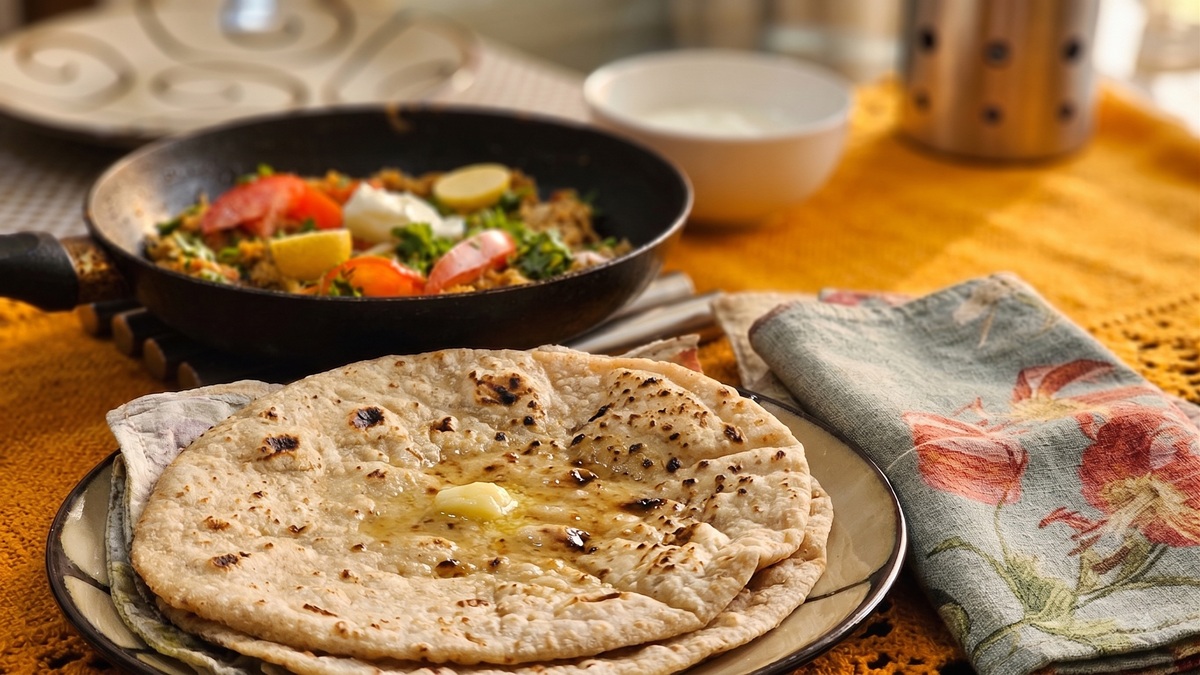
Khapli rotis tend to have a deeper colour and a more rustic, grain-forward appearance than the paler rotis many households are accustomed to. The flavour can be earthier and nuttier, and the dough may feel different under the hand.
That matters because food does not get adopted on nutritional logic alone.
It has to taste good. It has to roll. It has to survive lunch.
The Khapli Roti Test: 5 Things to Get Right
1. Get the Dough Hydration Right
The fastest way to struggle with an unfamiliar atta is to assume it needs exactly the same amount of water as your regular flour.
Add water gradually and aim for a soft, pliable dough rather than a stiff one. Give the flour time to absorb the water before deciding that the dough needs more dry atta.
Aashirvaad reports a Water Absorption Percentage of 73% for its Khapli atta. Water absorption is a technical measure of how much water flour takes up under specified test conditions; in the kitchen, the amount you actually need will still depend on the quantity of flour, room conditions and how you prefer your dough.
The practical lesson is simpler:
Do not be afraid of a well-hydrated dough.
2. Give the Dough a Short Rest
Once kneaded, cover the dough and let it sit briefly before rolling.
Resting gives the flour more time to hydrate evenly and often makes an unfamiliar dough easier to handle.
You do not need to turn this into a forty-five-minute bread-making exercise. Even a short rest while you prepare the sabzi, set the table or make the next part of the meal can help.
Then make one roti.
That first roti tells you whether the dough wants another splash of water, a little dry flour for dusting or simply a gentler hand.
3. Roll Gently Rather Than Chasing Perfection
A Khapli roti does not need to look exactly like your regular phulka to qualify as a successful roti.
If the dough feels more delicate, roll with lighter pressure and use enough dry flour to prevent sticking without coating the roti heavily.
The objective is not perfect circle + maximum thinness + photographic puff.
The objective is a roti your household wants to eat.
That distinction becomes surprisingly liberating after the first couple of attempts.
4. Do Not Overcook It
A whole-grain roti can become dry when left on the tawa longer than necessary.
Cook until the roti is done rather than waiting for every surface to become heavily browned. Once it comes off the heat, a light brush of ghee can be added if that is how your household enjoys its rotis.
Ghee changes flavour and mouthfeel; it is not required for Khapli roti to “work”.
The more important variable is avoiding unnecessary moisture loss during cooking.
5. Think About Storage Before the Tiffin Closes
A roti eaten immediately off the tawa and one eaten five hours later are being asked to perform two different jobs.
For tiffins, allow freshly cooked rotis to stop steaming heavily before stacking and packing them. Keeping them covered in a clean cloth or another suitable food-safe wrap can help manage moisture without trapping excessive condensation.
And remember that flour is only one part of tiffin softness.
Dough hydration, resting, roti thickness, cooking time and how the rotis are packed all affect what lunchtime feels like.
How Do You Make Khapli Roti Softer?
If your first Khapli rotis feel drier or firmer than expected, troubleshoot the method before deciding that the flour simply “doesn’t make soft rotis”.
Try this checklist:
- make a softer dough;
- add the water gradually rather than compensating later;
- rest the dough before rolling;
- avoid using excessive dry flour while rolling;
- roll gently;
- do not overcook;
- keep finished rotis covered;
- for a tiffin, pack only after excess steam has escaped.
Some home cooks also add a small quantity of milk while kneading when they want a softer result. If your household already uses milk in dough and you tolerate dairy, it is one optional technique to test rather than a requirement.
Change one thing at a time.
Otherwise you will never know which adjustment fixed the roti.
Why Does Khapli Roti Look Darker?
The colour can take some getting used to if your family associates “good roti” with a pale, smooth phulka.
Khapli flour naturally has its own colour and character, and the finished roti reflects both the grain and the way the flour has been milled. A darker Khapli roti should therefore not automatically be interpreted as burnt, stale or poorly made.
But avoid the opposite oversimplification too: Darker does not automatically mean better.
Colour by itself cannot tell you everything about how nutritious a flour is. Grain variety, whole-grain content and processing matter more than simply judging how pale or brown the roti looks.
The useful adjustment is sensory rather than nutritional:
Expect the Khapli roti to look like a Khapli roti.
What Does Khapli Roti Taste Like?
Khapli is generally associated with an earthier, nuttier flavour and a more rustic texture than many conventional wheat rotis. Aashirvaad and nutritionist Qurath Ain likewise describe its cooked character as grainier, nuttier and earthier.
That difference is exactly why forcing a direct “does this taste identical to our usual roti?” comparison can be unhelpful.
It probably will not.
Try it with foods the family already loves instead:
- familiar dal;
- a favourite sabzi;
- curd;
- chutney;
- paneer;
- a well-loved chicken or fish curry.
Do not introduce a new atta, three new vegetables and a worthy-looking salad on the same evening and then blame the flour when nobody is delighted.
Give the new grain familiar company.
Will Khapli Roti Stay Soft in a Tiffin?
It can, but no flour can guarantee tiffin softness regardless of how the roti is made and packed.
Aashirvaad reports a Water Absorption Percentage of 73% for its Khapli atta. Higher water uptake can help a dough hold more moisture, but the finished roti is still affected by kneading, resting, thickness, cooking time and storage.
For a tiffin, concentrate on the controllable bits:
soft dough → short rest → gentle rolling → avoid overcooking → sensible packing.
If you are testing Khapli specifically for school or office lunches, do not judge it solely from a fresh dinner roti.
Make one batch in the morning.
Pack it exactly as you would normally.
Open it at lunch.
That is the actual tiffin test.
Should You Switch the Whole Family to Khapli at Once?
You do not have to.
Changing a staple food is partly nutritional, but it is also behavioural. Rotis are repeated foods: people know what they expect them to look, smell and feel like.
A gradual transition can therefore be much easier.
Nutritionist Qurath Ain has suggested starting with roughly 70% of your regular atta and 30% Khapli atta, then increasing the Khapli proportion as the household adjusts to the flavour, texture and dough behaviour.
You may prefer another approach:
- Khapli rotis at one meal rather than every meal;
- Khapli on weekdays and the usual atta for particular dishes;
- one week of mixed dough followed by a higher Khapli proportion;
- 100% Khapli from the beginning if everybody happens to enjoy it.
There is no prize for making the transition difficult.
The sustainable version is the one that actually stays in the kitchen.
Can You Still Use Other Attas?
Of course.
Trying Khapli does not require declaring a winner among every grain in the pantry.
Regular wheat, jowar, bajra, ragi and other flours have their own culinary uses. A varied kitchen can use different grains for different preparations rather than demanding that one atta take over puris, parathas, bhakri, baking and every other possible wheat-based dish.
A staple change does not have to become a kitchen ideology.
The 30-Second Roti Test
Before deciding whether Khapli atta “works” for your household, ask:
| Test | Question |
|---|---|
| Dough test | Have I adjusted the water rather than treating it exactly like my usual atta? |
| Roti test | Am I rolling gently and avoiding overcooking? |
| Taste test | Have I paired it with foods the family already enjoys? |
| Tiffin test | Have I actually checked how the roti behaves several hours later? |
| Family test | Did I give everyone time to adjust rather than demand an instant full switch? |
If one test fails, change that variable.
You do not necessarily need to abandon the flour.
One Important Clarification: Khapli Contains Gluten
Khapli is a wheat and therefore contains gluten.
It should not be presented as gluten-free or as suitable for people with coeliac disease.
Claims that ancient wheats such as emmer universally contain less gluten than modern bread wheat are also not supported consistently by comparative research; studies have found that gluten quantity and composition vary by wheat species and cultivar. What is clear is that emmer remains a gluten-containing wheat.
Anyone who needs a medically gluten-free diet should use genuinely gluten-free grains and flours according to professional guidance.
What to Look for When Buying Khapli Atta
Once a grain becomes fashionable, the word on the front of the pack is not the only thing worth checking.
Look at:
- whether the flour is actually 100% Khapli or a blend;
- the ingredient list;
- current nutrition information;
- manufacturer and sourcing information;
- milling or processing information where provided;
- batch and quality information.
Aashirvaad Chakki 100% Khapli Atta is sourced from farmers in Karnataka and Maharashtra, uses Chakki Jaisi Pisai and undergoes more than 40 quality checks per batch. The brand also provides batch-linked quality information for the product.
Those are product and provenance claims—not reasons to assume that every flour labelled “Khapli” will behave identically in your kitchen.
FAQs About Khapli Roti
How do I make Khapli roti soft?
Start with a soft, well-hydrated dough, let it rest briefly, roll gently and avoid overcooking. Keep the cooked rotis covered so they do not lose moisture unnecessarily.
Why is my Khapli roti dry?
A stiff dough, too much dry flour while rolling, prolonged cooking or leaving rotis uncovered can all contribute to dryness. Adjust one variable at a time to see what works with your flour.
Why is Khapli roti darker than regular roti?
Khapli has its own natural grain colour and character, and the milling method also influences the flour’s appearance. A darker roti is therefore not unusual, but colour alone should not be used as a measure of nutritional quality.
What does Khapli roti taste like?
Khapli roti is generally described as earthier, nuttier and somewhat more rustic in texture than many conventional wheat rotis.
Can Khapli roti stay soft in a tiffin?
Yes, although the result depends on the dough, resting time, roti thickness, cooking and packing as well as the flour itself. Test your usual method by packing a morning roti and checking it at lunchtime.
Can I mix Khapli atta with regular wheat atta?
Yes. If you prefer a gradual transition, one option is to begin with a smaller proportion of Khapli and increase it as the household adjusts.
Is Khapli atta gluten-free?
No. Khapli is emmer wheat and contains gluten. It is not suitable for people with coeliac disease.
Is Khapli wheat the same as emmer wheat?
Yes. Khapli is an Indian name for emmer wheat, commonly identified as Triticum dicoccum.
Ask Happy Tummy GPT
“I’m new to Khapli atta. My rotis are coming out [dry / thick / difficult to roll / hard in the tiffin]. Ask me a few questions about my dough and cooking method, then suggest the smallest changes I should test on my next batch.”
The Bottom Line
The real test of a new atta is not whether it sounds impressive on a nutrition label.
It is whether somebody makes roti with it again tomorrow.
Khapli asks for a little adjustment: expect a different colour, learn how much water your flour wants, be gentle with the dough and test the finished roti in the situations that actually matter to your household — including the tiffin box.
And if the family needs time, give them time.
A grain earns its place in an everyday kitchen by becoming ordinary enough to stop feeling like a health experiment.
That is the roti test.
Disclaimer: This article is intended for general educational purposes only and should not be considered medical advice. People with coeliac disease or another medical reason to avoid gluten should not consume Khapli wheat and should follow guidance from a qualified healthcare professional.
Sources
- What Is Khapli Wheat? The Ancient Grain Your Roti Deserves — Aashirvaad
- Khapli Atta Benefits: Is This Ancient Grain Worth Switching To? — HealthShots
- Do Ancient Wheats Contain Less Gluten Than Modern Bread Wheat? — Brouns et al., Nutrition Bulletin (2022)