

Table of Contents
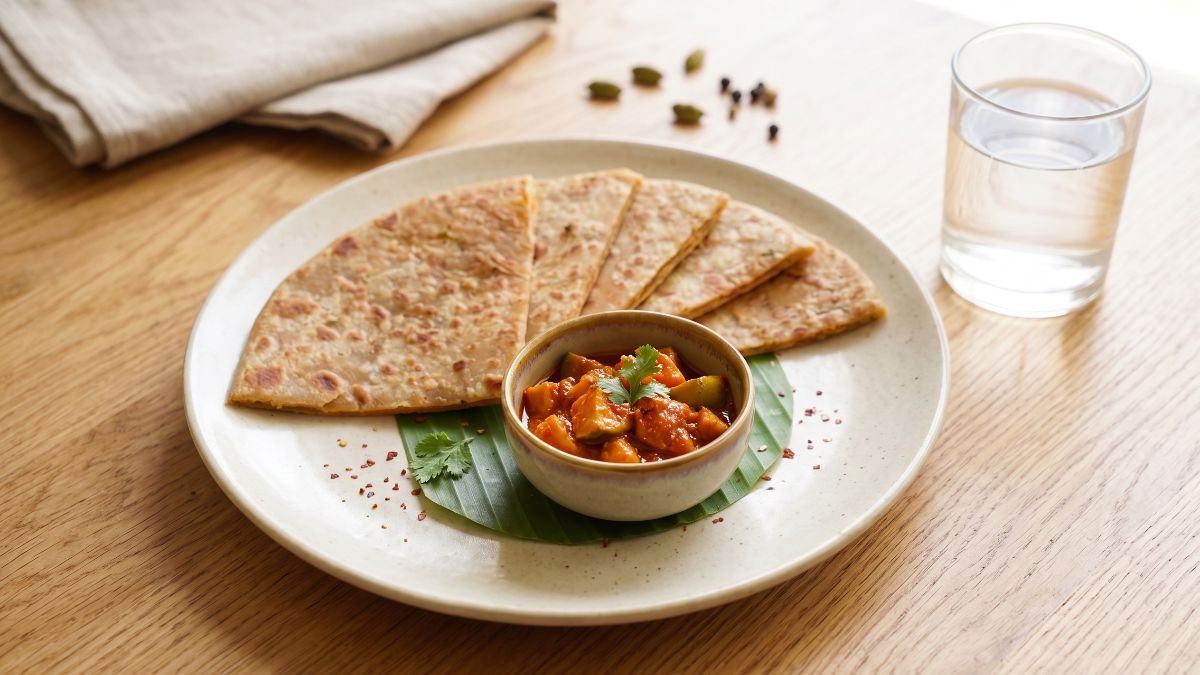
Is roti and pickle enough for a meal? Occasionally, it can absolutely be the meal you eat. But if you are asking whether Khapli roti and achaar alone make a varied, well-rounded plate, usually not.
The reason is simple. Khapli roti provides a whole-grain base, including carbohydrates, dietary fibre and some protein. Pickle brings intense flavour and, depending on the recipe, ingredients such as fruit or vegetables, spices, salt and oil. But a spoonful of achaar is a condiment-sized addition — it does not usually supply the vegetable, pulse or protein-rich component that a more varied meal might contain.
And yet: we have all eaten this meal.
The fridge is nearly empty. The roti is fresh off the tawa. A jar of mango achaar is waiting in the refrigerator door. Lunch sorts itself out.
Khapli roti. Pickle. Done.
It is the meal of hostel evenings, train journeys and those particular Tuesday afternoons when nobody has the energy to cook anything more. There is a reason the combination works so well. Fresh roti is mild and warm; pickle is salty, tangy, spicy and emphatic.
Sometimes it is exactly what you wanted. The useful question is not whether you are “allowed” to eat it. It is: What could you add, with almost no effort, when you want the plate to do a little more?
What Does Khapli Roti Bring to the Meal?
Khapli wheat — also known as emmer wheat or Triticum dicoccum — is a whole-grain wheat.
Aashirvaad Chakki 100% Khapli Atta provides about 11.4g of dietary fibre per 100g. The amount in an individual roti will depend on how much atta is used.
ALSO READ | Is Chai and Roti a Healthy Breakfast? 3 Easy Additions
A freshly made Khapli roti therefore provides a useful whole-grain foundation for the plate: carbohydrates, dietary fibre, some protein and naturally occurring vitamins and minerals from the wheat.
That word foundation matters. A foundation is valuable. It is simply not the whole structure.
What Does Pickle Add?
Pickle deserves its place on the plate.
Mango, lemon, chilli, garlic, amla or mixed vegetable achaar can turn an otherwise plain meal into something memorable with a single spoonful. Depending on the preparation, pickles may be salted, spiced, preserved in oil, acidified or fermented — Indian pickle traditions are far too varied to reduce to one method.
Nutritionally, though, achaar is usually eaten as a condiment, not as the main vegetable component of a meal.
Many pickles are salty by design, and some also contain a substantial amount of oil. That is one reason the usual serving is small. The pickle’s primary role on this plate is flavour: heat, salt, acidity, spice and contrast.
That is not a lesser role.
It is simply a different one.
Why Can Roti and Pickle Feel Like a Complete Meal?
Because satisfaction and nutritional variety are not the same thing.
Roti and pickle occupy opposite ends of the flavour spectrum. One is soft, familiar and grain-based; the other is concentrated, sharp and punchy. That contrast can make a very simple meal feel deeply satisfying.
Hunger, habit and nostalgia matter too.
A meal can therefore taste completely right while still drawing from only a small number of food groups.
You do not need to distrust that satisfaction. Just recognise what it tells you — and what it does not.
What Might Be Missing From a Roti-and-Pickle Plate?
Look at the plate:
Khapli roti + a spoonful of pickle.
Now ask:
- Is there a pulse or another substantial protein-rich food?
- Is there a serving of vegetables beyond the condiment-sized pickle?
- Is another food group represented?
- Could one simple addition make the meal more varied?
The roti is doing most of the meal-building work. The pickle is mainly handling flavour.
That is why adding one different food changes the plate much more than simply adding another spoonful of pickle.
5 Easy Ways to Round Out Khapli Roti and Pickle
You do not need a full thali.
Pick one.
1. Add a Bowl of Dal
This is perhaps the most natural extension of the meal.
Moong, masoor, toor, chana dal — whichever is already cooked or easiest for your household — adds a pulse to the plate, bringing additional fibre and protein alongside the grain.
Roti + dal + achaar is not a complicated “healthy meal”.
It is simply an Indian combination that already knows what it is doing.
2. Add Whatever Sabzi Already Exists
Do not make another dish if one is already sitting in the fridge.
Yesterday’s bhindi works. So does lauki, cabbage, beans, aloo-gobi, pumpkin or whatever seasonal vegetable happened to be cooked.
Reheat it.
The plate now contains a whole grain, a vegetable dish and the pickle you wanted in the first place.
3. Put Out a Bowl of Plain Curd
This is the zero-cooking option.
Curd adds a protein-rich dairy food and provides a cool, creamy contrast to a salty or spicy pickle.
No tempering required. No recipe required.
Spoon into bowl. Eat.
4. Make the Three-Minute Salad
Cucumber. Tomato. Carrot. Onion. Radish.
Choose whatever is available, slice it and put it on the plate.
A salad does not have to contain six vegetables and three seeds before it qualifies as food.
The point is simply to add fresh vegetable variety with almost no cooking.
5. Add One Protein-Rich Side
If dal is not happening, consider whatever already fits your kitchen:
- roasted or cooked chana;
- rajma;
- paneer;
- eggs;
- fish;
- chicken.
You do not need several protein-rich foods at once.
You need the one that is actually available.
What Changes When You Add One More Food?
| Meal | What else appears on the plate? | What changes |
|---|---|---|
| Khapli roti + pickle | Whole grain + condiment | A very simple meal |
| Khapli roti + pickle + curd | Dairy/protein-rich food | Adds another food group |
| Khapli roti + pickle + dal | Pulse | Adds fibre, protein and food-group variety |
| Khapli roti + pickle + sabzi | Vegetable dish | Adds vegetable variety |
| Khapli roti + pickle + salad | Fresh vegetables | Adds another plant-food source |
| Khapli roti + pickle + dal + sabzi | Pulse + vegetables | Draws from several different food groups |
Notice what remains in every row:
the pickle.
Nothing here is asking you to sacrifice the achaar.
Its job simply shifts from trying to carry the entire meal to doing what pickle does exceptionally well: making everything around it taste better.
Can Pickle Count as Your Vegetable?
A pickle may begin life as mango, lemon, chilli, carrot or another plant food, but a typical spoonful of achaar should not be treated as nutritionally equivalent to a normal serving of vegetables.
The quantities are different. The preparation is different. The role on the plate is different.
So if your lunch contains one spoonful of mango pickle, that does not mean you have to say:
“Excellent. Vegetables sorted.”
Keep the pickle.
Add the sabzi or salad when you can.
Is Khapli Roti and Pickle Okay Occasionally?
Absolutely.
Not every meal you eat has to be an exemplary thali. Balance and dietary variety are built across meals and across days, not judged from a single hurried lunch.
There is no reason to turn a Tuesday afternoon of fresh roti and excellent mango pickle into a moral crisis.
Eat it.
Enjoy it.
Then look at the broader pattern.
If most of your meals contain a reasonable variety of grains, pulses or other protein-rich foods, vegetables, fruits and other foods, one very simple roti-and-pickle lunch is exactly that: one very simple lunch.
Healthy dietary patterns are based on adequacy, balance, moderation and diversity rather than one food performing every nutritional role.
What About Ghee on the Roti?
If you enjoy your Khapli roti brushed with ghee, it can remain part of the meal.
Ghee adds fat, flavour and richness. It does not, however, replace the missing vegetable, pulse or other protein-rich food on the plate.
So:
Khapli roti + ghee + pickle
is still largely a grain-based meal with a condiment.
If you want greater food-group variety, add something different rather than simply adding more of the foods already there.
A Five-Minute Way to Build the Plate
Instead of asking:
“Is roti and pickle enough?”
ask:
“What is already in my kitchen that would take less than five minutes to put beside it?”
Look for:
- yesterday’s dal;
- leftover sabzi;
- plain curd;
- half a cucumber;
- one tomato;
- roasted chana;
- a boiled egg;
- paneer already in the fridge.
The answer often does not require shopping or a recipe. It requires noticing what the plate is missing.
A 30-Second Plate Check
Before you sit down, ask:
- Is there a whole grain?
- Is there a pulse or another protein-rich food?
- Is there a vegetable beyond the pickle?
- Is the pickle being used as a condiment rather than carrying the meal?
- Is there one easy addition already in the fridge?
There is no score; you are not trying to build the perfect thali every time. You are simply checking whether one tiny addition could make an extremely simple meal more varied.
FAQs About Khapli Roti and Pickle
Can I eat Khapli roti and pickle for lunch?
Yes. Khapli roti and pickle can absolutely be an occasional simple lunch. If you want a more varied meal, add dal, vegetables, curd or another protein-rich food alongside it.
Is pickle unhealthy?
Pickle does not need to be labelled simply “healthy” or “unhealthy”. It is traditionally eaten in small quantities as a flavourful condiment. Many varieties are salty and some contain considerable oil, so serving size and the rest of the diet matter.
Can pickle replace a serving of vegetables?
A typical spoonful of pickle is not nutritionally equivalent to a normal serving of vegetables. Enjoy it as a condiment and include vegetables elsewhere on the plate or across the day.
Is one Khapli roti enough for a meal?
There is no universal number. Appetite and energy needs vary with age, activity, roti size and what else accompanies it. Think about the whole plate rather than treating one roti count as correct for everyone.
What is the quickest thing to add to roti and pickle?
Plain curd, leftover dal, sliced cucumber or tomato, roasted chana or a boiled egg can all be added with little or no cooking.
Does adding ghee make roti and pickle a complete meal?
Ghee adds fat and flavour but does not replace vegetables, pulses or other protein-rich foods. If the plate lacks variety, adding another food group is more useful.
Is Khapli wheat the same as emmer wheat?
Yes. Khapli is an Indian name used for emmer wheat, commonly identified botanically as Triticum dicoccum.
Ask Happy Tummy GPT
“I often make simple meals with Khapli rotis because I’m short on time. Based on the ingredients I usually keep at home, suggest five varied meal combinations that take less than 15 minutes to put together. Use everyday Indian foods and explain what each addition contributes to the plate.”
The Bottom Line
Khapli roti and pickle is a real meal with a real place in Indian food culture. Sometimes it is exactly what the day allows. Sometimes it is exactly what you wanted. There is no need to apologise for that.
But if you want the plate to contain more variety, the fix is pleasantly small: add yesterday’s dal, a bowl of curd, half a cucumber, a leftover sabzi or one other protein-rich food. The pickle stays. It just gets better company.
Disclaimer: This article is intended for general educational purposes only and should not be considered medical advice. For personalised dietary recommendations or medical nutrition advice, consult a qualified healthcare professional or registered dietitian.