

Table of Contents
Yes. Khapli roti contributes dietary fibre, but vegetables bring vitamins, minerals, plant compounds and variety that a grain alone cannot replace. Here’s why a more complete plate needs both.
A Khapli roti contributes dietary fibre, but fibre is only one of the reasons vegetables belong on the plate. Vegetables also bring their own mix of vitamins, minerals, plant compounds, colours, textures and flavours — things a whole-grain roti cannot replace by itself.
A 16–18 cm Khapli roti made with around 30–40g of dry atta contributes fibre even if it is lightly brushed with ghee after cooking. But whether the whole meal is varied and well-rounded depends on more than the roti: how many you eat, what accompanies them, whether there is a pulse or another protein-rich food on the plate, and what vegetables and other plant foods appear across the day.
So the more useful question is not “Does my Khapli roti have fibre?”
It is: “What else does this plate need?”
How Much Fibre Does Khapli Roti Provide?
Khapli wheat, also known as emmer wheat or Triticum dicoccum, naturally contains dietary fibre.
Aashirvaad Chakki 100% Khapli Atta provides about 11.4g of dietary fibre per 100g. If one roti uses roughly 30–40g of dry atta, that means the flour used for the roti contributes approximately 3.4–4.6g of fibre before the rest of the meal is counted.
That makes Khapli roti a useful fibre contributor and a whole-grain base for a meal.
But it does not make vegetables redundant.
Why Do You Still Need Vegetables If Your Roti Has Fibre?
Imagine a simple lunch: two Khapli rotis, dal, a seasonal sabzi and perhaps some cucumber or tomato on the side.
Now remove the vegetables because the rotis already contain fibre.
The rotis have not become less nutritious — but the meal has become less varied. Along with the vegetables, you have removed a different set of vitamins, minerals, plant compounds, colours, textures and flavours.
This is the distinction worth remembering:
Khapli roti contributes fibre. Vegetables contribute fibre too — but they also contribute things the roti does not provide in the same amounts or combinations.
The two foods are partners, not substitutes.
What Vegetables Add Beyond Fibre
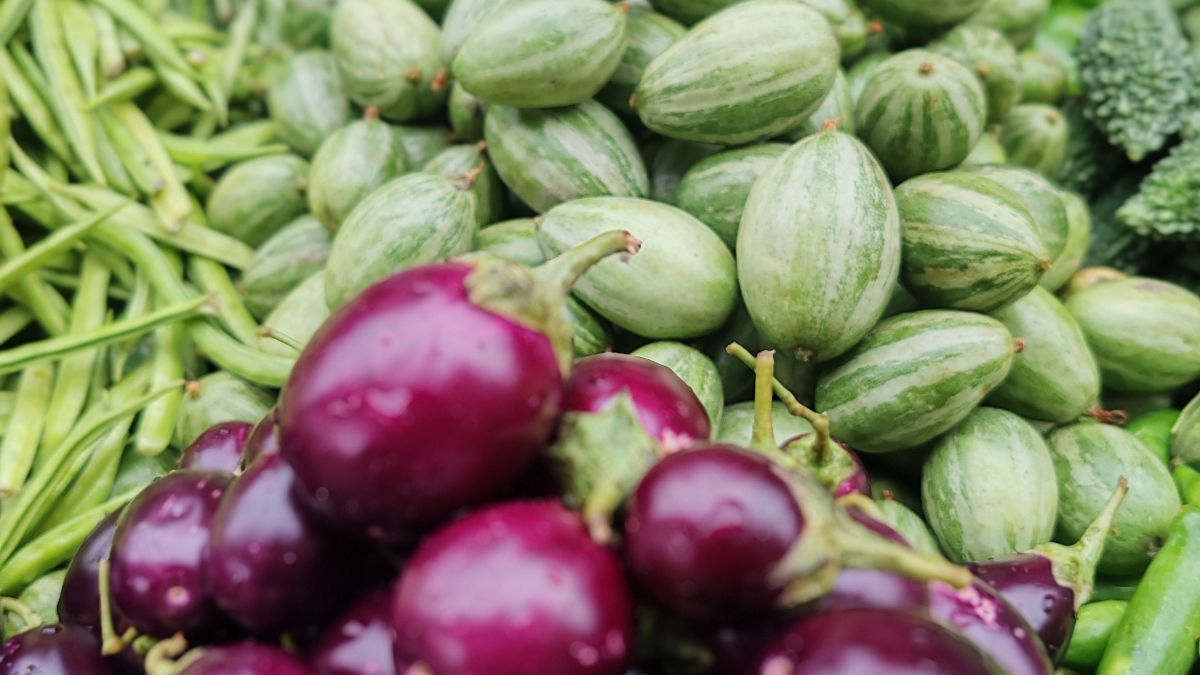
Depending on the vegetables you choose, they can add:
- different vitamins and minerals;
- a wider variety of naturally occurring plant compounds;
- additional sources and types of dietary fibre;
- more colour, flavour and texture on the plate;
- greater dietary variety across the week.
You do not need every vegetable at every meal. What matters is that whole grains do not become a reason for vegetables to disappear from the diet.
Why One Food Cannot Do Everything
Every food has strengths.
Whole grains contribute one set of nutrients. Pulses contribute another. Vegetables and fruits bring their own mix. Curd, paneer, eggs or other protein-rich foods add something different again.
No single ingredient needs to carry the whole nutritional burden of a meal.
Think of the plate as a cricket team. Khapli roti may be an excellent opening batter, but one batter cannot play every position. The dal, vegetables and other accompaniments each have a different job.
That is why addition is a more useful way to think about a plate than substitution.
Instead of:
“My roti already has fibre, so I can skip the vegetables.”
Try:
“My roti gives me one fibre source. What else can I add to this plate?”
What Does a More Varied Khapli Roti Meal Look Like?
Here is a simple way to see what changes as foods are added around the roti.
| Meal | Fibre sources | Vegetable source | Pulse / protein-rich addition | What changes |
|---|---|---|---|---|
| Khapli roti | Whole grain | No | No | A whole-grain base |
| Khapli roti + dal | Whole grain + pulse | No | Yes | Adds a second plant-food and fibre source |
| Khapli roti + sabzi | Whole grain + vegetable | Yes | Depends on dish | Adds vegetable variety |
| Khapli roti + dal + sabzi | Whole grain + pulse + vegetable | Yes | Yes | Draws from several food groups |
| Khapli roti + dal + sabzi + salad | Several plant-food sources | Yes | Yes | Adds further vegetable variety |
The point is not that every lunch must reproduce the last row perfectly.
It is that the roti is the foundation, not the entire meal.
Do Vegetables Have to Mean a Full Sabzi?
Not at all.
Vegetables do not have to involve another elaborate dish or an extra hour in the kitchen. Depending on what is already being cooked, they might be:
- cucumber or tomato slices;
- grated carrot;
- a quick onion-cucumber-tomato salad;
- leftover bhindi, lauki, pumpkin or cabbage;
- stir-fried beans;
- spinach stirred into dal;
- grated cucumber mixed into curd;
- whatever seasonal sabzi is already in the fridge.
Even simple additions can make the meal more varied.
Can Fruit Replace the Vegetables on Your Plate?
Fruit is an excellent part of a varied diet, but fruit and vegetables are not nutritionally identical.
Rather than treating one as a replacement for the other, think across the whole day. Vegetables may appear with lunch and dinner, while fruit may fit naturally at breakfast or as a snack.
The same principle applies here as it does to Khapli roti: foods can complement one another without needing to compete for the same nutritional job.
A Better Way to Think About Fibre
Rather than asking whether one food contains fibre, look at where your fibre is coming from across the entire day.
It may come from:
Khapli roti + dal + vegetables + fruit + chana or rajma + oats + nuts + seeds.
That is much more useful than expecting one ingredient — even a fibre-containing whole grain — to provide everything.
It also changes how you look at a meal. A roti does not have to “beat” a vegetable on fibre. Dal does not have to “beat” the roti. Each food adds something.
The value lies in the combination.
Three Easy Ways to Add Vegetables Without Much Extra Work
1. Use yesterday’s sabzi
Leftover vegetables often pair perfectly with freshly made Khapli rotis. No additional cooking required.
2. Keep the salad simple
Cucumber, tomato, onion or carrot can become a side in minutes. It does not need to be an elaborate salad to add another vegetable to the meal.
3. Add vegetables to something you are already making
Stir spinach into dal. Add grated cucumber to curd. Put peas, carrots or beans into another dish already on the stove.
The aim is not to create another task. It is to make vegetables easier to keep on the plate.
A 30-Second Plate Check
Before your next roti meal, look at the plate and ask:
- Is there a whole grain?
- Is there a pulse or another protein-rich food?
- Is there at least one vegetable?
- Is there more than one source of fibre?
- Does the plate have some colour and variety?
There is no score and no perfect plate to chase.
The check is simply a way of noticing whether one food is being expected to do everything.
Whole grains deserve a place on the plate. So do vegetables. One does not cancel out the need for the other.
That is also why familiar Indian combinations such as roti + dal + sabzi make intuitive sense: different foods contribute different things.
The wisdom is not in finding one “superfood”. It is in variety.
FAQs About Khapli Roti, Fibre and Vegetables
Does Khapli roti provide dietary fibre?
Yes. Khapli wheat naturally contains dietary fibre. Aashirvaad Chakki 100% Khapli Atta provides about 11.4g of fibre per 100g. The amount in one roti depends on how much flour is used.
How much fibre is in one Khapli roti?
If a roti is made with approximately 30–40g of atta, a flour containing 11.4g fibre per 100g would contribute roughly 3.4–4.6g of dietary fibre. Roti size and flour quantity vary from household to household, so this is an estimate rather than a universal serving value.
If my Khapli roti has fibre, can I skip vegetables?
Generally, no. Khapli roti contributes fibre, but vegetables also provide vitamins, minerals, plant compounds and dietary variety that a whole grain alone cannot replace.
Can vegetables replace Khapli roti?
They do not need to. Whole grains and vegetables perform different nutritional roles and work well together as part of a varied meal.
What is the easiest way to include vegetables with Khapli rotis?
Try a seasonal sabzi, leftover vegetables, sliced cucumber and tomato, a quick salad, or add vegetables to foods you are already preparing — such as spinach in dal or cucumber in curd.
Can fruit replace vegetables?
Fruit and vegetables both contribute to a varied diet, but they are not identical. Rather than choosing one in place of the other, include a mix of both across the day.
Is Khapli wheat the same as emmer wheat?
Yes. Khapli is an Indian name used for emmer wheat, commonly identified botanically as Triticum dicoccum.
Ask Happy Tummy GPT
“Review my usual lunch and dinner plates. Identify where my fibre is coming from and suggest easy ways to add more vegetables without making the meals more complicated. Use everyday Indian foods and explain why whole grains and vegetables complement each other instead of replacing one another.”
The Bottom Line
A Khapli roti can provide a useful whole-grain and dietary-fibre foundation for a meal. But fibre is not the only reason vegetables belong on your plate.
Vegetables contribute their own mix of fibre, vitamins, minerals, plant compounds, colour, texture and dietary variety. Rather than asking whether vegetables are still necessary because the roti already contains fibre, think of the two as partners.
Build around the roti: add a dal or another protein-rich food, bring in a sabzi or simple vegetable side, and look at the variety across the whole day.
No single ingredient has to do everything.
Disclaimer: This article is intended for general educational purposes only and should not be considered medical advice. For personalised dietary recommendations or advice related to your health, consult a qualified healthcare professional or registered dietitian.
Sources:
ICMR–National Institute of Nutrition: Indian Food Composition Tables 2017
WHO: Healthy Diet
WHO: Increasing Fruit and Vegetable Consumption