


Table of Contents
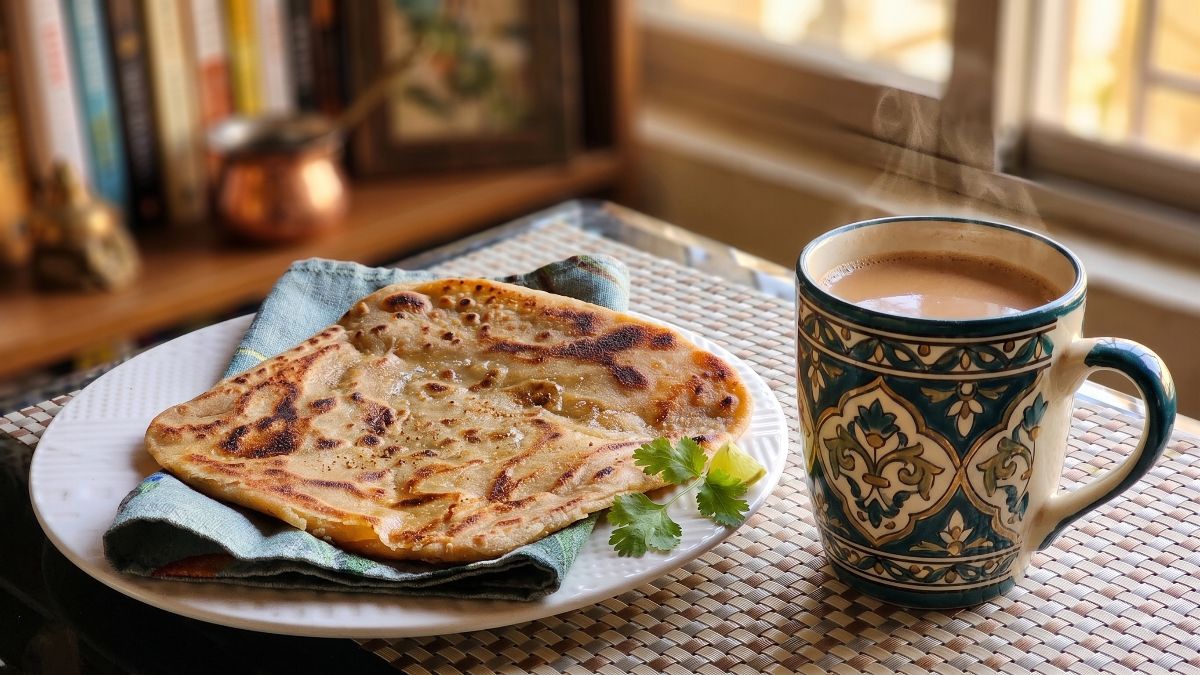
Chai and Khapli roti can make a satisfying start to the day, but the meal becomes more varied with one simple addition. Here are three easy ways to add protein-rich foods, fruit or vegetables without turning breakfast into a project.
Is chai and roti a healthy breakfast? It can certainly be part of one.
One or two Khapli rotis with a cup of chai provide a familiar grain-based start to the morning. Whether the breakfast feels more rounded, however, depends on what else accompanies them. A bowl of curd, an egg, some sprouts, a piece of fruit or a few vegetables can add another food group without requiring an entirely different breakfast.
That distinction matters because breakfast does not have to become a production.
ALSO READ | Do You Still Need Veggies If Your Khapli Roti Has Fibre?
For many Indian households, some mornings mean idli and sambar. Some mean yesterday’s sabzi with whatever is warm on the stove. And some mean chai and a fresh roti — made quickly, eaten between everything else that needs doing, and genuinely satisfying because it is familiar.
If that roti is made with Khapli wheat — also known as emmer wheat or Triticum dicoccum — the useful question is not whether you need to give it up.
It is simply:
What small addition would make this breakfast more varied?
What Does Chai and Khapli Roti Already Provide?
A Khapli roti provides carbohydrates, dietary fibre, some protein and naturally occurring vitamins and minerals from the wheat.
Aashirvaad Chakki 100% Khapli Atta provides about 11.4g of dietary fibre per 100g. The amount in an individual roti depends on how much atta is used.
Chai contributes fluid and, when made with milk, some of the nutrients present in that milk. The amount of milk and added sugar can vary considerably from one household — and one cup — to another.
So chai and roti are not nutritionally “empty”. But they are still largely a breakfast built around a grain and a beverage.
Look at the meal and ask:
- Is there another protein-rich food?
- Is there any fruit or vegetable?
- Does the breakfast contain more than one or two food groups?
If not, that does not make it a bad breakfast. It simply shows where one easy addition could help.
Why Does Breakfast Variety Matter?
There is no need to build a perfect plate at every breakfast.
But the morning meal is one opportunity to bring different foods into the day. If chai and roti are already your habit, the practical answer is not to replace them with something trendier. It is to build around them.
That might mean curd today, a banana tomorrow or leftover sabzi when there happens to be some in the fridge.
Small changes are easier to repeat than a breakfast routine that requires an entirely new shopping list.
3 Easy Ways to Make Chai and Khapli Roti More Balanced
1. Add One Protein-Rich Food
A bowl of curd, a boiled egg, paneer or a small serving of sprouts can add another food group to the breakfast.
You do not need all of them at once.
For someone who eats eggs, one boiled egg requires very little morning preparation. For a vegetarian household, plain curd may be even simpler: take it out of the fridge, put it in a bowl and breakfast has immediately become more varied.
The goal is one practical addition, not a checklist.
2. Add a Fruit
Fruit may be the easiest addition of all because it requires little or no cooking.
A banana can leave the house with you. Papaya can be cut the night before. An apple, orange, guava or whatever seasonal fruit is already at home can sit alongside breakfast or be eaten later in the morning.
If you genuinely do not want fruit with your chai and roti, carry it for later.
It still contributes to the variety of foods you eat across the morning.
3. Add Vegetables Without Cooking Another Meal
Vegetables do not have to mean making a fresh sabzi at 8 am.
Try:
- sliced cucumber;
- tomato;
- carrot sticks;
- a small portion of yesterday’s sabzi;
- spinach stirred into something already being cooked;
- a simple cucumber or vegetable raita.
Leftovers are particularly useful here. If last night’s bhindi, lauki, beans or mixed vegetables are sitting in the fridge, breakfast does not require another recipe — just a reheat.
Chai and Khapli Roti: What Changes When You Add One More Food?
| Breakfast | What gets added | What changes |
|---|---|---|
| Khapli roti + chai | Whole-grain food + beverage | A simple grain-based breakfast |
| Khapli roti + chai + fruit | Fruit | Adds another plant-food group |
| Khapli roti + chai + curd | Protein-rich dairy food | Adds another food group |
| Khapli roti + chai + egg | Protein-rich food | Adds another food group |
| Khapli roti + chai + leftover sabzi | Vegetables | Adds vegetable variety |
| Khapli roti + chai + protein-rich food + fruit or vegetables | Two additional food groups | A more varied version of the same familiar breakfast |
Notice what does not happen in any of these examples:
The roti does not disappear.
You are building around what you already eat.
Does Adding Ghee Make the Breakfast Complete?
Many households brush rotis with ghee before serving, and it can absolutely remain part of a breakfast you enjoy.
But ghee does not perform the same role as fruit, vegetables, curd, eggs, pulses or other foods.
A Khapli roti with ghee and chai is still primarily built around a grain-based food and a drink. If you want greater food-group variety, the useful move is to add something different rather than simply more of the same.
Does the Type of Chai Matter?
It can change the composition of the drink, particularly according to how much milk and added sugar are used.
Black tea, milk tea, masala chai, ginger chai and less-sweet chai are not nutritionally identical. But changing the style of chai does not alter the main plate-building principle of this article.
You do not need your cup of tea to provide everything.
If chai is something you enjoy with breakfast, keep it. Look at what accompanies it.
What If You Are Not Very Hungry in the Morning?
Not everyone wants a large meal soon after waking up.
If your appetite is small, breakfast does not need to become an endurance exercise. You might have:
One Khapli roti + chai + a small bowl of curd
and carry a fruit for later.
Or:
One Khapli roti + chai + a boiled egg
and eat fruit when you are actually hungry.
Thinking across the morning can be more practical than trying to fit several foods into one sitting.
One Breakfast That Requires Almost No Morning Planning
Try:
- one or two Khapli rotis;
- one cup of chai;
- one boiled egg or one bowl of curd;
- one seasonal fruit.
The egg can be boiled in advance. The fruit requires virtually no preparation. Leftover rotis or dough may already be part of the household routine.
It is a breakfast built from familiar foods rather than a separate “healthy eating” project.
A 30-Second Breakfast Check
Before changing what you eat, look at the breakfast you already have.
Ask:
- Is there a grain or whole-grain food?
- Is there an additional protein-rich food?
- Is there a fruit or vegetable?
- Is there more than one food group on the plate?
- Is this something I can realistically eat again next week?
There is no score. You are simply looking for the smallest useful addition.
Don’t Overcomplicate Breakfast
Breakfast has acquired a peculiar amount of performance anxiety.
It can seem as though doing it “properly” requires overnight oats, imported seeds, a smoothie in a mason jar and a version of your weekday morning that somehow contains an extra forty-five minutes.
It does not. The smoothie bowl is, for many people, a Wednesday fantasy that collides with reality by Thursday.
What works is whatever you will actually make and eat. If chai and Khapli roti are already part of your morning, start there. Add curd. Add an egg. Pick up the banana on your way out. Reheat yesterday’s sabzi.
You do not need a new breakfast identity. You need one useful addition.
FAQs About Chai and Khapli Roti for Breakfast
Is chai and Khapli roti a healthy breakfast?
It can be part of a varied eating pattern. On its own, chai and Khapli roti are largely centred on a grain-based food and a beverage. Adding curd, an egg, sprouts, fruit or vegetables introduces more food-group variety.
Is one Khapli roti enough for breakfast?
There is no universal number. Appetite and energy needs vary with age, activity, portion size and the foods eaten alongside the roti. Some people may be comfortable with one, while others may prefer two or more.
What is the easiest thing to add to chai and roti for breakfast?
Plain curd, a boiled egg, a seasonal fruit or leftover vegetables are among the lowest-effort additions because they require little or no extra cooking.
Can I eat leftover sabzi with Khapli roti for breakfast?
Yes. Leftover vegetable dishes can be a practical way to add vegetable variety without preparing another meal.
Can I have fruit later instead of with breakfast?
Yes. If you do not want fruit alongside chai and roti, you can eat it later in the morning. Looking at food variety across the morning can be more useful than forcing everything into one meal.
Does ghee make Khapli roti a complete breakfast?
Ghee can be part of the meal, but it does not replace foods such as fruit, vegetables, curd, eggs or pulses. If the breakfast lacks variety, adding another food group is more useful than simply adding more ghee.
Is Khapli wheat the same as emmer wheat?
Yes. Khapli is an Indian name used for emmer wheat, commonly identified botanically as Triticum dicoccum.
Ask Happy Tummy GPT
“I usually have chai and Khapli rotis for breakfast. Based on the foods I already keep at home, suggest seven quick breakfast combinations that take less than 15 minutes to prepare. Include one protein-rich addition and one fruit or vegetable with each option.”
The Bottom Line
Chai and Khapli roti make a comforting, familiar breakfast, and there is no reason to abandon a combination you enjoy simply because it does not look like somebody else’s idea of a perfect morning meal.
The useful change is much smaller: Add a bowl of curd. Boil an egg. Reheat yesterday’s sabzi. Take a piece of fruit with you. The roti stays… you are just giving it company.
Disclaimer: This article is intended for general educational purposes only and should not be considered medical advice. For personalised dietary recommendations or medical nutrition advice, consult a qualified healthcare professional or registered dietitian.