

7 Green Gram Benefits, Nutrition and Protein per 100 gms in Moong Dal
Did you know that the green gram can help you beat the heat? Read the amazing and surprising benefits of this humble bean
Table of Contents
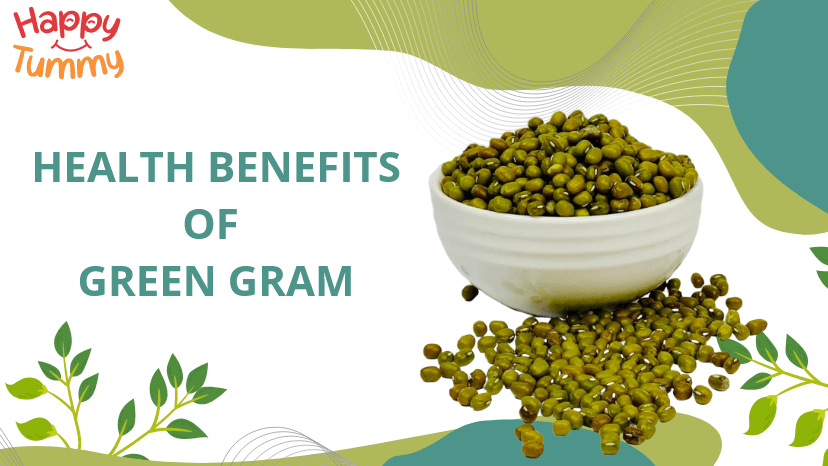
Green gram, often known by the name mung dal, does not need an introduction in India. It is one of the most consumed dal. We cherish it as namkeen, eat it with rice or roti, and even turn it into spicy cheelas.
While its protein content is well-known, numerous health benefits often go unnoticed beyond its familiar flavors. But we won’t let it happen here.
We’ll discuss everything green here – green gram benefits, its nature, its history and names, and a few fun facts. Let’s get going green.
Green gram is native to India. As far as the evidence suggests, it was domesticated here some 4,500 years back. Harappans were the first ones to embrace it and utilise it. From there, the road took these lentils to China, Thailand, and other nearby lands.
In India, green gram is usually known as mung dal. However, there are other local names too that you must know. After all, you can’t go to Karnataka and get things working with the word ‘mung’.
| Language | Name | Pronunciation |
| Hindi | मूंग दाल | moong daal |
| Punjabi | ਮੁੰਗ ਦੀ ਡਾਲ | mūng dī ḍāl |
| Gujarati | મગ ડાલ | mag ḍāl |
| Marathi | हिरवे मुग डाळ | hirve mug ḍāḷ |
| Konkani | मुगा डाल | mugā dāl |
| Bengali | মুঁগ ডাল | mū̃g ḍāl |
| Odia | ମୁଗ ଡାଲି | mûgå ḍāli |
| Assamese | মগু দাইল | magu dail |
| Kannada | ಹೆಸರು ಬೇಳೆ | hesaru bēḷe |
| Tamil | பயத்தம் பருப்பு | payatham paruppu |
| Malayalam | പെറുപയർ പരിപ്പ് | cherupayar parippu |
| Tulu | ಪದಂಗಿ ಸಲೈ | padangi salayi |
| Telugu | పెసలు | pesalu |
Usually, you’ll find 3 types of mung dal in the market.
When it comes to taste, green gram holds very subtle hints of nutty and sweet flavours. It is easy to cook and light to digest.
Now, let’s do some nutrition talk.
Green gram benefits our health through not just protein but numerous other nutrients that hide within its hard shell. All three types of green gram usually offer the same amount of nutrients except for fibre, which gets removed during the dehusking process.
| Nutrient | Amount |
| Calories | 294 Kcal |
| Water | 10 grams |
| Carbohydrates | 46 grams |
| Fibre | 17 grams |
| Protein per 100 gms | 22.5 grams |
| Fat | 1.1 grams |
| Vitamins | Vitamins B1, B2, B3, B5, Folate, E, K, etc. |
| Minerals | Calcium, iron, phosphorus, magnesium, selenium, zinc, potassium, etc. |
| Phytonutrients | flavones, isoflavonoids, anthocyanins, flavanols, etc. |
As we see, it has a rich nutrition profile. But what do these nutrients mean to our health? Let’s understand this through all the green gram benefits.
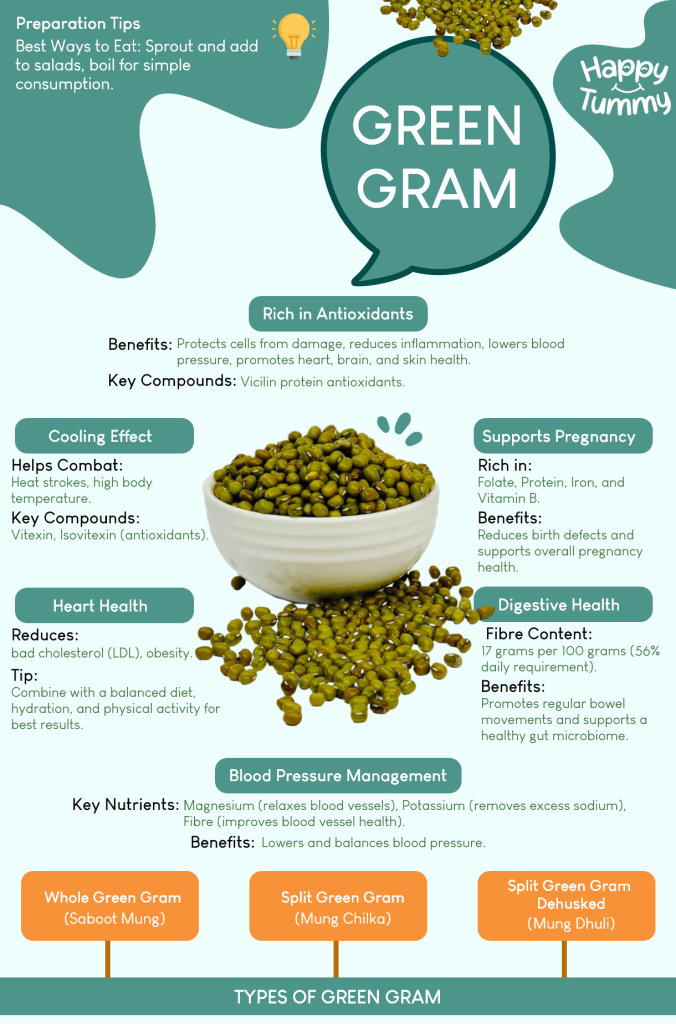
Mung beans stay soaked in good amounts of antioxidants. It contains vicilin protein, which contains numerous antioxidant compounds known to be beneficial for humans. [2]
Although antioxidants are mainly marketed as beneficial for the skin, their benefits fare far and well. Here is how:
Eating a diet rich in antioxidants can protect your heart [3]
Brain health, skin health, eye health, the benefits are many. This is why nutritionists and doctors often recommend embracing a diet rich in antioxidants. It can truly enhance your health and increase your lifespan.
Indian summers are infamous for their scorching heat. The temperature gets brutally high, reaching 50°s, and sometimes, it even leaps this tough bar. This calls for a diet with cooling effects. Green gram is alkaline in nature, which helps maintain the body’s pH balance and promote overall health and well-being. Consuming alkaline foods like green gram can also reduce symptoms of acid reflux, which high temperatures can exacerbate. Green gram also benefits us in heat by managing our body temperature.
In Ayurveda, green gram is considered ‘Laghu’ (easy to digest) and having a cooling nature
Excessive heat can cause heat strokes, which can be life-threatening. But mung dal can help.
Firstly, green gram contains strong anti-inflammatory properties, which hold protective potential against heat strokes, thirst, high body temperatures, etc. [4]
Secondly, it contains vitexin and isovitexin, antioxidants known for protecting our cells from damage from free radicals during heat. [5]
Lastly, mung dal is easy to digest and is alkaline, which helps in digestion and acid reflux.
Among the many causes behind rising heart diseases these days, one is excessive cholesterol and obesity. These two are intertwined and are known to block blood vessels.
Green gram benefits the heart by reducing bad cholesterol (LDL) in our bodies. Also, because it is easy to digest, weight stays under control. This again helps the heart stay joyful.
Numerous studies have shown that consuming lentils regularly is a healthier choice. It can bring down bad cholesterol. [6]
However, to bring the heart to a healthier state, one must always work on changing the overall diet and lifestyle. This includes:
Most of us do not look at blood pressure with much seriousness. But blood pressure imbalance is a much more serious thing that deserves attention. High or low blood pressure can weaken your blood vessels and might cause serious damage.
If you sail your boat through high or low blood pressure, green gram can be beneficial for you. It contains good amounts of
All these three nutrients are known to leash down blood pressure. How? [7]
Magnesium relaxes blood vessels, making blood flow easier. Potassium helps remove excess sodium, which in turn reduces blood volume and pressure. Soluble fibre improves the health of blood vessel linings, keeps them flexible, and lowers cholesterol.
Several studies have linked the intake of legumes to balanced blood pressure. [8]
Mung dal is one of the most easily digestible lentils around the world. Despite its high protein content, it comes light and cool on the digestive system. The carbs it contains do not cause flatulence or indigestion as compared to other lentils. [9]
Also, green gram contains high amounts of fibre, nearly 17 whopping grams in 100 grams. This is around 56% of the daily fibre requirement. It especially contains Pectin, a type of soluble fibre that has been found to be brilliant for gut health. [10]
WHO recommends consuming at least 25-30 grams of fibre per day [11]
But why is fibre important?
Fibre boosts digestive health by inducing regular motions and keeping constipation away. Furthermore, fibre acts as food for our good gut bacteria. When they eat well, they work well, and when they work well, we feel energetic.
Just as how blood pressure can be dangerous, an imbalance in blood sugar can be equally harmful. High blood sugar can not only cause obesity, it can even cause fatigue, damage eyes and organs, stiffen blood vessels, and many more foul things if left untreated.
Green gram benefits in blood sugar in numerous ways. For example
Numerous studies have found mung beans to be brilliant at controlling blood sugar, lowering cholesterol, and reducing triglyceride levels. [12] [13]
Most women don’t get enough folate, which is a must during pregnancy. A lack of folate may lead to birth defects. [14]
Mung bean can be beneficial in terms of folate. It has good folate content. 100 grams of boiled mung beans can easily provide around 160mcg – almost 50% of the RDA. Not just this – green gram also benefits pregnant women through its rich [15]
As we see, green gram benefits our overall health and is a true gem. However, it must also be cooked more healthily. This preserves the nutrients that get damaged during frying.
The best way to get all the mung dal benefits is to sprout it and add it to salads. Or you may simply boil it and consume it. There are many recipes that are based on boiled green gram.
Being light and easy on the stomach, mung dal is a great choice to add to your meal plan. Especially if you are tired of all the junk and fast food and looking for a healthy and tasty alternative.
Do you also prefer simple food, have a sensitive stomach, or just want to get away from daily oily and spicy meals? Well, moong is going to be your best friend. It is the comfort food for many, especially during recovery from a fever or weakness.
In short, moong dal is one of those rare foods that work well for almost everyone in the house.
While it is true that moong dal is usually friendly for most people, a few individuals may need small adjustments.
Generally, moong dal is healthy and mild, but it is always better to listen to the body to make daily food more bearable.
Try Aashirvaad Organic Moong Dal that follows strict quality inspections and organic food standards. It has been carefully chosen and packed in a clean way so that you can enjoy both taste and health.
Ingredients:
Serving Size: 2-3 servings
Time: 25 minutes
Method:
Ingredients:
Serving Size: 2 servings
Time: 10 minutes
Method:
Green gram, or mung dal (as it is called in India), is a much-loved lentil. It has been used since ancient times due to its light nature. For this very reason, it is cherished during summer due to its cooling potency.
Despite being one of the most protein-rich lentils (almost 23 grams per 100 grams), it is easily digestible and doesn’t cause flatulence. Furthermore, it is rich in antioxidants, can bring down blood pressure, help with sugar control, and is rich in folate too. This makes it a brilliant addition during pregnancy.
However, if you are planning to consume green grams every day, consult with a nutritionist.
So, are you ready to cherish this green beauty (or golden when split)?
Green gram is a protein-rich lentil that helps in bringing down blood pressure, blood sugar, body heat, etc. Also, it is rich in antioxidants and folate. This makes it a brilliant addition during pregnancy.
Although green gram is wonderfully healthy, consuming lentils daily must be practised only after consulting a nutritionist or a doctor.
Green gram is one of the most protein-rich lentils consumed around. 100 grams of green gram provides around 22-23 grams of protein.
In India, green gram is commonly known as mung dal. However, it also has different names in different languages. For example, in Kananda it is known as hesaru bēḷe, and in Tamil, it is known as pesalu.