Dosa Calories: How To Prepare Healthy Dosa, Full Recipe, and Its Health Benefits
Get to know about the recipe of healthier dosa, calorie content, and benefits. This South Indian dish is guilt-free and nutritious.
Table of Contents
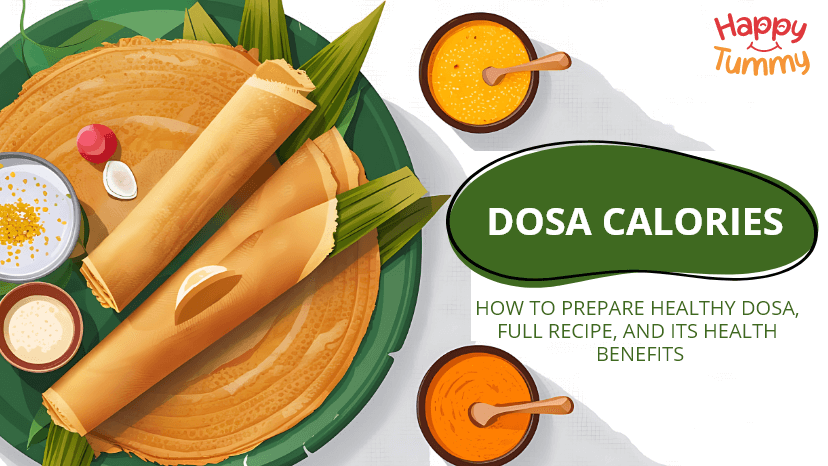
Dosa are South Indian Crispy, golden-brown crepes that have become a favourite worldwide for their unique texture, taste, and versatility.
Dosa is a favourite food both at home and in restaurants all over the world, with or without a spicy sambhar or some cool coconut chutney.
However, have you ever wondered what the calorie content of this favourite meal is? You may be surprised by what you actually get in it.
Dosa may not be that bad, though; it can be considered a healthy fermented breakfast option as well as a snack. however the method of preparation can make it calorie-dense.
There are various varieties of Dosa, such as masala dosa, rava dosa, sada dosa, onion dosa, moong dal dosa, ragi dosa, wheat dosa, etc.
In this blog, we are going to deconstruct the calories of a conventional dosa, demonstrate how to prepare a healthier dosa, and discuss all the health benefits of this South Indian delicacy.
We will find out how you can make dosa and still make it part of a balanced diet without losing the taste!
The average Sada Dosa (1 medium-sized dosa can measure around 90g) consists of:
| Nutrients | Values |
| Energy | 113.41kcal |
| Carbohydrates | 16.88gm |
| Protein | 2.67gm |
| Fat | 3.7 gm |
| Fiber | 1.14gm |
Traditional dosas, particularly ghee- or oil-based dosas, can be calorie-dense—the intake of refined rice and urad dal can augment carb intake.
Aashirvaad Atta Multigrains has developed the Digestion Quotient. This short 2-minute survey will help you evaluate your digestive system’s well-being and provide a digestion score based on your answers. Take the test today and have more information about your digestive health!
Having learned about the amount of calories a typical dosa has, it is time to proceed to the healthier update of this legendary meal.
Serving Size: 4-5 dosas (depending on size)
Time Taken: 10-15 minutes (batter)
Fermentation Time: 8-12 hours (when batter is made from scratch)
Preparation: 2- 3 minutes per dosa.
Ingredients:
Instructions:
Soak the Ingredients:
Grind the Batter:
Ferment the Batter:
Prepare the Dosa:
Serve the Dosa:
Now that you have a healthy dosa, it is time to enjoy its various health benefits.
Dosa may be healthy when prepared with healthier ingredients and provides a wide variety of nutrients to support overall well-being.
Dosa contains a lot of dietary fibre because it is made with brown rice and dal, both of which are vital for digestion.
Fibre may help normalise bowel function, manage constipation, and support a healthy intestinal microbiome.
Moreover, fibre may delay the absorption of sugar into the blood, thereby helping keep blood sugar levels normal [3]. Fibre in brown rice may also help maintain satiety levels, thereby supporting weight management.
Protein is a necessary nutrient for building and repairing tissues and is extremely important for muscle health, immunity, and overall wellbeing & growth [4]. Adding urad dal and moong dal to the dosa batter will make it richer and add a lot of plant protein.
Protein may also leave you feeling fuller, which is why your calorie intake during the day may be reduced. To enhance the protein value of dosa, adding soaked green gram can also be beneficial.
Olive oil may contain healthy fats in the form of monounsaturated fats that have been found to reduce bad cholesterol (LDL) and keep the heart healthy[5]. Including healthy fats in your diet is essential for maintaining a well-balanced, nutritious eating plan.
Also, instead of refined oils,use cold-pressed oils such as groundnut oil and sesame seed oil, and even a small to moderate amount of ghee, can be used.
The conventional dosa is gluten-free by nature, making it a great choice for a celiac disease patient or a gluten-sensitive individual. The batter is made from rice and lentils, which are gluten-free.
The greatest benefit of dosa is that it is gut-friendly due to fermentation. Dosa can be considered a good source of probiotics. The bacteria used to ferment lactic acid during fermentation may help digest carbohydrates and enhance the growth of healthy gut bacteria.
It is advantageous because it can support improved gut health, digestion, and nutrient absorption, thereby helping maintain a healthy digestive system.
Fermentation may also increase the bioavailability of dosa batter, enabling it to absorb various important nutrients, including minerals and B vitamins.[6]
Aashirvaad Atta with Multigrains has partnered with leading dietitians to launch theMy Meal Plan Test to determine your daily fibre intake. It will provide you with a diet plan tailored to your needs and help enhance your health and nutrition.
Dosa is a healthy, delicious dish that everyone can enjoy, even those who are careful about their calorie intake.
It is just necessary to make several substitutions, such as replacing white rice with brown rice, replacing soy oil with olive oil (which is also healthier), and replacing curd with moong dal, so that you can prepare a healthy dosa that can be as crispy and good as well.
Dosa is a healthy snack with good amounts of fats, micronutrients, protein, and fibre, and when prepared correctly, it can be included in a balanced diet.
One should keep in mind that a healthy diet is a key factor, and it is vital to consult a medical specialist or nutritionist to ensure the diet aligns with the individual’s health goals.
Then the next time you have a craving for this South Indian delicacy, go ahead and prepare it the healthy way, you will have all the benefits without the guilt!
Yes, dosa is healthy as long as it’s made with brown rice, lentils, and little oil. These replacements add more fibre and protein, and keep you fuller. Other healthy dosa options include wheat dosa, ragi dosa, moong dal dosa, and mixed dal dosa.
To add more content to dosa, moong dal can be added to the batter to increase protein and fibre. It can also be served with sambhar or vegetable stuffing to make it more satiating and nutritious. You can also add toppings such as paneer, egg, etc., to enhance the protein content
To save on calories, brown rice should be used, ghee should be limited, and butter should be avoided and cooking dosa in a non-stick pan will reduce oil use. Vegetable dosa, mixed dal dosa, pesarattu, etc., are more nutritious options.