Tamil Nadu’s Fermented Breakfasts: Paniyaram & Uttapam, Decoded
The same rice-and-urad-dal ferment can become a crisp paniyaram or a thick uttapam. What changes when the batter meets a different pan — and does fermented really mean probiotic?
Paniyaram and uttapam are commonly made from the same fermented rice-and-urad-dal batter family used for idli and dosa, then shaped and cooked differently — paniyaram in the oiled cavities of a special pan, uttapam as a thick, topped pancake on a flat griddle.
Fermentation changes the batter before cooking and can alter starch and protein digestibility, flavour and nutrient availability. What it does not automatically do is make the finished food probiotic. Researchers have isolated live bacteria with promising probiotic characteristics from fermented dosa batter, but both paniyaram and uttapam are subsequently cooked, so the foods on your plate should not be assumed to deliver those microorganisms alive.
And there is another useful distinction here: fermented food and “light” food are not the same thing. How much oil is used in paniyaram or uttapam depends on the pan and the cook, and the cooking method is part of the nutritional picture too.
Same Batter, Two Very Different Breakfasts
Kerala’s fermented breakfasts, covered in the first piece in this series, get much of their character from coconut. Tamil Nadu takes a different route entirely. Rather than beginning with a markedly different batter, paniyaram and uttapam commonly draw on the same rice-and-urad-dal ferment that most people already know through idli and dosa, and get much of their individual identity from shape and cooking method instead.
That is genuinely interesting from a food-science angle, because this batter family has been studied more directly than many regional fermented foods. Researchers have isolated and characterised microorganisms from fermented dosa batter, which gives us something more substantial to work with than simply saying “traditional fermentation is good for the gut”.
It also makes the honest story about paniyaram and uttapam a story about what happens after fermentation: what changes when the same sort of batter goes into a cavity pan rather than being poured thick onto a flat griddle.
This is the second piece in the series looking at fermented South Indian breakfasts beyond the idli-dosa spotlight, one state at a time. Where Kerala stood apart because of its rice-and-coconut base, Tamil Nadu is interesting almost for the opposite reason: the starting point is deeply familiar, while the finished foods are not.
Paniyaram: The Crisp, Round One
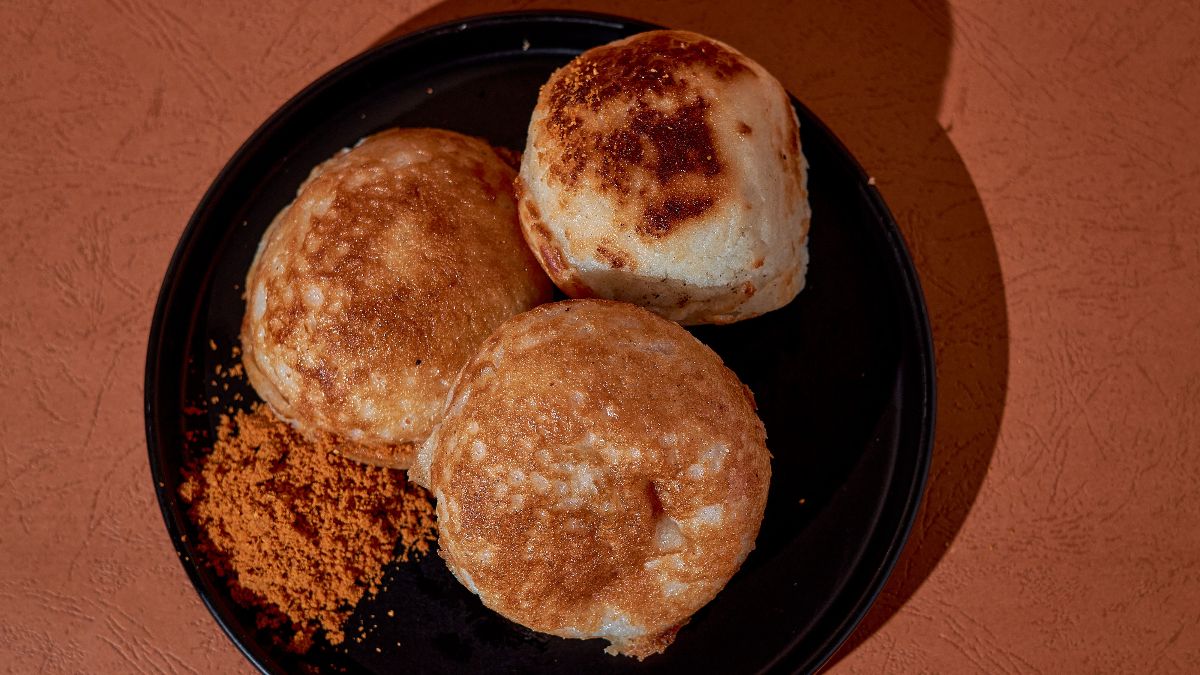
Kuzhi paniyaram is strongly associated with Tamil cooking, including Chettinad cuisine, and is made by pouring fermented rice-and-urad-dal batter into the small round cavities of a dedicated paniyaram pan. Savoury versions are often tempered first with mustard seeds, onion, curry leaves and green chilli, though household variations are endless.
A little oil is usually added to the cavities before or during cooking. The outside browns and crisps against the pan while the interior stays soft and fluffy, giving paniyaram a texture that is quite different from anything produced by steaming the same batter.
It is also a practical leftover-batter food. Slightly tangier, safely refrigerated idli or dosa batter is often turned into paniyaram rather than discarded or forced into another morning of dosa. That economy is part of the dish’s everyday appeal: it does not necessarily require a dedicated batter or a separate cooking project.
This preparation travels under several regional names. Tamil Nadu commonly calls it kuzhi paniyaram; Telugu-speaking regions have gunta ponganalu, while Karnataka has paddu or guliyappa. They belong to essentially the same South Indian preparation family — fermented rice-and-lentil batter cooked in a multi-cavity pan — with local differences in seasoning, proportions and sweet or savoury treatment.
There are sweet paniyaram versions too, made with jaggery and coconut instead of the onion-chilli tempering. The pan and basic idea remain the same; the flavour shifts completely.
Uttapam: The Thick, Topped One
Uttapam belongs to the same fermented rice-and-urad-dal batter family as dosa, but the similarity becomes much less obvious once the batter hits the pan.
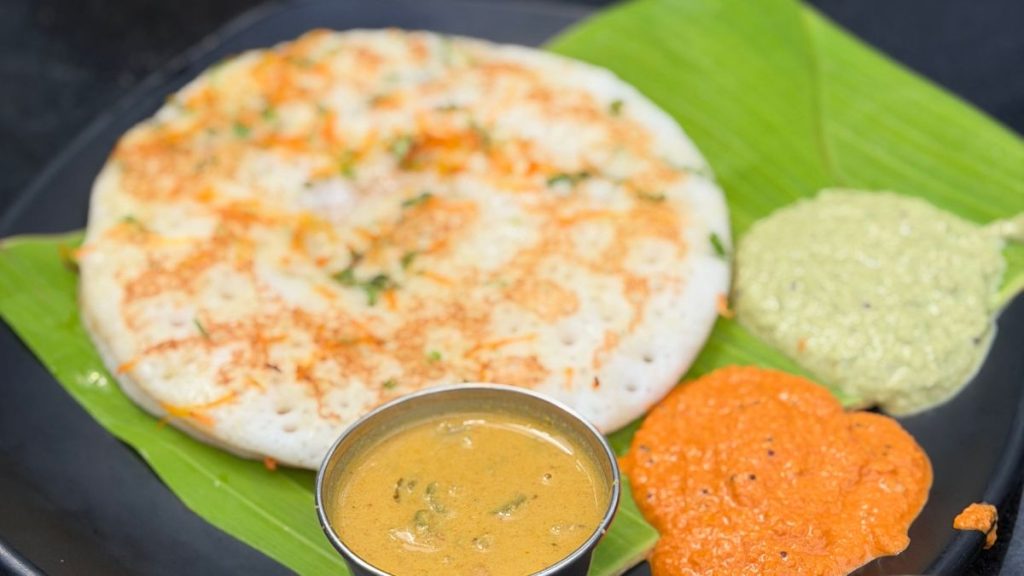
Instead of being thinned and spread into a large, crisp crepe, the batter is kept thicker and poured onto the griddle with relatively little spreading so that it holds its body. Chopped onion, tomato, green chilli and coriander are commonly pressed into the surface as it cooks rather than being folded inside later.
The result is closer to a thick savoury pancake than to dosa’s crisp crepe: soft, substantial and studded with vegetables across the surface. The starting point may be similar, but the eating experience is not.
Onion uttapam is probably the most familiar version, but tomato and mixed-vegetable versions with capsicum, carrot or other vegetables are routine tiffin-centre fare too. Some cooks scatter the toppings onto the surface; others mix some of them into the batter before cooking. Neither approach needs to win an authenticity contest. It is largely a matter of household and tiffin-centre habit.
What the Fermentation Is Actually Doing
The Same Correction as Kerala: Fermented Does Not Automatically Mean Probiotic
Rice-and-urad-dal batter is one of the more directly studied fermented foods in Indian cuisine. Researchers have isolated strains including Lacticaseibacillus casei and Limosilactobacillus fermentum from fermented dosa batter and found promising characteristics in laboratory testing, including acid and bile tolerance and antimicrobial activity.
That is a useful finding.
It is not the same as proving that dosa batter itself is a clinically established probiotic food, and it certainly does not mean the cooked paniyaram or uttapam on your plate is delivering those organisms alive.
Both dishes are cooked at temperatures far above those in which most fermenting microorganisms remain viable. The interesting part, therefore, is what the fermentation has already done to the batter before the heat arrives.
During fermentation, microorganisms consume available carbohydrates and produce acids, gases and other metabolites. Enzymatic activity can also alter starches and proteins and reduce some antinutritional compounds such as phytate. Research on fermented cereal-and-pulse systems supports changes in digestibility and nutrient availability, although that should not be stretched into a promise that every person will necessarily find paniyaram or uttapam easier to digest.
The mildly sour flavour, the aerated batter and the texture of the finished food are all visible consequences of that fermentation whether or not any live microorganisms survive cooking.
EXPERT LENS | What Does “Probiotic Potential” Actually Mean?
A microorganism can show probiotic potential in laboratory testing without yet being an established probiotic in the clinical sense. Researchers may test whether a strain survives simulated stomach and bile conditions, adheres to cells or inhibits certain microorganisms. Those findings are useful early evidence.
Calling a food probiotic, however, requires more: defined live microorganisms must be present in adequate amounts and associated with a demonstrated health benefit. So finding promising strains in fermented dosa batter tells us something interesting about the fermentation ecology; it does not prove that a serving of cooked paniyaram or uttapam is delivering a probiotic effect.
Uttapam begins with the same fermented rice-and-urad-dal batter family as dosa, but keeping it thick and cooking vegetables into the surface creates a softer, more substantial breakfast. Image via PEXELS
Fermented Food and ‘Light’ Food Are Not the Same Thing
Paniyaram makes this distinction particularly easy to see.
The batter may be fermented, but the finished food is cooked in oiled cavities. Depending on the pan and the cook, that can mean more added oil than a steamed idli, although the exact difference between paniyaram, dosa and uttapam cannot be fixed without knowing how each one was prepared.
None of this turns paniyaram into a food to avoid. It simply means fermentation describes what happened to the batter; it does not describe the fat content of the finished dish.
A paniyaram cooked with a light film of oil and one cooked generously in each cavity are both paniyaram. An uttapam can likewise be cooked with very little oil or considerably more. The nutritional picture belongs to the actual preparation, not merely to the fact that fermentation happened overnight.
And that is a useful correction to the way fermented foods are often discussed: “fermented” is a processing description, not a synonym for “light”, “low-fat” or “healthy”.
Paniyaram vs Uttapam
Paniyaram
Uttapam
Cooking method
Pan-cooked in oiled cavities
Thick batter cooked on a flat griddle
Texture
Crisp outside; soft and fluffy inside
Soft, thick and pancake-like
Added oil
Usually some oil in the cavities; amount varies by cook and pan
Can be made with little or more oil depending on preparation
Typical use
Breakfast or evening snack with chutney
Breakfast with sambar and chutney
Fermentation angle
Fermented batter is subsequently cooked, so it should not be treated as a live-probiotic food
Same principle: fermentation changes the batter before griddle cooking
If You Want to Try Making Either
Both work well with the sort of fermented batter already used for idli or dosa, which is part of their everyday appeal. You are not necessarily starting from scratch specifically for paniyaram or uttapam.
For paniyaram, a proper cast-iron kuzhi paniyaram pan gives you the characteristic rounded shape and good surface browning. Non-stick versions work too, though the texture and browning can differ.
For uttapam, resist the urge to spread the batter the way you would for dosa. The thickness is the point. Pressing the toppings gently into the surface helps them cook into the batter rather than sitting loosely on top.
Paniyaram is also a familiar way to use safely refrigerated leftover idli or dosa batter once it has become a little tangier. That extra sourness can work particularly well with the crisp, savoury format, rather than being treated as a sign that the batter has failed.
As always with fermented batter, use ordinary food-safety judgement: refrigerate leftovers properly and discard batter that shows signs of spoilage rather than assuming every degree of sourness is desirable fermentation.
The Honest Takeaway
Paniyaram and uttapam are good examples of how fermentation changes a rice-and-urad batter before cooking, and how the cooking method then changes the food again.
Neither needs to be sold as a probiotic breakfast. The batter undergoes a genuine fermentation, and that fermentation alters its flavour, texture and nutritional chemistry before it reaches the pan. Cooking then introduces another set of variables — shape, surface area, heat and, particularly with paniyaram, the amount of oil used.
None of that makes either dish less worth having on your table. It simply gives you a more accurate reason to appreciate them than a probiotic health halo the food never promised in the first place.
There is a useful general lesson in the pairing too. A single fermented batter can become four or five genuinely different foods — idli, dosa, uttapam, paniyaram — depending on how it is shaped and cooked, and each of those decisions changes the finished food in a real way, not just the taste.
“Fermented” describes what happened to the batter overnight. It does not describe what happens to it in the pan the next morning, and that second part matters just as much.
Frequently Asked Questions
Is Paniyaram Healthy?
Paniyaram can comfortably be part of an ordinary varied diet. It is made from a fermented rice-and-urad batter and cooked with some oil in a cavity pan, so the amount of added fat depends on how it is prepared.
Fermentation does not automatically make it either “light” or “heavy”.
What Is the Difference Between Uttapam and Dosa?
They commonly use the same fermented rice-and-urad-dal batter family, but the cooking method is different.
Dosa is usually spread thin to create a crisp crepe, while uttapam is kept thick and left largely unspread, with vegetables cooked into or onto the surface. That produces a much softer, thicker pancake.
Is Paniyaram the Same as Gunta Ponganalu or Paddu?
They belong to essentially the same South Indian preparation family: fermented rice-and-lentil batter cooked in a specialised multi-cavity pan.
Tamil Nadu commonly calls it kuzhi paniyaram, Telugu-speaking regions gunta ponganalu, and Karnataka paddu or guliyappa, with regional variations in batter, seasoning and sweet or savoury treatment.
Do Paniyaram and Uttapam Contain Probiotics?
They should not be described as probiotic foods simply because the batter is fermented.
Researchers have isolated live strains with promising probiotic characteristics from fermented dosa batter, but paniyaram and uttapam are subsequently cooked. The finished foods should therefore not be assumed to deliver those viable microorganisms in probiotic amounts.
Does Fermentation Make Paniyaram or Uttapam Easier to Digest?
Fermentation can alter starches, proteins and antinutritional compounds in cereal-and-pulse batters in ways associated with improved in-vitro digestibility and nutrient availability.
That does not establish that every person will find the finished dishes easier to digest, so it is better understood as a change in the food matrix than as a guaranteed digestive benefit.
Can I Make Paniyaram or Uttapam From Regular Dosa Batter?
Yes. Both are commonly made from the same general fermented batter family used for dosa and idli, which is one reason they fit so easily into the South Indian breakfast rotation.
Does Paniyaram Always Have More Fat Than Uttapam?
Not necessarily. Paniyaram is cooked in an oiled cavity pan, but the amount of oil varies. Uttapam can also be cooked with very little or quite a bit of oil. The preparation matters more than the name of the dish.
You are now being directed to an external website https://www.callr.live/aashirvaadexperts/premium-plan.
This link is provided for your information and convenience only and ITC Limited is not
responsible for the contents or services provided by Brand Touch India or any information that
you share with Brand Touch India.