Appam and vattayappam begin with fermented rice-and-coconut batters, but cooking changes what reaches the plate. A nutritionist explains what fermentation does — and why ‘fermented’ does not automatically mean ‘probiotic’.
Appam and vattayappam are Kerala’s own fermented rice-and-coconut foods — one a lacy, soft-centred pancake, the other its steamed, cake-like cousin. Both begin with batter that is allowed to ferment, traditionally with toddy in some versions and now commonly with yeast.
That fermentation changes the batter before it is cooked: microorganisms use available carbohydrates and produce acids, gases and other compounds that alter flavour, texture and food chemistry. Research on fermented cereal foods also shows that fermentation can affect starch and protein digestibility and reduce some compounds such as phytate that influence mineral availability.
What fermentation does not automatically do is turn the finished appam or vattayappam into a probiotic food. Both are cooked after fermentation, so the live microorganisms responsible for the fermentation are not something we should assume survive in meaningful numbers on the plate.
Less exotic than much of the marketing around “fermented foods” suggests, perhaps. Still genuinely worth understanding.
Beyond Idli and Dosa: Kerala’s Own Fermented Tradition
Ask most people outside South India to name a fermented South Indian breakfast, and you’ll get idli or dosa, maybe uttapam if they’re being thorough. That’s not wrong, but it’s a narrow slice of a much bigger picture. Kerala alone has its own distinct fermented breakfast tradition, built around rice and coconut rather than the familiar rice-and-lentil combination, and it rarely gets mentioned in the same breath as its more famous cousins.
This is the first piece in a short series looking at exactly that gap — fermented South Indian breakfasts that live outside the idli-dosa spotlight, one state at a time. Kerala’s contribution is arguably among the most distinctive, largely because of what takes the place usually occupied by the lentil in the batter: coconut, which changes not just the flavour but the texture and richness of the final dish.
Appam and vattayappam are two of the most recognisable examples. They use closely related ideas but end up as genuinely different foods, one a thin, lacy pancake cooked in a curved pan, the other a soft, spongy steamed cake. Both rely on fermentation. Both are worth understanding properly, not only as regional curiosities but for what that fermentation is actually doing before the food reaches your plate.
Appam: The Lacy Pancake
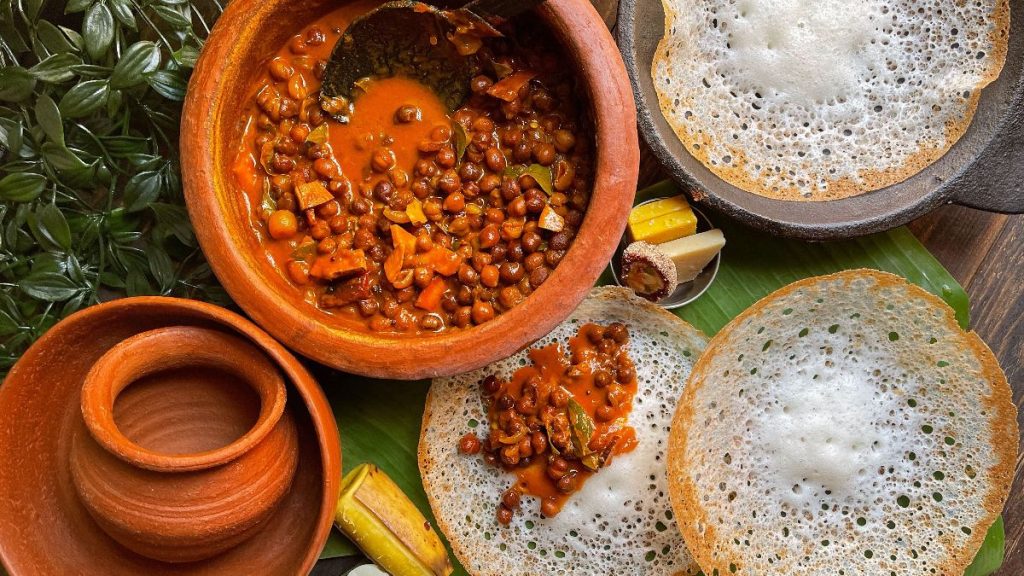
Appam is commonly made from a batter of rice, some cooked rice and coconut, ground and left to ferment. Toddy, or palm wine, has traditionally been used as the fermenting agent in some versions, while yeast is now a common and much easier substitute in home kitchens.
The fermented batter is poured into a small curved pan, the appachatti, and swirled so it climbs the sides thin and lacy while a pool collects in the centre and cooks up soft and slightly spongy. The contrast between crisp, delicate edges and the pillowy middle is what appam is known for.
It is typically eaten with vegetable stew, egg curry or meat curries, while sweeter accompaniments based on coconut milk and sugar or jaggery are familiar too. It is a genuine everyday food in Kerala rather than something that exists only for festivals.
There are regional and household variations worth knowing about as well. Kallappam, for instance, is traditionally associated with toddy fermentation and carries a tang quite different from a straightforward yeast-fermented batter. Palappam tends to lean further into coconut milk and has its own characteristic richness. If the only appam you have encountered is the neat yeast-leavened restaurant version, you have met one perfectly good member of a much larger family.
Vattayappam: The Steamed Cousin
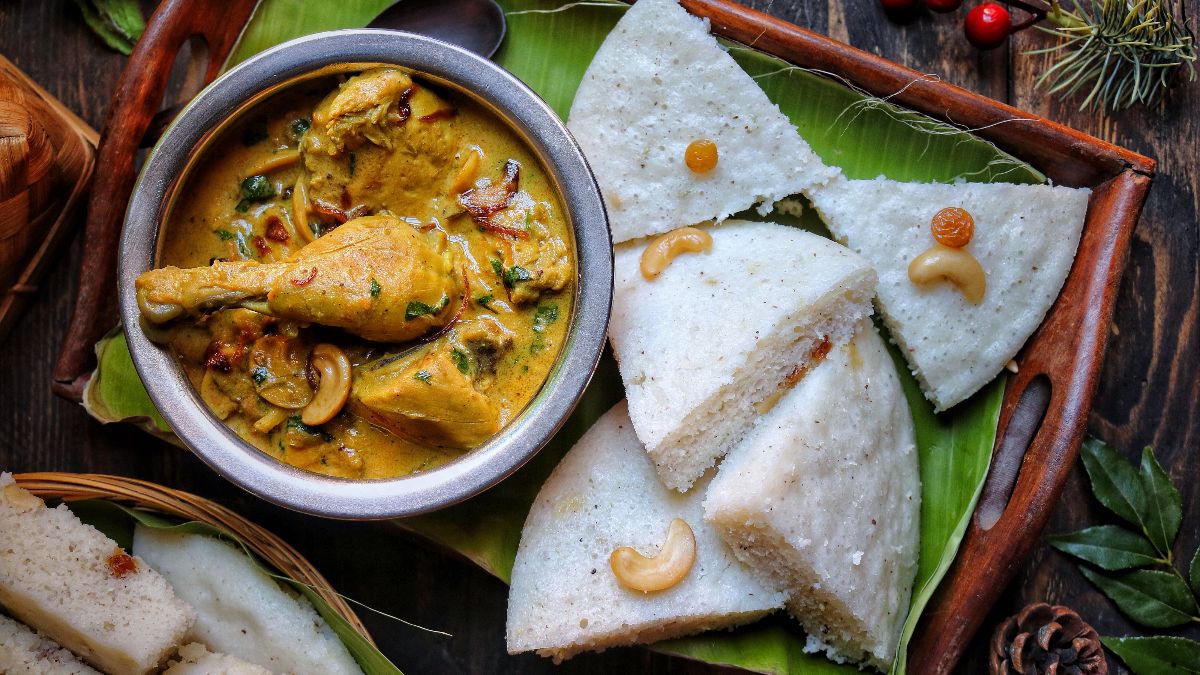
Vattayappam uses a related rice-and-coconut batter, usually with sugar and a fermenting or leavening agent, but then takes a completely different route. Instead of going onto a hot curved pan, it is steamed in a round mould. The result is a soft, spongy, mildly sweet cake, sometimes studded with raisins or nuts and lightly perfumed with cardamom, closer in spirit to a steamed sponge cake than to a pancake.
Vattayappam carries a particularly strong cultural association with Kerala’s Christian households and festive tables, including Christmas and Easter, though it is by no means confined to them or to festival mornings. It also appears as a tea-time food through the year.
The texture is its signature. A well-fermented batter traps gas produced during fermentation, and steaming sets those bubbles into a matrix of tiny air pockets, creating the springy, airy crumb that makes a good vattayappam feel quite unlike an ordinary rice-flour cake.
What Fermentation Is Actually Doing
Fermented Does Not Automatically Mean Probiotic
This is worth being precise about, because a lot of what gets written about fermented Indian foods slides too easily from one word to another.
Fermentation occurs when microorganisms in the batter — including added yeast and, depending on the preparation, naturally occurring microbes — metabolise available carbohydrates and produce acids, gases and other compounds. Those changes help create the flavour, aroma, acidity and texture we associate with fermented batter.
But fermented and probiotic are not synonyms.
A probiotic food requires specific live microorganisms, present in adequate amounts, with a demonstrated health benefit. A fermented food may contain live cultures, but that alone does not automatically make it probiotic.
Appam and vattayappam complicate the matter further because the fermented batter is then cooked. Appam meets a hot pan; vattayappam is steamed. That heat means the finished dishes should not be treated as reliable sources of the live microorganisms responsible for the fermentation.
The useful effects of fermentation, therefore, are largely about what has already happened to the batter before cooking.
What Changes Before the Batter Reaches the Heat?
During fermentation, microorganisms consume available carbohydrates while their own enzymes and those naturally present in the food alter components of the batter. In fermented cereal systems, this can change starch and protein digestibility and reduce antinutritional compounds such as phytate, which can bind minerals and affect their availability.
That does not mean every person will necessarily digest an appam better than an otherwise comparable unfermented rice dish; we do not have the kind of direct clinical evidence on appam and vattayappam that would justify such a blanket promise.
What we can say is that fermentation changes the food matrix before cooking, and research on related fermented cereal foods supports meaningful changes in digestibility and nutrient bioavailability.
That is already more interesting than needing to call breakfast a probiotic.
Expert Lens | What Survives When a Fermented Food Is Cooked?
Fermentation can change a food even when the organisms responsible for it do not survive cooking. Microbes may already have produced acids, enzymes and metabolites, altered carbohydrates and proteins, or reduced compounds such as phytate before heat is applied.
Once a fermented batter is thoroughly cooked, however, it is inaccurate to assume the finished food is still delivering large populations of live fermenting microbes. This is why “fermented food” and “probiotic food” should remain separate terms.
The same caution applies to idli and dosa. Their batter is fermented, but the finished steamed or griddled foods are not automatically live-probiotic foods either.
So Is There a ‘Gut Health’ Advantage?
There is a temptation to answer every fermented-food question by finding a gut-health halo for it. Appam and vattayappam do not need one.
Fermentation is a meaningful processing step. It alters the batter, helps create the textures these foods depend on and may improve the digestibility or availability of particular food components. Those are legitimate consequences of fermentation.
What we should not do is take the next leap and promise that eating an appam delivers live probiotics to your intestine, “feeds good bacteria” in a uniquely prebiotic way or treats digestive symptoms.
That is not what the evidence gives us.
And it is worth placing this alongside what most people already know about idli and dosa, because the same distinction applies there. Idli and dosa use rice and urad dal rather than rice and coconut, but the basic principle remains: fermentation transforms the batter; subsequent cooking changes what survives into the finished food.
What sets Kerala’s dishes apart is the ingredient base, the flavour and the culture around them rather than an entirely different relationship to the microbiome.
Appam’s fermented rice-and-coconut batter gives it its characteristic lacy edges and soft centre; the fermentation shapes the food before cooking, even though the finished appam should not be treated as a live-probiotic food. Image via PEXELS
Appam vs Vattayappam
Appam
Vattayappam
Cooking method
Griddle-cooked in a curved pan
Steamed in a round mould
Texture
Lacy, crisp edges; soft centre
Soft and spongy throughout; cake-like
Typical use
Everyday breakfast with stew or curry
Breakfast or tea-time food, strongly associated with Christmas and Easter in Kerala Christian households
Fermentation
Traditionally toddy in some versions; yeast is now common
Traditionally fermented; yeast is now a common home-kitchen option
Fermentation angle
Fermentation changes the batter, but the cooked food should not be treated as a live-probiotic source
Same principle: fermentation happens before steaming, while cooking greatly reduces viable fermenting microbes
If You Want to Try Making Either
Both require advance planning, which is part of what makes them different from the breakfast you decide to cook five minutes after waking up. Rice is generally soaked for several hours before being ground with coconut and, in many recipes, a portion of cooked rice for body. The batter is then left to ferment.
With yeast, around six to eight hours can be enough in suitably warm conditions, but fermentation time varies with ambient temperature, the quantity and activity of the yeast and the recipe itself. Somewhere cooler may need considerably longer. The useful thing to watch is the batter, not the clock: it should show clear signs of aeration and fermentation without being allowed to run indefinitely into aggressive sourness.
Yeast makes the process particularly reproducible for a first attempt if fresh toddy is not available.
Appam needs the right kind of pan to produce its signature shape. Without an appachatti, you may still make a perfectly good fermented rice-and-coconut pancake, but you will struggle to get that characteristic sweep from lacy edge to soft middle.
Vattayappam is more forgiving about equipment. A suitable round heat-safe mould that fits comfortably inside your steaming setup is usually enough.
If your appam comes out flat without its characteristic lace, an under-fermented batter is one possible reason, though batter consistency and pan temperature matter too. If vattayappam emerges dense rather than airy, fermentation, batter consistency and steaming conditions are all worth checking rather than assuming that “longer is always better”.
Fermentation is alive enough to resist being reduced to a timer.
The Honest Takeaway
Appam and vattayappam can sit perfectly comfortably within a varied diet, not because they are secretly probiotic superfoods, but because fermentation has already changed the batter before it is cooked — affecting its flavour, texture and nutritional chemistry in ways worth understanding.
That is a smaller claim than much of what gets written about fermented Indian foods, and it is a more useful one.
There is a broader point worth sitting with here too. Kerala has been making these foods in one form or another for generations, long before anyone was framing fermentation as a wellness trend and long before probiotic entered everyday vocabulary.
The dish came first. The marketing language came much later, and it does not always describe the food particularly well.
That is true of a lot of traditional Indian food, and it is worth remembering the next time a packaged product borrows the word fermented to imply something it may not actually deliver. Appam and vattayappam do not need that borrowed credibility.
What they offer, plainly stated, is still worth having on the breakfast table.
Frequently Asked Questions
Is Appam Good for Gut Health?
Appam is a fermented food, and fermentation changes the rice-and-coconut batter before it is cooked. Research on related cereal fermentations suggests that the process can alter digestibility and reduce some antinutritional compounds such as phytate.
There is not enough direct clinical evidence to promise that appam itself produces a particular gut-health benefit, however. It is better described as a fermented traditional food than as a digestive treatment.
What Is the Difference Between Appam and Vattayappam?
Appam is cooked in a curved pan to produce a thin, lacy edge and soft centre. Vattayappam is steamed into a soft, spongy, mildly sweet round cake.
Both use fermented rice-and-coconut batters, but their cooking methods create very different foods.
Do Appam and Vattayappam Contain Probiotics?
They should not be described as probiotic foods simply because their batter is fermented.
Both are cooked after fermentation, which means we should not expect the fermenting microorganisms to remain alive in meaningful numbers in the finished food. “Fermented”, “contains live cultures” and “probiotic” are three different claims.
Does Fermentation Make Appam Easier to Digest?
Fermentation can alter starches, proteins and antinutritional compounds in cereal-based batters in ways associated with improved in-vitro digestibility and nutrient availability.
Direct human studies comparing digestion of appam with an otherwise equivalent unfermented food are limited, so “easier to digest” should not be treated as a guaranteed effect for every person.
Can I Make Appam or Vattayappam Without Toddy?
Yes. Yeast is a common modern substitute and makes the fermentation easier to reproduce where fresh toddy is not available.
The flavour will not be identical to a toddy-fermented preparation, but it is a completely practical home-kitchen route to both dishes.
Is Vattayappam Only Eaten at Christmas?
No. It has a particularly strong association with Christmas and Easter in Kerala Christian households, but it is also eaten at other times, including as a tea-time food.
Are Idli and Dosa Probiotic Foods?
Their batters are fermented, but both foods are subsequently cooked. They should therefore not automatically be described as probiotic foods containing live beneficial microorganisms.
The fermentation process can still change the batter before cooking, which is a separate question from whether live microbes survive into the finished food.
You are now being directed to an external website https://www.callr.live/aashirvaadexperts/premium-plan.
This link is provided for your information and convenience only and ITC Limited is not
responsible for the contents or services provided by Brand Touch India or any information that
you share with Brand Touch India.