Is Khapli Atta Gluten-Free? Here's What the Evidence Says
Khapli is often described as a lower-gluten, easier-to-digest ancient wheat. But it is still wheat, still contains gluten, and is not suitable for coeliac disease. A nutritionist explains what the evidence actually says.
Khapli atta is not gluten-free. Khapli is emmer wheat, an ancient type of wheat, and it contains gluten. It is therefore not suitable for people with coeliac disease or anyone who has been medically advised to follow a strict gluten-free diet.
The equally important part is that “ancient wheat” does not automatically mean “lower gluten”. Published comparisons have not shown ancient wheats such as emmer to consistently contain less gluten than modern bread wheat; some analyses have found as much or more. “Low gluten” is also no longer a regulated food-labelling category in India.
Is This Article for You?
Read this if you have started using Khapli atta because you heard it was gluten-free; you feel better on some flours than others and want to know why; you are shopping for someone in the family who has been told to avoid gluten; or you simply want to know what you are actually buying.
This is not the article for you if you or someone in your household has been diagnosed with coeliac disease and you are looking for permission to try Khapli anyway. In that case the answer is short: Khapli atta is wheat, and it is not suitable for you. Please follow the gluten-free diet your doctor and dietitian have set. Nothing below changes that.
Khapli atta is not gluten-free. It is wheat — a very old type of wheat, but wheat all the same — and it contains gluten. Anyone who has been medically advised to follow a strict gluten-free diet should not be eating it. I have put that in the first few lines on purpose, because it is the single most common misunderstanding I encounter about this flour.
I do not blame anyone for believing otherwise. Khapli arrives wrapped in the language of ancient grains, traditional milling and easier digestion, and somewhere in that bundle the word gluten-free gets quietly attached to it. It travels through friends, family WhatsApp groups and search results. By the time someone asks me about it, they are often several months into using it, convinced they have solved a problem they may not have understood clearly in the first place.
So let us take the whole thing apart properly, because the distinction genuinely matters — for some people, medically so.
First, What Is Gluten?
Gluten is not an additive. It is not something done to wheat during processing. It is the collective name given to a family of storage proteins naturally present in wheat, and it is central to the way wheat dough behaves.
In wheat, the main gluten-forming proteins are gliadins and glutenins. When flour is mixed with water and worked into dough, these proteins interact to form the elastic network that helps wheat dough stretch and hold together.
Expert Lens | What Does ‘Gluten’ Actually Refer To?
Gluten is usually used as an umbrella term for the storage proteins found in wheat and closely related cereals. In wheat, gliadins contribute largely to extensibility while glutenins contribute strength and elasticity to the dough network. In people with coeliac disease, particular gluten peptides trigger an immune response in genetically susceptible individuals.
That biochemical description does not mean gluten is inherently harmful to everybody. For people without coeliac disease, wheat allergy or another clinically relevant wheat/gluten sensitivity, there is no general reason to remove gluten simply because it is gluten.
The Different Things People Mean When They Say ‘Gluten Doesn’t Suit Me’
When someone tells me they cannot handle gluten, they may be describing several quite different things. These are not interchangeable, and the distinction changes what needs to happen next.
Coeliac Disease
Coeliac disease is an autoimmune condition in which exposure to gluten damages the lining of the small intestine. Over time, this can affect nutrient absorption and produce gastrointestinal as well as non-gastrointestinal symptoms.
Treatment is not “eat less gluten”. It is a strict, lifelong gluten-free diet.
Indian readers sometimes assume coeliac disease is primarily a European condition. It is not. A community-based study in northern India found coeliac disease in roughly 1 in 96 people screened, a prevalence comparable with that reported in several Western populations.
Non-Coeliac Gluten/Wheat Sensitivity
Non-coeliac gluten or wheat sensitivity describes symptoms that appear in association with wheat or gluten-containing foods in people who do not have coeliac disease or wheat allergy.
Unlike coeliac disease, there is currently no single diagnostic blood test or biomarker for it. Diagnosis requires excluding other conditions and assessing whether symptoms reproducibly respond to dietary changes.
The terminology itself tells us something useful: researchers continue to investigate whether gluten is always the responsible component. In some people, fermentable carbohydrates such as wheat fructans, amylase-trypsin inhibitors or other components of wheat may also contribute to symptoms.
Wheat Allergy
Wheat allergy is an immune reaction to proteins in wheat rather than necessarily to gluten alone. Immediate wheat allergy is commonly IgE-mediated and may cause symptoms such as hives, swelling, respiratory symptoms or, in severe cases, anaphylaxis. Other, less common non-IgE-mediated forms can also occur.
These conditions require proper diagnosis rather than experimentation with different varieties of wheat.
Symptoms people attribute to gluten are therefore not always confirmed as being caused by gluten itself. That does not make the symptoms imaginary. It means the cause deserves investigation rather than a decade-long elimination of a staple food based on a hunch.
EXPERT LENS | Coeliac Disease, Wheat Allergy and Gluten Sensitivity Are Not the Same
Coeliac disease is autoimmune and requires strict lifelong gluten avoidance. Wheat allergy is an allergic response to wheat proteins and can involve gluten or other wheat proteins. Non-coeliac gluten/wheat sensitivity is diagnosed only after coeliac disease and wheat allergy have been excluded, and researchers continue to investigate which wheat components drive symptoms in different people.
This is why somebody saying “wheat makes me uncomfortable” is describing a symptom pattern, not giving themselves a diagnosis.
What ‘Gluten-Free’ Means Legally in India
This is the part almost nobody knows, and it is the reason the phrase cannot be used loosely on a food pack.
Under Indian food regulations, a product labelled gluten-free must contain less than 20 mg/kg, or 20 parts per million, of gluten. That threshold is also used internationally in standards including Codex and US FDA regulations.
India previously recognised a separate category for foods processed to reduce gluten into the 20–100 mg/kg range. That category was subsequently removed from the regulations, leaving the under-20 ppm gluten-free threshold as the meaningful current labelling standard.
So when you see low gluten used casually in wellness writing, understand what it is and is not. It may be intended as a descriptive phrase, but it is not a current regulated food-labelling category in India, and it gives you no reliable number for how much gluten is actually present.
EXPERT LENS | Why 20 ppm Matters
For somebody with coeliac disease, the issue is not whether a flour contains “less gluten than another wheat”. The relevant question is whether the product meets the threshold required for a gluten-free food and has been produced in a way that controls contamination.
Khapli atta does not qualify simply because it belongs to an ancient wheat species. It is wheat flour containing wheat proteins, including gluten.
Where Khapli Actually Stands
Khapli is the Indian name commonly used for emmer wheat, Triticum dicoccum, an ancient cultivated wheat that predates the bread wheat found in most modern Indian kitchens.
It is very widely described as being “lower in gluten” than modern wheat, and many people who switch to it report that they feel more comfortable eating it.
I want to be careful here, because this is where popular writing gets ahead of the evidence.
A 2022 review in Nutrition Bulletin examined the claim across ancient wheats including einkorn, emmer, spelt and Khorasan wheat. Its conclusion was not that these grains are reliably lower in gluten. Gluten is present in all wheat species studied, ancient wheats can trigger coeliac disease in susceptible people, and some controlled analyses have found ancient wheats to contain as much or more total protein and gluten than modern common wheat.
The published evidence therefore does not support recommending an ancient wheat simply because somebody has labelled it “low gluten”.
Khapli’s gluten protein composition is not identical to that of modern bread wheat, and the flour can behave differently in dough. But different is not absent, and different protein composition has not been shown to mean that Khapli is universally easier to digest.
If you have coeliac disease, none of these differences alter the answer. Khapli remains wheat.
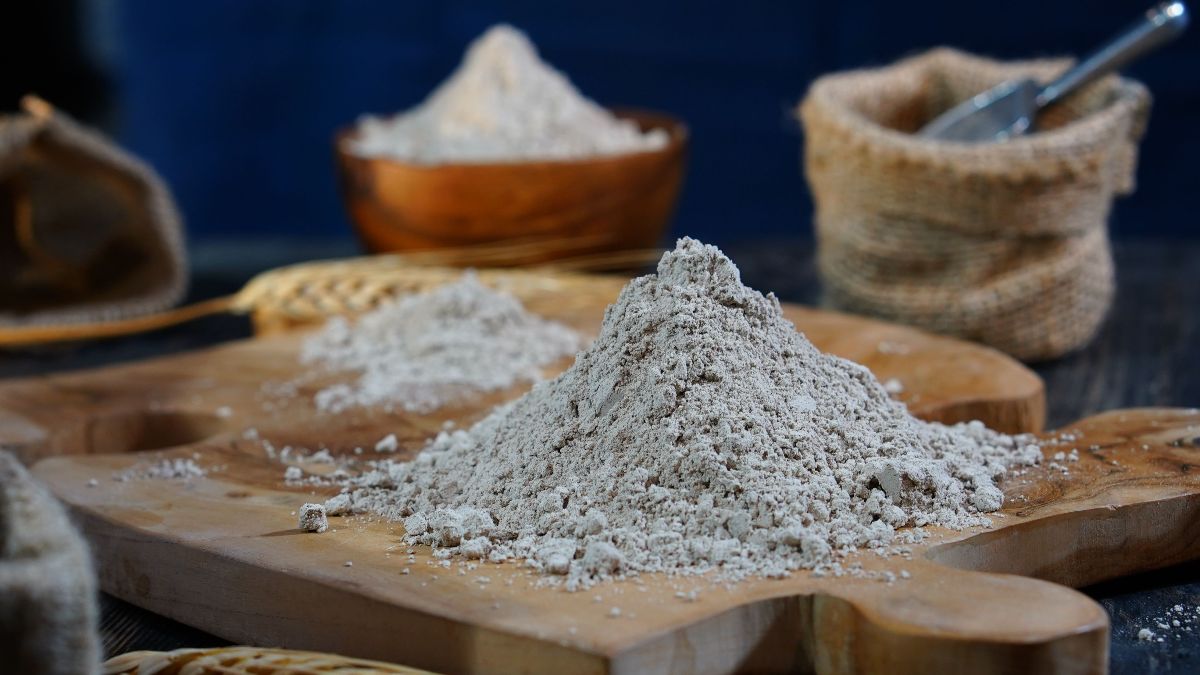
Flour can look interchangeable at first glance, but whether it is whole grain, refined, gluten-free or simply marketed as “low gluten” changes what the label actually means. Image via PEXELS
EXPERT LENS | Is Khapli Gluten Actually Different?
Studies comparing wheat species do find differences in the proportions and composition of their gliadin and glutenin proteins. Emmer therefore need not have exactly the same gluten-protein profile as modern common wheat.
What those compositional studies do not establish is a clinical chain in which Khapli’s gluten automatically breaks down faster, causes less gastrointestinal heaviness or is safer for people who react to wheat. One controlled comparison of ancient and modern wheats actually found higher total protein and gluten in emmer than in common wheat.
The evidence supports different composition. It does not support translating that directly into “low gluten” or “easier to digest”.
Then Why Eat Khapli at All?
Because the case for Khapli was never really about gluten, and I think the gluten story has done it a disservice by crowding out the more ordinary reasons somebody might choose it.
The meaningful nutritional comparison in an Indian kitchen is not necessarily Khapli against another good whole-wheat atta. On fibre, the two figures used here are essentially level: Aashirvaad Namma Chakki 100% Khapli Atta reports 11.4g of dietary fibre per 100g, while whole-wheat atta in the Indian Food Composition Tables is listed at 11.36g per 100g. Those are the same number in any practical sense.
The comparison that changes more dramatically is either of those against refined maida, which the same food-composition tables list at 2.76g dietary fibre per 100g.
If three rotis are each made with roughly 30g of a flour containing 11.4g fibre per 100g, the flour itself would contribute around 10g of fibre across those rotis. That is a meaningful contribution to a day’s fibre intake, while the dal, sabzi, fruit, nuts, seeds and other foods around them contribute the rest.
The point is not that Khapli possesses some unique fibre magic. It is that whole-grain flour retains far more of the grain’s fibre than refined maida, and Khapli is one whole-grain wheat option a household may enjoy using.
EXPERT LENS | Whole Grain Matters More Than the Ancient-Grain Halo
The fibre figures used in this article do not show a meaningful advantage for Khapli over regular whole-wheat atta. What they show very clearly is the effect of refining: whole-wheat flours retain substantially more dietary fibre than maida.
Khapli can therefore earn a place in a varied diet without needing to be presented as nutritionally superior to every modern wheat. Grain variety, flavour, texture and household preference are perfectly reasonable reasons to use it.
What the Evidence Actually Supports
If you have been diagnosed with coeliac disease, Khapli is not for you. Neither is any other wheat, however it is milled or however old the variety.
If you suspect gluten is a problem, seek testing before removing it completely. Coeliac testing is most reliable while gluten is still being eaten; starting a strict gluten-free diet first can make diagnosis more difficult.
If you have switched flours and genuinely feel better, enjoy the food that suits you — but remain curious about why. Feeling different after a change does not identify the responsible component. Fibre, portion size, recipe, what you eat alongside the roti and several other things may have changed at the same time.
And if you are choosing a flour for general family eating, choose on the things you can actually establish: whether it is whole grain, its fibre content, how it works in the foods you cook and whether the people you are feeding actually enjoy it.
A high-fibre flour nobody enjoys is not a nutrition strategy.
Khapli atta can earn its place in an Indian kitchen. It simply does not need a dubious gluten claim to do so.
Frequently Asked Questions
Is Khapli Atta Gluten-Free?
No. Khapli is emmer wheat and contains gluten. It is not suitable for people with coeliac disease or anyone who needs a strict gluten-free diet.
Can Someone With Coeliac Disease Eat Khapli Roti?
No. Coeliac disease requires strict avoidance of gluten from wheat, barley, rye and foods contaminated with them. Ancient wheat varieties such as emmer are still wheat and are not safe substitutes.
Why Do So Many People Say Khapli Is Low in Gluten?
The phrase is widely repeated, but controlled research does not show that ancient wheats consistently contain less gluten than modern bread wheat. Some comparisons have found emmer to contain as much or more total gluten.
Its gluten-protein composition is different from common wheat, but that should not be translated into “low gluten” or “easier to digest” without clinical evidence.
Is ‘Low Gluten’ an Official Food Category in India?
Not currently. India previously had a regulatory category for foods processed to contain 20–100 mg/kg of gluten, but that category was removed. Foods labelled gluten-free must meet the under-20 mg/kg threshold.
I Feel Lighter After Khapli Rotis. Does That Mean I Am Gluten-Sensitive?
Not necessarily. Feeling better after changing flour does not identify gluten as the cause. Portion size, fibre, the recipe and the rest of the meal may all have changed as well.
If symptoms are frequent or persistent, proper assessment is more useful than self-diagnosing gluten sensitivity.
Is Khapli Higher in Fibre Than Regular Whole-Wheat Atta?
Not according to the figures used here. Aashirvaad Namma Chakki 100% Khapli Atta reports 11.4g fibre per 100g, while ICMR-NIN’s Indian Food Composition Tables list whole-wheat atta at 11.36g per 100g.
The much larger fibre difference is between either whole-grain flour and refined maida.
Is Khapli Easier to Digest Than Modern Wheat?
There is not enough evidence to make that a general claim. Emmer differs from common wheat in its protein composition and dough properties, but that has not established that it is universally easier for people to digest.
Individual experience can differ, but that should not be confused with evidence of safety for coeliac disease or proof of lower gluten.
Should I Replace All My Flours With Khapli?
There is no need to. Most Indian kitchens use more than one flour for different dishes, and that is a perfectly sensible approach.
Khapli can be one whole-grain wheat option among others rather than the flour that has to replace everything else.
The Short Version
Khapli atta contains gluten. It is wheat, and it is not gluten-free.
If you have coeliac disease, Khapli is not suitable for you. The condition requires strict gluten avoidance, not simply choosing a wheat believed to contain less.
‘Gluten-free’ in India means less than 20 ppm of gluten. “Low gluten” is not a current regulated category.
Ancient wheat does not automatically mean lower gluten. Controlled research has found emmer can contain as much or more total gluten than modern bread wheat.
Different gluten composition does not equal proven easier digestion.
Khapli and regular whole-wheat atta are essentially level on fibre in the figures used here. The much larger distinction is between whole-grain flour and refined maida.
If you think gluten is causing symptoms, get assessed before you remove it completely. Starting a gluten-free diet before coeliac testing can make diagnosis harder.
Medical Note
Khapli is wheat and contains gluten. If you have coeliac disease, a diagnosed wheat allergy or have been advised to follow a strict gluten-free diet, do not use Khapli as a substitute for gluten-free flour.
If you suspect coeliac disease, speak to a clinician before removing gluten from your diet, because diagnostic testing is generally most reliable while gluten is still being consumed.
Sources
Brouns F, et al.Do ancient wheats contain less gluten than modern bread wheat, in favour of better health? Nutrition Bulletin, 2022; 47(2):157–167.
Geisslitz S, Longin CFH, Scherf KA, Koehler P.Comparative Study on Gluten Protein Composition of Ancient (Einkorn, Emmer and Spelt) and Modern Wheat Species (Durum and Common Wheat). Foods, 2019; 8(9):409.
Makharia GK, et al.Prevalence of celiac disease in the northern part of India: a community-based study. Journal of Gastroenterology and Hepatology, 2011.
Cárdenas-Torres FI, et al.Non-Celiac Gluten Sensitivity: An Update. Medicina, 2021; 57(6):526.
Reese I, et al.Non-celiac gluten/wheat sensitivity — position statement of the task force on food allergy of the DGAKI. Allergo Journal International, 2018.
FSSAI. Food Products Standards and Food Additives Regulations
You are now being directed to an external website https://www.callr.live/aashirvaadexperts/premium-plan.
This link is provided for your information and convenience only and ITC Limited is not
responsible for the contents or services provided by Brand Touch India or any information that
you share with Brand Touch India.