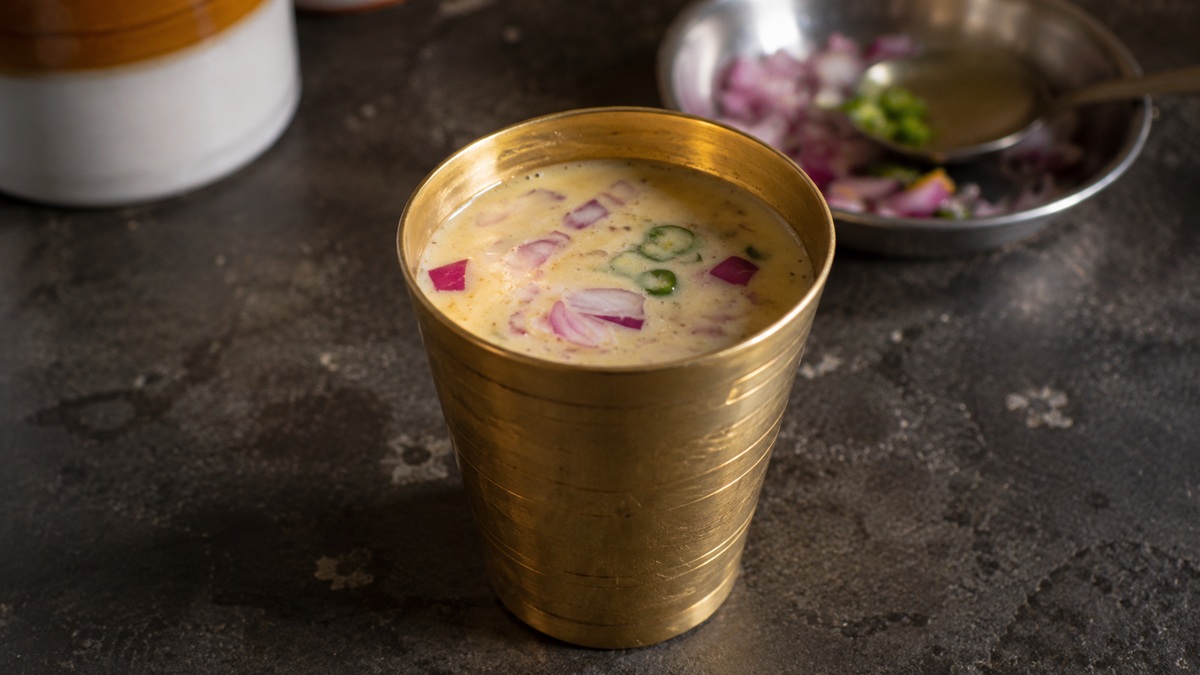
Sattu, Ragi Koozh: India’s Traditional Flour-Based Drinks, Explained
Roasted gram in sattu, twice-fermented ragi in traditional koozh and heat-puffed finger millet in huri hittu arrive in the glass by very different routes. Here’s what those processes actually change.
Long before protein shakes and instant drink mixes, Indian kitchens were already turning roasted grains, pulses and millets into foods that could be mixed or thinned with water, buttermilk or milk.
Sattu, traditionally made from roasted gram and sometimes other roasted grains, needs no fermentation. Tamil Nadu’s ragi koozh takes a very different route: traditional versions can undergo fermentation before cooking and then again after cooking, meaning the final food may still contain living microorganisms. Karnataka’s ragi huri hittu is different again, relying on heat treatment such as puffing or roasting rather than fermentation.
They may look like variations on the same flour-in-a-glass idea, but the food science underneath them is not interchangeable.
One Idea, Reinvented Region by Region
There’s an interesting pattern running through Indian food: communities in different parts of the country often arrive at foods that solve broadly similar practical problems using completely different local ingredients.
Flour-based drinks and porridges are one example.
Before refrigeration, bottled meal replacements or protein powders entered the picture, households needed foods that could be stored relatively easily, prepared without much fuss and turned into a filling meal or drink using ingredients close at hand. In grain- and pulse-growing regions, one solution was to roast, puff, grind or ferment the crop and then combine it with water, milk or buttermilk when it was time to eat.
The result is not one national recipe under many aliases. Sattu, ragi koozh and ragi huri hittu are genuinely different foods, shaped by different crops and processing traditions.
This first part looks at those three approaches. Part 2 will move to other regional flour- and grain-based drinks, including Odisha’s mandia preparations and Maharashtra’s ambali.
Sattu: Roasted Gram That Needs No Further Cooking
Sattu is most strongly associated with Bihar and Jharkhand, although it is consumed widely across adjoining parts of northern and eastern India.
The familiar version is made from roasted chana that is ground into flour, sometimes with roasted barley or other grains depending on the regional or household preparation. Mixed with water, lemon, salt and roasted cumin, it becomes a savoury sattu drink; jaggery is commonly used for sweeter versions.
The important processing step has already happened before the flour reaches the glass: The gram has been roasted.
That means sattu is not raw gram flour or besan mixed into cold water. Heat treatment changes the pulse before grinding and makes the resulting flour suitable for preparations that don’t require another cooking step.
Roasting can also alter the nutritional characteristics of chickpeas. Studies have found reductions in phytic acid after roasting, although the degree varies considerably with the chickpea and processing method. Research on Indian pulses also suggests that roasting may produce modest changes in in-vitro protein digestibility rather than the dramatic transformation sometimes implied in wellness descriptions.
Sattu still has a straightforward nutritional advantage that doesn’t need embellishment: chana naturally contributes plant protein and dietary fibre, so a drink based on roasted gram is nutritionally quite different from flavoured water or a sugar-sweetened beverage.
Sattu Was Everyday Food Before It Was a ‘Protein Drink’
Sattu’s newer life as a high-protein wellness product can make it sound like a modern nutrition invention. It isn’t.
Its much older role is considerably more ordinary: an inexpensive roasted flour that could be kept on hand and quickly turned into food without lighting the stove again. That practicality helps explain why it became embedded in working households and agricultural communities.
The contemporary protein-shake comparison isn’t completely absurd. Sattu does contribute protein, carbohydrate and fibre and can make a substantial drink depending on how much flour is used.
But calling it “India’s original protein shake” can also distort what it historically was. It wasn’t developed as a supplement. It was food.
A Similar Roasted-Grain Logic Elsewhere
The specific grain changes as you move across the country.
In Rajasthan and other millet-growing regions, roasted or pre-cooked bajra can also be ground and combined with liquids such as water or buttermilk. The crop changes from gram or barley to pearl millet, but the basic practical idea remains familiar: process the grain first, grind it into something portable and make the final preparation when needed.
That similarity shouldn’t be mistaken for nutritional identity.
A pulse-based sattu and a millet flour will naturally contribute different proportions of protein, starch, fibre and micronutrients. The technique is related. The ingredients are not.
Ragi Koozh: Where Fermentation Changes the Story
Move south to Tamil Nadu and ragi, or finger millet, takes centre stage.
Ragi koozh, particularly kelvaragu koozh, belongs to a very different processing tradition from sattu. It is strongly associated with rural Tamil food culture and with the Tamil month of Aadi, when koozh is also prepared and distributed in connection with temple and community observances.
A recently published ethnographic study documenting traditional preparation in rural Tamil Nadu describes a two-stage natural fermentation. First, finger-millet flour is mixed with water and left for roughly eight to ten hours. That fermented mixture is then added to cooked broken rice and cooked into a thick porridge. Once cooled, the cooked mixture is diluted and left for a second fermentation of roughly 12–15 hours before being mixed with curd and served with accompaniments such as shallots and green chilli.
That second fermentation is the detail worth noticing.
In idli or dosa, fermentation happens before the final cooking step, so much of the living microbial population in the batter is subsequently destroyed by heat.
In traditional two-stage koozh, fermentation happens again after cooking, and there is no further high-temperature cooking before consumption.
That creates the possibility for living microorganisms to be present in the finished food.
Does Ragi Koozh Contain Probiotics?
There is better evidence here than a vague “fermented foods are good for the gut” claim, but the terminology still needs care.
Researchers analysing koozh samples have isolated numerous lactic-acid bacteria, including strains of Leuconostoc, Enterococcus, Streptococcus and Lactobacillus. Some isolated strains demonstrated characteristics associated with probiotic potential in laboratory testing, such as acid and bile tolerance.
That makes live fermented food a fair description of traditionally fermented koozh. It doesn’t necessarily make every glass a clinically proven probiotic.
“Probiotic” properly refers to specific live microorganisms shown to confer a health benefit when consumed in adequate amounts. A naturally fermented household food does not contain a standardised strain or guaranteed microbial dose from batch to batch.
So koozh is microbiologically interesting without needing a probiotic halo.
Not Every Ragi Koozh Is Made Exactly the Same Way
Traditional food rarely obeys one laboratory protocol.
The two-stage method is well documented, but simpler household versions also exist in which ragi batter is fermented overnight, cooked with rice and then served after cooling with buttermilk, without another long fermentation. Published research on ragi koozh itself also distinguishes between fermented and non-fermented preparations.
That variation matters because a freshly cooked ragi porridge mixed with buttermilk is not microbiologically identical to koozh that undergoes a true post-cooking fermentation.
The name on the bowl doesn’t tell you the whole process. The method does.
Ragi Huri Hittu: Same Millet, Completely Different Process
Karnataka’s ragi huri hittu shows just how misleading it can be to group foods together merely because they use the same grain.
Huri hittu is made from ragi that has undergone heat treatment — commonly puffing, popping or roasting depending on the particular traditional or commercial method — before it is milled into flour.
No fermentation is required.
Puffing alters the structure of the millet starch through heat. Reviews of finger-millet processing report that popping and puffing can increase in-vitro starch and nitrogen digestibility, partly because heat changes starch structure and protein accessibility.
That is what makes huri hittu useful as an instant flour: the grain has already undergone substantial thermal processing before it is ground.
It can therefore be mixed with water, milk, curd or buttermilk without treating the final drink like raw ragi flour that still requires cooking.
So while ragi koozh and huri hittu both begin with finger millet, their processing paths are almost opposites.
One uses fermentation. The other uses heat.
Sattu vs Ragi Koozh vs Huri Hittu
Food
Region most associated with it
Base
Key processing method
Fermented?
Sattu
Bihar, Jharkhand and adjoining regions
Roasted gram, sometimes with barley or other grains
Roasting, then grinding
No
Ragi koozh
Tamil Nadu
Finger millet, commonly with rice
Traditional versions may use fermentation before and after cooking
Yes, in fermented versions
Ragi huri hittu
Karnataka
Finger millet
Puffed/popped or roasted, then milled
No
Roasted bajra preparations
Rajasthan and other millet-growing regions
Pearl millet
Heat processing and grinding
Generally no
Once you put them beside one another, the interesting thing isn’t that India has several “health drinks”.
It’s that communities found several completely different ways to make grains and pulses convenient to eat.
What Does Processing Actually Change?
This is where it’s tempting to make all three foods tell the same nutrition story, but they don’t.
Fermentation, roasting and puffing can each change starch, proteins and compounds such as phytate, but their effects are neither identical nor guaranteed to occur to the same degree in every preparation.
In finger millet, fermentation has repeatedly been shown to reduce phytic acid and can improve measures of mineral availability and in-vitro protein digestibility. One study found substantial phytate reduction during fermentation of finger millet, although the magnitude depended on duration and grain variety.
Roasting chickpeas can also lower phytic acid, but effects vary considerably by cultivar and roasting conditions, and changes in protein digestibility can be relatively modest.
Puffing finger millet alters starch through heat and may improve certain measures of starch and protein digestibility.
So the more accurate shared principle is not: “All traditional flour drinks are easier on the gut.”
It is that traditional processing changes the raw ingredient in ways that affect texture, preparation, digestibility and nutrient availability — and the particular effect depends on the process.
Traditional Doesn’t Automatically Mean Light
There’s another assumption worth resisting.
Sattu and koozh are called drinks, which can make them sound nutritionally equivalent to something you sip alongside breakfast. Traditionally, they could be considerably more substantial than that.
A thick sattu drink containing several spoonfuls of roasted gram or a large serving of ragi koozh can contribute meaningful carbohydrate and energy, and sattu also brings protein and fibre from chickpea.
In farming and working households, that was precisely the point. These preparations could function as food rather than mere refreshment. So portion and context still matter.
A small glass added to a meal is not nutritionally the same thing as a large serving replacing one. That isn’t a reason to label either good or bad; it’s simply a reason to know what role the food is playing on your plate.
What About Diabetes and Weight Loss?
This is where traditional grains frequently acquire claims they never asked for.
Ragi is rich in fibre and finger-millet processing can affect starch digestibility. Chickpeas bring fibre and protein. Fermentation can alter some antinutritional compounds.
None of those facts turns ragi koozh or sattu into a treatment for diabetes or a weight-loss intervention.
Even recent literature on traditional koozh notes that much of the proposed metabolic evidence comes from broader finger-millet research or preclinical studies rather than clinical trials of the traditional drink itself.
For someone managing blood glucose, the actual serving size, recipe, added jaggery or other sweeteners, accompanying foods and individual response all matter.
Likewise, weight change depends on an overall energy and dietary pattern rather than whether one traditional drink appears on the menu.
The foods are interesting without making them medicinal.
Which One Is ‘Best for Gut Health’?
There isn’t a useful winner.
Ragi koozh has the clearest fermentation story of the three, particularly when made using a traditional post-cooking fermentation that leaves living microorganisms in the finished food.
Sattu brings fibre and plant protein from roasted gram but is not fermented.
Huri hittu is a heat-processed millet food whose value comes from the characteristics of finger millet and the convenience created by puffing or roasting, not from live cultures.
Those are different strengths rather than positions on a leaderboard. A varied diet has plenty of room for more than one idea.
The Honest Takeaway
Sattu, ragi koozh and ragi huri hittu are genuinely different foods solving a recognisably similar old problem: how do you turn a locally available pulse or grain into something practical, portable and easy to prepare?
Bihar and Jharkhand roast gram and grind it into sattu. Traditional Tamil koozh uses fermentation to transform ragi, sometimes through two separate fermentation stages. Karnataka’s huri hittu applies heat first, puffing or roasting finger millet before grinding it into an instant flour.
None of them needs to be fermented to be worth eating, and fermented doesn’t automatically mean nutritionally superior.
What makes the comparison useful is precisely the opposite: the same broad category of food can emerge through very different techniques, and each technique changes the ingredient in its own way.
Part 2 heads to other parts of India, where regional grain drinks complicate the map again, including Odisha’s mandia preparations and Maharashtra’s ambali.
Frequently Asked Questions
What is sattu made from?
Sattu is most commonly made from roasted gram or chana that is ground into flour. Some regional preparations may also contain roasted barley or other grains. It can be mixed with water, lemon, salt and spices for a savoury drink or with jaggery for a sweeter version.
Is sattu the same as besan?
No. Both can come from chickpeas, but their processing is different. Sattu is made from roasted gram, while besan is typically flour milled from raw or unroasted Bengal gram and therefore normally requires cooking.
Is sattu fermented?
No. Sattu’s key processing step is roasting, not fermentation.
What is ragi koozh?
Ragi koozh is a traditional Tamil millet porridge or drink made from finger millet. Traditional versions can involve fermentation of the ragi mixture before cooking and a second fermentation after the cooked porridge has cooled. It is commonly thinned with buttermilk and served with ingredients such as shallots and chilli.
Is ragi koozh fermented twice?
Some traditional preparations are. A 2026 ethnographic study documenting rural Tamil preparation describes an initial 8–10-hour fermentation, cooking with broken rice and then a second 12–15-hour fermentation after the mixture has cooled. Other household and modern versions may use a shorter or single fermentation, so the method is not completely universal.
Does ragi koozh contain probiotics?
Naturally fermented koozh can contain living lactic-acid bacteria, and researchers have isolated strains showing potential probiotic characteristics in laboratory testing. That does not establish every serving as a clinically proven probiotic product with a standardised strain and dose.
Is ragi huri hittu fermented?
No. Huri hittu relies on heat processing such as puffing, popping or roasting before the ragi is milled. It is therefore quite different from fermented koozh.
Are ragi koozh and ragi huri hittu the same?
No. Both use finger millet, but their processing is fundamentally different. Traditional koozh is fermented and cooked; huri hittu is made from heat-treated millet that is subsequently ground into flour.
Does fermentation reduce phytic acid in ragi?
Research on finger millet shows that fermentation can reduce phytate, although the amount depends on the grain variety and fermentation conditions. This may improve the availability of minerals bound by phytate.
Is sattu high in protein?
Roasted gram naturally contains protein, so gram-based sattu can make a meaningful contribution to dietary protein. The exact amount in a drink depends on the product and how much sattu you actually use.
Are sattu and ragi koozh good for diabetes?
They can be part of an individual’s diet, but neither is a treatment for diabetes. Serving size, preparation, sweeteners, the rest of the meal and individual glucose response all matter.
You are now being directed to an external website https://www.callr.live/aashirvaadexperts/premium-plan.
This link is provided for your information and convenience only and ITC Limited is not
responsible for the contents or services provided by Brand Touch India or any information that
you share with Brand Touch India.