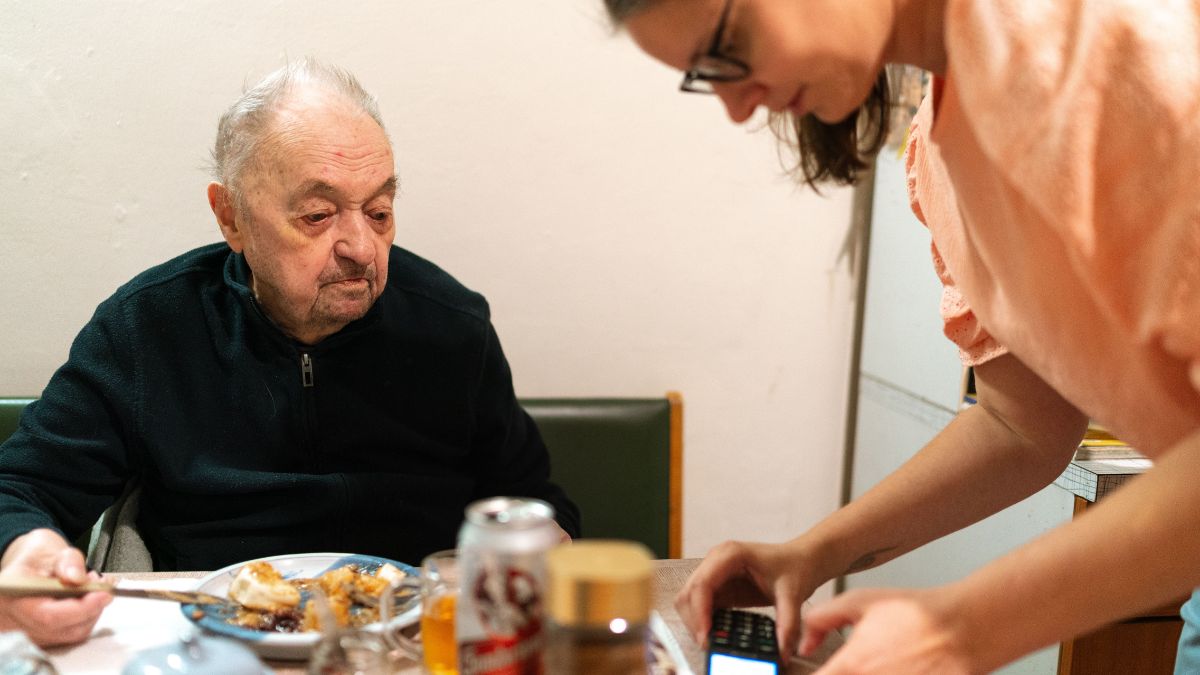
Helping an Elderly Parent Eat More Fibre, Gently
Getting an elderly parent to eat more fibre can be tricky. Here’s how to make small, familiar changes that support digestion without turning every meal into an argument.
Table of Contents
Getting an elderly parent to eat more fibre can be tricky. Here’s how to make small, familiar changes that support digestion without turning every meal into an argument.
Expert reviewed by Qurath Ain, Certified Nutritionist and Clinical Dietitian
If you are an Indian child trying to help an elderly parent eat more fibre, you are navigating something that goes well beyond nutrition. You are trying to negotiate with someone who has survived decades on chai, toast, and the occasional samosa, and who regards your dietary suggestions with a particular kind of polite indifference that is far more difficult to argue with than outright refusal.
The conversation usually happens after a doctor’s appointment. Your parent smiles graciously, nods at everything the doctor says, and then returns home and has their usual dinner. This is not stubbornness, exactly. It is the weight of decades of familiarity, and the genuine difficulty — physical and psychological — of changing deeply ingrained habits later in life.
But fibre genuinely matters as we age, and there are ways to introduce it that do not require winning an argument. That is what this piece is about.
Fibre supports healthy digestion, helps keep the gut moving, and plays a role in supporting fullness, cholesterol balance and blood-sugar steadiness. As we age, digestion naturally slows, and constipation becomes increasingly common in older adults — partly because of reduced mobility, partly because of medications that many older people take, and partly because food intake often decreases overall.
What this means practically is that the fibre-dense foods your parent used to eat in larger quantities — proper servings of dal, a full plate of sabzi, fruit at the end of a meal — may have quietly reduced without anyone noticing. The goal is not to get them to eat more. It is to make what they do eat more fibre-dense. The daily recommended amount of dietary fibre is 30g for men and 25g for women.
Changing food habits in older adults is genuinely more complicated than it sounds, and understanding why is more useful than getting frustrated.
Chewing capacity changes. Dental problems, loose dentures, and reduced jaw strength are common among older adults, and these are not small obstacles. Raw salads, whole fruits with tough skins, and fibrous vegetables that require substantial chewing can be genuinely uncomfortable to eat. This is not fussiness; it is a physical reality that any food change has to work around.
Appetite decreases. Smaller portions, less enthusiasm for eating, and a general reduction in the variety of foods eaten are all common with age. Pushing for quantity is usually counterproductive. It is important to make sure that too much fibre is not introduced at once, as it can cause gastric discomfort
The question is always: how do we make what they already eat more fibre-rich?
Habits are deep and identity-laden. For the last four decades, your mother has been making the same dal. Your father has his morning rituals perfected. These are not merely preferences — they represent familiarity, stability, and a sense of self that deserves respect, not pressure. Any fibre change that disrupts these rituals too forcefully is likely to fail, and the conversation about changing them is likely to cost you more goodwill than the fibre is worth.
And the gut needs time. If an older person’s fibre intake is suddenly doubled, they may experience intense gas, bloating, cramping and abdominal discomfort. The gut’s adjustment to more fibre is slower in older adults than in younger ones. A gradual approach — one small change at a time, over several weeks — is not just more politically wise; it is physiologically necessary.
The practical approach is to work with what your parent already eats and make it slightly more fibre-dense, rather than introducing unfamiliar foods.
Dal, every day. Many Indian households eat dal regularly, which is already a genuine gift — cooked lentils are an excellent source of soluble fibre, easy to digest, and completely familiar. The aim is not to introduce something new but to make sure this comfort staple does not get skipped or reduced to a very small portion. For older adults, a slightly thinner, well-cooked dal is gentler on the digestive system than a thick, heavy one. Moong dal and masoor dal are particularly well-tolerated.
Cooked vegetables rather than raw. Lauki, tinda, turai, sweet potato, pumpkin, and well-cooked carrots are all mild in flavour, soft in texture, and genuinely fibre-providing without requiring significant chewing effort. Sabzi, curry, soups, smoothies and juice are a few ways to include vegetables in meals to make them more fibre-rich and nutritious. If your parent is eating these without fuss, that is the goal.
Oats, introduced gently. Soft, warm, well-cooked oats are one of the gentler ways to increase soluble fibre, and they can be made in ways that feel familiar — with a pinch of salt, a touch of jeera, or a little jaggery. The introduction should be slow: one or two mornings a week to begin with, not every day immediately.
Fruit that is soft and peel-free. Bananas are already a beloved staple in many Indian homes and are a good source of fibre that requires no chewing effort. Papaya, peeled and sliced, is traditionally considered digestive and is genuinely gentle. Ripe mango, when in season. These are familiar foods that can be offered more consistently rather than occasionally.
A small addition to the atta. If your parent is open to the idea, adding a small amount of jowar, bajra, or besan flour to their regular atta introduces more fibre while maintaining familiar taste and texture. Start with a very small ratio — one part millet to four parts regular atta — and increase gradually only if they tolerate and accept it. For breakfast, switch from white bread toast, white pasta, and rice-based dishes to whole-grain breads, wheat pasta, oats, multigrain bread, and millets, as they have higher fibre content.
Curd with meals. Plain curd is already a recommended daily component of a balanced Indian plate, and combining it with fibre-rich foods supports gut health in a practical, well-established way. Fresh homemade curd at room temperature is easiest on the stomach for older adults.
Relish desserts and baked foods made with whole wheat, oats, bran, barley, wheat semolina, Vermicelli, nuts and seeds, for example, oatmeal cookies, multigrain crackers, whole wheat brownies, etc.
Keep it tasty, keep it gentle. Spices like jeera, hing, ajwain, and ginger not only provide flavour but also support digestion — and for older adults who may have reduced appetite, familiar flavours are what make a meal feel like home rather than medicine. Cook vegetables until genuinely soft; add them to soups and thin gravies if that makes them more appetising.
A practical framework from geriatric digestive care that is worth knowing: a morning routine that includes gentle movement, a warm drink, a high-fibre element, and a consistent toilet time supports regularity in older adults more reliably than dramatic dietary changes alone.
Something worth knowing about elderly digestion: constipation in older adults is often linked to reduced movement and to several common medications — blood pressure drugs, antidepressants, and certain calcium and iron supplements are common contributors. Diet is important, but it is not always the only lever. If dietary changes are not making the expected difference, it may be worth mentioning this to their doctor rather than assuming the problem is solely about fibre.
Along with fibre, hydration and physical activity are important. 2- 3 litres of water per day is necessary to stay hydrated and keep constipation and UTI at bay.
For the elderly above 60 years of age, it is recommended by the ICMR (Indian Council of Medical Research) to include activities that enhance strength and functional balance for three days or more in a week, along with 30-60 minutes of moderate-intensity aerobic physical activity or 15 minutes of vigorous- intensity activity aerobic physical activity per day for at least five days in a week.
Cooking for an older family member today? It is worth noting what they ate comfortably and what they resisted — patterns tend to be informative. “Fibre-Rich Foods in India: Where Your Fibre Should Actually Come From” is a good reference for identifying the most practical fibre sources within Indian cooking. And “How to Increase Fibre Without the Bloating: Do It Gradually” covers the gradual-introduction principle in more detail.
Avoid relying solely on dietary adjustments if your parent is experiencing significant constipation, persistent bloating, blood in the stool, or unexplained weight loss. Fibre can support a healthy digestive system, but these symptoms may warrant a proper medical conversation. Older adults in particular should not be managed on dietary modifications alone when symptoms are persistent or worrying.
How do I get my elderly parent to actually eat more fibre without a fight?
Work with what they already eat rather than introducing unfamiliar foods. More dal, softer-cooked vegetables, a banana at breakfast, oats in the morning. Include porridges made with multigrain and millet like finger millet, foxtail millet, jowar, bajra and oats — these are additions to existing habits rather than replacements of them, which makes them far easier to maintain.
Why does my parent seem to struggle more with digestion now than they used to?
Metabolism and digestion. Digestion naturally slows with age, and constipation becomes more common in older adults due to gut dysbiosis, reduced mobility, smaller food intake, and the effects of several common medications. This is not just about diet — movement, hydration, and a consistent daily routine all play a role.
Is it safe to add millet flour to my parent’s regular atta?
In small quantities, yes, for most people. A small ratio of jowar, bajra, or besan to regular wheat atta is generally well-tolerated and increases fibre without significant changes to taste or texture. Also if the person is diabetic do check the glycemic index of the grains and the atta before introducing it. Introduce gradually and watch how it sits. If in doubt, their doctor is the right person to ask.
Do I need to completely change my parent’s diet?
No. The goal is fibre-density, not a dietary overhaul. Slightly more dal, one piece of fruit daily, vegetables cooked until soft, multigrain, whole grains, millets and oats a few mornings a week — these are incremental changes to existing meals, not a new diet. Incremental and consistent is what actually works.
Helping an elderly parent eat more fibre is an exercise in patience, strategy, and respect. The goal is not to win an argument about nutrition but to quietly make the meals they already love a little more fibre-rich, a little more gut-friendly, and no less familiar. Small, consistent changes over time — one adjustment, given enough time to become normal before the next — is almost always the approach that works.
Disclaimer: This article is intended for general educational purposes and is not a substitute for personalised medical or dietary advice.