Quick Answer
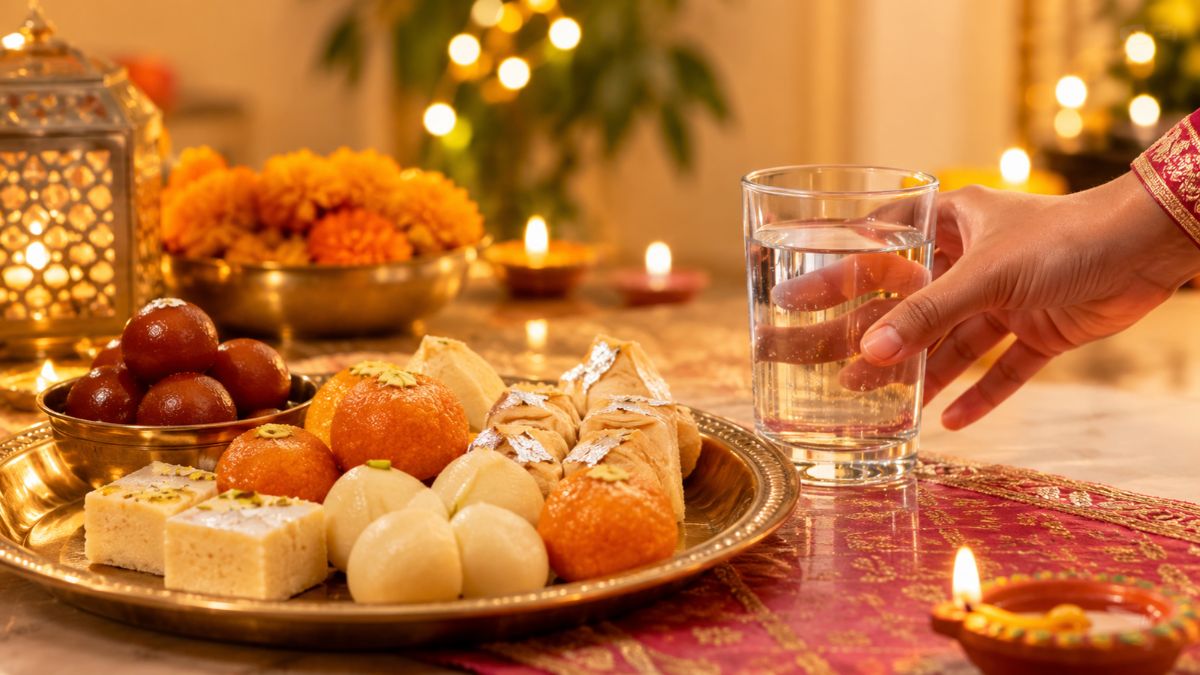
Yes. If you feel thirsty after eating mithai, you can drink water straight away. There is no good evidence that drinking water after sweets harms digestion or that you need to wait a certain number of minutes before having a glass. Mayo Clinic says water does not interfere with digestion or dilute digestive fluids enough to cause a problem. It can help break down food so your body can absorb nutrients, and drinking enough water helps soften stools.
Water can also be useful after sweets for your teeth. Sugar feeds bacteria in the mouth, which produce acids that attack tooth enamel. Drinking water after sugary foods or snacks can help rinse the mouth, while having sweets with or just after a meal is generally kinder to your teeth than grazing on them throughout the day.
The familiar warnings that water after sweets causes a cold, a sore throat or poor digestion are not supported by good evidence. Colds are caused by viruses, not by drinking water after a laddoo. If your throat is already sore, very cold water may simply feel uncomfortable; choose the temperature you prefer.
There is also no good evidence that warm water digests sweets better or that cold water makes ghee solidify in your stomach. Your body warms what you drink, so comfort is a sensible guide.
The main exception is people who have been advised to restrict fluids because of a heart, kidney or liver condition. They should follow their healthcare professional’s instructions. And if you feel persistently thirsty, especially alongside frequent urination or unusual tiredness, speak to a doctor rather than assuming it is just the sweets.
For everyone else, there is no need to put the water glass away after mithai. Drink when you are thirsty.
ALSO READ | Which Indian Sweets Are Healthiest? Your Diwali Mithai Box, Sweet by Sweet
Should you drink water after eating mithai?
Yes, if you’re thirsty, go ahead. There is no good evidence that drinking water after sweets harms digestion or that you need to wait before drinking it.
Mayo Clinic says water does not cause problems with digestion or dilute the body fluids used in digestion enough to interfere with the process. Water can help break down food so your body can use the nutrients, and drinking enough helps soften stools. A few sips after mithai can also help rinse sugar from your mouth, which is useful for your teeth.
The old advice to wait, or to skip water altogether, is not supported by good evidence. The main people who need to think twice are those whose doctor has asked them to limit fluids.
Where does the no-water rule come from?
Ask around and you’ll hear a dozen versions. Don’t drink water after sweets, or you’ll catch a cold. Don’t drink it after ice cream, or your throat will hurt. Don’t drink it after fruit, or straight after a meal, because it will spoil your digestion. Most of us grew up with at least one of these, delivered with total confidence at the dining table.
Some of the thinking draws on traditional ideas about digestion. The Central Council for Research in Ayurvedic Sciences (CCRAS), for instance, includes guidance in its Ayurvedic health-promotion document that water should not be drunk immediately after food; if needed, it can be taken in small quantities during a meal. This is traditional Ayurvedic guidance, not evidence that water after a meal harms digestion in the biomedical sense.
The broader scientific guidance is different. Mayo Clinic says water during or after a meal does not cause problems with digestion. There is also no good evidence that a particular waiting period after sweets or meals improves digestion. So let’s take the worries one by one.
Does drinking water after sweets spoil your digestion?
No. This is the most common worry, and Mayo Clinic addresses it directly: water does not cause problems with digestion or meaningfully interfere with the body fluids involved in the process. Your stomach is well able to cope with a glass of water arriving after a gulab jamun.
Water can help. It helps break down food so your body can use the nutrients, and drinking enough softens stools, which can help prevent constipation. Fibre also needs fluid to do its work. The NHS explains that fibre absorbs water and cannot do its job properly without enough fluid.
What water will not do is undo the sweets. It will not cancel the sugar or calories in a piece of mithai, but it will not make the sweet harder to digest either. Which leaves the throat question.
Will water after sweets give me a cold or a sore throat?
No. Colds are caused by viruses, spread through coughs, sneezes and contact with contaminated hands or surfaces, not by a glass of water after laddoos.
If your throat is already sore, very cold water might feel uncomfortable, so choose room-temperature water if you prefer. But drinking it after sweets will not bring on a cold. If anything, the water does one more useful job after mithai.
Is drinking water after sweets good for your teeth?
It can help. Sugar feeds bacteria in your mouth, which produce acids that attack tooth enamel. The Oral Health Foundation recommends drinking water after meals or snacks to help neutralise the acid more quickly. It also points out that how often you eat sugary foods matters: frequent snacking gives your teeth repeated exposure to acid.
Diwali is the perfect storm for teeth: a piece of mithai here, a handful of namkeen there, all day long. Having your sweets with or straight after a meal, then drinking some water, is kinder to your teeth than grazing on them through the afternoon.
How long after eating sweets should you drink water?
There’s no good evidence that you need to wait. Mithai khane ke kitni der baad pani pina chahiye is a question plenty of people ask, but there is no established waiting period for digestion. Drink when you’re thirsty: straight after, a few minutes later, or with the sweet itself.
The same general advice applies to water with or after meals. Some people simply feel more comfortable sipping rather than drinking a large glass on a full stomach. That is a matter of comfort, not a digestive rule. And while we’re here, the same goes for the other no-water rules.
What about drinking water after fruit?
The festive sweets rule has plenty of cousins. People ask whether it’s safe to drink water after banana, guava, apple, pineapple, jamun and fruit in general, and many of us were told firmly that it isn’t.
There is no good evidence that drinking water after fruit harms digestion. Water also helps fibre do its job, and fruit contains fibre. If drinking a large glass on top of a big bowl of fruit leaves you feeling uncomfortably full, sip instead of gulping. That’s comfort again, not danger.
Temperature is another common worry.
Is warm water better than cold water after sweets?
Many families swear by a glass of warm water after a ghee-rich meal or a plate of sweets. There is no good evidence that warm water digests sweets better than cold water, or that cold water makes ghee solidify in your stomach. Your body warms what you drink, so choose whichever temperature you find more comfortable.
What matters more is drinking enough throughout the day.
How much water do you actually need?
The NHS suggests 6 to 8 cups or glasses of fluid a day as a general guide. Water, lower-fat milk, tea and coffee all count towards this. You may need more in hot weather, when you’re active, or while you’re ill or recovering. It is a guide rather than a fixed prescription for every person.
Festive weeks have their own pull, too: salty namkeen and chaat can leave you thirsty, while late nights and travel make it easy to forget to drink. A jug of water on the table during Diwali is one of the simplest habits you can keep.
ALSO READ | Do Sugar-Free Sweets Cause Gas? What to Know About Polyols
Is anyone better off being careful?
Yes, a few people. Mayo Clinic notes that people with heart, kidney or liver disease may need to limit how much water they drink. If that applies to you, follow your doctor’s advice rather than general hydration targets.
And one thing worth noticing: if you find yourself persistently thirsty, not just after sweets, especially alongside peeing more than usual or feeling very tired, speak to a doctor. These can be symptoms of type 2 diabetes, among other possible causes. A doctor can advise whether you need a blood test.
Blood in your stool, severe or persistent pain, or difficulty swallowing also need medical attention. If symptoms continue, are severe, or keep coming back, it’s worth speaking to a doctor.
Sources
Disclaimer
This article is for general information only and is not a substitute for medical advice, diagnosis or treatment. If you have heart, kidney or liver disease, or have been advised to limit fluids or follow a specific diet, follow your doctor’s guidance. Persistent thirst or other ongoing symptoms should be discussed with a healthcare professional.
FAQs
Should I drink water after eating mithai?
Yes, if you’re thirsty. There is no good evidence that it harms digestion, and drinking water after sugary foods can help rinse your mouth.
How long after eating sweets should I drink water?
There is no established waiting period. Drink whenever you’re thirsty, including straight after eating.
Does drinking water after sweets cause a cold or cough?
No. Colds are caused by viruses, not by drinking water after sweets. If your throat is already sore, room-temperature water may feel more comfortable than very cold water.
Is it bad to drink water after ice cream?
No. Drinking water after ice cream does not harm digestion or cause a cold. It can also help rinse your mouth after eating something sweet.
Does drinking water with or after meals affect digestion?
No. Mayo Clinic says water does not interfere with digestion or dilute digestive fluids enough to cause a problem. It can help break down food and soften stools.
Is it okay to drink water after eating fruit?
Yes. There is no good evidence that water after fruit harms digestion. If a large glass on a full stomach feels uncomfortable, sip instead.
Who should be careful about drinking water?
People with heart, kidney or liver disease may need to limit fluids, so they should follow their doctor’s advice. Persistent thirst, especially with frequent urination or tiredness, is worth discussing with a doctor.