

Table of Contents
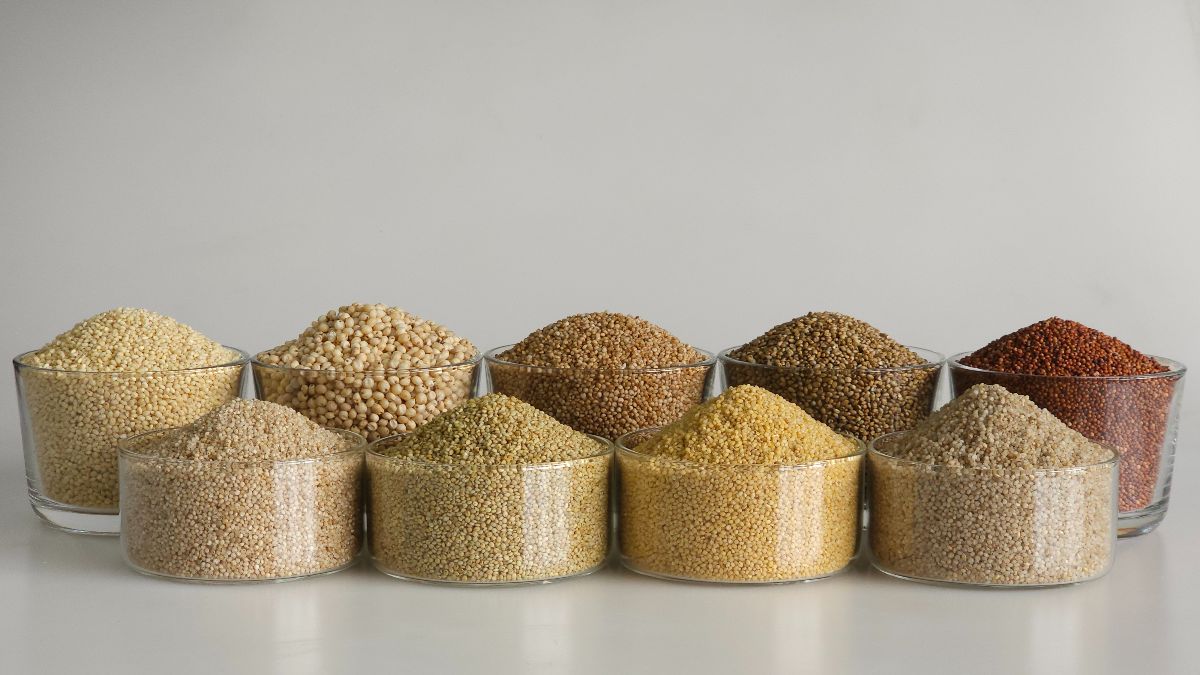
Foxtail, little, kodo, barnyard and browntop millet differ in texture, regional use and cooking behaviour. Here is how to tell them apart (and why processing matters as much as the millet’s name).
WHAT IS FOXTAIL MILLET? Also known as kangni, thinai or korralu, it is a small, naturally gluten-free millet that can be cooked in rice-like dishes, khichdi, pongal and upma.
It is one of several Indian millets that receive far less attention than ragi, jowar and bajra. Little, kodo, barnyard and browntop millet each have their own regional names, textures and culinary uses. Their nutritional composition also varies, as does the amount of fibre retained after dehusking and polishing.
The reason to explore them is therefore not that one is a miracle grain. It is that they offer more ways to build grain variety into an Indian kitchen while keeping regional food traditions in view.
What Is Foxtail Millet?
Foxtail millet (Setaria italica), known as kangni in Hindi, thinai in Tamil and korralu in Telugu, is one of the oldest cultivated crops in Asia — domesticated over 8,000 years ago and still grown across Andhra Pradesh, Telangana, Karnataka and parts of North India. Its small, yellow-gold grain has a mild, slightly sweet flavour and a texture that makes it well-suited as a rice substitute — it can be cooked as a pilaf, a khichdi, or as a pongal-style preparation. It’s also naturally gluten-free, like all millets.
| ⓘ What Are India’s Lesser-Known Millets? Foxtail millet (kangni, thinai, korralu): Mild grain used in khichdi, pongal, upma and rice-style preparations Little millet (kutki, samai, same): Small, delicate grain used in upma, pongal and porridge Kodo millet (kodon, varagu, harka): Earthier grain used in khichdi and porridge-style dishes Barnyard millet (sanwa, sama, oodalu): Commonly used in fasting dishes and soft rice-style preparations Browntop millet: Less widely available small millet used whole or milled into flour Worth checking: Whether the product is polished or unpolished, since processing can substantially affect its fibre content and cooking behaviour. |
Little, Kodo, Barnyard and Browntop Millet Explained
Little millet (Panicum sumatrense), known as kutki in Hindi, samai in Tamil, same in Kannada and samalu in Telugu, is the smallest of the commonly eaten millets and has a light, delicate texture that suits thin porridges and upma-style preparations. Kodo millet (Paspalum scrobiculatum) has an earthy flavour and is traditionally used in grain bowls, porridges and khichdi-style preparations in parts of central and southern India. Barnyard millet, known as sanwa or sama, is perhaps most familiar to North Indian readers as the sama ke chawal used during Navratri and other Hindu vrat days — its light texture and gluten-free status make it a natural fast-food grain across communities.
Browntop millet is among the least familiar of India’s small millets. It is grown on a relatively limited scale and is more likely to be found through speciality retailers than in an ordinary supermarket. Like the other millets in this guide, it can be cooked into grain-based dishes or milled into flour. (Its limited visibility is a reason to know its name, not evidence that it is nutritionally superior to better-known millets.)
Why Small Millets Matter to Food and Farming Diversity
Foxtail, kodo, little and other small millets have long been cultivated in rain-fed and relatively dry regions. Several can tolerate conditions that are difficult for more water-demanding crops, although the exact water and input requirements vary by species and location.
Their decline cannot be reduced to taste or nutrition. Institutional support, procurement, processing infrastructure and markets have historically favoured major staples, while the cultivation and availability of diverse millets narrowed. Restoring some of that diversity can support regional food traditions as well as a more varied agricultural system.
How to Use Foxtail Millet
The easiest entry point is as a direct rice substitute: foxtail millet khichdi cooked with dal and spices, foxtail upma in the same spirit as rava upma but with the grain’s slightly different texture, or simply foxtail millet cooked plain alongside dal and a vegetable. It takes slightly less water than rice and cooks in a comparable time. For households completely new to it, a multi-millet mix that includes it is a lower-friction start than sourcing and preparing a raw grain for the first time.
Is a Multi-Millet Mix a Practical Starting Point?
For households that want the variety benefit of several millets without buying separate bags of each, a ready blend is the most practical solution. A ready product such as Aashirvaad Multi Millet Mix can offer a convenient way to bring more than one millet into everyday cooking. (Do check the current ingredient list to see which millets it contains, their order in the blend and whether other grains have also been included.) This doesn’t have to be a permanent replacement for any single millet; it can be one item in a rotation alongside regular use of whichever specific millets already have a place in a household’s cooking.
How to Cook Foxtail and Other Small Millets
Rinse the millet thoroughly before cooking. Water quantity and cooking time vary according to the grain, how much it has been polished and whether you want a fluffy, rice-like result or a softer porridge or khichdi.
Packet instructions are the safest starting point for an unfamiliar product. Where none are provided, cook a small first batch and adjust rather than assuming every small millet behaves like rice. Soaking may shorten the cooking time for some products, but it is not mandatory for every millet or every preparation.
Foxtail and little millet can become soft or clump when cooked with more water, which is useful for pongal and porridge but less desirable in a pilaf. Barnyard millet cooks into a soft, light grain, while kodo generally retains a more distinct texture. The right result depends less on a universal ratio than on the dish you are making.
Why ‘Minor Millet’ Does Not Mean Less Valuable
The term ‘minor millets’ refers to cultivation volume and market visibility, not nutritional or culinary value. Each of the grains covered here was, within living memory, a primary food crop for significant populations in specific regions of India. Their demotion to ‘minor’ status is a recent and largely economic phenomenon. This piece is part of the work of making them visible again — not as superfoods, but as what they actually are: good, diverse, traditional grains that deserve a place in a varied diet.
A Note on Where to Find Minor Millets
Foxtail, little millet, kodo and barnyard millet are more readily available now than they were five years ago, partly driven by the Nutri-Cereal push and partly by growing consumer interest in grain variety. Specialty stores, health food retailers and online grocery channels carry most of them year-round. Barnyard millet (sama) is the most widely available during Navratri season in North Indian markets, often disappearing from shelves outside this period; the others tend to have more consistent availability in South Indian and specialty stores. A multi-millet mix that includes these varieties, like Aashirvaad’s Multi Millets Mix, is the most practical option for households wanting to try several without sourcing each separately.
Which Millet Fits Your Kitchen?
The most sustainable approach to adding minor millets to an everyday kitchen is one at a time. Pick the one most aligned with your existing cooking tradition. Get comfortable with one before adding another. The goal over a year isn’t to stock all five separately; it’s to have one or two of them rotating in naturally alongside the grains and attas already in the pantry.
Think about the dishes you already make rather than beginning with a nutritional ranking.
Choose foxtail millet if you want to try a khichdi, pongal or rice-style preparation. Consider little millet for softer dishes such as upma or porridge. Barnyard millet may feel most familiar if sama already appears in your fasting meals. Kodo millet suits households willing to experiment with an earthier grain and a more distinct texture.
Before buying, check whether the millet is polished or unpolished and whether the packet provides cooking instructions. Begin with one small pack and one familiar recipe rather than stocking several unfamiliar grains at once.
There is no prize for using every millet. A grain has earned a place in the kitchen when you know how to cook it and genuinely want to eat it again.
Good To Know: Why Polished and Unpolished Millet Are Different
Millet grains have an inedible outer husk that must be removed. Further polishing can also remove portions of the bran and germ, changing the grain’s fibre and micronutrient content as well as its colour, texture and cooking behaviour. This is why two packets carrying the same millet name may not be nutritionally identical. Where the label specifies whether the grain is polished or unpolished, that information is more useful than assuming every version of a particular millet offers the same fibre content.
FAQs About Foxtail and Other Millets
What is foxtail millet?
Foxtail millet, or Setaria italica, is a small millet known as kangni in Hindi, thinai in Tamil and korralu in Telugu. It is used in khichdi, pongal, upma and rice-style dishes.
Is foxtail millet gluten-free?
Foxtail millet is naturally gluten-free. People who require strict gluten avoidance should check the product label for cross-contact information and keep it separate from wheat during storage and cooking.
Does foxtail millet contain more fibre than rice?
Whole or minimally polished foxtail millet generally contains more fibre than polished white rice. The precise amount depends on the variety and degree of polishing; the millet’s name alone does not guarantee that it is unpolished.
What is sama rice?
Sama or sanwa generally refers to barnyard millet used in many North Indian fasting preparations. Despite the word “rice”, it is a millet rather than a variety of rice.
How do I cook foxtail millet?
Rinse it and follow the packet’s water and timing instructions where available. Use less water for a separated, rice-like texture and more for a softer khichdi or pongal, adjusting after the first batch.
Are foxtail and little millet the same?
No. Foxtail millet is Setaria italica, while little millet is Panicum sumatrense. They are separate grains with different regional names and somewhat different textures.
What is the difference between foxtail millet and rice or wheat nutritionally?
Foxtail is a whole grain retaining its bran, making it higher in fibre than white rice and in a comparable range to other millets. No verified IFCT figure is quoted in current briefing.
How is barnyard millet different from other millets?
Barnyard millet has the lightest, most delicate texture of the five covered here and cooks very quickly. Its main Indian identity is as sama ke chawal, the vrat grain used during Hindu fasts.
Next Steps
- Do: Scan Your Plate — did a millet show up in your day?
- Ask Happy Tummy GPT: “How do I cook foxtail millet for the first time?”
- Reflect: “Have you tried any millets beyond ragi, jowar and bajra?”
Disclaimer: This article is intended for general educational purposes. Nutritional composition and cooking behaviour may vary according to the millet variety, processing method and product. People with coeliac disease or another medical need for strict gluten avoidance should check product labelling and cross-contact controls.
Sources:
ICAR–Indian Institute of Millets Research: Latest Millet Production and Processing Technologies (2024)
Indian Journal of Medical Research: Assessment of Quality of Minor Millets Available in the South Indian Market and Glycaemic Index of Cooked Unpolished Little and Foxtail Millet
Food and Agriculture Organization: Millets—Climate-Smart Seeds of the Future
Checked by the Happy Tummy editorial team using the sources listed above. This article has not undergone medical review.