

Table of Contents
Here is how to choose one for your kitchen — without pretending there is a single healthiest millet.
WHICH MILLET IS BEST? There is no single answer. Bajra, jowar, ragi, foxtail, little, kodo and barnyard millet differ in flavour, texture, cooking behaviour and nutrient composition. The most useful choice depends on what your household will genuinely cook and enjoy.
Bajra works particularly well in hearty rotis and bhakris. Ragi can move between roti, dosa, idli and porridge. Jowar has a relatively mild flavour, while foxtail and several smaller millets can be used in rice-style preparations. Processing matters too: a heavily polished millet product is not nutritionally identical to an intact or minimally processed grain.
This guide compares the main options without trying to crown one universal winner.
What Are Millets?
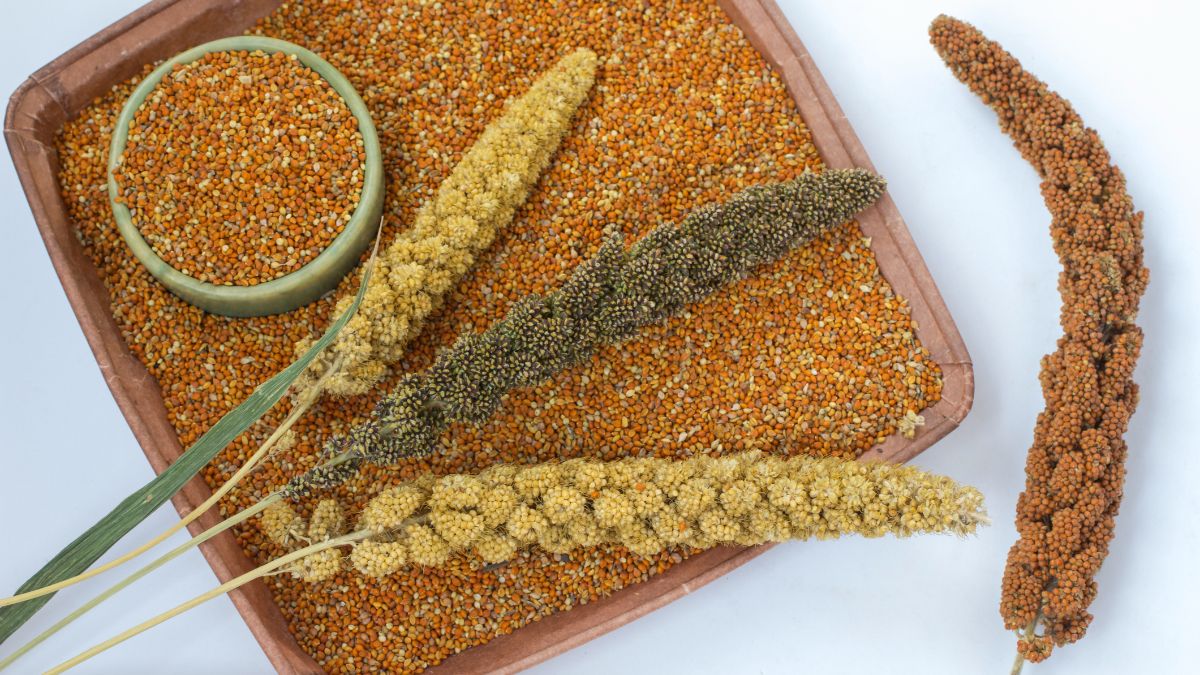
Millets are a group of small-seeded cereal crops rather than one single grain. Bajra, jowar, ragi, foxtail, little, kodo and barnyard millet are separate species with different culinary traditions and nutritional profiles.
In their pure form, millets are naturally gluten-free. They are not, however, automatically whole grain in every product: dehulling, polishing and milling can remove parts of the bran and germ, altering the grain’s fibre and micronutrient content. (Packaged blends may also contain wheat, while naturally gluten-free flours can encounter gluten through shared milling or handling.)
Do Millets Have More Fibre Than Wheat?
Bajra, ragi and jowar do not contain dramatically more fibre than whole-wheat atta. IFCT 2017 lists bajra at approximately 11.49g of total dietary fibre per 100g, ragi at 11.18g, jowar at 10.22g and whole-wheat atta at 11.36g.
These are composition figures per 100g edible portion, not the amount automatically present in one roti or serving. The final amount depends on how much flour is used and how the grain has been processed.
For these three millets, the case is therefore not fibre superiority. It is grain variety, different micronutrient profiles, distinct culinary uses and a naturally gluten-free option when the pure millet has been processed and prepared without gluten cross-contact.
| ⓘ Millet Fibre at a Glance (per 100g, IFCT 2017) Bajra (pearl millet): ~11.49g Ragi (finger millet): ~11.18g Jowar (sorghum): ~10.22g Whole wheat atta, for comparison: ~11.36g All broadly comparable; the case for millets is variety, not fibre superiority |
Bajra, Jowar, Ragi and Other Millets Compared
Bajra, or pearl millet, has a hearty, earthy flavour and a dense texture. It is traditionally used for rotis and bhakris, particularly in Rajasthan, Gujarat and Maharashtra, and pairs well with strongly flavoured chutneys, dals and sabzis.
Ragi, or finger millet, is especially prominent in Karnataka and parts of southern India. It is notable for its calcium content and can be prepared as mudde, roti, dosa, idli or porridge. The texture varies considerably by dish: smooth in kanji, but denser and earthier in roti form.
Jowar, or sorghum, has a relatively mild flavour that may suit households new to millet rotis. Its bhakri is light but can be crumbly, and shaping the gluten-free dough may still take some practice.
Foxtail, little millet, kodo and barnyard millet are smaller-volume millets with their own regional traditions. Foxtail (kangni) is particularly associated with Andhra Pradesh and Telangana and can be used as a rice substitute in upma or pulao formats. Foxtail, little, kodo and barnyard millet are covered in more detail in our guide to India’s lesser-known millets.
Which Millet Is Best for Your Kitchen?
Instead of beginning with a nutritional ranking, begin with the food you already make.
Bajra may suit a household that enjoys hearty rotis and strongly flavoured accompaniments. Ragi offers several routes beyond flatbread, including dosa, idli and porridge. Jowar may appeal to people looking for a milder-flavoured bhakri, although its dough still requires a different technique from wheat atta. Foxtail and little millet may feel more familiar to households that want a grain for khichdi, pongal or rice-style dishes.
None is automatically the healthiest choice. The most practical starting point is the millet that fits a familiar dish and is likely to be cooked more than once.
Are Millet Blends a Practical Starting Point?
A ready millet product can reduce the difficulty of learning to handle several unfamiliar grains, but different products serve different purposes.
Aashirvaad Atta with Millets is a wheat-based atta containing 25% millet flour. It is intended for households that want millet flour within a familiar wheat-roti format, and it should not be described as gluten-free.
Aashirvaad Multi Millet Mix is designed to be added to dough or batter. Follow the proportions on the current pack and check its ingredient list to understand which millets and other grains it contains.
These products offer convenience, but they are not nutritionally or culinarily identical to cooking an individual whole millet. The useful choice depends on whether you want a familiar wheat roti, a blended batter or the experience of cooking a particular millet by itself.
What Millets Can (and Cannot) Do
Millets are not cures for diabetes, weight gain or any other health condition. Nor should every millet dish automatically be labelled low-GI: grinding, polishing, fermentation, cooking, portion size and the other ingredients in the meal can all change its nutritional effect.
Research suggests that some millet-based foods may produce a more favourable glycaemic response than certain refined-grain foods. That does not mean every millet preparation has the same effect, or that changing one grain constitutes diabetes treatment.
The dependable case for millets is simpler: they broaden the grains used in the diet, offer distinct nutrient profiles and culinary traditions, and provide naturally gluten-free options when the product and preparation remain free of gluten.
How to Start Cooking With Millets
The most common barrier isn’t access — it’s unfamiliarity with what to do with a bag of bajra or ragi flour if you didn’t grow up cooking with it. A few practical starting points: jowar bhakri is the most forgiving of the three main millet rotis to learn, since jowar’s milder flavour makes it easy to pair with almost anything. Ragi porridge (kanji) requires no new technique at all if porridge is already part of a household’s repertoire. And a multigrain atta that includes millets in the blend, like Aashirvaad’s Atta with Millets, offers an entirely seamless entry point — same roti-making process, different grain mix already done.
Why Rotation Matters More Than Replacement
The most useful frame for millets isn’t ‘should I switch from wheat?’, it’s ‘how do I rotate across more grains?’ A household that eats regular wheat rotis most days but has jowar bhakri on the weekends, ragi dosa at breakfast occasionally, and a multigrain atta in the mix some weeks is getting the variety benefit without any of the permanence or pressure of a full kitchen transition.
Last Word: Choose the Dish Before You Choose the Millet
Think about the meal you want to make rather than asking which grain wins nutritionally.
For a hearty roti or bhakri, bajra may be a natural starting point. For dosa, idli, mudde or porridge, ragi offers more familiar preparation routes. Jowar suits a milder bhakri, while foxtail or little millet can work in khichdi, pongal and other rice-style dishes.
Next, check the form you are buying. Is it whole or polished grain, pure flour, wheat-and-millet atta, or an add-in mix for dough and batter? These products will not cook—or behave nutritionally—in exactly the same way.
Begin with one dish that already belongs in your routine. A millet is more valuable when it becomes a meal you genuinely repeat than when it remains an impressive packet in the pantry.
FAQs
Which millet is best for health?
There is no single healthiest millet. Bajra, ragi and jowar have broadly comparable fibre levels but differ in micronutrients, flavour, texture and culinary use. Choose according to the complete diet and what your household will regularly eat.
Do millets have more fibre than wheat?
Not necessarily. IFCT 2017 lists bajra, ragi and jowar at approximately 10.22–11.49g fibre per 100g, broadly comparable to whole-wheat atta at about 11.36g. Processing and serving quantity also matter.
Are all millets gluten-free?
Pure millets are naturally gluten-free. Packaged blends may contain wheat, however, and pure millet flour may encounter gluten through shared milling or handling. People with coeliac disease should use suitably labelled products and prevent cross-contact.
How do I start including millets without buying lots of different flours?
A wheat-and-millet atta or a millet mix for dough and batter can be a convenient starting point. Check the ingredient list and instructions because the two types of product are used differently.
What’s the difference between bajra, jowar and ragi?
Bajra has a hearty flavour and dense texture; jowar is generally milder and commonly used for bhakri; ragi has an earthier taste and can be used for roti, dosa, idli, mudde and porridge. Their fibre contents are broadly comparable, but their micronutrient profiles differ.
How do I begin cooking with millets?
Start with a preparation that already feels familiar: bajra or jowar bhakri, ragi dosa or porridge, or foxtail millet khichdi. Follow product-specific instructions because millet flours and grains do not all require the same technique.
Can I use millets every day instead of wheat?
Millets can be part of regular meals, but there is no nutritional requirement to replace wheat completely. Rotating grains across the week is often more practical and provides greater culinary variety.
Next Steps
- Do: Scan Your Plate — did a millet show up in your day?
- Ask Happy Tummy GPT: “Which millet should I try first?”
- Reflect: “Have you tried a millet this week? Which one?”
- Find Out: What is Foxtail Millet? Plus four lesser-known Indian millets to try
Disclaimer: This article is intended for general educational purposes and is not a substitute for personalised medical or dietary advice. Nutritional composition varies by millet variety, processing method, product and preparation. People with coeliac disease or another medical need for strict gluten avoidance should check labels and cross-contact controls. Consult a qualified healthcare professional for guidance concerning diabetes or other health conditions.
Sources:
Indian Food Composition Tables 2017 — ICMR-National Institute of Nutrition
Millets Primary Processing for Income and Nutritional Security — ICAR-Indian Institute of Millets Research
Coeliac UK: Guide to Gluten-Free Grains and Cross-Contamination