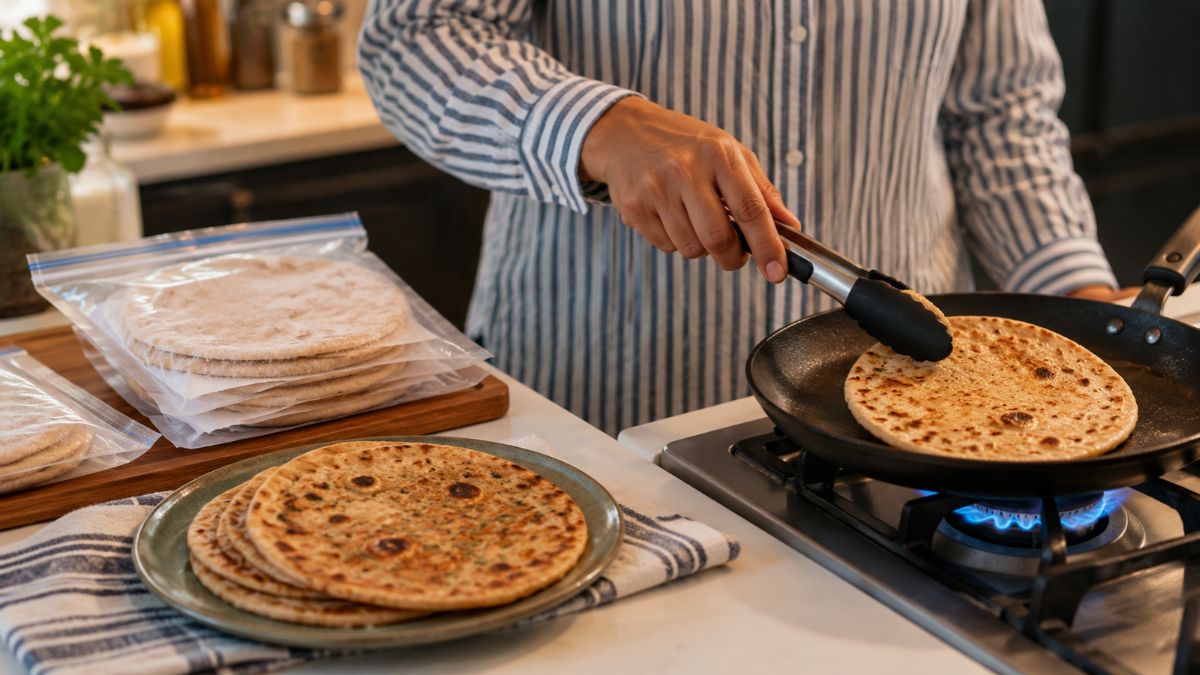
Frozen Parathas vs Homemade Rotis: How to Compare Fibre
A quick label check helps you see what is in your flatbread, without adding another job to the morning.
Table of Contents
Frozen parathas and ready-made rotis do not automatically have less fibre than homemade rotis. The biggest driver is usually the flour, but added ingredients, water content and the size of each piece matter too. Whole wheat, refined wheat and millet blends can produce different flatbreads, even when the packs look similar.
Start with the ingredient list. Look for whole wheat atta or another whole-grain flour, then check the rest of the ingredients and any declared percentages. A whole-grain ingredient listed first is useful information; it does not tell you the entire recipe.
Next, compare the fibre per 100g between similar finished products, on the same basis. Do not compare a frozen paratha directly with dry atta: the paratha contains water and may contain oil, fillings or other ingredients. There is no fibre number that proves a product is whole grain.
Check the amount per piece as well. A roti made with 30g of whole-wheat atta provides an estimated 3.4g fibre from the flour. That is an example, not a standard roti size. For packaged flatbreads, use the label and the amount you eat.
Read total fat, saturated fat, sodium and added sugars alongside fibre. Follow storage and cooking instructions, especially when a frozen product needs cooking rather than warming.
Convenience can fit a varied diet. Pair your flatbread with dal, vegetables or a pulse-based side. Increase fibre gradually, drink enough fluid, and follow individual advice if you have a prescribed low-fibre diet. One food does not have to supply everything.
Most people with busy lives have made peace with frozen parathas. They are fast and reliable, and on a morning when you are already late, having breakfast in the freezer helps.
Convenience food exists for real reasons. Knowing what is in it makes the choice easier. The useful question is how much fibre your flatbread contributes, alongside the rest of the meal.
It depends on the flour and how much you use. The Indian Food Composition Tables 2017 list whole-wheat atta at 11.36g dietary fibre per 100g of uncooked flour, compared with 2.76g for refined wheat flour, or maida. On that basis, atta contains about four times as much fibre as maida.
| Flour used | Fibre per 100g uncooked flour | Estimated fibre from 30g flour |
| Whole-wheat atta, IFCT A019 | 11.36g | 3.4g |
| Refined wheat flour/maida, IFCT A018 | 2.76g | 0.8g |
The 30g amount is a worked example, not a standard roti size or a recommended portion. If your roti uses more or less flour, its contribution changes. Three rotis using 90g whole-wheat atta in total would provide approximately 10.2g fibre from the flour. Actual amounts vary with the atta and recipe.
These are flour calculations, not nutrition values per 100g of cooked roti. Water changes the weight of the finished food. Fillings, seeds and other ingredients can change its fibre content too.
Fibre supports normal bowel function. Different fibres act differently: some help hold water in stools, some add bulk, and some are fermented by gut bacteria. A varied diet supplies a mixture.
WHO recommends at least 25g of naturally occurring dietary fibre daily for adults. That is guidance for the overall diet. Roti, dal, vegetables, fruit, nuts and seeds can all contribute.
There is no need for one breakfast to carry the whole day. A flatbread with less fibre can still sit alongside a bowl of dal and a vegetable. Equally, a high-fibre label does not tell you everything about a meal.
The biggest driver is usually the flour, but the full recipe matters. Some products use whole-wheat atta, some blend whole wheat with refined flour, and some use mostly refined flour. Pulse or vegetable fillings and added fibres may also contribute.
A layered paratha can contain more added fat than a plain roti. That helps create its flaky texture. The amount varies by product and recipe, so read the pack rather than assuming all parathas are alike.
Freezing itself does not tell you which flour was used or how much fibre a serving contains. A ready-made roti is not automatically lower in fibre because someone else made it.
FSSAI’s labelling regulations generally require ingredients to be listed in descending order by weight or volume at manufacture. Look for whole-wheat atta or a named whole-grain flour, then read the rest of the list and any stated percentages.
The first ingredient is a starting point. It does not establish the proportion of whole grain in the entire product. Water can also appear near the beginning of an ingredient list.
Compare per 100g between similar finished products. Check whether the figures describe the food as sold or as prepared, and use matching information.
There is no 10g or 3g fibre cut-off that proves a flatbread is whole-grain-based or mostly refined. Water, fat, fillings and added fibre can change the number. Dry flour figures cannot serve as a classification system for finished parathas.
If fibre is not listed, do not assume the product contains none. Ask the manufacturer if you need a figure.
A paratha can weigh more than a roti. Check the piece weight and how many pieces the stated serving contains.
Fibre per piece = fibre per 100g × piece weight in grams ÷ 100.
For example, a hypothetical product with 6g fibre per 100g and an 80g piece would provide 4.8g fibre per piece. Two pieces would provide 9.6g. These numbers illustrate the calculation; they are not figures for a particular brand.
Use the piece weight that matches the label’s basis. Do not multiply an as-sold nutrition value by a cooked weight that has changed during preparation.
Check total fat, saturated fat, sodium and added sugars too. Include any oil or ghee you add while cooking when considering the meal. Then read the storage, allergen and cooking instructions.
For fresh rotis from a local supplier, ask which flour or blend is used. Without nutrition information or the recipe quantities, you cannot give an exact fibre figure just from the roti’s appearance.
They can contribute fibre, but the word “millet” on the front does not settle the comparison. The quantity, grain and other ingredients matter.
IFCT 2017 lists the following values for uncooked grains:
| Grain | Dietary fibre per 100g uncooked grain |
| Bajra, A003 | 11.49g |
| Ragi, A010 | 11.18g |
| Jowar, A005 | 10.22g |
These three grains are broadly comparable with whole-wheat atta on this measure. The table does not describe every millet or any finished millet paratha. Milling and the product recipe can change the result.
Look for the named millet and its percentage where declared. A blend can be a useful way to add variety even when millet is not the first ingredient. Check its actual fibre content rather than treating one ingredient position as a pass or fail.
ICMR-NIN’s 2024 dietary guidelines recommend consuming at least half of cereals and other grains as whole or minimally polished grains. Ordinary whole-wheat atta can help you do that too.
Khapli is another wheat choice. The manufacturer’s current page for Aashirvaad Meri Chakki Khapli Atta lists 10.7g fibre per 100g. This is a product-specific figure, separate from the generic IFCT atta entry. Both can contribute fibre; there is no reason here to present Khapli as a fibre upgrade over ordinary whole-wheat atta. Choose according to taste, availability and budget. Khapli contains gluten.
Whatever flatbread you choose, pair it. Dal, a vegetable sabzi, cooked chana or kachumber can add fibre. Plain curd, egg or paneer can add protein, although these do not provide fibre. Use edible vegetable skins where appropriate, washed and prepared safely.
If a weekend batch suits you, fully cook some rotis and freeze portions for later. This lets you choose the flour and recipe. Texture and reheating time will vary, so there is no need to promise that every home-frozen roti will behave like a shop-bought one.
Increase fibre gradually rather than changing everything at once. Sudden increases can cause wind and bloating. Drink enough fluid alongside fibre to help keep stools soft. Follow individual advice if you have a fluid restriction or have been prescribed a low-fibre diet.
Heat makes safe handling particularly important. Apply these general leftover rules to home-cooked rotis:
These points draw on FoodSafety.gov’s time and temperature guidance and the Food Standards Agency’s freezing and defrosting advice.
For shop-bought frozen parathas or rotis, follow the pack. Some need cooking from frozen; others need reheating. A browned surface does not replace completing the stated cooking instructions.
If constipation, bloating or other digestive symptoms persist or keep returning, speak to a healthcare professional. Blood in the stool, unexplained weight loss or persistent abdominal pain need medical review. Seek urgent care for sudden, severe abdominal pain.
This article provides general food and nutrition information, not a diagnosis or personalised medical advice. Nutrient values vary by flour, recipe, brand and portion; calculations are estimates. Follow current pack instructions for allergens, storage and cooking. If you have coeliac disease, a food allergy, a prescribed low-fibre diet, a fluid restriction or another medical dietary requirement, follow your clinician’s or dietitian’s advice. Wheat, including Khapli, contains gluten.
They can fit a balanced diet. Compare ingredients, fibre, total and saturated fat, sodium and portion size. The recipe and the rest of the meal matter more than a category-wide judgement.
Some do and some do not. Look for “refined wheat flour” or “maida” in the ingredients. Its position and any stated flour percentages help explain the recipe; the fibre line shows the finished product's declared fibre content.
A roti made with 30g whole-wheat atta provides an estimated 3.4g fibre from the flour, using IFCT's 11.36g per 100g value. Roti size varies. The figure is an example, not a universal amount per roti.
It can provide similar nutrients when the flour, recipe and portion are similar. Homemade does not guarantee more fibre, and a short ingredient list alone does not establish nutritional quality. Check what is in the roti and what you eat with it.
There is no automatic winner. Bajra, ragi and jowar can contribute fibre, but the amount in a finished paratha depends on its recipe. Use millets for variety and compare the labels on the same basis.
Pair them with dal, cooked pulses or vegetables, and include fruit and other whole grains across the day. Increase fibre gradually and drink enough fluid. You do not have to get all your fibre from the paratha.