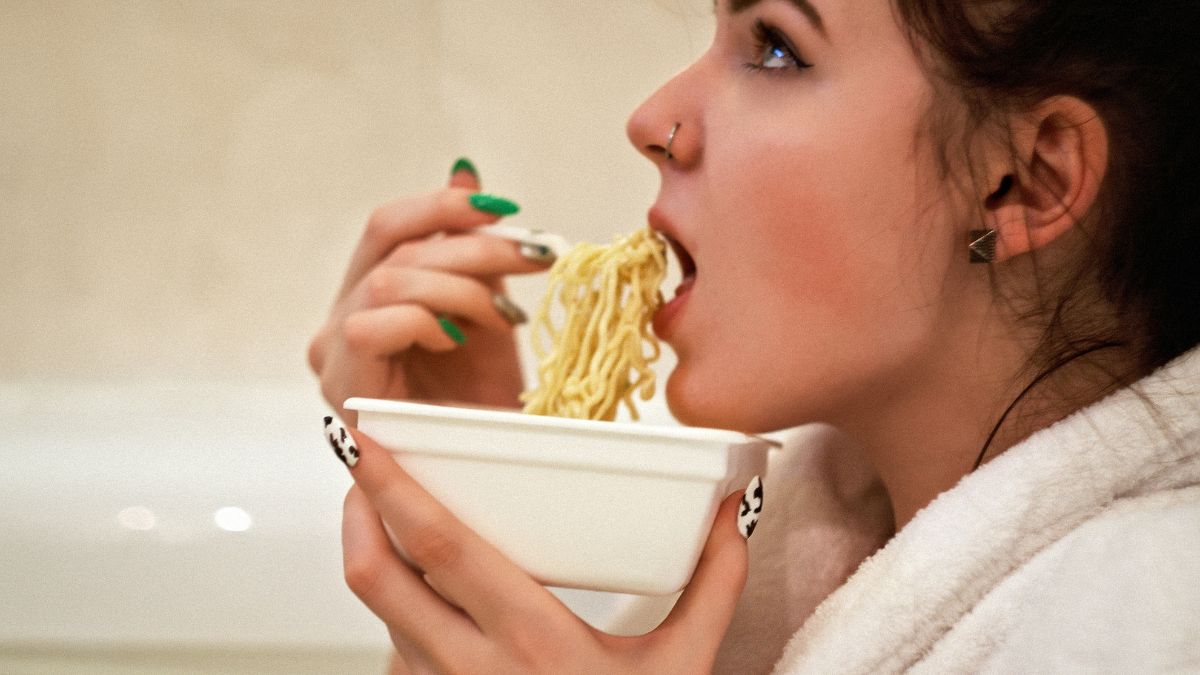
How Fast You Eat Changes How the Meal Feels
Five minutes for breakfast, ten for lunch, dinner in front of a screen. What the research says about eating speed, what it does and doesn’t do for digestion, and how to slow down without eating cold rotis.
Table of Contents
Eating slowly can make a meal feel less rushed, but it is not a treatment for digestive problems. Controlled studies suggest that a slower eating pace can reduce energy intake during a meal. A review of 22 experimental studies found no significant difference in reported hunger afterwards; it did not establish that everyone will feel fuller or eat less.
There is a more direct connection with gas. Eating or drinking too fast can increase the air you swallow, which may contribute to burping and gas. Slowing down may help when swallowed air is part of the problem. Persistent bloating, acidity, constipation or pain needs a broader assessment.
You do not need to chew every bite 32 times, follow a timer or let your rotis go cold. Different foods need different amounts of chewing. Try sitting down, taking mouthfuls and finishing each before reaching for the next. Put your spoon down occasionally if that feels natural.
Attention matters too. Experimental research has linked distracted eating with greater intake during the meal and at later eating occasions. One meal without a phone or television is a practical experiment, rather than a household rule you must enforce perfectly.
The aim is to enjoy the food and find a comfortable pace, while eating enough for your needs. Seek medical advice for recurring digestive symptoms, difficulty swallowing, blood in stools or unexplained weight loss. If food rules make you anxious, or you have a history of disordered eating, seek support from a doctor or dietitian.
A plate of steaming rice arrives with dal, sabzi, fish curry and some crisp bhaja on the side. You take a little rice with dal, another mouthful with the vegetables, another with the fish curry. The fritters add crunch between softer bites.
Even a simple roti-sabzi lunch has different textures waiting for your attention: soft, pillowy rotis, a dryish curry, and perhaps a bowl of chilled, creamy curd with pomegranate seeds on top. Yet somewhere between a morning meeting, a school pick-up, office notifications and another task waiting afterwards, eating can become a race.
There is an invisible timer: five minutes for breakfast, ten for lunch, and an endless limbo for dinner while scrolling through your phone.
A rushed lunch does not mean you have failed at some imaginary standard of mindful eating. But if most meals disappear before you have really noticed them, pace may be worth a little attention.
A 2014 systematic review and meta-analysis combined 22 experimental studies comparing slower and faster eating. Slower eating reduced energy intake on average, although the results varied substantially between studies.
The researchers found no significant difference in self-reported hunger at the end of the meal or up to 3.5 hours later. That is not proof that hunger was identical for everyone. It also does not establish that eating slowly reliably makes people feel fuller.
Much of this evidence concerns eating occasions under experimental conditions. It cannot tell us exactly what will happen at your family dinner, or establish a long-term health benefit from changing pace alone.
The useful message is modest: eating rate can influence intake. It does not follow that you should aim to eat less, or that every meal needs a stopwatch. You still need enough food for your needs.
Think about eating a hot samosa while sitting down, then think about eating one while rushing to catch a cab. In the first situation, you notice the crisp pastry, the warm, spicy filling and the coriander chutney. In the second, the samosa may be gone before you have paid it much attention.
Eating is a sensory experience. Taste, aroma, texture and chewing all contribute to it. A 2018 systematic review of oral processing found that chewing, eating rate and food texture influenced intake, with smaller effects on appetite ratings. The relationship is more complicated than “chew longer and feel full”.
You can still give yourself a little more opportunity to notice what is on the plate. That is a practical reason to ease the rush, even without expecting a particular appetite response.
Consider an ordinary lunch: roti, moong dal, aloo-gobi, sliced cucumber, curd and a little pickle. There is softness from the dal, chewiness from the roti, crunch from the cucumber, heat from the pickle and the cooling acidity of curd.
At a more comfortable pace, you may notice how different those mouthfuls feel. Perhaps you prefer the dry aloo-gobi with roti rather than rice. Perhaps the curd is the part you had barely noticed when eating at your desk.
You do not need to turn dinner into a food review. You are simply making room to experience the meal you have already taken the trouble to prepare.
There is no universally correct number. Cucumber, khichdi, roasted chana and grilled chicken need different amounts of chewing. A fixed count treats very different foods as though they were the same.
Instead of counting to 32, try finishing one mouthful before automatically reaching for the next. Chew until the food feels comfortable to swallow. The point is a comfortable rhythm, rather than another target to meet.
If you struggle to chew or swallow, cough or choke during meals, or feel food sticking in your throat or chest, seek prompt medical assessment. These are not problems to solve by following a chew count.
A meal eaten while watching cricket, scrolling Instagram or answering WhatsApp messages can become a background activity. Digestion continues, but you may pay less attention to the food itself.
A 2013 review of 24 experimental studies found that distraction increased intake during eating, with a larger effect at later eating occasions. Helping participants remember what they had eaten reduced later intake. Simply increasing attention during the meal did not show a clear reduction in immediate intake.
That distinction matters. Distraction and eating speed are separate habits: watching a screen does not necessarily mean you are eating faster.
For families, a practical starting point is one meal with phones put aside. Eat together if that works for your household, and notice whether the meal feels different. It does not need to become a rule that turns dinner into an argument.
Nobody should have to eat cold rotis because they are trying to become a slow eater. The goal is to remove the frantic parts, rather than prolong the meal unnecessarily.
Try whichever of these feels useful:
These are practical suggestions, not a tested formula or a promise that you will eat a particular amount. There is no need to force every meal to last 20 or 30 minutes. A pause can give you an opportunity to consider another helping; it is also fine to have one when you want or need it.
The clearest practical link here is swallowed air. The US National Institute of Diabetes and Digestive and Kidney Diseases lists eating or drinking too fast among habits that increase the air you swallow. Air may leave as a burp or pass into the intestines.
If you often burp or feel gassy after a rushed meal, pace may be part of the story. Fizzy drinks and chewing gum can also contribute to gas.
That does not mean eating more slowly will fix digestion. Bloating, acidity, constipation and abdominal pain have many possible causes. Do not assume that persistent symptoms mean you have been chewing incorrectly.
Speak to a doctor if digestive symptoms do not settle or keep returning. Seek prompt advice for unexplained weight loss, blood in stools, persistent vomiting, a lasting change in bowel habits or difficulty swallowing.
Sudden, severe abdominal pain, vomiting blood or black, sticky stools need emergency medical care. See the NHS advice on stomach pain and swallowing problems for the distinction between routine assessment and urgent help.
There will be mornings when the cab is waiting and office lunches squeezed between meetings. There will be train journeys, weddings and festival meals where nobody is thinking about eating pace.
Finishing lunch quickly once or twice does not determine the quality of your diet. Nor does finishing before everyone else prove that something is wrong. If your usual pace feels rushed, try a small change and see whether eating feels more comfortable.
If monitoring bites, pace or fullness makes you anxious, or you have a history of disordered eating, leave the rules aside and seek support from a doctor or dietitian. An enjoyable, adequate meal matters more than meeting an eating-speed target.
This article provides general information and is not a substitute for individual medical, dietetic or swallowing advice. Eating slowly does not diagnose or treat a digestive condition. Follow your healthcare professional’s advice for persistent symptoms, swallowing difficulties, an eating disorder or specific nutritional needs. For children, during pregnancy and for older adults with feeding or health concerns, seek individual guidance.
Controlled studies have found lower energy intake with slower eating, without a significant difference in reported hunger afterwards. A comfortable pace also gives you time to enjoy the food. Reduced intake is not a necessary goal.
It may help reduce swallowed air, particularly if you tend to burp after rushed meals. It is not an established treatment for ongoing digestive symptoms.
It can contribute by increasing swallowed air. But gas and bloating have other causes, so recurring symptoms deserve assessment rather than an assumption about eating speed.
There is no universal count. Different textures need different amounts of chewing. Aim for food that feels comfortable to swallow, and get medical advice if chewing or swallowing is difficult.
It can. Experimental research has linked distraction with higher intake during the meal and later on. This does not mean every screen meal has the same effect. Try a meal without a screen if that feels useful.