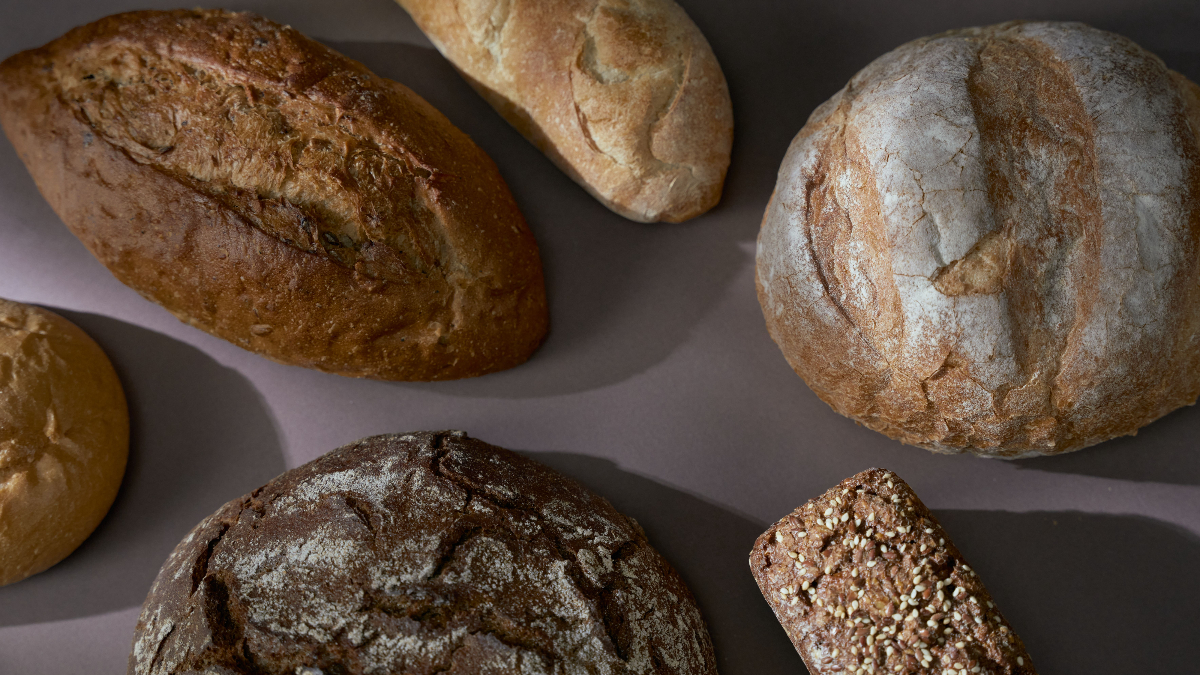
World Bread Day 2026: How to Choose a Gut-Friendly Bread
Is bread good or bad for your gut? On World Bread Day, the honest answer is that it depends on the loaf: what it’s made from, how it rose, and what came along for the ride.
Table of Contents
Bread can be part of a varied, balanced diet. For most people, a useful starting point is a loaf made mainly with whole-grain flour, with a fibre content that compares well with other options. Traditional sourdough fermentation can reduce some fermentable carbohydrates, but it doesn’t make every loaf easier to digest, probiotic or gluten-free. Read the ingredients and nutrition panel together: colour and the number of ingredients won’t tell you the whole story. And your everyday atta roti counts as bread too. If wheat foods repeatedly cause discomfort, seek medical advice before making major exclusions.
Today, 16 October, isn’t only World Food Day. It’s also World Bread Day, established by the International Union of Bakers and Confectioners (UIBC). According to Worldchefs, the date was chosen to coincide with the anniversary of the UN’s Food and Agriculture Organization.
In India, bread leads a double life. There’s the sliced loaf, the pav and the burger bun, which most of us think of as “bread”. And there’s the family of rotis, bhakris, theplas, appams and bhaturas, which most of us never call bread at all. So when someone asks whether bread is good for the gut, the most honest answer is: which bread? Let’s take it one question at a time.
Bread had a long life before it became a wellness argument. Sourdough fermentation is an old way of making it, using a living starter to help dough rise. Industrial breadmaking brought different possibilities: refined flours, commercial baker’s yeast and mechanised processes that made loaves faster and more consistent to produce.
A 2023 review in Trends in Food Science & Technology examines how bread’s ingredients and processing interact with the gut microbiota. Its central question is more useful than a verdict on bread as a whole: what changes when the flour, recipe and fermentation change?
Refining can reduce fibre. Fermentation can change the dough. Neither the factory wrapper nor the artisan paper bag tells you everything you need to know about the finished loaf.
Fibre is a useful place to start. Some gut microbes ferment particular fibres and resistant starches that escape digestion, producing short-chain fatty acids such as acetate, propionate and butyrate. These are among the ways microbes interact with our bodies, as this review of bread and health explains.
This is where flour matters. Per 100 g of uncooked flour, whole wheat atta has about 11.4 g of fibre and refined maida about 2.8 g, according to the Indian Food Composition Tables. Our piece on wheat germ, whole wheat and maida explains what refining removes.
Those flour figures aren’t the fibre content of a slice. Finished breads contain water and other ingredients, and recipes differ. Whole-grain flour is a helpful starting point, but compare the fibre declared on the actual loaves. The NHS recommends wholegrain or higher-fibre bread as part of a balanced diet.
Research into specific breads and gut microbes is still developing. The Wang review highlights promising findings but also major gaps in the evidence. A change in particular bacteria is interesting; it isn’t, by itself, proof that a loaf improves someone’s health.
It may suit some people better, but it isn’t magic. Traditional sourdough uses a starter containing yeasts and lactic acid bacteria. The fermentation changes the dough’s acidity, flavour and texture, and can change some of its carbohydrates.
One useful example is fructans, a type of FODMAP. These are fermentable carbohydrates that can contribute to gas and bloating in susceptible people. Monash University explains that during a long sourdough proof, microbes break down carbohydrates including FODMAPs. Traditional proofing can take more than 12 hours, but the flour, starter and process all matter. The word “sourdough” doesn’t guarantee that a loaf is low in FODMAPs, or that a particular serving will suit you.
Then come two important distinctions. First, baking kills the live starter organisms, so ordinary baked sourdough should not be called a probiotic simply because it was fermented. ISAPP, the scientific association for probiotics and prebiotics, has specifically challenged that claim. Fermentation can change food before cooking without delivering those microbes alive afterwards.
Second, lower FODMAP does not mean gluten-free. Ordinary wheat sourdough still contains gluten and is unsuitable for people with coeliac disease.
The broader human evidence also needs perspective. A 2026 systematic review found only low-certainty evidence for modest blood-glucose or insulin advantages over yeast bread, with too little strong long-term evidence for a general health promise. Enjoy the flavour and texture; a guaranteed gut benefit doesn’t come with the crust.
One of the most interesting bread studies comes from the Weizmann Institute in Israel. In a small randomised crossover trial, published in Cell Metabolism in 2017, Korem and colleagues compared industrial white bread with traditional whole-grain sourdough. Twenty healthy adults ate one type for a week, had a two-week break, then switched to the other.
The study found no significant average difference between the breads across the clinical measures tested. But individuals’ blood-glucose responses differed: some responded more favourably to white bread, others to whole-grain sourdough. Within this small study, the researchers could predict which bread produced a lower response using participants’ gut microbiome data collected beforehand.
That doesn’t make white bread and whole-grain bread nutritionally interchangeable. It also doesn’t tell us which is better for long-term health. The breads differed in both flour and preparation, and the interventions lasted just a week each. What it does show is that an average response can hide individual differences. Your own gut is part of the story, too.
Packaged bread often contains ingredients that help with texture, freshness and shelf life: emulsifiers to improve the crumb, for example, and preservatives to slow mould growth. These ingredients have jobs. The WHO explains that food additives are assessed for safety, with authorities permitting their use in specified foods and amounts.
Research into the effects of particular additives on gut microbes is continuing. A 2026 review notes that the relevance of some emulsifier findings to the general population still needs clarification. So there’s no need to panic about one sandwich, or to treat every unfamiliar ingredient as evidence of harm.
A shorter ingredient list may appeal to you, but it isn’t a nutrition score. A loaf with seeds and several whole grains can have a longer list than a simple white loaf. Read what the ingredients are, alongside the fibre, salt and other nutrition information.
Absolutely, and it’s one of the simplest whole-grain breads you can make at home. A roti made from atta is usually just whole-grain flour and water, cooked fresh. Swap in jowar, bajra or ragi now and then and you widen the mix of grains too. Curious what happens after you eat one? Here’s what happens to roti in your gut.
India also has its own fermented breads. Appam batter is fermented before cooking; bhatura dough may be rested or fermented, depending on the recipe. Many South Indian breakfasts start with a fermented batter. As with sourdough, fermentation changes the food, but cooking means it should not be treated as a reliable source of the live fermenting cultures. Our guide to appam and vattayappam explains that distinction.
That doesn’t give all breads the same nutritional profile. An atta roti, a refined-flour pav and a deep-fried bhatura are different foods, even if they share a place in the bread family.
For most people, bread can fit comfortably into a varied diet. Choose whole-grain or higher-fibre options where they suit you, enjoy a properly fermented loaf if you like one, and think about the rest of the meal. Dal, sabzi, paneer or eggs can make a more rounded meal of bread than bread and jam alone.
If you’re moving from white to higher-fibre bread, make the change gradually. A sudden jump in fibre can cause gas or bloating; the NIDDK advises adding fibre a little at a time. And if bread or other wheat foods repeatedly leave you bloated or uncomfortable, talk to a doctor rather than deciding for yourself that gluten must be the problem. Several things can cause those symptoms. If coeliac disease is being considered, cutting out gluten before testing can make the results inaccurate. If you already have diagnosed coeliac disease or a wheat allergy, follow your clinician’s advice on suitable foods.
Disclaimer: This article provides general food and nutrition information and is not a substitute for personalised medical or dietary advice. Dietary needs and tolerance vary. Seek medical advice for persistent or worsening bloating, abdominal pain or diarrhoea. If coeliac disease is suspected, speak to a doctor before removing gluten, as doing so can affect test results. If you already have diagnosed coeliac disease, a wheat allergy or another condition requiring dietary restrictions, follow your clinician’s guidance.
For most people, whole-grain flour and a useful amount of fibre are sensible starting points. Compare the actual loaf’s ingredients and nutrition panel, consider your portion and the rest of the meal, and pay attention to your tolerance. “Gut-friendly” is not a guarantee that a bread will suit everyone.
No. Traditional fermentation can reduce fructans and may suit some people better, but the flour, fermentation process and portion all matter. A sourdough label alone does not establish a digestive benefit.
Ordinary baked sourdough is not probiotic simply because its dough was fermented. Baking kills the starter’s live organisms, although fermentation has already changed the dough
Ordinary sourdough made from wheat, barley or rye contains gluten. Fermentation does not make these loaves suitable for coeliac disease. A product intended for a gluten-free diet needs to meet gluten-free requirements.
No. FSSAI sets different minimum whole wheat flour proportions: at least 50% of the flour for wheat or brown bread, and at least 75% for whole wheat bread. Check the ingredients and fibre information rather than assuming either is entirely whole wheat.
An atta roti is a simple whole-grain bread that can contribute fibre. Pair it with dal, vegetables or another suitable protein source. It is still a wheat food, so it is unsuitable for someone who needs to avoid wheat or gluten.