
East India's Thalis: Bengal's Shukto, Odisha's Dalma and Bihar's Chokha
From bitter beginnings and leafy greens to temple food and smoky roasted vegetables, Eastern India's traditional plates reveal the everyday wisdom behind the feasts.
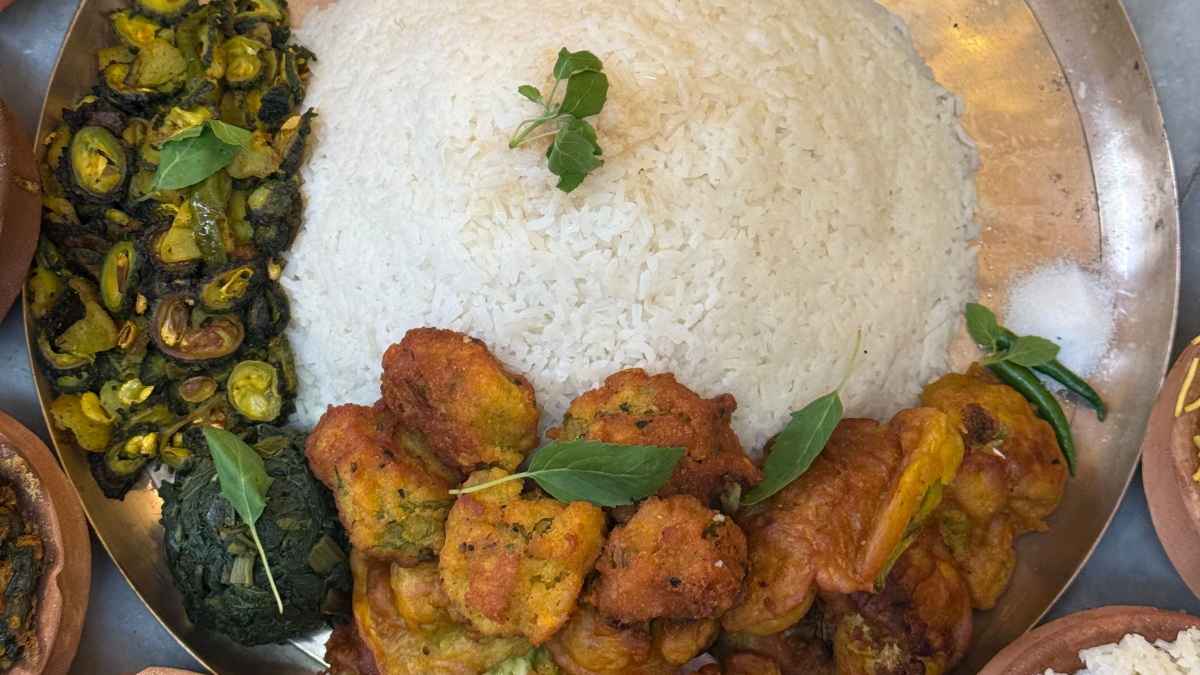
Table of Contents
The everyday eastern Indian meal, often built around rice, dal, vegetables, greens and, in many households, fish, offers a strong foundation for balanced eating. The regional plates show what’s worth borrowing: Bengal’s habit of opening a traditional meal with something bitter and eating greens as a course of their own, Odisha’s dalma and lightly cooked vegetables, and Bihar’s roasted chokha and dahi-chura.
Mustard oil and mustard paste are familiar threads running through these cuisines. The elaborate meat curries, fried breads and generous spreads of sweets show another side of the region’s food traditions, one best appreciated alongside the simpler everyday meals.
Ask what people in Kolkata, Bhubaneswar or Patna ate for lunch today, and many answers will share a shape. Rice, very likely. A dal. A vegetable preparation, perhaps a mixed one. Some kind of greens. In many households, fish, cooked in a light gravy. Mustard oil may well have been involved somewhere.
It’s a plate that can work well for the gut: a pulse for protein and fibre, several vegetables for variety, and greens that have a prominent place in many eastern kitchens.
The regional differences show up at celebrations: a Bengali wedding feast, a meal of Mahaprasad at the Jagannath temple in Puri, a Bihari thali laid out for Chhath or a family occasion. These are different kinds of food traditions, from festive hospitality to sacred offerings, and they aren’t all meant to represent an ordinary Thursday’s lunch.
So this piece reads each as a map, asking three questions: what the everyday foundation looks like, what’s worth borrowing, and what belongs to the feast.
It doesn’t rank one state against another.
Bengal doesn’t traditionally lay everything out at once. A full Bengali meal moves in a deliberate order, one preparation at a time, often eaten with rice.
It may open with something bitter, such as shukto, a mildly spiced mixed-vegetable dish that often contains bitter gourd, or simply fried bitter gourd. Then come greens (shaak), dal with bhaja (fried vegetables), a mixed vegetable preparation such as chorchori or labra, and perhaps fish or meat. A sweet-sour chutney follows, with curd or sweets completing the meal on many occasions.
Everyday meals are often shorter, simpler versions of that traditional sequence, and the order varies between families and communities.
The Bengali wedding feast brings out luchi (deep-fried bread made from refined flour), sweet yellow pulao, rich fish kalia, slow-cooked kosha mangsho, papad, and a parade of sweets: rosogolla, sandesh and mishti doi.
Mishti doi is made by fermenting sweetened milk, so it can contain live cultures when fresh, depending on how it’s made and handled. But it’s also a sweetened preparation, and the presence of live cultures doesn’t cancel out its added sugar.
Enjoy these dishes at the celebration. And remember that while sweets and luchi can be part of ordinary life too, the elaborate feast is only one side of Bengali cooking.
The Odia plate often centres on rice with dalma, the state’s signature dish of dal cooked together with vegetables such as raw banana, pumpkin, brinjal and papaya.
Alongside it might be a saga (greens), a besara (vegetables cooked with mustard paste), a bhaja and a sour khata.
In summer, many homes eat pakhala, cooked rice soaked in water and served with curd, fried vegetables or a little fish. Some versions are freshly prepared, while others, such as basi pakhala, undergo fermentation.
Odisha’s most famous ceremonial food tradition isn’t a wedding spread at all.
At the Jagannath temple in Puri, Mahaprasad is sacred food that has been offered to the deities and is then shared by devotees. It is prepared daily by temple cooks known as suaras, using earthen pots and wood-fired cooking methods, without onion or garlic.
Devotees can partake of Mahaprasad at the temple’s Ananda Bazar. Preparations include rice, dal, khechudi, greens, vegetable dishes and sweets, with offerings governed by the temple’s ritual traditions.
It’s food with a significance that goes well beyond the ingredients. And because the offering is prepared and shared every day, Mahaprasad is not simply the temple equivalent of an occasional celebratory feast.
For the full story, including regional variations, fermentation and the food-safety question, see our guide to panta bhat, pakhala and poita bhat.
Odisha’s sweets are among India’s finest: chhena poda (baked fresh cheese), rasagola, khiri and the many pithas of festival season.
Enjoy them as the treats they are. They sit alongside, rather than replace, the everyday tradition of rice, dal, vegetables and greens.
And the sacred Mahaprasad has its own place in the region’s food culture, one shaped by devotion and ritual rather than everyday nutritional calculations.
Everyday food in Bihar is plain and hearty: dal, bhaat, a sabzi and a chokha, a mash of vegetables, often with rotis as well.
Litti, balls of wheat dough stuffed with spiced sattu (roasted gram flour) and roasted over a fire, is the state’s best-known dish, frequently eaten with chokha.
During Chhath, the first day’s meal, associated with the Nahay-Khay ritual, is traditionally kaddu-bhaat: a simple preparation featuring bottle gourd, rice and often chana dal, generally cooked without onion or garlic.
Litti generously drenched in ghee, thekua (fried wheat-and-jaggery biscuits prepared for Chhath), malpua and the layered, fried khaja are some of Bihar’s richly satisfying food traditions.
The sweets are closely associated with festivals and celebrations. Litti-chokha, however, is also everyday food, and needn’t be confined to a feast. How rich it becomes depends considerably on how much ghee is used and what accompanies it.
They’re all part of Bihar’s culinary identity, and there’s room to enjoy them without mistaking an elaborate festival spread for the whole cuisine.
Travel across these three states and one ingredient keeps turning up: mustard.
Mustard oil is a familiar cooking fat in much of the East, used raw in Bihar’s chokha and for frying and tempering in Bengal and Odisha. Ground mustard paste thickens Odisha’s besara and Bengal’s shorshe preparations, and kasundi, a sharp mustard relish, sits beside Bengali snacks.
Bengal’s panch phoron, a whole-spice mix commonly made with fenugreek, nigella, cumin, fennel and mustard seeds, turns up in dals, chutneys and vegetables alike. Some regional versions use radhuni in place of mustard.
For readers elsewhere, this is less about switching to mustard oil than about the principle behind it: every region has its familiar cooking fats and flavour bases. The type and quantity of oil used matter for nutritional balance, but there’s no need to rotate oils simply for the sake of variety.
Mustard paste, meanwhile, is a way to give vegetables a lot of flavour without automatically relying on a rich sauce.
The East is wider than three plates.
Jharkhand’s kitchens use marua (finger millet), a wide range of locally available and forest greens, and fried rice-and-lentil breads like dhuska.
Bengali home cooking itself varies, between ghoti and bangal family traditions, and between the hills and the coast.
And Assam, which shares the eastern love of rice, fish and greens, has meal traditions distinct enough to explore alongside the wider North East.
The same broad pattern holds across these food cultures: everyday meals shaped by local ingredients, and celebrations that bring out another side of the kitchen.
The eastern plate’s strengths are easy to miss because they’re so ordinary at home: greens eaten often, vegetables cooked into the dal, bitter flavours welcomed rather than avoided, and light fish curries that many people outside the region may never have tried.
Where the balance can slip is in the rice portion, which can crowd out everything else, and in generous helpings of fried accompaniments and sweets.
The feasts are worth every bit of their reputation. But the everyday meals deserve just as much attention.
If you borrow one thing from each plate here, let it be Bengal’s greens and bitter opening, Odisha’s dalma, and Bihar’s chokha and dahi-chura.
Disclaimer: This article is intended for general educational and informational purposes and does not constitute medical advice or a personalised diet plan. If you’re increasing your intake of greens, pulses, millets or other fibre-rich foods, make changes gradually and drink adequate fluids, since a sudden rise in fibre intake may cause gas, bloating or discomfort. Traditional fermented foods, particularly preparations made from cooked rice, require appropriate food-safety practices. The presence of fermentation or live microorganisms does not guarantee safety or a clinically established probiotic benefit. Individual dietary needs vary. If you’re managing a digestive condition, food allergy or medically prescribed diet, consult your doctor or qualified dietitian before making significant dietary changes. Persistent or recurring digestive symptoms warrant medical assessment. Blood in the stool, unexplained weight loss, severe or persistent abdominal pain, or difficulty swallowing require prompt medical attention.
A traditional eastern Indian meal commonly features rice, dal, vegetable preparations, greens and regional accompaniments. Fish is an important part of many households' meals, while vegetarian traditions are equally varied. Bengali meals may follow a sequence of courses, Odisha is known for dishes such as dalma and besara, and Bihar for sattu, chokha and litti.
Tradition holds that a bitter opening prepares the stomach for the rest of the meal. There's limited research supporting digestive benefits from that particular sequence, but the habit does mean bitter vegetables like bitter gourd get eaten regularly, which adds variety to the diet.
Mishti doi is made by fermenting sweetened milk, so some fresh preparations can contain live cultures. However, the presence of live microorganisms doesn't automatically establish a probiotic benefit. Mishti doi also contains added sugar. Plain, unsweetened curd containing live cultures is generally a more practical everyday choice, while mishti doi can be enjoyed as a dessert.
Mahaprasad is sacred food that has been offered to the deities at the Shree Jagannath Temple in Puri and is then shared by devotees. The food is traditionally cooked in earthen pots over wood fires and includes rice, dal, vegetables and sweets, prepared according to temple traditions. Devotees can partake of it at Ananda Bazar.
Pakhala is Odisha's preparation of cooked rice soaked in water, with some versions undergoing fermentation. Fermented pakhala may contain live microorganisms, but research into specific gut-health benefits remains limited. Food safety is important: cooked rice held improperly at room temperature can support harmful bacterial growth. Use a properly validated preparation method rather than assuming overnight fermentation makes rice safe.
It can form part of a balanced meal. The sattu filling contributes pulse-derived protein and fibre, while chokha can add vegetables. How rich the dish becomes depends on the recipe, particularly the amount of ghee or oil used, and the portions eaten.



