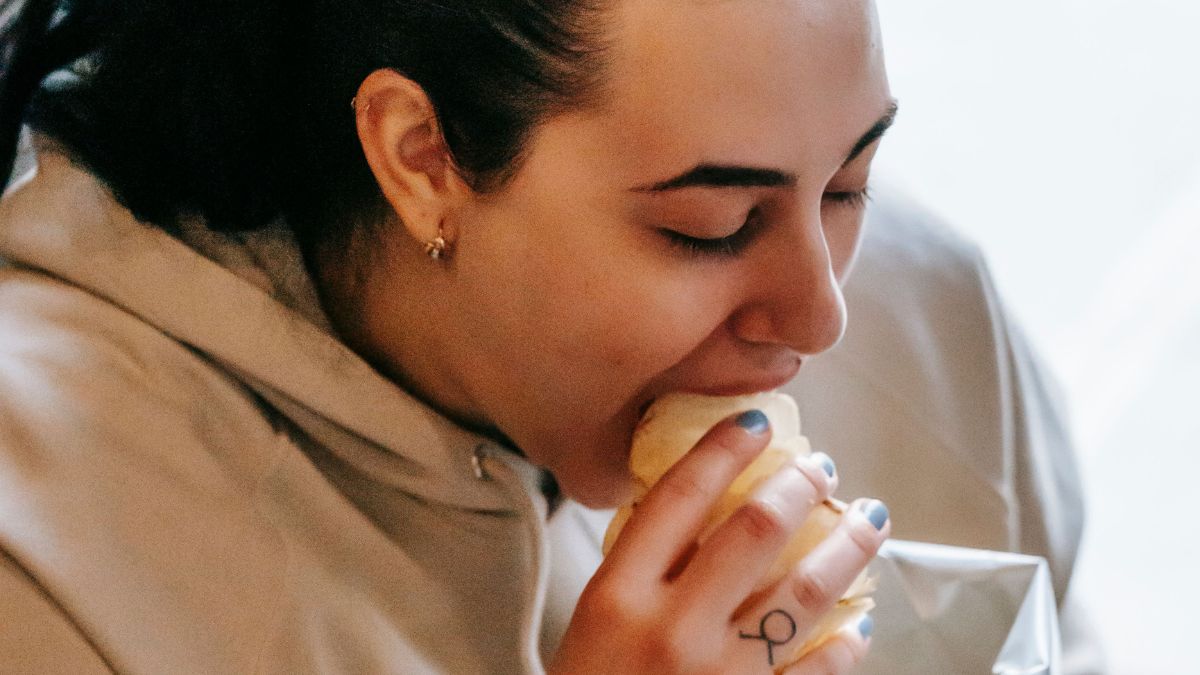
The Deadline Lunch: Why Eating in a Rush Feels Different
Rushed, distracted lunches can contribute to bloating and discomfort. Learn how eating speed, swallowed air, fullness signals and simple lunch habits can change how your meal feels.
Table of Contents
| TL;DR Eating fast, distracted lunches — not necessarily unhealthy food — is a common cause of post-lunch bloating and discomfort. Fullness signals take about 20 minutes to register, and rushed eating means more swallowed air. Slowing down for even a few extra minutes, with fewer distractions, tends to help. Try the slower-lunch experiment below to check your own pattern. |
Eating in a rush changes how a meal feels in your body, and that’s often more responsible for post-lunch bloating and discomfort than anything actually on the plate. Mindful eating — slowing down and paying attention while you eat — gives your body the time it needs to register food properly, digest it comfortably and signal when you’re full. Skip that, and even a perfectly healthy lunch can leave you feeling bloated, sleepy or strangely unsatisfied twenty minutes later.
It’s 1.45 pm. Your stomach has been reminding you to eat since 12.30, but you’ve ignored it because there was one more email to send, one more meeting to finish, one more deadline to meet. You finally grab your lunch, open your laptop, take a few bites between replying to messages, and before you know it, the plate is empty. Twenty minutes later, you’re wondering why you feel so bloated, or sleepy, or strangely unsatisfied. If this sounds like your average workday, you’re not alone.
For many people, it’s not what they’re eating that makes lunch feel different — it’s how they’re eating it. Think about your last weekday lunch. Were you actually eating, or were you also answering emails, sitting in a meeting, watching a webinar, scrolling through your phone, planning the rest of your day? Modern lunches often come with a side of distraction. Your mouth is eating, but your mind is somewhere else.
| Why does eating speed change how full you feel? Fullness isn’t instant. It takes roughly 20 minutes from the start of a meal for the body’s fullness signals — both the nerve signals from a stretching stomach and the slower hormonal ones from the gut — to fully register in the brain. Eat well within that window, and you can easily finish a plate before your body has had the chance to say it’s had enough. That lag is also part of why rushed meals feel different afterwards. Eating quickly is linked to swallowing more air, which can add to burping, gas and bloating, and fast eating alongside processed food and fizzy drinks is a common, well-documented contributor to gas and bloating generally. Sources: Cleveland Clinic, on how the body signals fullness. |
A rushed lunch usually comes after a rushed morning. Maybe breakfast was skipped, or water intake has been poor. You’ve had two cups of tea and no proper meal. By lunchtime, you’re genuinely hungry, and that often means eating faster than usual, taking larger bites, finishing the meal quickly, or returning to work immediately. Your stomach is trying to digest lunch while the rest of you is already mentally back in the meeting.
| A familiar 1.45 pm: Priya’s desk lunch Priya manages a small team and, most days, eats lunch the same way: dabba open, laptop open, replying to a Slack message between bites. For months, she assumed her afternoon bloating was about what was in the dabba, and quietly started cutting things out — first rice, then dal, then most vegetables she used to enjoy. Nothing changed. The bloating kept showing up, some days worse than others, with no obvious pattern to the food. What she hadn’t tracked was how she was eating it. On the two days a week she had a client call at 1 pm and genuinely couldn’t eat at her desk, she took her lunch to the office pantry instead, ate without her laptop, and finished in a leisurely fifteen minutes. Those were consistently her best afternoons — regardless of what was on the plate. Priya had been solving the wrong variable. It wasn’t the dal. It was the desk, the laptop and the ten-minute lunch that came with it. |
Imagine eating the exact same lunch on two different days. On Sunday, you’re chatting with family, taking your time and enjoying the meal. On Tuesday, you’re eating it at your desk while answering emails. Same food, very different experience. Many people notice their digestion feels different too, which is why looking only at what you ate doesn’t always tell the full story.

Another thing that can happen during rushed meals is that you swallow more air. For some people, that can contribute to burping, gas and bloating. It’s one more reason your stomach may feel different after a deadline lunch than after a relaxed weekend meal.
| What happens | Rushed, distracted lunch | Slower, attentive lunch |
| Time to eat | Often under 10 minutes | 15–20 minutes or more |
| Fullness signal | Plate is empty before the body registers it | Body has time to say when it’s had enough |
| Air swallowed | More, from fast bites and talking or typing while chewing | Less, with slower, more deliberate bites |
| How lunch feels after | Bloated, overly full, sometimes sleepy | Comfortable, settled |
| Where attention is | Split between food, screen and the next task | Mostly on the meal |
Let’s be realistic. Most people can’t disappear for a leisurely 90-minute lunch every day, and honestly, you don’t have to. You don’t need candlelight, meditation music, or the need to chew every bite 40 times. Sometimes, simply slowing the pace a little and giving your meal your full attention for even a few extra minutes is enough to notice a difference.
| A desk lunch that’s actually easy to eat slowly Part of what makes rushed eating worse is a lunch that needs a laptop-side assembly line, several containers, or constant attention. A simpler plate is easier to eat without multitasking, which does half the work for you. A Khapli roti roll, for instance — made with Aashirvaad Chakki 100% Khapli Atta, a simple vegetable or paneer filling and a bit of chutney — travels well, needs only one hand free, and doesn’t need a fork, spoon or bowl juggling act at your desk. Wrap it, eat it in a few unhurried minutes, and there’s genuinely less to manage than a multi-container dabba, which makes it a little easier to actually put the laptop down while you eat. This is a practical suggestion, not a rule — any meal eaten with attention works. The point is that some lunches make slowing down easier than others. |
For the next three workdays, keep your lunch exactly the same. The only thing you’ll change is how you eat it.
| Day | Time taken | Ate while… | How did I feel afterwards? |
| Day 1 | |||
| Day 2 | |||
| Day 3 |
Also note:
Don’t worry about getting a “perfect score” — the goal is simply to look for patterns.
Try this prompt: “Here’s my three-day lunch tracker. I’ve recorded how long I took to eat, whether I was working while eating, and how I felt afterwards. Can you help me identify whether eating in a rush could be affecting my digestion?”
A rushed lunch isn’t automatically bad. We’ve all had days when work takes over. But if eating quickly while multitasking has become your everyday routine, it may help explain why your stomach feels different after lunch. You don’t need to turn your lunch break into a ceremony — just give your meal a little more time than your inbox. Your deadlines will still be there when you’re done. Your digestion might thank you for the pause.
Was lunch calm, rushed or skipped today? Log it and see if a pattern shows up over the week.
DISCLAIMER: If digestive symptoms continue, are severe, or keep coming back despite healthy eating habits, it’s worth speaking to a doctor. Sudden weight loss, blood in your stool, severe or persistent pain, or difficulty swallowing should always be evaluated promptly.
Mindful eating means slowing down and paying full attention while you eat. It gives your body time to register fullness and swallow less air, which can meaningfully reduce bloating after meals.
Eating fast often means swallowing more air and finishing before your body's fullness signals catch up, both of which can leave you feeling bloated or overly full afterwards.
Roughly 20 minutes, according to research on satiety signals. Eating quickly within that window makes it easy to eat past the point your body would otherwise call “enough.”
It can. Distracted eating often means faster, less attentive eating, which is linked to more swallowed air and a weaker sense of fullness, even when the food itself is healthy.
Even a few extra minutes helps. Put your laptop aside, take smaller bites, and choose lunches that are easy to eat without multitasking.