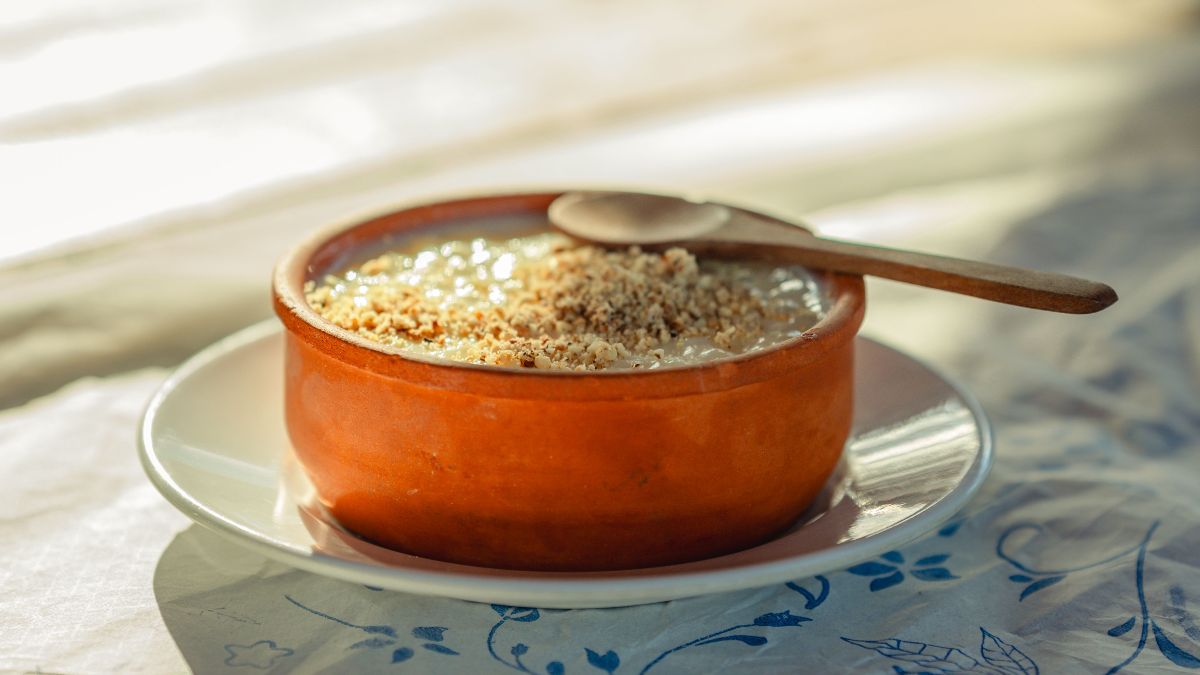
Overnight Dalia for Gut Health: Benefits & 3 Breakfasts
Soaking broken wheat overnight won’t cook it, but it can soften the grain and shorten the work required the next morning. Here are three easy ways to turn that head start into breakfast.
Table of Contents
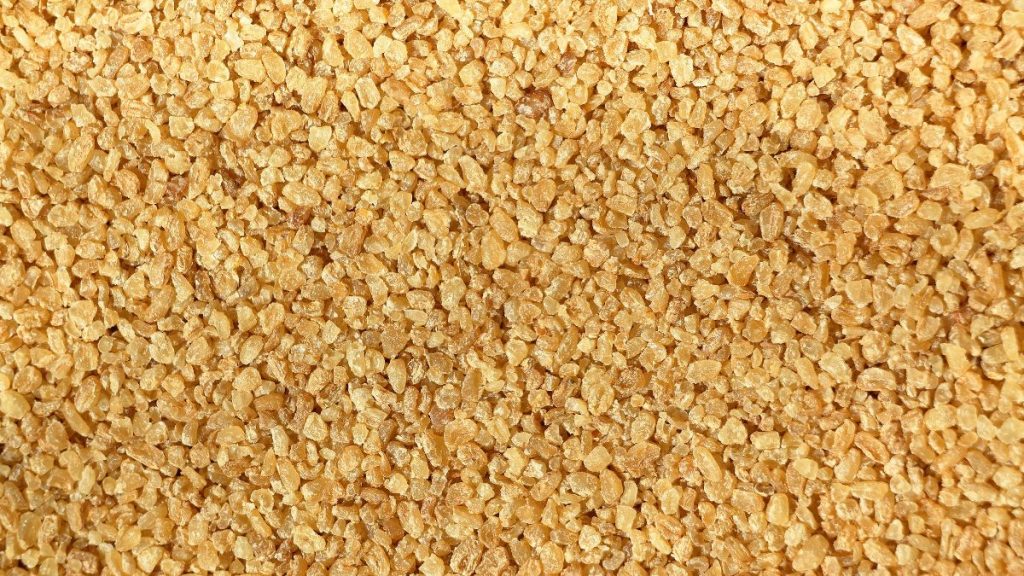
Dalia, or cracked or broken wheat, can be soaked overnight to soften the grain and shorten the cooking it needs the following morning. Unlike rolled oats, however, ordinary dalia is still raw cracked wheat and should be properly cooked before eating. Bulgur looks similar but is different: it has already been parboiled before drying and cracking, while cracked wheat has not.
When dalia is made from whole wheat, cracking the kernel can retain the bran, germ and endosperm rather than refining the grain down to the starchy endosperm alone. An overnight soak is therefore useful less because it transforms the nutrition and more because it gives a familiar whole-grain breakfast a head start before morning.
Here’s something worth noticing: soaking grains overnight isn’t actually a new idea you’re adopting; it’s one you probably already practise without thinking of it as a wellness habit at all. Rajma, chana, whole moong — most Indian kitchens already soak something overnight, most weeks, purely because it makes cooking easier the next day. This is really just extending a technique you already trust into a new context, breakfast, rather than asking you to learn something unfamiliar.
That familiarity matters more than it might seem. A lot of health habits fail not because they’re difficult, but because they’re foreign: they don’t fit into how you already cook and eat, so they quietly fall away after a week or two. Overnight dalia doesn’t have that problem. It uses a grain many Indian households already know and a technique — soaking — that’s already part of the household cooking vocabulary. The only real change is doing it with breakfast in mind.
The practical case is straightforward. A few minutes at night means the dalia has already absorbed water and begun softening by morning, so the cooking stage can be quicker than starting from completely dry grain. Dalia also has something the other ingredients in this series don’t quite have: it isn’t a novelty. If you’ve ever soaked dal or grain the night before cooking it, you already have every bit of the muscle memory this habit needs. You’re just applying it to a bowl destined for breakfast instead of a pot destined for lunch.
Dalia is wheat that’s been cracked or broken into smaller pieces rather than ground into flour. When it is made from the whole wheat kernel, the bran, germ and endosperm remain present, which makes it a whole-grain form of wheat rather than a refined grain such as maida. Cracking a whole kernel does not in itself stop it being whole grain, provided all of those original grain components remain in their natural proportions.
ALSO READ | Overnight Oats for Gut Health: Benefits & 3 Easy Recipes
There is one label-reading distinction worth making here, because the word wheat by itself does not always guarantee that a packaged product is whole grain. If that’s what you’re specifically looking for, check for wording such as whole wheat, whole-grain broken wheat or an equivalent clear statement on the product rather than assuming every coarse wheat product is nutritionally identical.
The biggest effect is physical: the dry grain absorbs water and softens.
Cracking already allows water to penetrate the wheat more quickly than it would an intact wheat berry, which is why cracked wheat cooks faster than whole kernels. An overnight soak gives that hydration process several more hours before the grain reaches the stove.
What the soak does not do is cook ordinary dalia.
This is where dalia differs fundamentally from both rolled oats and bulgur. Rolled oats undergo steaming during their manufacture; bulgur is made from wheat that has been cooked or parboiled before being dried and cracked. Ordinary cracked wheat is raw wheat broken into smaller pieces.
So if a bowl of soaked dalia has become pleasantly soft by morning, that texture should not be taken as proof that the grain has undergone the same processing as a ready-to-eat cereal. Soaking is the preparation step; cooking finishes the job.
If the dalia you’re buying is whole-grain broken wheat, its most useful gut-health contribution is fairly uncomplicated: it is another way to include whole grain and dietary fibre in the diet.
There isn’t a need to attach a precise universal fibre number to dalia because the value can differ by product and how the wheat has been processed. More importantly, the term whole grain tells us something separate from the fibre number alone: all three anatomical parts of the grain — bran, germ and endosperm — are retained in their original proportions.
Whole grains contribute several types of fibre and other grain components, and a varied fibre intake supports normal bowel function and the gut microbial ecosystem. But dalia isn’t a digestive treatment, and an overnight soak doesn’t create a special new fibre that wasn’t present in the grain before.
For most people, the useful advantage is much more ordinary: it’s a familiar whole-grain food that can be built into breakfast without requiring an elaborate recipe.
If you’re not used to eating much whole grain or fibre, ease in gradually rather than starting with a very large bowl. A sudden increase in fibre can cause gas, fullness or bloating while the digestive system adjusts, particularly if the rest of your diet has previously been quite low in fibre.
Adequate fluids matter too, but that doesn’t mean the soaking liquid itself somehow guarantees that a large fibre increase will be symptom-free. Portion size and your usual diet still matter.
And if you already follow specific advice to limit or modify fibre because of a diagnosed digestive condition, that individual recommendation takes precedence over the general virtue of adding another whole grain.
It’s worth saying something about coarseness, because dalia isn’t sold as one single product.
Finer dalia absorbs water more quickly and will generally cook faster after an overnight soak. Coarser dalia, the kind commonly used for khichdi or upma, retains considerably more bite and will still need a proper cooking period the following morning.
Scan your plate to find out how gut friendly your meal is, on the Happy Tummy app.
If you’re trying overnight-prepped dalia for the first time and want the quickest breakfast, a relatively fine broken wheat is the more forgiving starting point.
But check the packet too. If what you have is actually labelled bulgur, the preparation may be different because bulgur has already been parboiled and dried before it is cracked. Very fine bulgur can sometimes be hydrated rather than boiled, while raw cracked wheat still needs cooking.
For the recipes below, the night-before step is deliberately simple.
Rinse ¼ cup dalia well, then place it in a covered container with enough clean water to submerge it generously and refrigerate overnight. In the morning, drain if there is substantial excess water, add fresh liquid as required for the recipe and cook until the grain is completely tender with no raw, hard centre remaining.
Exactly how long that takes will depend on the size and brand of dalia. Fine broken wheat may cook fairly quickly after soaking; a coarse product will need longer. Traditional dalia recipes themselves vary substantially in cooking time according to the grain.
The point of the overnight step isn’t to eliminate cooking altogether. It is to make the morning part easier.
You’ll need:
Cook the soaked dalia with enough milk to let the grain become completely soft, adding a splash of water if necessary. Once it has reached a porridge consistency, take it off the heat and add cardamom. Let it cool slightly before adding the jaggery, then finish with chopped nuts.
This is close to a traditional sweet dalia bowl in flavour, but the overnight soak gives the grain a head start so the morning preparation doesn’t begin with completely dry wheat.
You’ll need:
Cook the overnight-soaked dalia in water until completely tender, then allow it to cool. Once it is no longer hot, stir in the curd and honey and add the fruit and raisins just before eating.
The curd here does double duty in the finished breakfast, bringing creaminess and protein alongside the grain. If the curd contains live cultures, those cultures can also remain in the bowl because the curd is added after the dalia has been cooked and cooled rather than being heated with it.
You’ll need:
Cook the soaked dalia until completely soft, then let it cool until comfortably warm or room temperature. Thin it with buttermilk, stir through the chopped vegetables and salt, then finish with a quick tempering of mustard seeds, curry leaves and green chilli.
This version keeps Adrija’s original savoury-breakfast idea intact, but the tempering isn’t being asked to do the job of cooking raw wheat; the dalia has already been properly cooked before the buttermilk and vegetables go in.
If mornings are particularly tight, you can take the prep one step further and cook the dalia the night before, refrigerate it promptly and simply assemble the bowl in the morning. Cooked grain should be stored covered and cold rather than left at room temperature overnight.
Get your gut health score! Take Happy Tummy’s Digestive Quotient Test now.
If you’re following the soak-then-cook method, keep the soaking grain in the refrigerator rather than on the kitchen counter, particularly when milk or other perishable ingredients are involved. I would also keep the milk, curd, buttermilk, fruit and fresh vegetables out of the overnight raw-grain soak and add them during or after cooking as appropriate.
Texture will vary substantially between products. If your dalia remains chewy after the time another recipe specifies, that’s not a sign you’ve failed at overnight meal prep; it means your particular grain needs more cooking. Add liquid and give it the time it needs.
Not nutritionally by default.
Both begin with the same grain. Soaking before cooking can shorten preparation and change texture, but there isn’t a good basis for saying that the overnight version is inherently “better for the gut” than dalia that was simply cooked from dry grain.
The behavioural difference may be more useful. If soaking it before bed makes a whole-grain breakfast easier to prepare on a weekday and therefore more likely to happen, the habit has value without requiring the soak itself to possess special digestive powers.
That is also what makes dalia fit this overnight series despite being different from oats and chia: the night-before step is helping the morning, even though the grain still needs heat before it becomes breakfast.
The useful case for overnight-prepped dalia is less about turning raw wheat into a no-cook food and more about using an old kitchen habit to make a familiar whole grain easier to fit into the morning.
When the product is whole-grain broken wheat, it retains the bran, germ and endosperm rather than being reduced to refined flour. Soaking gives that grain time to hydrate, and cooking the softened dalia the next morning turns it into the familiar porridge-like texture Indian kitchens already know.
If there’s one ingredient in this series worth starting with precisely because it’s the least intimidating, it may still be this one. Oats and chia can feel like introducing something new; dalia asks you to use something familiar and a technique you already half-know how to do. The only correction is an important one: the soak prepares the grain; it doesn’t replace cooking it.
Ordinary dalia or cracked wheat should be cooked rather than treated as ready-to-eat after soaking. Cracked wheat is raw broken wheat, unlike bulgur, which has been parboiled before drying and cracking.
It can. Cracking already allows water to penetrate wheat more quickly than an intact kernel, and an overnight soak hydrates it further before cooking. The amount of time saved depends on how fine or coarse the dalia is.
It can be, when the broken wheat contains the bran, germ and endosperm in the same proportions as the intact grain. Check the product label for a clear whole-wheat or whole-grain statement rather than assuming every wheat product is whole grain.
No. They look similar, but ordinary cracked wheat is raw wheat broken into pieces. Bulgur has been cooked or parboiled first, then dried and cracked, which is why it cooks much more quickly and some fine bulgur can be prepared simply with hot-water hydration.
Soaking softens and hydrates the grain, but there isn’t strong evidence that an ordinary overnight soak “pre-digests” dalia or makes it universally easier for every gut than properly cooked dry dalia.
You can refrigerate dalia with milk and cook the mixture thoroughly the next morning, but for the most flexible meal prep I prefer soaking the raw grain in water and adding fresh milk during cooking. In either case, keep the soak refrigerated.
For this preparation, cook the soaked dalia first, allow it to cool and then add curd. This also avoids heating the curd’s living cultures if retaining them is part of why you’re using it.
Whole-grain dalia can contribute dietary fibre, but constipation has many causes and no single food reliably resolves it. Fibre intake, fluid, physical activity and the rest of the diet all matter.
It can be one of several whole-grain foods in a varied diet if you tolerate wheat. Rotating it with oats, millets, rice, other grains and different breakfast foods can give you broader dietary variety.
Yes. Dalia is wheat and therefore contains gluten. It is not suitable for someone who needs a strict gluten-free diet, including people with coeliac disease.