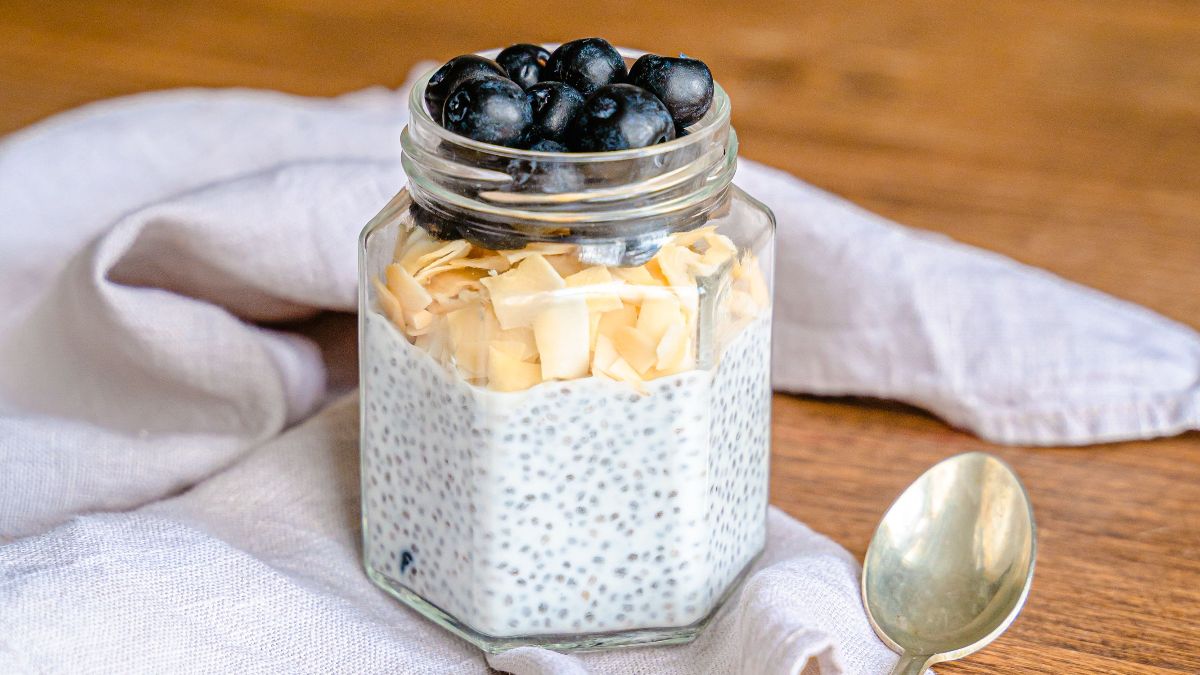
Overnight Chia Pudding for Gut Health: Benefits & 3 Recipes
Chia’s fibre-rich seeds form a soft gel when soaked, while also contributing plant-based omega-3s. Here’s what that means for your gut, why chia can sometimes cause bloating, and three easy overnight versions.
Chia seeds absorb several times their own weight in liquid and develop a gel-like coating when soaked, which is exactly what makes overnight chia pudding work. Chia is particularly rich in dietary fibre, although most of that fibre is insoluble; the distinctive gel comes from the smaller water-soluble mucilage fraction around the seed.
Chia also provides alpha-linolenic acid, or ALA, a plant-based omega-3 fatty acid. If chia sometimes leaves you bloated, the issue is more likely to be the amount of fibre introduced at once, your usual fibre intake and overall fluid intake than simply whether the seeds soaked for six hours or eight. The overnight preparation is still useful because it gives the seeds time to form the texture you actually want, while leaving breakfast ready before the morning rush begins.
Why Overnight Prep Is a Genuinely Good Habit
Most of us make our worst food decisions in the morning, not because we don’t know better, but because willpower and patience are both in short supply before you’ve properly woken up. Whatever’s fastest wins, and “fastest” at 7 am rarely lines up with what you meant to eat when you were thinking clearly the night before. The genuine value of overnight prep is that it moves the one decision that matters — what you’re actually going to eat — to a time of day when you have the bandwidth to make it well.
Chia pudding is close to the purest version of this idea. There’s no cooking involved at any point, not the night before and not in the morning; you’re mixing seeds with a liquid and letting time and hydration do the rest. That’s a genuinely different category of “easy” from a recipe that still asks you to stand at a stove, even briefly, before you’ve had your coffee.
There’s also something worth naming about the ritual itself. Preparing tomorrow’s breakfast tonight is a small act of care directed at a future version of you who’s going to be tired, rushed and not thinking particularly clearly about nutrition. It’s a five-minute favour with a next-morning payoff, and doing it consistently, even a few nights a week, can remove one decision from a chaotic part of the day. Breakfast isn’t magic; having something useful already waiting for you can simply make the morning easier.
The effort-to-benefit ratio here is hard to beat. A jar, two ingredients at minimum and a night in the fridge gets you a breakfast that’s ready before you are. It also travels unusually well for a breakfast that needs no morning assembly, provided you keep it refrigerated or properly chilled until you’re ready to eat it.
The Ingredient: Chia Seeds
Chia seeds are known for one striking physical property: when they meet water, the outside of the seed releases a polysaccharide-rich mucilage that traps liquid and develops the familiar gelatinous coating. Laboratory measurements vary substantially according to temperature, pH and other conditions, but chia can hold many times its own weight in water.
That gel often gets described simply as “chia’s soluble fibre”, which is only part of the story. Chia itself is extremely fibre-rich, but studies of its composition find that roughly 85–93% of the total fibre is insoluble, with around 7–15% soluble. The mucilage contains water-soluble polysaccharides and is responsible for much of the dramatic swelling you see in a chia pudding.
For gut health, the useful point is therefore broader than the gel alone. A serving of chia can make a meaningful contribution to daily fibre intake, and fibre supports normal bowel function and provides substrate for microbial fermentation. What we don’t yet have is strong enough human evidence to promise that chia itself produces a particular beneficial microbiome change in everyone who eats it.
The gel-forming property may also influence how a meal behaves after eating. Small human studies have found that adding chia can increase short-term satiety and reduce post-meal glucose responses in particular experimental settings, although those studies shouldn’t be stretched into a claim that chia guarantees fullness or controls blood sugar in everyday life.
Do Chia Seeds Cause Gas or Bloating?
They can, particularly if you’re not accustomed to eating much fibre.
The original temptation is to blame this entirely on under-soaked seeds continuing to swell once they reach the gut, but that’s too neat an explanation. Chia is a concentrated source of fibre, and increasing fibre quickly can lead to gas, abdominal fullness or bloating while the digestive system adjusts. The amount you eat and how much fibre is already present in the rest of your diet matter too.
Soaking is still worthwhile because it gives chia time to form its mucilage before you eat it and produces a much more pleasant pudding texture. But a fully hydrated chia pudding can still cause bloating in somebody who suddenly eats a large serving after normally having very little fibre.
If you’re new to chia, start smaller and work upwards rather than beginning with the biggest jar you can find. Adequate fluid intake through the day matters alongside any substantial increase in dietary fibre.
How Long Should You Soak Chia Seeds?
Chia doesn’t technically require an entire night to gel. You’ll see the mixture thicken within minutes, and several hours in the refrigerator is usually plenty for the seeds to hydrate evenly. Overnight simply happens to be convenient because it lets the texture finish developing while you’re asleep.
One practical trick makes a surprisingly large difference: stir the mixture when you first make it, then stir it again after five or ten minutes. Chia likes to gather into little gelatinous clumps if left to its own devices, particularly at the bottom of the jar.
By morning, the pudding should be evenly thickened rather than containing dry pockets of seeds.
Chia Also Brings Plant-Based Omega-3s
Chia is one of the richer plant sources of alpha-linolenic acid, or ALA, an essential omega-3 fatty acid. That makes it a genuinely useful addition to a varied diet, particularly for somebody looking to include more plant sources of omega-3.
It is worth being precise about what kind of omega-3 we’re talking about. ALA is not the same as EPA and DHA, the long-chain omega-3s supplied directly by fish and seafood. The body can convert ALA into EPA and subsequently DHA, but the conversion is limited; NIH describes reported conversion rates as below 15% overall and notes that obtaining EPA and DHA directly is the practical way to raise their levels.
That doesn’t make chia’s ALA somehow worthless. It simply means that “omega-3” isn’t one interchangeable nutrient. If you eat fish regularly, chia can sit alongside it rather than replacing it; if you don’t, chia remains a useful plant source of the essential ALA your diet still needs.
Fibre Still Needs a Little Respect
As with any fibre-forward food, if you’re new to eating much fibre, it makes sense to begin with a smaller portion and let your gut adjust rather than diving into a very large serving on day one. The original recipe quantity below makes a substantial pudding, so somebody who rarely eats seeds or other high-fibre foods can halve it initially and increase from there.
If chia or other high-fibre foods consistently cause significant discomfort despite moderate portions and adequate fluids, that’s different from the temporary gassiness that can accompany a sudden fibre increase and is worth discussing with a clinician, particularly if there are other digestive symptoms.
Chia’s gel-forming behaviour also means the texture keeps changing after you make it. A pudding that looks slightly thin after half an hour can be much thicker by morning, and may continue to firm in the refrigerator. That’s simply the mucilage holding more liquid, so if breakfast becomes almost sliceable, add another splash of milk, curd or water and stir.
Three Easy Ways to Have Overnight Chia Pudding
For a pudding rather than a chia-speckled glass of milk, a useful starting ratio is roughly 3 tablespoons of chia seeds to 1 cup of liquid. Adjust according to the seeds and the texture you prefer; two tablespoons will give you something looser, while three produces a more recognisable pudding.
Stir thoroughly when you mix it, stir again after five or ten minutes to break up clumps, cover and refrigerate.
1. The Classic Mango Chia Pudding
You’ll need:
3 tbsp chia seeds
1 cup milk, dairy or an unsweetened plant-based drink you like
1 tsp honey or jaggery syrup, if wanted
Fresh mango, chopped and added in the morning
A few chopped pistachios for texture
Mix the chia, milk and sweetener, stir well and refrigerate overnight. Top with mango and pistachios just before eating. In peak mango season, this is genuinely one of the easiest breakfasts you can make with almost no morning effort, and keeping the mango out until serving means it stays fresher and retains its own texture.
2. The Curd and Cardamom Version
You’ll need:
3 tbsp chia seeds
¾ cup curd, thinned with roughly ¼ cup milk or water
A pinch of cardamom powder
1 tsp jaggery or honey, if wanted
A few almonds, sliced in the morning
Mix everything except the almonds and refrigerate overnight. This version leans on curd for a tangier, more familiar flavour, while also contributing protein and, when the curd contains live cultures, living microorganisms alongside the chia’s fibre.
That pairing is nutritionally interesting without needing to call the finished pudding a probiotic food. The precise organisms and viable amount in curd differ between products and homemade batches, so “contains live cultures” is the safer description.
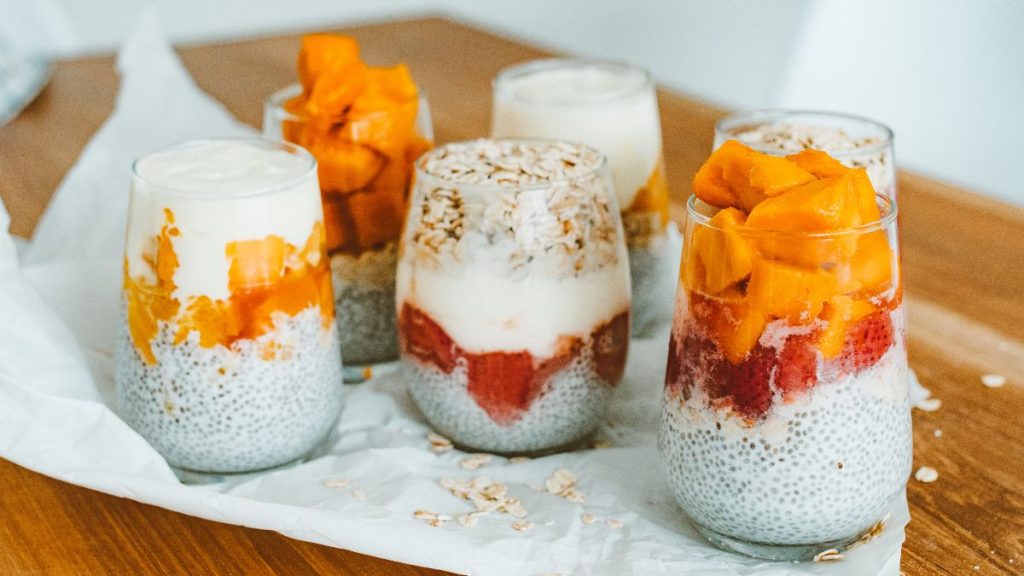
Chia pudding is easy to vary with seasonal fruit, curd or milk, nuts and seeds, turning the same fibre-rich base into very different breakfasts without changing the overnight prep. Image via PEXELS
3. The Chocolate-ish Everyday Bowl
You’ll need:
3 tbsp chia seeds
1 cup milk
1 tsp unsweetened cocoa or cacao powder
1 tsp honey or jaggery syrup, if wanted
A few banana slices and a scatter of seeds, added in the morning
Mix the chia, milk, cocoa and sweetener thoroughly, since cocoa tends to clump more than the other ingredients, and refrigerate overnight. Add banana and any extra seeds just before eating. This version changes the flavour more than the basic nutritional structure: chia remains the fibre- and ALA-rich centre of the pudding, while banana, milk and any toppings bring their own nutrients and change how substantial the breakfast becomes.
A Few Practical Notes
Chia pudding is convenient for advance preparation, but because these recipes contain perishable milk or curd, keep the jars refrigerated throughout. For home meal prep, making enough for the next two or three mornings is a sensible approach; if you use fresh fruit, add it closer to serving rather than storing chopped fruit in every jar for several days.
If a batch is thicker than you’d like after the overnight soak, a splash of milk or water loosens it in seconds. If you’re new to chia, you can also begin with a smaller portion than the recipes above and scale up once you know how your gut responds to the extra fibre.
And although chia is perfectly useful sprinkled onto foods in modest amounts, swallowing large spoonfuls of dry seeds is unnecessary. Their entire culinary advantage here is their ability to hydrate and form a gel, so giving them liquid before you eat a concentrated serving is the more sensible way to use them.
Are Chia Seeds ‘Good for the Gut’?
The useful answer is yes, with some restraint around what that phrase means.
Chia is a fibre-rich food, and including enough fibre from a range of foods supports normal digestive function. Its mucilage gives it unusual water-holding and viscosity, and the seed contributes both soluble and insoluble fibre. Chia has also been studied for effects on satiety, glycaemic response and metabolic markers, although clinical results across outcomes are mixed rather than uniformly dramatic.
What we don’t need to claim is that chia “heals” the gut, automatically improves everybody’s microbiome or prevents bloating once it has been soaked. Its value is more ordinary and much easier to defend: it is a compact source of fibre and ALA that works extremely well in a breakfast you can make the night before.
The Benefits, Recapped
Across all three versions, you’re getting the same core ingredient: a fibre-rich seed that develops a soft, water-holding mucilage when hydrated and contributes a meaningful amount of plant-based ALA. The preparation is convenient enough to repeat, easy to vary with familiar ingredients and substantial enough to become breakfast once milk or curd, fruit and nuts are added.
The overnight soak itself isn’t a digestive treatment, and it doesn’t guarantee that chia will suit every gut. What it does exceptionally well is turn three tablespoons of tiny dry seeds into a soft, ready-to-eat pudding while you’re asleep, which happens to make a fibre-rich breakfast almost absurdly easy to have the next morning.
Frequently Asked Questions
Are chia seeds good for gut health?
Chia seeds are high in dietary fibre, which can support normal digestive function as part of an overall fibre-rich diet. Most chia fibre is insoluble, while a smaller soluble fraction forms the seed’s characteristic mucilage.
Do chia seeds cause gas and bloating?
They can. Chia contains a substantial amount of fibre, and eating much more fibre than usual can cause gas or bloating while the gut adjusts. Starting with a smaller portion and ensuring adequate fluid intake is more useful than assuming an overnight soak will prevent every symptom.
Does soaking chia seeds stop bloating?
Not necessarily. Soaking hydrates the seeds and creates their gel-like texture, but somebody sensitive to a large fibre load may still experience gas or bloating from fully soaked chia.
How long should chia seeds soak?
Several hours is generally enough for them to hydrate thoroughly, while an overnight soak is convenient for breakfast prep. Stir once when combining the seeds and liquid and again after five or ten minutes to reduce clumping.
How much chia do I need for chia pudding?
Around 3 tablespoons of chia seeds per cup of liquid is a useful starting point for a thick pudding. Use less for a looser consistency or a smaller serving, particularly if you’re new to eating a lot of fibre.
Is chia mostly soluble fibre?
No. Although chia is famous for its gel, studies find that most of its total fibre is insoluble, with the soluble fraction accounting for roughly 7–15%. The mucilage that appears when the seeds are soaked is rich in water-soluble polysaccharides.
Is chia pudding probiotic?
Chia itself is not probiotic. A chia pudding made with curd containing live cultures can contain living microorganisms from the curd, but that does not automatically make the finished breakfast a clinically established probiotic food.
Are chia seeds a source of omega-3?
Yes. Chia is rich in the plant omega-3 ALA. ALA is different from EPA and DHA found in fish and seafood, and the body’s conversion of ALA into these long-chain forms is limited.
Does chia help you feel full?
Small controlled studies have found increased short-term satiety when chia was added to foods such as yoghurt, but individual responses vary and chia should not be treated as an appetite-suppressing or weight-loss treatment.
Can I eat chia pudding every day?
It can be part of a varied diet if you tolerate it well. As with other high-fibre foods, portion size matters, and there is no nutritional need for chia to displace other useful fibre sources such as whole grains, pulses, fruits, vegetables, nuts and seeds.
You are now being directed to an external website https://www.callr.live/aashirvaadexperts/premium-plan.
This link is provided for your information and convenience only and ITC Limited is not
responsible for the contents or services provided by Brand Touch India or any information that
you share with Brand Touch India.