Does a Khapli Roti Count as a Whole-Grain Food?
Yes, if it is made from 100% whole-grain Khapli atta. Here’s what “whole grain” actually means, how Khapli qualifies, and where it differs from regular whole-wheat atta.
Table of Contents
Yes — if it is made from 100% whole-grain Khapli atta. Here’s what “whole grain” actually means, how Khapli qualifies, and where it differs from regular whole-wheat atta.
Many of us enjoyed wheat rotis during childhood without ever stopping to think about their health benefits. But as we grow up, we start wanting our humble rotis to do a little more nutritionally.
When exploring healthier eating options, you might have noticed “whole grain” popping up quite frequently. And if you have come across Khapli atta during your research, you might naturally wonder how it fits into the bigger picture.
The short answer is yes: a roti made from 100% whole-grain Khapli atta counts as a whole-grain food. The important bit is the “100% whole-grain” part. Khapli is the wheat species; whether the finished flour qualifies as whole grain depends on how much of the original grain kernel is retained. Once that distinction is clear, the rest becomes much easier to understand.
Before we get into Khapli specifically, it helps to be clear on what whole grain means, because the phrase gets used rather casually.
A wheat kernel has three main parts: the bran, the germ and the endosperm. A food qualifies as whole grain when those principal components remain present in the same relative proportions as they occur in the intact grain, even if the grain has been ground, cracked or flaked. That is the definition used in major whole-grain guidance.
Refining is different. In refined wheat flour such as maida, much of the bran and germ is removed, leaving predominantly the starchy endosperm. Whole-grain flour retains the whole kernel instead, which means it also retains more of the fibre and many of the nutrients and plant compounds associated with the bran and germ.
That distinction matters more than whether the flour comes from an “ancient” or “modern” wheat. Regular whole-wheat atta can be whole grain. Khapli atta can be whole grain. Maida is refined flour. The grain variety and the degree of refining are two separate questions.
Whole-grain consumption has been associated with health benefits in a substantial body of research. Randomised trials comparing whole grains with refined grains have, on average, found modestly better post-meal glucose and insulin responses, while broader population research links higher whole-grain intake with lower risks of several chronic diseases. That does not make every whole-grain food metabolically identical, but it explains why the category matters.
Khapli wheat, also known as emmer wheat or Triticum dicoccum, is one of the older cultivated wheat species. It has a long history of cultivation in India and elsewhere, and was gradually displaced in many regions as higher-yield wheat varieties became dominant.
When 100% Khapli wheat is milled as whole-grain atta, all three principal parts of the grain remain represented in the flour. Make a roti from that atta and, yes, you are eating a whole-grain wheat food.
But this is where one claim in the original needs changing: Khapli is not whole grain “unlike modern wheat”. A modern bread wheat can also be milled into whole-wheat atta and retain its bran, germ and endosperm. Aashirvaad’s own Sharbati product, for instance, is explicitly described as 100% whole wheat.
Khapli’s distinction is therefore not that it alone remains whole while modern wheat does not. It is a different whole-wheat species, with its own flavour, protein profile, grain characteristics and culinary history.
That is a much more accurate — and still interesting — place for it in the whole-grain conversation.
Aashirvaad’s current comparison lists its Khapli atta at 14.7g protein per 100g, compared with 10.5g for the regular wheat atta used in the same comparison. That is a genuine product-level distinction worth knowing.
The fibre story is more modest. The same table lists:
In other words, they are essentially comparable on fibre.
Elsewhere on the same current Aashirvaad site, the brand’s quality-certificate material gives a Khapli figure of 11.4g fibre per 100g and uses that to calculate that three rotis provide approximately 34% of the daily fibre requirement. Because those two current public figures do not perfectly match, I would use whichever figure ITC confirms as the approved pack or quality-certificate value for this article rather than mixing the two.
ALSO READ | What’s The Best Time to Eat Khapli Atta: Breakfast, Lunch or Dinner?
Either way, the larger point remains intact: Khapli atta is a fibre-containing whole-grain flour. What we should not say is that its fibre content dramatically exceeds ordinary whole-wheat atta.
Its nutritional advantage over refined flour is a much cleaner comparison.
This is where it gets interesting, because regular chakki atta can also be a whole-grain flour. So what exactly is the difference?
Khapli is emmer wheat, while most conventional Indian atta is made from common bread wheat, Triticum aestivum. They differ genetically and can differ in protein composition, flavour, colour and various micronutrients. But the differences are not neatly captured by saying ancient wheat is “nutritionally intact” while modern wheat has lost its goodness through breeding.
Research on ancient and modern wheats paints a more complicated picture. Some ancient wheat varieties contain higher concentrations of particular nutrients or bioactive compounds; others do not, and growing conditions and genotype can substantially affect the final composition.
The gluten claim also needs particular care. Khapli is not reliably a lower-gluten wheat. Comparative research has found ancient wheats including emmer can contain as much or more total gluten than modern bread wheat, although the proportions of individual gluten proteins differ.
That means Khapli is emphatically not gluten-free, and it is not suitable for people with coeliac disease. Someone may personally prefer the taste or texture of Khapli roti, but that should not be converted into a universal claim that its gluten is “lighter” or easier for everyone to digest.
So if both Khapli atta and your regular atta are genuinely whole grain, think of the choice as one whole wheat versus another, rather than whole grain versus something nutritionally empty.
Ask anyone who has tried making rotis with Khapli atta for the first time and they may tell you the same thing: the dough behaves differently. It can feel unfamiliar while kneading, need a different amount of water, or produce a roti whose texture and flavour are not identical to the wheat the household has been using for years.
This is why a lot of people try Khapli atta once and quietly go back to their regular brand. The nutritional case may be convincing, but if the roti experience is frustrating, it becomes much harder to sustain.
Aashirvaad Namma Chakki 100% Khapli Atta is made from Khapli wheat sourced from farmers in Karnataka and Maharashtra and is stone-ground using the brand’s Chakki Jaisi Pisai process. The brand also states that every batch undergoes more than 40 quality checks and that packs carry a quality certificate with a unique traceability code linked to the grain source and batch.
For something as routine as a daily roti, consistency genuinely matters.
What I would avoid promising is that stone-grinding automatically makes the dough smoother or guarantees softer rotis. Flour hydration, kneading, resting, rolling and cooking still have an enormous say in what lands on the plate.
Not automatically.
If your roti is made from 100% whole-grain Khapli atta, then yes, it counts as a whole-grain food.
If the flour is a blend of whole-grain Khapli with maida or another refined flour, the finished roti contains some whole grain but is not the same thing as a 100% whole-grain Khapli roti.
And if you are buying packaged atta, “Khapli” on the front tells you the wheat variety. It does not, by itself, tell you how much of the whole grain is present. That is why the ingredient list and product information matter.
A whole-grain claim is about what remains of the grain, not simply which wheat species went into the packet.
Nutrition guidance broadly encourages eating minimally processed foods and making whole grains part of a varied diet. ICMR–NIN’s 2024 Dietary Guidelines for Indians include whole grains and grain preparations within the range of natural and minimally processed foods that form the basis of healthy dietary patterns.
Khapli fits very comfortably into that picture. So do regular whole-wheat atta, oats, barley, brown rice, jowar, bajra and ragi. There is no need to make Khapli win the whole-grain Olympics.
For somebody replacing maida-based foods with a 100% whole-grain Khapli preparation, the whole-grain difference is substantial. For somebody switching from one genuine whole-wheat atta to Khapli, the change is subtler: a different wheat species, a different protein profile, a different flavour and another grain option to bring into the kitchen.
That does not make Khapli less interesting. It simply makes the comparison honest.
There is also something quietly reassuring about reaching for a grain that has been part of human food traditions for thousands of years. Khapli has survived long enough not to need a miracle claim attached to it.
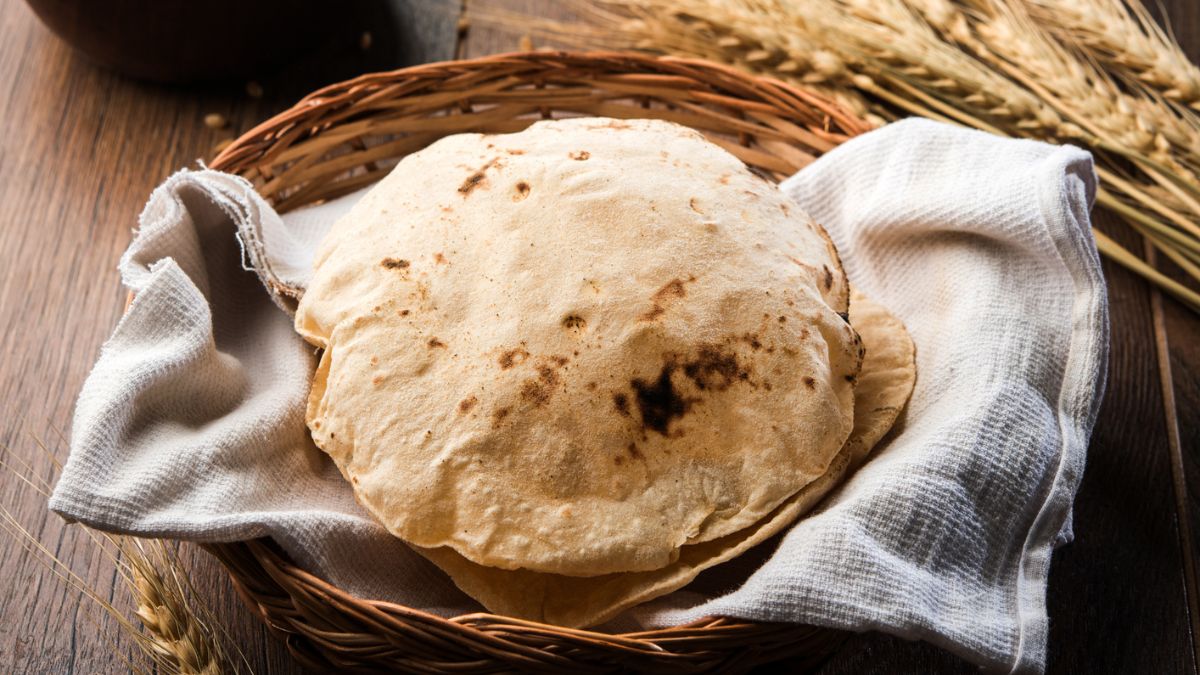
So to come back to the original question: yes, a Khapli roti counts as a whole-grain food when it is made from 100% whole-grain Khapli atta. Fully and legitimately.
But it does not become more “whole grain” than a regular roti simply because Khapli is ancient. A roti made from genuine whole-wheat atta also counts as whole grain.
ALSO READ | Does Adding Ajwain to Khapli Atta Make It Easier to Digest?
Where Khapli earns its own place is in being a different whole-wheat species with a distinctive flavour and product profile. Aashirvaad’s current comparison shows a notable protein difference, while fibre is broadly comparable with its regular whole-wheat atta. The whole-grain advantage becomes clearest when either one is compared with refined flour. Which, in some ways, makes the answer much simpler.
You do not have to turn your daily roti into a superfood. Sometimes it is enough to know that the whole grain is still there.
It can be. A 100% whole-grain Khapli atta contains the bran, germ and endosperm of the Khapli wheat kernel in their original proportions, which meets the standard definition of a whole grain.
Yes, if the roti is made from 100% whole-grain Khapli atta and not substantially diluted with refined flour.
Yes. Whole-grain status depends on retaining the bran, germ and endosperm, not on whether the wheat is Khapli or a modern bread-wheat variety.
Not according to Aashirvaad’s current comparison table, which lists approximately 10.7g fibre per 100g for Khapli and 10.8g for regular wheat atta. The brand also publishes a separate quality-certificate value of 11.4g/100g for Khapli, so the current approved product specification should be used for precise claims.
It should not be described that way as a general rule. Emmer wheat contains gluten, and comparative research has found ancient wheats can contain as much or more total gluten than modern bread wheat.
No. Khapli is wheat and contains gluten, so it is not suitable for people with coeliac disease.
They are different categories of flour in an important way: 100% whole-grain Khapli atta retains the whole wheat kernel, whereas maida is refined wheat flour with much of the bran and germ removed.
Disclaimer: This article provides general food and nutrition information and is not a substitute for personalised medical advice. Khapli is wheat and contains gluten; people with coeliac disease or a diagnosed wheat allergy should not consume it.