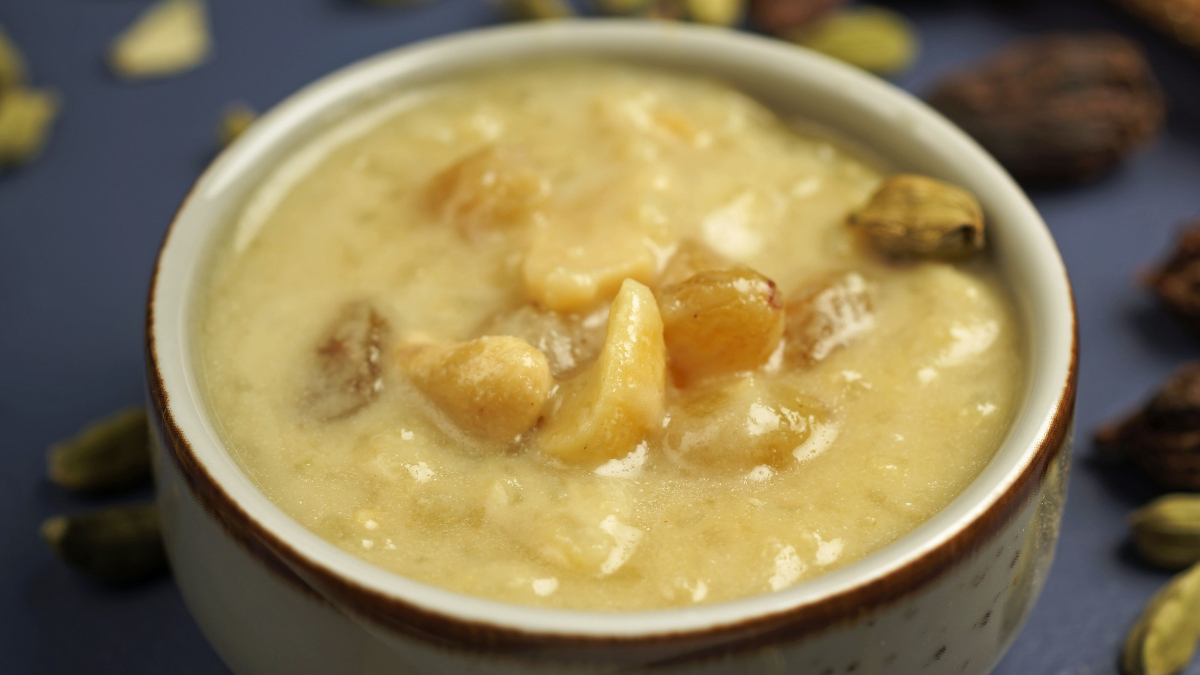
Sharad Purnima Kheer: Is It Safe to Leave It Out Overnight?
Moonlight kheer holds a place in many families’ rituals. Here’s how to honour the tradition while keeping the milk-and-rice prasad safely chilled.
Table of Contents
There is something beautiful about kheer simmering on Sharad Purnima, then carried outside to spend the night beneath the full moon before it’s shared as prasad the next morning. But milk-and-rice kheer shouldn’t sit unrefrigerated all night. Cool it quickly, ideally within an hour, and keep the main batch in the fridge. A small portion can take its place beneath the moon, provided it stays cold throughout. Chilling or reheating the kheer at dawn cannot reliably make it safe after hours at room temperature.
For many of us, the smell of milk and rice slowly thickening on the stove, with cardamom drifting through the kitchen, is pure childhood. In many Indian households, this kheer isn’t simply a sweet dish; it’s part of the night’s observance, offered to the moon and shared the following morning. That’s exactly why it’s worth getting the storage right, so the ritual and your family’s health can sit comfortably together.
This year, Sharad Purnima falls on Sunday, 25 October. According to Drik Panchang, the Purnima tithi begins at 11:55 am on 25 October and ends at 9:41 am on Monday, 26 October, with moonrise around 5 pm in New Delhi. These times are in IST. Moonrise and puja timings vary from city to city, so check your local panchang for exact times. In homes that follow the custom, the kheer goes out beneath the moon on the night of 25 October and is eaten the next morning.
The answer to the food-safety question doesn’t lie in treating moonlight kheer as dangerous or dismissing a cherished ritual. It lies in understanding how cooked food behaves once it leaves your stove, how long kheer can safely stay out of the fridge, and why putting it in the fridge at dawn can’t undo a full night of unsafe storage.
Sharad Purnima falls on the full moon of the Hindu month of Ashwin, and it goes by different names across India, each with its own customs. In homes that follow the kheer tradition, the dish is left beneath the moon and eaten as prasad the next day. In Maharashtra, where the night is Kojagiri Purnima, celebrations often include masala milk. In Bengal, Kojagari Purnima is associated with Lakshmi puja. The name is often explained as ‘who is awake?’, and Maharashtra Tourism notes the importance of staying awake and praying through the night. In Odisha, the night is also celebrated as Kumar Purnima. Customs differ between regions and families.
Behind the kheer tradition is the belief that the moon’s rays on this night carry amrit, gathered in the dish left beneath them. That belief belongs to the religious and cultural heart of the festival, and it deserves respect as such, without being presented as a scientifically established health benefit. Moonlight should not be relied on to improve digestion or protect kheer from harmful microbes. Keeping that distinction in mind lets ritual and practicality coexist: families can preserve the symbolism of the moonlit kheer while making a separate, informed decision about how it’s stored.
Kheer looks deceptively simple. Its styles are endless, but usually rice is cooked slowly in milk with sugar or jaggery and flavourings like cardamom, saffron and nuts. Some families like it thick and reduced; others keep it looser, with distinct grains of rice. There are vermicelli versions too, but this advice focuses on milk-and-rice kheer. The finished dish has two important features from a food-safety point of view: it contains dairy, and it’s a moist, cooked rice dish. Neither makes kheer unsafe in itself.
Freshly made kheer can be enjoyed safely when it’s handled and stored well. The concern begins after cooking, when it’s left at temperatures that let harmful bacteria multiply. Long simmering doesn’t protect a pot indefinitely, because bacteria can be reintroduced afterwards through hands, spoons or containers.
Rice brings an extra twist. Raw rice can carry spores of a bacterium called Bacillus cereus, and these spores can survive cooking. If cooked rice cools slowly or sits at room temperature, the bacteria can grow and may produce toxins. That doesn’t mean every bowl of kheer left out will make someone ill. It means unsafe storage creates a risk you can’t judge by looking at it.
The most important question isn’t whether your kheer sits under the moon, on a balcony or on the dining table. It’s how long it stays out of the fridge, and at what temperature.
US government food-safety guidance is to refrigerate perishable food within two hours of cooking, or within one hour if the surroundings are above 32°C. It also recommends small, shallow containers, because they cool more quickly. Food Standards Scotland’s advice for cooked rice is tighter: chill it as quickly as possible, ideally within an hour, keep it in the fridge, and eat it within 24 hours. For milk-and-rice kheer, following that rice guidance is a cautious practical approach, rather than treating two hours as a reason to leave it on the counter.
These are useful benchmarks for Indian homes, especially if your kheer is made in the afternoon or evening and served after sunrise. An October night may feel cool, but a pleasant breeze on your skin doesn’t mean a container of kheer has stayed at a safe temperature, and conditions differ between an open terrace, a sheltered balcony and an indoor room. So leaving kheer outside from late evening until morning isn’t a safe way to store it unless it’s kept consistently cold. Covering the bowl doesn’t solve that, either. A clean lid keeps out dust and insects, but it doesn’t keep the kheer cold, and a steel, silver or traditional vessel may be right for the ritual without making overnight storage any safer.
One of the easiest mistakes is to assume the kheer is fine because it still smells sweet, looks creamy and tastes normal. Unfortunately, spoilage and food poisoning don’t always announce themselves in the same way. As USDA guidance explains, illness-causing bacteria generally don’t change a food’s smell, taste or appearance. A bowl of kheer can look and smell perfect and still be unsafe. Don’t taste it to check.
Reheating doesn’t reliably rescue it either. Bringing kheer back to the boil the next morning may kill actively growing bacteria, but the vomiting toxin made by Bacillus cereus is heat-stable, so ordinary reheating may not destroy toxin that has already formed. Chilling it later doesn’t reverse that: the fridge slows bacterial growth, but it can’t undo hours of unsafe storage. If kheer has stayed unrefrigerated overnight, do not eat or serve it. Dispose of it respectfully rather than saving it for later.
The practical answer is to separate the symbolic act of offering the kheer to the moon from the way you store it. That doesn’t mean abandoning the ritual or changing your family recipe.
Handled this way, the kheer you share on the morning of 26 October carries all the meaning of the night before, with safer storage. The same habits help with the rest of the festive food: see our guide to storing and reheating leftover Indian food.
Food poisoning can have several causes, so symptoms alone can’t tell you which germ was involved. With Bacillus cereus, vomiting and nausea can start within about one to six hours; the diarrhoeal form usually starts within six to 15 hours and commonly lasts around a day.
Sip fluids little and often. A pharmacist can advise on oral rehydration solution. Seek urgent medical advice if someone can’t keep fluids down, has bloody diarrhoea, or has signs of dehydration that persist despite oral rehydration. Sudden, severe abdominal pain, vomiting blood or confusion needs emergency care. Young children, older adults, pregnant people and anyone with a weakened immune system should seek advice early if unwell.
If symptoms continue, are severe, or keep coming back, speak to a doctor. NHS guidance also advises urgent assessment for diarrhoea lasting more than seven days or vomiting for more than two days; don’t wait for those thresholds if there are warning signs or you’re concerned.
Disclaimer: This article provides general food-safety information and does not replace medical advice. Seek medical advice if someone becomes unwell after eating, especially a young child, an older adult, someone who is pregnant or anyone with a weakened immune system. Seek urgent care for dehydration, inability to keep fluids down, blood in vomit or stool, severe abdominal pain or confusion.
Not if it was left unrefrigerated. Kheer kept outdoors overnight without reliable chilling can harbour bacteria or toxins without looking, smelling or tasting any different. Keeping it consistently at 4°C or below is different from simply leaving it in a cool-feeling place.
Sharad Purnima falls on 25 October 2026, so households following this custom place the kheer beneath the moon that night. Check your local panchang for moonrise and puja timings. Keep the kheer cold while it’s outside rather than leaving it unrefrigerated until morning.
For milk-and-rice kheer, cool and refrigerate it promptly, ideally within an hour. The general limit for perishable food out of refrigeration is two hours, reduced to one hour above 32°C. Count time out during cooling and serving together; these are limits, not waiting times to aim for.
The belief that moonlight blesses the kheer is part of the festival’s religious meaning. A nutritional or digestive benefit is not established. Moonlight does not replace safe cooling and refrigeration.
Reheating cannot reliably make it safe. Bacillus cereus can produce a heat-stable vomiting toxin, so kheer left unrefrigerated overnight should not be eaten, even after boiling.
For promptly cooled milk-and-rice kheer, a cautious approach is to eat it within 24 hours of preparation and keep it at 4°C or below. This applies cooked-rice guidance to kheer; refrigeration does not rescue a batch that was left warm for hours first.