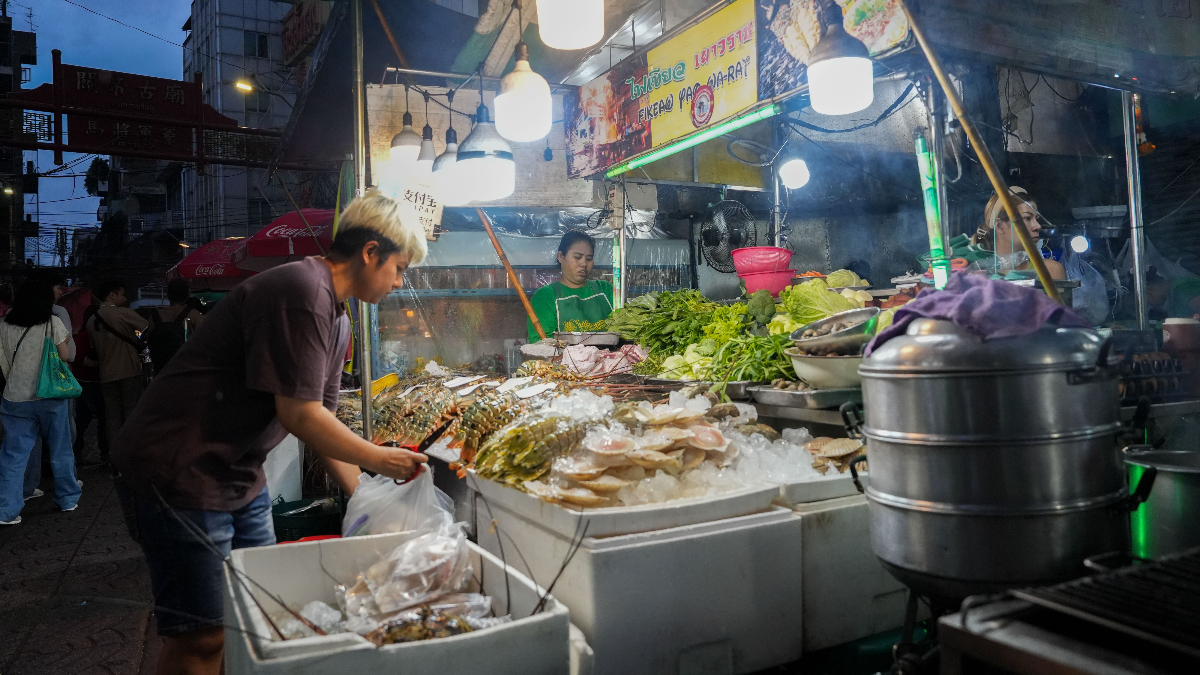
Is Thailand's Street Food Safe? Why Your ‘Cast-Iron Stomach’ Isn’t Enough
From raw prawns and fermented fish to the ice in your drink, familiar flavours and a busy stall can only tell you so much. Here’s how to make safer choices.
Table of Contents
Being comfortable with street food in India does not create dependable immunity to foodborne illness in Thailand. Choose food cooked to order and served steaming hot, avoid raw or undercooked meat and seafood, peel fruit yourself, and use sealed or reliably treated water. A long queue can suggest quick turnover, but it cannot prove that the water, ingredients or handling are safe. Ice deserves the same caution: its shape cannot establish safety, and skipping it is the conservative choice when its source is uncertain.
Eating chaat, golgappe or roadside meals regularly may make the flavours and spice levels feel familiar. It does not show that you are protected from bacteria, viruses, parasites or toxins in contaminated food and water. The gut microbiome does respond to diet and environment, but that is not a reliable immunity certificate for travel.
This distinction matters because confidence can change behaviour. A traveller who assumes that years of street-food experience provide protection may take risks that they would warn a visitor to India against. CDC’s travel guidance notes that one bout of travellers’ diarrhoea does not appear to protect against another. Treat each vendor and dish on its actual handling, water and cooking conditions.
‘Hot, fresh, busy and clean’ is a useful screening rule, provided it remains a rule of thumb rather than a guarantee. Food cooked after you order and served steaming hot is a safer choice than food that has been sitting at room temperature. Fast turnover may shorten holding time, while an orderly stall can make obvious handling problems easier to spot.
Look beyond the queue. Raw ingredients should be kept separate from cooked food, perishable items should be held cold, and utensils should not move casually between raw and ready-to-eat food. Notice whether the vendor can clean hands and equipment and whether money and food are handled separately. These observations reduce uncertainty, but they cannot reveal contaminated water, an unsafe ingredient or incomplete cooking inside a thick piece of food.
The same food storage and handling principles matter in a home kitchen and at a stall. Check your own hands, too: wash them with soap and safe water before eating and after using the toilet. Carry hand sanitiser containing at least 60% alcohol for times when handwashing is unavailable.
Hollow tube-shaped ice is often described as a sign of factory production. Even if the shape indicates commercial equipment, it does not tell you whether safe water was used or whether the ice stayed clean during transport, storage and serving.
CDC’s Thailand guidance advises travellers to avoid ice, while its broader guidance allows ice when you are reasonably certain it was made with safe water. If the venue cannot confirm the source, order the drink without ice. A particular shape is not a substitute for that information.
For travellers, the conservative options are water from an unopened, factory-sealed bottle, freshly boiled water or water that has been adequately disinfected. Do not drink untreated tap water.
Use safe water for brushing your teeth when the local supply or the building’s plumbing and storage are uncertain, and check that a bottled-water seal is intact before drinking.
Goong chae nam pla is made with raw prawns dressed with fish sauce, lime, chilli and garlic. Those ingredients add flavour, but they do not provide the reliable pathogen control of thorough cooking. The safety of a raw seafood dish depends heavily on sourcing, cold storage and preparation that a diner may not be able to assess.
Travellers who want the lower-risk option should choose seafood that is fully cooked and served hot. Raw garnishes, salads and accompaniments deserve attention too, particularly when the washing water and handling are uncertain.
The Thailand-specific parasite concern is Opisthorchis viverrini, a liver fluke acquired by eating infected freshwater fish that is raw, undercooked or fermented. Chronic infection damages the bile ducts and raises the risk of cholangiocarcinoma, a cancer of the bile ducts. The risk is established in Thailand and the wider Mekong region, especially where raw freshwater fish dishes are eaten. This concerns a parasitic infection and its long-term consequences; it is not a claim that every serving of fermented fish causes cancer.
Pla ra is a fermented freshwater fish seasoning used in some northeastern Thai dishes, including versions of som tam. It should not be described as uniformly unsafe, because recipes, salt levels, fermentation times and cooking practices vary. Nor should a restaurant or packaged product be assumed safe simply because it looks commercial.
Research describes how pla ra may retain parasite larvae depending on processing. Fermentation or salt curing should not be assumed to have made a particular batch safe. Ask whether the fermented fish component has been thoroughly cooked before it is added to the dish. If that cannot be confirmed, choose an alternative without raw or uncooked fermented freshwater fish.
Fruit that you wash with safe water and peel yourself is a straightforward lower-risk choice. Pre-cut fruit can pick up contamination from rinse water, knives, boards or hands, so avoid it when the preparation and cold holding are uncertain. Peeling reduces risk; it does not rescue fruit that is damaged, spoiled or handled with visibly dirty equipment.
Freshly and thoroughly fried insects from a hygienic vendor may present less microbial risk than insects that are raw, undercooked or poorly stored. Allergy is a separate concern. Research describes cross-reactivity between edible insects and crustacean shellfish allergens, including tropomyosin, although it varies by insect and person.
A shellfish allergy does not guarantee a reaction to every insect, but this is not something to test casually while travelling, particularly after a severe reaction. Ask an allergy specialist before the trip. Thorough frying does not reliably remove the allergy risk.
Before departure, keep meals familiar and balanced. Whole grains, including Khapli wheat, can be part of that diet if they suit you. Their fibre contributes to normal bowel health, but a particular grain or flour cannot make contaminated food or water safe.
If you are increasing fibre in your diet, build it gradually and drink enough safe fluids. A sudden increase just before travel can bring bloating or discomfort. There is no dependable ‘gut-fortification’ shortcut to food safety.
Before travelling, ask a doctor or travel-health professional about vaccines appropriate to your itinerary and health, including hepatitis A and typhoid. Vaccination does not replace food and water precautions. If you have a food allergy, carry your prescribed emergency treatment and plan how to communicate your ingredient and cross-contact requirements.
Pack oral rehydration salts (ORS) sachets and prepare the solution exactly as directed with boiled, treated or otherwise safe water. Use the volume stated on that particular packet. ORS replaces fluid and electrolytes; an unmeasured pinch of salt and sugar is not a dependable substitute.
In mild diarrhoea, keep drinking safe fluids. For substantial fluid loss, packaged ORS is the better option, but severe dehydration needs urgent medical care.
A doctor or travel-health professional can advise whether you need standby treatment based on your health, itinerary and access to care. Do not choose an antibiotic or other diarrhoea medicine simply because it helped someone else.
Seek medical help for bloody diarrhoea, high fever, severe abdominal pain, confusion, persistent vomiting, very little urine, faintness or symptoms that are severe, worsening or not improving. Seek help promptly if you cannot keep fluids down.
Thailand’s street food does not need blanket fear or blanket reassurance. Practical choices can lower risk, but no queue, ice shape, vendor reputation or past travel experience can replace safe water, hygienic handling and thorough cooking.
Disclaimer: This article provides general travel food-safety and nutrition information and is not a substitute for personalised medical advice, diagnosis or treatment. People who are pregnant, older adults, immunocompromised, travelling with young children or managing a chronic illness should seek advice tailored to their health and itinerary. If symptoms continue, are severe, or keep coming back, speak to a doctor. A suspected severe allergic reaction with breathing difficulty, throat or facial swelling, faintness or rapidly worsening symptoms requires emergency help.
There is no useful country-wide guarantee. Risk changes with the vendor, ingredients, water, storage, cooking and handling. Choose food cooked to order and served steaming hot, avoid raw or undercooked food, and use safe water. These steps lower risk without eliminating it.
It can indicate fast turnover, so cooked food may spend less time sitting out. It does not prove that raw ingredients were stored safely, that the water is clean or that each item is fully cooked. Check the whole setup rather than queue length alone.
The shape may suggest commercial production, but it cannot confirm the water source or later handling. CDC’s Thailand guidance advises avoiding ice. Its broader guidance allows ice only when you are reasonably certain it was made with safe water. If you cannot confirm that, order the drink without ice.
ORS sachets are a sensible basic item. Their measured glucose and electrolyte formulation helps replace water and salts lost during diarrhoea. Mix each packet with the exact amount of safe water its instructions specify. Bring enough of your regular medication and keep it in its original packaging. Ask a doctor or travel-health professional whether any standby medicine is appropriate for you.
Chilli can trigger burning, reflux, cramps or looser stools in some people, but it does not cause a foodborne infection. Do not assume persistent or severe diarrhoea is only a reaction to spice, especially when fever, blood, dehydration or repeated vomiting is present.
Thorough cooking and hygienic handling can lower microbial risk, but they do not remove allergy risk. People with shellfish allergy may react to some edible insects because related allergens can be present. Cross-reactivity is not universal, so discuss the specific risk with an allergy specialist.
Choose food that is cooked after you order and reaches you steaming hot. Pair that habit with safe drinking water, because no single step protects against every foodborne or waterborne hazard.