Benefits of Fibre: What High-Fibre Foods Actually Do for You
Everyone tells you to eat more fibre. Here’s what it actually does, without the lecture.
Table of Contents
Fibre is the part of plant foods your body can’t fully digest, and that’s exactly what makes it useful. As it moves through your gut, it helps keep bowel movements regular, adds to the feeling of fullness after a meal, and feeds the helpful bacteria in your large intestine. High-fibre foods such as whole grains, dals, vegetables, fruit, nuts and seeds also tend to bring a more balanced plate with them. But fibre isn’t a miracle cure. More isn’t always better, it works best with enough water, and it won’t guarantee you’ll never feel bloated or constipated again.
You’ve probably heard “eat more fibre” hundreds of times. Doctors say it. Nutritionists say it. Health articles repeat it. Even the cereal box reminds you. But somewhere in all that advice, one question often goes unanswered: what does fibre actually do? Not in scientific jargon or complicated diagrams, just in everyday life.
Let’s separate the facts from the hype.
| What is dietary fibre? Dietary fibre is a group of carbohydrates, found mainly in plant foods, that your body can’t digest or absorb in the small intestine. Some fibre passes through your gut largely intact; some is fermented by the bacteria in your large intestine. You’ll find it in whole grains, pulses, vegetables, fruit, nuts and seeds. |
Fibre comes in two broad types, and they work in slightly different ways:
Most plant foods contain a mix of both, so you don’t need to track which is which. What matters most is eating a variety of fibre-rich foods regularly.
Let’s start with the benefit most people already know: fibre supports regular bowel movements. Different fibres do this in different ways. Some add bulk, some hold on to water and soften stool, and some are fermented by gut bacteria. Together, for many people, these effects make stools easier to pass.
That doesn’t mean one fibre-rich meal will sort out constipation overnight. Your gut responds much better to consistent habits than one-off efforts. If your meals regularly include whole grains, vegetables, fruit and pulses, your gut gets a steady supply of fibre through the day rather than all at once.
Often, yes, but the evidence is more specific than “eat more fibre”. When the British Dietetic Association reviewed the research for its 2025 guidelines on chronic constipation, it found the strongest evidence for particular options, such as psyllium (isabgol) supplements, kiwifruit, rye bread and mineral-rich water, rather than for simply eating more fibre overall. Prunes are another fruit with evidence behind them.
So if constipation is a regular problem, a general “high-fibre diet” may not be the whole answer. Our comparison of isabgol and triphala looks at the evidence for one of India’s most familiar options. And if constipation is persistent, painful or new for you, speak to a doctor rather than simply adding more fibre.
Have you ever noticed that some meals keep you going for longer than others? Compare two breakfasts: a couple of biscuits with tea, or a vegetable paratha made with whole wheat atta, with curd and a piece of fruit.
The second is likely to feel more filling. That’s partly the fibre, since high-fibre foods tend to be more filling, but it’s also the extra volume, the protein in the curd and the broader mix of foods. Fibre is one part of what makes a meal satisfying, not the whole story.
Feeling comfortably satisfied after a meal can make it easier to keep regular eating habits instead of constantly hunting for snacks. The aim isn’t to stay full forever. It’s to build meals that keep you comfortably nourished until the next one.
Some of the fibre you eat becomes food for the bacteria living in your large intestine. As they ferment it, they help keep your gut environment healthy. It’s one of the reasons variety matters: different fibres feed different bacteria.
That fermentation also produces gas, which is normal in moderation. It’s part of why a sudden jump in fibre can leave you feeling windy for a while.
Here’s a benefit people rarely talk about. When you choose fibre-rich foods, your meals tend to become more balanced almost by default.
Think about a typical Indian thali: roti, dal, sabzi, salad, perhaps some curd. Without thinking too much about nutrients, you’ve already put whole grains, vegetables and pulses on one plate. Instead of treating fibre as another supplement to buy, it’s easier to think about the foods that naturally bring it with them.
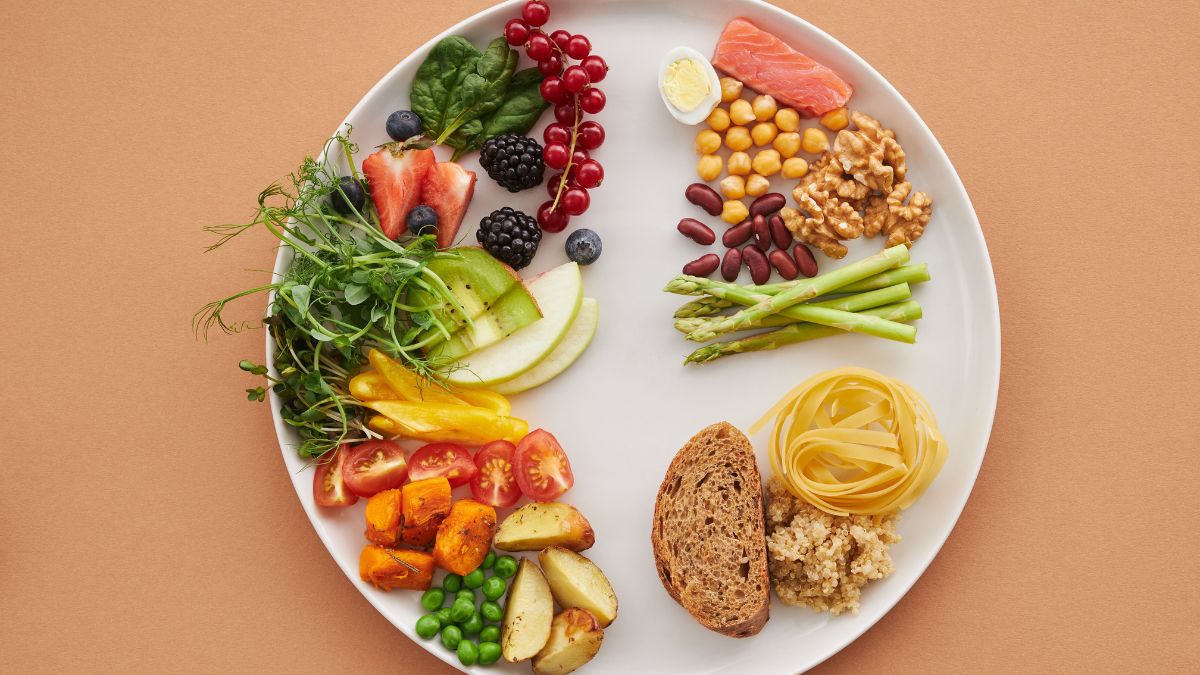
Many people go looking for the high-fibre food: the best fruit, the best grain, the best seed. But fibre doesn’t come from one hero ingredient. It comes from variety. Across the week, aim to include different vegetables, seasonal fruits, whole grains and millets, dals and legumes, and nuts and seeds. Eating a wider range of plant foods brings a wider range of fibre types, and makes meals more interesting too.
For a list of everyday high-fibre Indian foods, and how much fibre each contains, see our practical guide to increasing fibre in an Indian diet.
ICMR-NIN recommends about 40g of fibre a day for Indian adults, while the WHO sets a minimum of 25g. The two don’t contradict each other: 25g is the floor, 40g the target for Indian diets. Most Indians fall short of both.
You don’t need to count grams to close the gap, though. One of the easiest places to start is the flour you use every day. Whole wheat atta has nearly four times the fibre of maida, so choosing it for your rotis and parathas quietly does a lot of the work. Our explainer on the fibre number on your atta pack goes into the detail.
Once people hear that fibre is good, another misconception appears: if some is good, a lot must be better. Not necessarily.
If you suddenly double your fibre intake, your digestive system needs time to adapt, and you may notice gas, bloating or an uncomfortably full feeling for a while. Some added fibres, such as inulin (often found in “high-fibre” packaged foods and supplements), are known to increase wind. That’s why gradual changes over a few weeks are usually more comfortable than dramatic ones.
Water matters too. Fibre works by absorbing water, so increasing fibre without drinking more can actually make constipation worse. If you’ve been advised to limit fluids, for example because of a heart or kidney condition, ask your doctor how to increase fibre safely.
A high-fibre diet also isn’t right for everyone. Some medical conditions, including some bowel conditions and recovery from gut surgery, call for less fibre, not more, so treat this article as general information rather than advice for those situations.
Fibre is one member of a team. Water is the teammate it depends on most directly. Movement helps too: even a daily walk can help keep your bowels regular. And regular meals, enough sleep and managing everyday stress all shape how comfortable your gut feels overall.
If those habits are consistently missing, your digestion may still feel out of balance even when your fibre intake improves. Looking after your gut usually means looking beyond a single nutrient.
Instead of chasing a perfect number, ask yourself a few simple questions at the end of the day:
This is a check across the whole day, not a rule for every meal. If you’re ticking most of these boxes on most days, you’re already building habits that support digestion; no complicated diet required. Which box do you leave unticked most often? That’s your easiest place to start.
Small changes are easier to keep up than complete overhauls. Instead of thinking about restrictions, look for simple upgrades:
| Instead of… | Try… |
| Skipping vegetables at a meal | An extra serving of sabzi at lunch or dinner |
| Eating the same fruit every day | Rotating seasonal fruits; guava and amla are especially fibre-rich |
| Rotis or parathas made with maida | Whole wheat atta, sometimes mixed with millets such as bajra, jowar or ragi |
| Biscuits with evening chai | A handful of roasted chana or a piece of fruit |
| White rice at every meal | Brown rice some days, with plenty of dal and sabzi alongside |
Tiny improvements repeated every day often matter more than ambitious plans that last a weekend.
Curious how much fibre you’re getting now? Add a typical day’s meals to My Meal Plan and it will estimate your fibre intake and suggest ways to balance it. For ideas, browse our high-fibre recipes.
Happy Tummy GPT can look at what you usually eat and suggest easy ways to add fibre with everyday Indian foods. Try one of these prompts: “Here’s what I usually eat in a day. Can you scan my meals and tell me where I could naturally add more fibre variety using everyday Indian foods, without making my meals complicated?” “Help me build a week’s worth of balanced Indian meals that include whole grains, vegetables, fruits and pulses while increasing fibre gradually and realistically.”
Sometimes the easiest way to eat more fibre isn’t buying something new. It’s noticing what’s missing from the plate.
Fibre can support digestion, but it isn’t a fix for every symptom. If you have a diagnosed gut condition or severe constipation, ask a healthcare professional how to increase fibre safely.
If symptoms continue, are severe, or keep coming back, it’s worth speaking to a doctor. Sudden weight loss, blood in stool, severe or persistent pain, or difficulty swallowing need prompt medical attention. The same goes for any ongoing change in your bowel habits.
Fibre isn’t a miracle nutrient, and it doesn’t need a marketing campaign. It’s simply an important part of a balanced diet. High-fibre foods support regular digestion, help meals feel satisfying, feed your gut bacteria and bring a wider variety of plant foods onto your plate.
Rather than treating fibre as a quick fix, build it up gradually, drink enough water alongside it, and think of it as one piece of a bigger picture that also includes movement, regular meals and everyday habits. Over time, those choices add up.
This article is for general information only and is not a substitute for professional medical advice, diagnosis or treatment. Always consult a doctor or a qualified healthcare professional about any health concerns, or before making changes to your diet, especially if you are pregnant, managing a medical condition, or making changes for a child or an older adult.
Fibre supports regular bowel movements, helps meals feel more filling, and feeds the helpful bacteria in your gut. It also supports healthy cholesterol and blood-sugar balance, and fibre-rich foods tend to make meals more varied and balanced.
It can, but the best evidence for chronic constipation is for specific options such as psyllium (isabgol), kiwifruit, prunes, rye bread and mineral-rich water, rather than simply eating more fibre overall. Increase fibre gradually, drink enough water, and see a doctor if constipation is persistent or painful.
Yes. Adding a lot of fibre quickly can cause gas, bloating and a heavy feeling while your gut adjusts. Increase it gradually over a few weeks and drink more water alongside it.
ICMR-NIN recommends about 40g a day for Indian adults, and the WHO sets 25g as a minimum. Most people eat less than this, so a gradual increase from whole grains, dals, vegetables and fruit is a sensible goal.
Whole chana, rajma, whole moong, chana dal, flaxseed, sesame, millets such as bajra, ragi and jowar, whole wheat atta, and fruits such as guava and amla are all good sources. Eating a variety across the week works better than relying on any one food.