Golu Sundal Recipes: 9 Varieties for Navratri
Nine nights, nine sundals: how to soak, cook and temper the Golu prasadam, and make room for a little more fibre without overwhelming your stomach.
Table of Contents
Sundal is a South Indian dish of cooked legumes, usually tossed with mustard seeds, curry leaves and chilli, finished with grated coconut and offered as prasadam during Navratri Golu. These nine Navratri sundal recipes range from black chana and green gram to a sweet cowpea version and a mixed-pulse bowl. Most follow one method: sort, soak if needed, cook in fresh water until fully tender, then temper. Soaking can reduce some fermentable sugars, but portion size and your own tolerance matter too.
In Tamil Nadu, Golu evenings follow a lovely rhythm. The lamps are lit, the steps of dolls are dressed, visitors drop in to admire the display and sing, and each guest leaves with a little sundal, often alongside thamboolam. Many households make a different sundal each night. Some follow a day-wise order handed down at home; others cook whichever pulse is in the dabba. There’s no single compulsory menu, and the nine below mix the familiar with the less expected, savoury with sweet.
Sundal’s close cousins include guggillu in Telugu-speaking homes and usli in Karnataka. These are Golu prasadam ideas; follow your own household’s customs for offerings and fasting.
For dried pulses, start by picking out grit, stones and damaged seeds, then rinse and soak in plenty of water. Chickpeas and dried peas usually need an overnight soak; rajma needs at least 12 hours and the separate boiling step explained below. Whole green gram and cowpeas can be soaked for four to eight hours, while split chana dal and yellow moong dal need only a short soak, if any. Drain the soaking water, rinse once more, and cook in fresh water. For long or overnight soaking, keep the bowl in the refrigerator.
Cook until every pulse is tender right through. A firm or chalky centre means it needs more time. A pressure cooker saves time for many pulses, but cooking times vary by pulse, its age and the cooker, so follow the appliance instructions and check tenderness rather than counting whistles alone. Press a few cooked pulses with the back of a spoon before draining. Peanuts can be boiled or pressure-cooked without soaking, and fresh or frozen peas need much less cooking than dried ones.
The tempering is the same backbone for most savoury sundals. Use the quantities listed in each recipe: heat the oil, let the mustard seeds splutter, then add the urad dal, if included, and let it turn golden. Add the chilli, curry leaves and hing, where listed. Tip in the drained pulse with salt, toss briefly so the seasoning coats everything, and stir in the grated coconut off the heat. The recipes below call this the basic tempering. The sweet cowpea version takes a different route, with jaggery and cardamom.
It can reduce some of the sugars that contribute to gas, by different amounts in different pulses. Pulses contain alpha-galacto-oligosaccharides, or alpha-GOS, which we don’t fully digest in the small intestine. Gut bacteria ferment them instead, producing gas.
In a 2019 study of five legumes, 16 hours of soaking under the study conditions reduced these sugars by about 40% in chickpeas and about 10% in lentils and faba beans. Cooking reduced them further. Those are changes in the pulses’ sugar content, not measured reductions in people’s bloating, and a home kitchen will not necessarily reproduce the same percentages. Soaking helps with preparation; it just isn’t a guarantee against bloating.
The fibre figures below come from the ICMR-NIN Indian Food Composition Tables 2017. They refer to 100g of raw, dried pulse, not a bowl of cooked sundal. Cooking adds water, and the fibre in your serving depends on how much pulse went into it. Recipe servings are approximate; prasadam portions can be smaller.
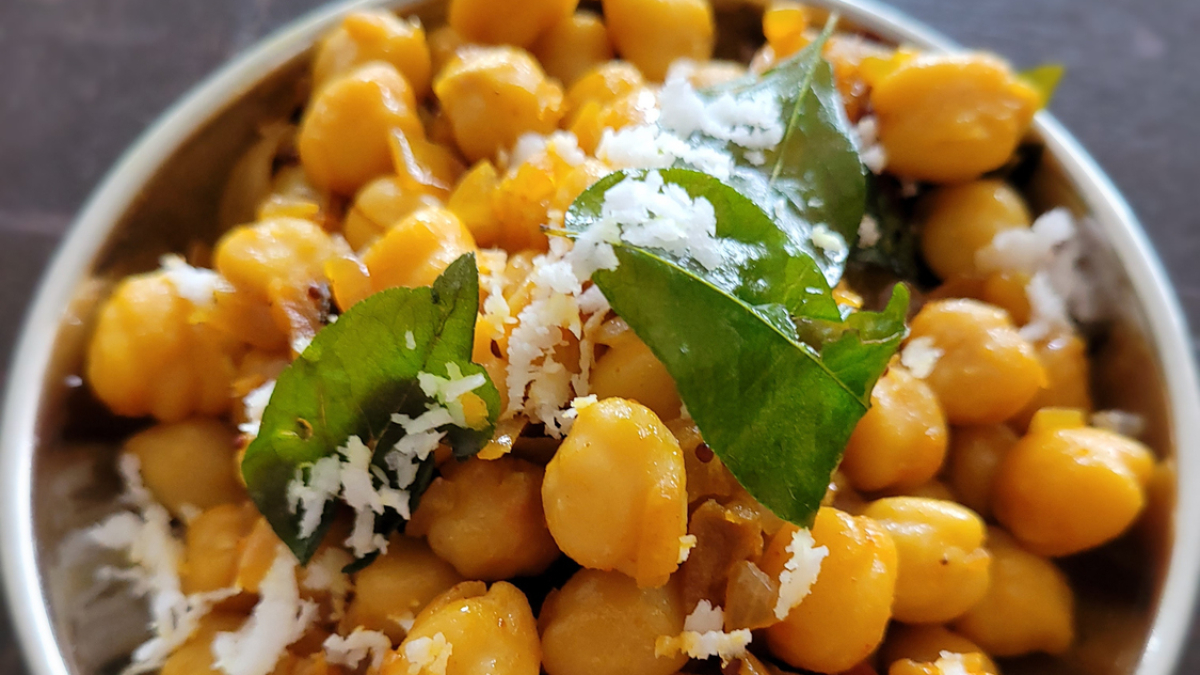
Black chana has a firm bite and a deeper, earthier flavour than white chickpeas, and it holds its shape well in a tempering, which makes it a dependable first-night sundal. IFCT lists whole Bengal gram at about 25g of fibre per 100g dried. White chickpeas, or kabuli chana, also work in this recipe, though cooking time may differ.
Ingredients (serves 3 to 4): 1 cup dried black chana, 1 tsp mustard seeds, 1 tsp urad dal, 1 dried red chilli, a sprig of curry leaves, a pinch of hing, 2 tbsp grated coconut, 1 tbsp oil and salt to taste. Optional: a squeeze of lemon.
Method: Soak the chana overnight in the refrigerator, drain, rinse, and pressure-cook in fresh water until completely tender, following your cooker’s instructions. Drain well. Make the basic tempering, add the chana and salt, and toss for 3 to 4 minutes. Take the pan off the heat and stir in the coconut. Add lemon just before serving if you like, or leave it out for a more traditional, coconut-forward sundal.
Whole green gram, or pachai payaru, has a grassy, slightly sweet flavour and a pleasantly firm texture when it’s cooked just right. It suits a light tempering that lets the gram lead rather than drowning it in seasoning. It brings about 17g of fibre per 100g dried.
Ingredients (serves 3 to 4): 1 cup dried whole green gram, 1 tsp mustard seeds, 1 tsp urad dal, 1 chopped green chilli, a sprig of curry leaves, 2 tbsp grated coconut, 1 tbsp oil and salt to taste. Optional: finely chopped coriander.
Method: Soak the gram for 4 to 6 hours, then drain, rinse and cook in fresh water until tender but still holding its shape. Drain thoroughly. Make the basic tempering using the green chilli, add the gram and salt, toss gently, and finish with coconut and coriander. A dried red chilli works in place of the green if you prefer.
A sweet sundal makes a welcome change in a run of savoury ones. Cowpeas, or karamani, include the familiar black-eyed peas and have a mild flavour that takes well to jaggery, coconut and cardamom. Keep the jaggery modest for a lightly sweet prasadam, and add a pinch of dry ginger, or sukku, for warmth.
Ingredients (serves 3 to 4): 1 cup dried cowpeas, 2 to 3 tbsp grated jaggery, 2 tbsp grated coconut, ¼ tsp cardamom powder and a pinch of salt. Optional: a pinch of dry ginger powder.
Method: Soak the cowpeas for 6 to 8 hours, then drain, rinse and cook in fresh water until tender. Drain. Melt the jaggery with a tablespoon of water and strain out any grit. Return the syrup to the pan, add the cowpeas and the pinch of salt, and stir briefly until every bean is coated. Finish with coconut, cardamom and dry ginger, if using.
Pattani sundal is a reminder that sundal is a method as much as a recipe. Fresh or frozen green peas cook quickly and give a softer result than dried peas. For the tang associated with thenga manga pattani, or beach sundal, add a little grated raw mango at the end.
Ingredients (serves 2 to 3): 2 cups fresh or frozen green peas, 1 tsp mustard seeds, 1 green chilli, a sprig of curry leaves, a pinch of hing, 2 tbsp grated coconut, 1 tbsp oil and salt to taste. Optional: 1 tsp urad dal and 2 tbsp grated raw mango.
Method: Cook the fresh peas until tender, or cook frozen peas according to the packet instructions, then drain. Make the basic tempering, including the urad dal if using. Add the peas and salt, and toss gently for 2 to 3 minutes. Take off the heat and stir in the coconut, and the raw mango if you’re using it.
If you prefer dried peas, soak and cook them separately until fully tender, then measure 2 cups of cooked, drained peas for this recipe. Fresh, frozen and dried peas aren’t interchangeable on cooking time.
Split chana dal, or kadalai paruppu, cooks far faster than whole chickpeas and makes a different kind of sundal: less chewy, with small pieces that take up the seasoning. It brings about 15g of fibre per 100g dried. The trick is to stop cooking once the dal is tender, before it turns mushy. A pinch of turmeric in the cooking water adds colour, and once the dal softens, stir as little as possible.
Ingredients (serves 3 to 4): 1 cup chana dal, such as Aashirvaad Organic Chana Dal; 1 tsp mustard seeds; 1 tsp urad dal; 1 dried red chilli; a sprig of curry leaves; 2 tbsp grated coconut; 1 tbsp oil and salt to taste. Optional: a pinch of turmeric.
Method: Rinse the dal and soak for 30 minutes if you have the time. Drain, then simmer in fresh water, with the turmeric if using, until tender but still holding its shape. Drain well, make the basic tempering, fold in the dal and salt gently, and finish with coconut off the heat.
Rajma isn’t the first pulse most people associate with sundal, but it takes the tempering well, and its hearty texture makes a satisfying change midweek. IFCT lists roughly 16.6 to 17.7g of fibre per 100g dried rajma, depending on the variety.
Cook rajma completely. Raw or inadequately cooked kidney beans contain phytohaemagglutinin, a lectin that can cause food poisoning with vomiting, diarrhoea and stomach pain. Hong Kong’s Centre for Food Safety advises a soak of at least 12 hours followed by vigorous boiling in fresh water for at least 10 minutes. Continue cooking until the beans are fully tender. A slow cooker alone may not destroy the toxin.
Ingredients (serves 3 to 4): 1 cup dried rajma, 1 tsp mustard seeds, 1 tsp urad dal, 1 dried red chilli, a sprig of curry leaves, 2 tbsp grated coconut, 1 tbsp oil and salt to taste. Optional: a pinch each of freshly ground cumin and coriander.
Method: Soak the rajma in the refrigerator for at least 12 hours. Discard the water and rinse. Cover with fresh water, bring to a vigorous boil and keep it boiling for at least 10 minutes, then simmer until the beans are completely tender, adding water as needed. Drain. Make the basic tempering, toss in the rajma with salt and the cumin and coriander if using, and finish with coconut off the heat.
Peanuts, or verkadalai, bring richness and a softer crunch, and they’re handy when the week needs variety without another overnight soak. Finish with a squeeze of lemon or a little crushed black pepper. If you’re serving visitors, ask about peanut allergies and make clear which sundal contains peanuts. Keep it separate from other batches and use a separate serving spoon.
Ingredients (serves 3 to 4): 1 cup raw shelled peanuts, 1 tsp mustard seeds, 1 green chilli, a sprig of curry leaves, 1 to 2 tbsp grated coconut, 2 tsp oil and salt to taste. Optional: lemon or crushed black pepper.
Method: Rinse, then boil or pressure-cook the peanuts in salted water until tender, following your cooker’s instructions if using one. Drain. Make the basic tempering with the green chilli, toss in the peanuts, and finish with coconut off the heat. Add lemon or pepper if using.
Yellow moong dal, or pasi paruppu, is the quick option for a busy evening. Because it cooks relatively quickly, it needs a gentler hand than whole pulses: aim for dal that is tender but still holds its shape. Finish with lemon zest or chopped coriander, and keep the chilli mild if the sundal is for guests who prefer gentler seasoning.
Ingredients (serves 3 to 4): 1 cup yellow moong dal, 1 tsp mustard seeds, 1 green chilli, a sprig of curry leaves, 2 tbsp grated coconut, 1 tbsp oil and salt to taste. Optional: a little lemon zest or chopped coriander.
Method: Rinse the dal and soak briefly if you like, then drain. Simmer in fresh water until just tender, checking often so it doesn’t turn to paste. Drain carefully, make the basic tempering, fold in the dal and salt, and finish with coconut off the heat. Add the lemon zest or coriander if using.
A mixed-pulse sundal brings several pulses together in one bowl. Navadhanya versions use nine grains or legumes, with the mix varying by family; this simpler version uses three or four pulses from your dabba. Cook each separately so the quickest one doesn’t turn mushy while you wait for the firmest to soften.
Ingredients (serves 4 to 6): ½ cup each of three or four dried pulses, such as black chana, whole green gram, cowpeas and dried peas; 1 tsp mustard seeds; 1 tsp urad dal; 1 to 2 dried red chillies; a sprig of curry leaves; a pinch of hing; 3 tbsp grated coconut; 1½ tbsp oil and salt to taste. Optional: 1 to 2 tsp sundal podi.
Method: Sort and soak each pulse according to its needs, then drain, rinse and cook each separately in fresh water until tender. Drain well. Make the basic tempering, add the cooked pulses and salt, and toss gently. Stir in the coconut off the heat. A little sundal podi, a roasted spice powder, can stand in for some of the chilli; keep the seasoning restrained so each pulse still tastes like itself.
Whole pulses such as chana, moong and rajma bring both fibre and plant protein to the Indian kitchen. Some of their fibre and other carbohydrates are used by gut microbes, and their fibre also contributes to bowel health. But beans, peas and lentils can cause gas, especially when you suddenly eat more than usual. Some extra gas doesn’t automatically mean you need to give them up. It is a reason to look at the amount, the preparation and how you feel.
If you’ve been advised to follow a specific diet for a digestive condition, keep following your doctor’s or dietitian’s guidance through the festival. If bloating is persistent or keeps coming back, speak to a doctor. Sudden severe abdominal pain, repeated vomiting or blood in the stool needs prompt medical attention.
Golu evenings run long, and sundal often sits in a big kadai while visitors come and go. A little planning keeps the prasadam safer. The WHO’s Five Keys to Safer Food cover the basics: clean preparation, thorough cooking and safe holding temperatures.
After the festival, those same pulses can stay in the weekly rotation, bringing variety to everyday meals.
Disclaimer: This article is for general information and is not a substitute for personalised medical or dietary advice. Fibre needs, digestive tolerance and food allergies vary. If you have a digestive condition or a prescribed diet, follow your doctor’s or dietitian’s guidance. Seek medical advice for persistent or recurring digestive symptoms.
There’s no single fixed order across all households. Some families follow a day-wise tradition handed down at home, while others make whichever pulse they have. A practical approach is to alternate whole pulses that need an overnight soak with quicker-cooking dals, and include a sweet sundal if your family enjoys one.
Soaking and cooking can reduce some fermentable sugars in pulses, but that doesn’t guarantee less bloating for every person. The effect varies with the pulse and preparation. Portion size and individual tolerance matter too.
Soak dried black or white chickpeas overnight, usually about 8 to 12 hours, in plenty of water in the refrigerator. Drain, rinse and cook in fresh water until fully tender. Older chickpeas may need longer cooking even after soaking.
Pulse-based sundal contributes fibre and plant protein and can be part of a varied diet. It isn’t a treatment for digestive symptoms. Cook pulses fully, start with a portion that suits you, and increase gradually if comfortable.
No more than two hours at room temperature, or one hour when it is hotter than about 32°C. Refrigerate within that time, below 5°C, or keep hot above 60°C. Adding coconut later doesn’t reset the clock. Discard sundal left out beyond the limit.
Yes, when properly prepared. Soak dried rajma for at least 12 hours, discard the water, rinse, then boil vigorously in fresh water for at least 10 minutes and continue cooking until fully tender. Don’t rely on a slow cooker alone.