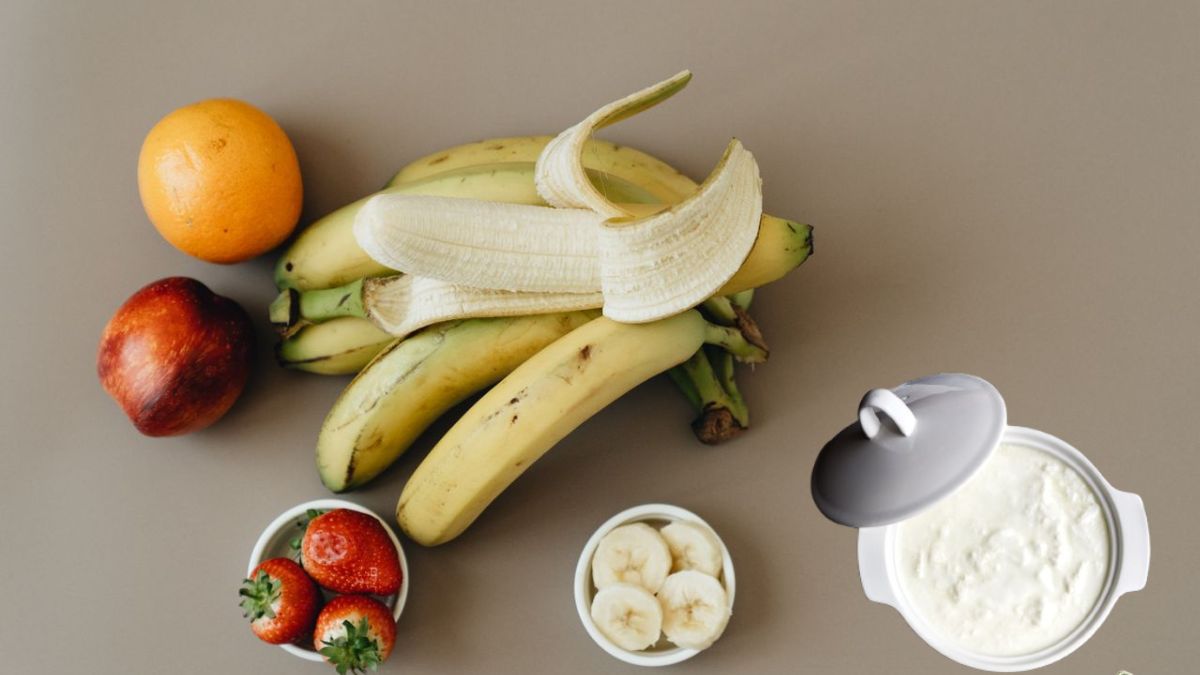
Can These Everyday Foods Cause Gas? Banana, Curd, Apple and More
Bananas, curd, apples, papaya and sprouts can affect digestion differently. Here's why some may cause gas, what individual tolerance means, and when to look closer.
Table of Contents
The short answer for most of these foods, for most people: no, not reliably. Banana, curd, apple and papaya are all generally well-tolerated everyday foods that only occasionally cause gas, and usually for specific, understandable reasons rather than as a blanket property of the food itself. Sprouts are the one exception in this list — yes, they can, and the reason is worth knowing. This piece goes through each food specifically, so you can stop Googling ‘can [food] cause gas?’ one at a time.
Ripe bananas are generally well-tolerated and unlikely to cause gas in most people. They contain a mix of sugars including fructose, but in amounts that most digestive systems handle without difficulty. The exception is unripe (green) bananas, which contain higher amounts of resistant starch — a type of carbohydrate that passes to the large intestine largely undigested and can be fermented by gut bacteria there, producing gas. If bananas have been causing you discomfort, trying a riper banana (more yellow, softer) rather than a green one is worth testing before concluding the fruit itself is the problem.
Fresh curd (dahi) is a fermented dairy food with live cultures that’s actually associated with supporting rather than disrupting gut comfort for most people. It can cause discomfort in people with lactose intolerance, though fermentation reduces lactose compared to plain milk, making curd better tolerated than milk for many people who can’t drink it. If curd consistently causes gas for you specifically, lactose sensitivity is the most likely explanation — worth noting as an individual response rather than a general property of curd as a food.
Apples contain fructose and sorbitol — types of sugars that some people absorb less well than others, and which can cause gas and bloating in those who are sensitive to them (this is part of the FODMAP framework for people managing IBS). For most people without this sensitivity, apples are a nutritious, high-fibre fruit that doesn’t cause gas. If you consistently feel gassy after apples but not after other fruits, individual fructose sensitivity is the more likely explanation than something universally wrong with apples as a food.
| ⓘ Quick Answer: Does This Food Cause Gas?Banana: generally no; unripe/green bananas more likely than ripe ones Curd: generally no; may cause discomfort in lactose-sensitive individuals Apple: generally no; individual fructose sensitivity can cause issues for some people Papaya: generally no; associated with aiding digestion rather than disrupting it Sprouts: can yes — the fermentation-adjacent character makes gas more likely for some people The common pattern: most foods cause gas in some people some of the time, not in everyone reliably |
Papaya has a long traditional association with digestive comfort rather than disruption, partly because it contains papain, an enzyme that helps break down proteins. This is the basis of papaya’s use as a meat tenderiser, and the same mechanism is cited in its traditional reputation as a digestive aid. The science on papain and human digestion is not settled enough for this series to make a strong digestive-benefit claim for papaya, but ‘papaya causes gas’ is not a claim with much support either. For most people, ripe papaya is a well-tolerated fruit.
Sprouts are the one food in this list that does have a more consistent gas-causing reputation, and for genuine reasons. Sprouting activates complex carbohydrates in the seed that can be harder for some digestive systems to break down, and fermentation-adjacent processes in the gut tend to produce more gas with sprouts than with most other vegetables. This doesn’t mean sprouts are unhealthy — they’re nutritious, and many people eat them without any issue — but the gas association is real rather than imagined. If sprouts cause you consistent discomfort, starting with a smaller portion, eating them cooked rather than raw, or pairing them differently are all worth trying before concluding they simply don’t work for you.
Gas is a normal byproduct of digestion — gut bacteria ferment the parts of food that your small intestine couldn’t fully absorb, and gas is what’s produced. Some fermentation-prone foods (pulses, certain vegetables, some fruits) produce more gas in some people because of how their gut bacteria interact with those specific carbohydrates. Individual gut bacteria composition varies widely, which is partly why the same food causes discomfort in one person and none in another. Eating pace also matters: swallowing air by eating quickly adds to gas independently of any food’s specific properties.
Occasional gas after any meal is entirely normal and not a cause for concern. If gas is persistent, severe, or consistently associated with a specific food to a disruptive degree, it’s worth tracking which foods seem most strongly associated and mentioning it to a doctor rather than assuming the food is simply ‘bad for you’. Persistent, uncomfortable bloating or gas that doesn’t improve with the usual dietary adjustments is worth a medical conversation, not just a Google search.
It’s worth mentioning because it often gets missed: a meaningful amount of gas has nothing to do with the food itself and everything to do with how fast it was eaten. Eating quickly — bolting down a meal at a desk, eating between tasks, drinking carbonated drinks with food — all involve swallowing more air than a slower-paced meal would. That air has to go somewhere. If gas seems to be an issue regardless of what’s on the plate, eating pace is worth looking at before the food list is.
Almost any food can cause gas in someone, under some conditions, at some quantity. ‘Can X cause gas?’ searches tend to spike after one bad experience with a food, which is completely understandable but often leads to overgeneralising from a single data point. The more useful question is usually: ‘Does this food cause gas for me, reliably, when eaten in a normal amount as part of a normal meal?’ If the answer is yes consistently, that’s individual and worth noting. If it was once, in unusual circumstances, the food is probably not the explanation.
Disclaimer: This article is for general informational purposes only — not medical or dietary advice.
Ripe bananas generally don't cause gas for most people. Green, unripe bananas contain more resistant starch and are more likely to cause gas; switching to a riper banana is usually enough to resolve it.
Curd generally doesn't cause gas and is associated with gut comfort. People with lactose sensitivity may experience some discomfort, since curd still contains some lactose even after fermentation.
For most people, no. Some people are sensitive to fructose and sorbitol (sugars in apples), which can cause gas and bloating; this is an individual sensitivity rather than a universal property of apples.
Generally good — ripe papaya is well-tolerated and traditionally associated with digestive comfort. 'Papaya causes gas' doesn't have much support; the more common direction is that papaya is relatively easy to digest.
Yes, more than most fruits and vegetables, because of complex carbohydrates in the seed that some digestive systems have trouble fully breaking down. Eating sprouts cooked or in smaller portions can reduce the effect.
Individual gut bacteria composition varies widely — the same food interacts differently with different gut ecosystems. Eating pace also contributes, independently of the food itself.