Buckwheat and Amaranth: The Grains That Aren’t What They Sound Like
Buckwheat and amaranth aren’t true grains, but these Indian fasting staples offer complete protein, gluten-free nutrition and useful variety beyond everyday cereals.
Table of Contents
Neither buckwheat nor amaranth is what its name implies. Buckwheat is not wheat — it’s not even a grain in the botanical sense, but a seed from a flowering plant related to sorrel and rhubarb. Amaranth is not a true cereal grain either; like buckwheat, it’s a pseudocereal — a seed used as a grain, from a plant that isn’t in the grass family. Both are naturally gluten-free for this reason, and both have genuine nutritional cases to make. Neither is dramatically superior to Indian whole grains. Both are worth knowing about, especially if you cook with them during fasting periods.
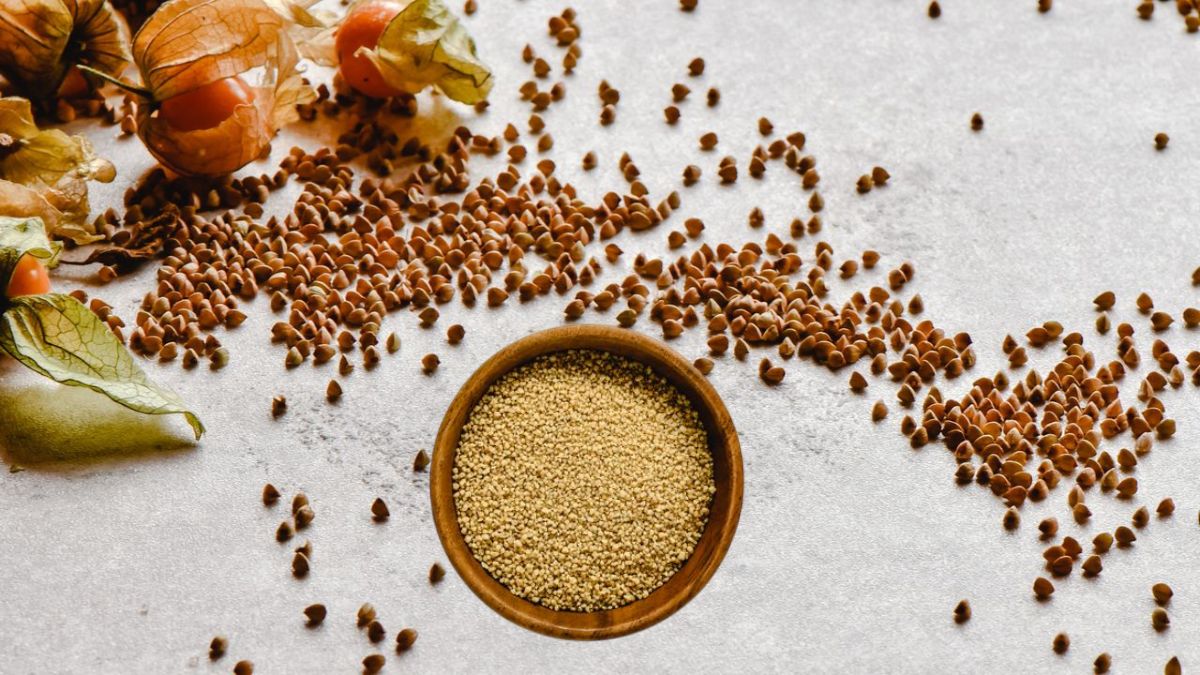
Buckwheat (Fagopyrum esculentum) is a flowering plant whose seeds are used as a grain-like food. In India it’s most commonly known through kuttu atta — buckwheat flour used for rotis and pakoras during Hindu vrat days (Navratri, Ekadashi and others) when wheat and rice are avoided. Kuttu atta has a distinctive earthy, slightly bitter flavour that’s noticeably different from wheat flour; kuttu ki roti is typically made thicker than a wheat roti because the lack of gluten makes a thin roti more difficult to handle. Outside of fasting periods, buckwheat is less commonly used in everyday Indian cooking, though this is starting to change as interest in gluten-free grains grows.
Buckwheat carries a reasonable fibre content — no verified IFCT figure is quoted here, but it sits in a broadly comparable whole-grain range — and notably it contains all nine essential amino acids, making it a complete protein, similar to quinoa in this respect. It also contains rutin, a flavonoid with antioxidant properties. The complete-protein characteristic is the most distinctive nutritional property; for vegetarian households specifically, a grain-like food that provides complete protein is genuinely useful. No GI figure is assigned to buckwheat in this series.
| ⓘ Buckwheat and Amaranth: The Quick Picture Buckwheat (kuttu): not wheat, not a true grain — a seed from a flowering plant; naturally gluten-free Amaranth (rajgira): not a true cereal grain — a pseudocereal; naturally gluten-free Both are complete proteins — contain all nine essential amino acids Both widely used during Hindu vrat days when wheat and rice are avoidedNo specific IFCT 2017 figure quoted for either in current briefing |
Amaranth (Amaranthus) is known as rajgira in Hindi and ramdana in some North Indian contexts. Like buckwheat, it’s most commonly encountered in India as a vrat food — rajgira ke laddoo, rajgira ki roti, and rajgira kheer are traditional fasting preparations. It has a mild, slightly earthy flavour, pops beautifully when heat-treated (like popcorn, but smaller), and works in porridges, laddoos and flatbreads. Amaranth is also one of the few plant foods that carries all nine essential amino acids in useful amounts — the same complete-protein characteristic as buckwheat. Both grains are genuinely valuable for this property in a largely vegetarian diet.
For millions of Hindu households that observe regular fasting — Navratri, Mondays for Shiva, Ekadashi, Mahashivaratri and others — kuttu and rajgira are not exotic health foods but functional everyday ingredients already bought and used several times a year. The growing interest in gluten-free and alternative grains from a health perspective is, in a sense, catching up to a culinary tradition that has been using these grains for centuries without the health-food framing. If you already cook with kuttu or rajgira during fasting periods, you already know more about these grains than most of the global ‘superfood’ content about them suggests.
Indian millets — bajra, ragi, jowar — carry fibre in a well-verified range (roughly 10–11.5g per 100g, IFCT 2017). Buckwheat and amaranth sit in a broadly comparable nutritional range, though this series doesn’t quote a specific per-100g figure for either. The protein advantage — complete amino acid profile — is real for both pseudocereals and doesn’t have a direct equivalent in the millets, which don’t carry the same complete-protein characterisation. This is the most meaningful nutritional distinction, and it’s relevant specifically for vegetarian households thinking about amino acid diversity rather than just fibre.
Kuttu atta and rajgira flour are seasonally available in most Indian grocery stores around Navratri and other major fasting seasons; finding them outside these windows can require a specialty store or online order depending on location. Whole buckwheat groats and amaranth grain are more consistently available in health food stores and via online channels. For households that want to use these grains beyond fasting periods, the growing health-food availability makes them more accessible than they were a decade ago — though Indian millets and whole grains remain more widely available, more affordable, and more deeply embedded in everyday Indian cooking.
If this piece has made you curious about other Indian grains that carry a similar ‘whole grain, naturally gluten-free, nutritionally sound’ story without the import price tag, this series covers several of them. Millets, Explained is the best next step for the big picture: bajra, ragi and jowar as everyday Indian whole grains with deep culinary roots. Foxtail and the Lesser-Known Millets goes deeper on the smaller millets with their own regional traditions. Between those two pieces and this one, the case for grain variety in an Indian diet is fully made — without needing to import anything.
‘Pseudocereal’ is a useful term precisely because it explains the naming confusion for both buckwheat and amaranth. Their grain-like use in cooking, their complete protein profiles, and their gluten-free status all follow from the botanical fact that they’re seeds from non-grass flowering plants rather than true cereal grains. The nutritional benefits are real and the culinary uses are genuine — the category they belong to just turns out to be different from what their common names imply. Knowing this makes the science easier to follow, which is exactly what this series is for.
Disclaimer: This article is for general informational purposes only — not medical or dietary advice.
No — despite the name, buckwheat is not wheat or any related grass. It's a seed from a flowering plant related to sorrel and rhubarb, making it naturally gluten-free.
Yes — kuttu (buckwheat) flour is naturally gluten-free, which is one reason it's used during Hindu fasting periods when wheat is avoided. Confirm cross-contamination controls if coeliac disease is a concern.
Amaranth is a pseudocereal — a seed used as a grain from a plant that isn't in the grass family. Known as rajgira in North India, it's used in traditional fasting preparations including laddoos and flatbreads.
Yes — both contain all nine essential amino acids in useful amounts, which is unusual for plant foods and is their most distinctive nutritional property compared to Indian millets.
Both are whole-grain foods with comparable fibre levels. Buckwheat's specific advantage is its complete protein profile; Indian millets have the advantage of being more deeply embedded in everyday Indian cooking and more widely available.
Yes — both are versatile grains available year-round at health food stores and online, though seasonal availability is more consistent around major fasting periods in most grocery stores.