Oats: Genuinely Good for Your Gut, or Just Popular?
Oats have a genuine gut-health case, thanks to beta-glucan, but they aren't necessarily better than Indian whole grains already delivering fibre and variety.
Table of Contents
Genuinely good. That’s the honest answer, which makes oats unusual in a landscape of inflated health food claims: the core case for oats and gut health is actually supported by real research, not just marketing. The soluble fibre in oats — beta-glucan — has among the strongest evidence of any single dietary fibre type for specific benefits, particularly relating to cholesterol and post-meal blood sugar, in relevant populations. Where it gets more nuanced is the question of whether oats is actually better than the Indian whole grains already in most kitchens, or just more visible.
Oats’ nutritional reputation rests primarily on beta-glucan, a type of soluble fibre that forms a thick gel when it dissolves in water in the digestive tract. This gel slows the movement of food through the gut, which is the mechanism behind the blood sugar and cholesterol associations in research. Oats also contain a reasonable amount of total fibre, some protein, and a range of micronutrients — but it’s the beta-glucan specifically that the gut-health research points to, not total fibre alone.
Beta-glucan from oats has earned regulatory health claims in several countries — including FDA and EFSA approvals for specific cholesterol-related claims — which places it on firmer evidence ground than most foods that carry a gut-health reputation. The research is primarily in people managing elevated cholesterol or blood sugar, so the direct relevance to everyday gut comfort in a generally healthy person is more modest, but the underlying evidence is genuine and substantial. Oats is one of the few foods this series can say ‘the research is solid’ about without significant qualification.
| ⓘ Oats and Beta-Glucan: The Evidence Picture Beta-glucan (soluble fibre): well-evidenced for cholesterol and blood-sugar effects in relevant populations Regulatory health claims approved in US (FDA) and EU (EFSA) for oat beta-glucan and cholesterol — a high bar For general everyday gut comfort in healthy adults: directional benefit, consistent with any high-fibre whole grain Total fibre: comparable to Indian whole grains in the broad range — not dramatically superior No IFCT figure quoted here — oats not a traditional Indian grain covered in current briefing |
Oats’ total fibre content sits in a broadly comparable range to Indian millets and whole wheat — bajra carries about 11.49g of fibre per 100g, whole wheat atta about 11.36g (IFCT 2017). Oats’ specific advantage is the beta-glucan concentration, which is relatively higher in oats than in most other grains, including Indian millets. However, Indian millets and dals bring their own nutritional variety, their own micronutrient profiles, and a culinary tradition with millennia of preparation knowledge behind it. The honest framing: oats are genuinely good and the beta-glucan research is real; it’s not a necessary upgrade over a diet already rich in varied Indian whole grains.
Oats have been adapted into Indian cooking formats with considerable success — oats upma, oats idli, masala oats, and oats khichdi are all common preparations that bring oats into an Indian meal context without treating it as a foreign grain. These adaptations are a reasonable, practical way to include oats in a varied diet without a full breakfast overhaul. They’re also a genuine improvement over plain, unflavoured porridge for palates more accustomed to spiced, savoury morning meals.
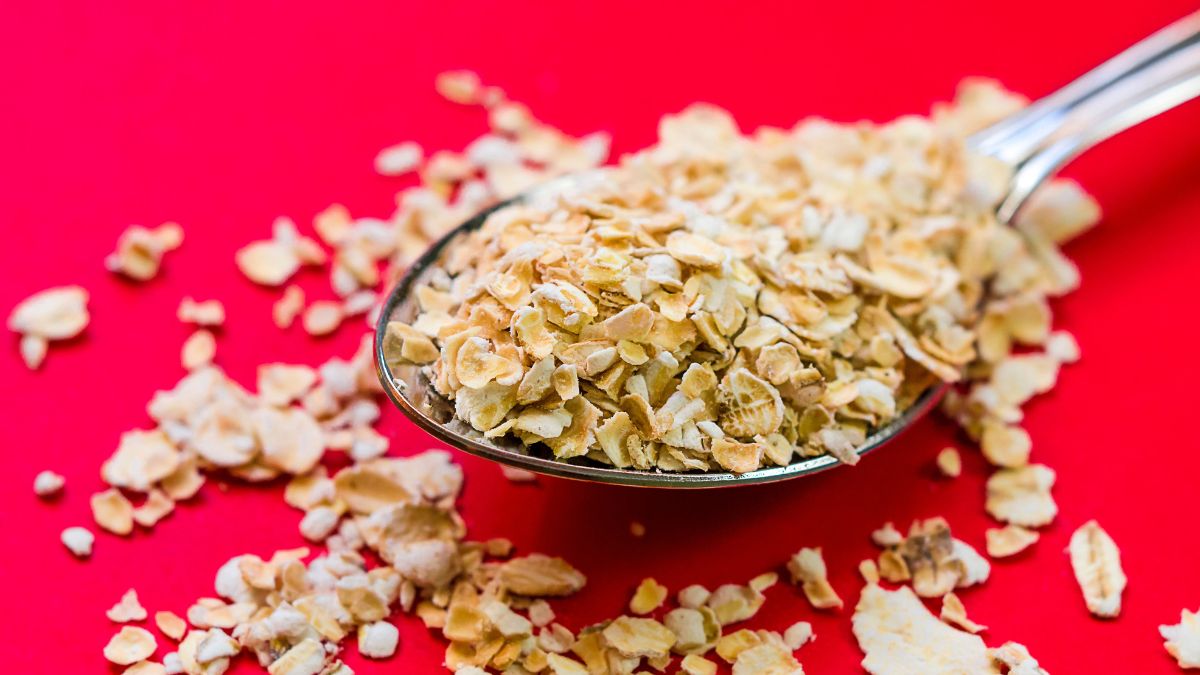
Not all oats are equally processed. Steel-cut oats are the least processed and take the longest to cook; rolled oats (the standard porridge oat) are flattened and par-cooked; instant oats are pre-cooked and dry for the fastest preparation. All three contain beta-glucan, but instant oats tend to have a higher glycaemic effect because the further processing means faster digestion. For everyday gut health purposes, rolled oats are the most practical balance of accessibility and nutritional retention; steel-cut is nutritionally slightly superior; instant is convenient but less ideal for sustained morning fullness.
The piece that pairs most naturally with this one in this series is the dalia entry — dalia is, in many ways, India’s equivalent of oats as a breakfast whole grain: coarser than flour, whole-grain in character, versatile across sweet and savoury preparations, and a traditional breakfast food in its own right. For households already eating dalia regularly, oats add variety rather than a nutritional gap closure. For households new to whole-grain breakfasts, both are reasonable starting points, and the choice is largely taste, habit and accessibility.
The most friction-free way to include oats in a varied Indian diet is in masala oats upma or oats khichdi — preparations where oats replaces or sits alongside a grain in a format the palate already knows. A bowl of plain oats porridge with milk is a perfectly reasonable breakfast, but it asks for a bigger adjustment from someone used to savoury, spiced morning food. Starting with masala oats — tempered spices, onion, tomato, mixed vegetables, cooked with oats in the same way one would make rava upma — is a minimal-adjustment entry point that carries most of the nutritional case.
This series doesn’t prescribe a frequency for oats, and there’s no magic number of servings per week where the benefit kicks in. The beta-glucan research looks at regular consumption as part of a broadly healthy diet, rather than a specific threshold. For someone not currently eating many whole grains, adding oats a few mornings a week is a meaningful improvement. For someone already eating dalia, millets and dal regularly, oats are a welcome addition to the rotation rather than a targeted fix for a specific gap.
Disclaimer: This article is for general informational purposes only — not medical or dietary advice.
Yes — genuinely. The beta-glucan in oats has among the strongest research support of any dietary fibre type, particularly for cholesterol and blood-sugar effects in relevant populations.
Not dramatically. Oats' beta-glucan concentration is relatively high, but Indian millets and whole wheat carry comparable total fibre and their own micronutrient variety. Oats is a good addition to a varied diet, not a necessary upgrade from Indian whole grains.
Beta-glucan is a soluble fibre in oats (and barley) that forms a gel in the gut, slowing digestion. It's the basis of FDA and EFSA-approved health claims for oats and cholesterol — one of the more solidly evidenced dietary fibre benefits.
Nutritionally similar, but instant oats tends to digest faster and produce more of a blood-sugar spike than rolled oats. Rolled oats is a better choice for sustained morning fullness; instant is convenient but less ideal.
Yes — oats upma, masala oats, oats idli and oats khichdi are all popular adaptations. They bring oats into a familiar flavour context without requiring a different breakfast paradigm.
Dalia (broken wheat) is probably the closest Indian equivalent — a coarse whole grain prepared as a porridge or upma-style dish, versatile across sweet and savoury formats.