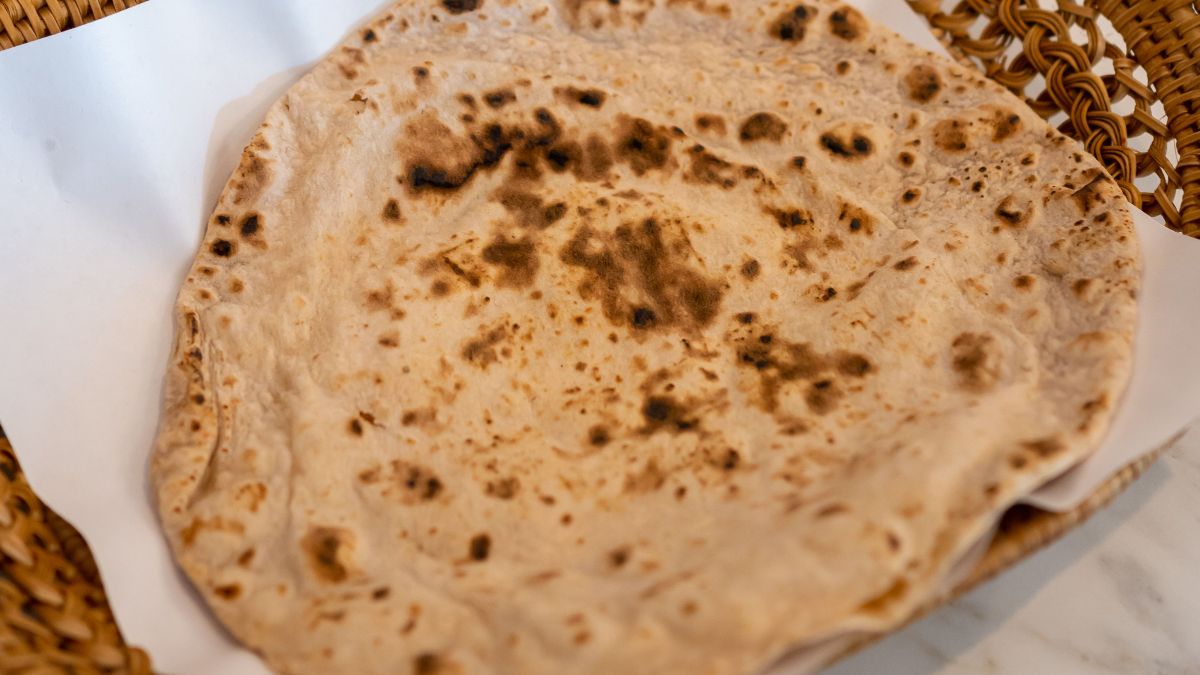
What Two Rotis Actually Contribute to Your Day
Two rotis are easy to dismiss as “just carbs”, but the flour behind them contributes protein, fibre and micronutrients too. Here’s what the numbers actually look like.
Table of Contents
Two rotis are easy to dismiss as “just carbs”, but the flour behind them contributes protein, fibre and micronutrients too. Here’s what the numbers actually look like.
Ever looked at your plate of rotis and genuinely wondered whether they are doing anything useful for you nutritionally? Not in a guilty way, but in a curious, slightly practical way.
Most of us eat two rotis at lunch or dinner without giving it much thought. It is just what we eat. But when someone mentions protein, the conversation always seems to jump to eggs, paneer, dal or protein shakes, as if the roti sitting right there on the plate is nutritionally invisible.
It is not. The numbers are actually more interesting than most people expect, and doing the arithmetic properly changes how you think about your everyday meal.
For the purpose of this calculation, let’s assume two standard home-made rotis use approximately 60g of atta, or around 30g each. Real rotis obviously vary — one household’s neat little phulka is another household’s snack — so think of this as a useful working example rather than a universal serving size.
According to the Indian Food Composition Tables 2017, regular whole-wheat atta contains about 10.57g of protein per 100g. That means 60g of flour contributes approximately 6.3g of protein before you have added a single dal, egg or piece of paneer to the meal. The same 60g also gives you roughly 6.8g of dietary fibre, based on IFCT’s figure of 11.36g fibre per 100g of atta.
So two rotis at lunch and another two at dinner could contribute roughly 12.7g of protein across the day, assuming each pair uses around 60g flour. That does not make roti a replacement for your dal or other protein foods. It does make it considerably less nutritionally invisible than we tend to assume.
Based on approximately 60g atta in total
| Nutrient | Approximate contribution |
|---|---|
| Protein | 6.3g |
| Dietary fibre | 6.8g |
| Flour used | 60g |
Calculated from IFCT 2017 values for whole-wheat atta; the actual amount in your rotis will vary with their size and the flour used.
The Indian Council of Medical Research and National Institute of Nutrition set nutrient-reference values that help us understand how much protein healthy adults generally require. The current ICMR-NIN RDA is 0.83g of protein per kilogram of body weight per day, based on high-quality protein sources. That means somebody weighing 60kg would have an illustrative RDA of roughly 50g per day.
There is an important footnote, though, especially in an Indian food context. ICMR-NIN notes that for people consuming a largely cereal-based diet with lower protein quality, the requirement may be closer to 1g/kg/day. Protein needs also change with body weight, age, pregnancy, health status and other factors, so 50g is an example for a 60kg adult, not a universal target.
Against the 50g illustration, two ordinary whole-wheat rotis supplying around 6.3g would contribute roughly 13% of that day’s protein. It is not enough on its own. It is also not nothing.
Not all atta has exactly the same nutritional profile. The wheat variety matters, and so does whether you are comparing one whole-grain flour with another or comparing whole wheat with a refined flour such as maida.
Khapli wheat, also known as emmer wheat, is one of the older cultivated wheat species and has seen a quiet revival in Indian households. For Aashirvaad Namma Chakki 100% Khapli Atta specifically, the current product information lists 14.7g protein per 100g, compared with 10.5g in the regular wheat atta used in the brand’s comparison.
Using our same 60g-of-flour example, that would give approximately 8.8g of protein from two Khapli rotis. Three rotis made from about 90g of the flour would provide roughly 13.2g, which is why current Aashirvaad material describes three Khapli rotis as providing around 23% of a daily protein requirement.
ALSO READ | What Is Wheat Germ? What Happens When It Is Removed
The fibre difference is much less dramatic. Aashirvaad’s current comparison table lists 10.7g fibre per 100g for Khapli and 10.8g for its regular wheat atta, although a separate quality-certificate figure on the same site gives Khapli as 11.4g. Until the current approved product figure is confirmed, I would simply say that both are fibre-containing whole-wheat flours rather than claiming Khapli is substantially higher in fibre than ordinary whole-wheat atta.
The protein number gets the attention, but it is not the only thing happening in those two rotis. Whole-wheat atta brings along dietary fibre as well as minerals and B vitamins. IFCT 2017, for example, lists regular wheat atta at about 11.36g dietary fibre and 4.1mg iron per 100g, compared with maida at about 2.76g fibre and 1.77mg iron.
Fibre supports normal bowel function and helps build the overall fibre total of the day. Iron is required for haemoglobin and oxygen transport, while thiamine, or vitamin B1, participates in the metabolic processes that help the body release energy from food. None of these turns a roti into a multivitamin. The point is simply that whole-wheat atta carries more nutritional context than the phrase “carbs” suggests.
That contrast is clearest when whole-wheat atta is compared with refined wheat flour. Refining removes much of the bran and germ, which is why maida ends up considerably lower in fibre and several micronutrients. The roti does not become nutritious because it is brown; it contributes these things because more of the original grain remains in the flour.
No, and this is where the arithmetic needs the rest of the plate.
Wheat does contain all the essential amino acids, but its protein is relatively low in lysine, one of the indispensable amino acids. That is one reason cereal-and-pulse combinations are so useful nutritionally: dals and other legumes help improve the amino-acid balance of a cereal-based meal. ICMR-NIN’s current protein guidance itself discusses the importance of protein quality and the cereal-legume-milk balance of Indian diets.
So a plate of roti + dal is doing something more useful than either component viewed in isolation. Add curd, paneer, egg, fish, meat or another protein source according to how you eat, and the calculation changes again.
The point is not to turn lunch into an amino-acid spreadsheet. It is to stop pretending the roti contributes zero while everything beside it does the nutritional work.
The same principle applies.
Two whole-wheat rotis made from about 60g flour contribute roughly 6.8g of fibre using IFCT figures. That is useful, but your day’s fibre should not come from roti alone. Dal, beans, vegetables, fruit, nuts and seeds all bring different fibre sources to the diet.
A meal of two rotis and pickle therefore looks rather different nutritionally from two rotis with dal, sabzi and salad, even though the rotis themselves have not changed.
This is why counting one food can be illuminating up to a point. It tells you what was already there. Then you have to zoom back out and look at the meal.
None of this is to say that rotis alone will meet your daily protein needs. They will not, and that was never the point. What the arithmetic does tell you is that the roti is not dead weight on your plate. It is contributing protein, fibre and micronutrients to every meal, reliably, without you having to think about it.
The more useful way to look at those two rotis is therefore not “Are these carbs?” Of course they are. It is “What else comes with those carbohydrates, and what else is on the plate?”
GOOD TO KNOW | Does a Khapli Roti Count as a Whole-Grain Food?
For ordinary whole-wheat atta, 60g gives you around 6.3g protein and 6.8g fibre. For Aashirvaad’s Khapli atta, the same flour weight provides more protein according to the current product specification. Add dal and the protein rises. Add sabzi and you broaden the fibre and micronutrient mix. Add curd and the meal changes again.
The numbers matter because they correct an assumption, not because anybody needs to calculate their rotis before dinner. The roti was contributing all along. You just weren’t counting it.
If two standard rotis are made from roughly 60g of regular whole-wheat atta, IFCT 2017 values work out to approximately 6.3g protein. The exact amount depends on roti size and the flour used.
Using the same 60g-flour assumption, regular whole-wheat atta contributes about 6.8g dietary fibre, based on IFCT 2017.
Aashirvaad Namma Chakki 100% Khapli Atta currently lists 14.7g protein per 100g. If two rotis together use about 60g flour, that works out to approximately 8.8g protein.
Roti contributes meaningful protein, but wheat should not be your only protein source. Wheat protein is relatively low in lysine, so pairing rotis with dal, legumes, dairy, eggs or other protein-rich foods helps build a better-balanced meal.
For the specific Aashirvaad products in the brand’s current comparison, yes: Khapli is listed at 14.7g protein per 100g and regular wheat atta at 10.5g. That is product-specific information rather than proof that every emmer wheat will always contain exactly that amount.
Yes. IFCT 2017 lists whole-wheat atta at approximately 11.36g fibre per 100g, compared with 2.76g per 100g for refined wheat flour or maida.
ICMR-NIN’s current RDA for healthy Indian adults is 0.83g/kg/day when based on high-quality protein. For a 60kg adult, that is about 50g. The guidance notes that diets dominated by lower-quality cereal protein may require closer to 1g/kg/day.
Disclaimer: This article provides general food and nutrition information. Individual protein requirements vary with body weight, age, activity, physiological state and health conditions.