Khapli Atta vs Dalia vs Whole Grain: What’s the Difference?
They all begin with emmer wheat, but flour, broken wheat and the whole grain behave very differently in the kitchen. Here’s which Khapli form to reach for, depending on what you want to cook.
They all begin with emmer wheat, but flour, broken wheat and the whole grain behave very differently in the kitchen. Here’s which Khapli form to reach for, depending on what you want to cook.
If you have been exploring ancient grains lately, chances are you have come across the word “Khapli” more than once. Maybe a friend mentioned it, maybe you went down a rabbit hole searching for better options for your family’s rotis, or maybe you spotted it on a shelf and thought, wait, which one do I actually need? Because here is the thing: Khapli is not just one product. You can encounter it as atta, dalia or the whole grain itself, and each form has a different purpose in the kitchen.
They all begin with emmer wheat, or Triticum dicoccum, one of the older cultivated wheat species and a grain with a long history in India. What changes between atta, dalia and whole Khapli is not the wheat species but the physical form in which it reaches your kitchen. Whole kernels can be cooked intact, the grain can be cracked into dalia, or it can be milled into flour. That changes texture, cooking time and what you can make with it.
One distinction is worth making upfront: grinding a whole grain into atta or cracking it into dalia does not automatically strip away its nutritional value. If the bran, germ and endosperm remain represented, a cracked or milled grain can still be a whole-grain food. And Khapli is still wheat in every one of these forms, which means it contains gluten. Ancient wheats such as emmer should not be described as reliably lower in gluten than modern bread wheat; comparative research has found they can contain as much or more total gluten, even though their gluten-protein composition differs.
So the source is the same. What changes is what has been done to the grain before it reaches you — and, practically speaking, what you can do with it once it does.
About Khapli Dalia
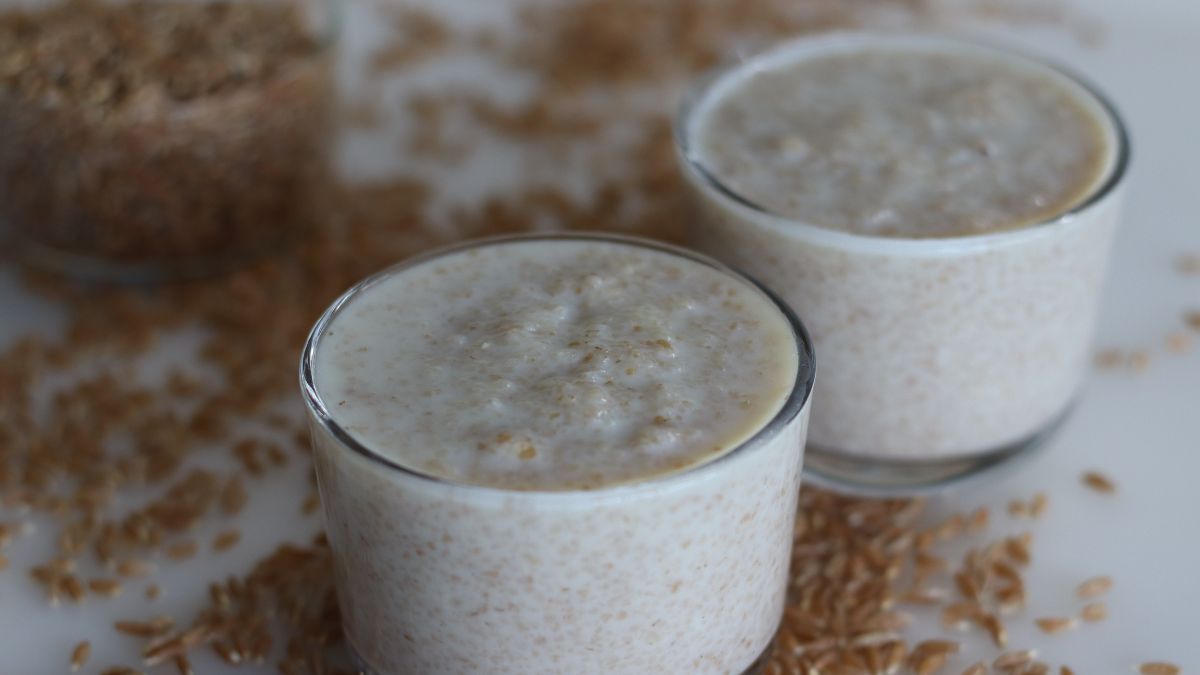
Dalia is what happens when the Khapli grain gets cracked or coarsely broken down without being milled all the way into flour. You still have recognisable pieces of wheat rather than a powder, which gives the finished dish more texture and bite while reducing the cooking time compared with intact grain.
Aashirvaad’s Samba Broken Wheat, for instance, is made from 100% Khapli wheat sourced from Maharashtra. Its current product information lists 14.7g protein per 100g along with iron and magnesium, although I would avoid drawing fibre comparisons from that page because its current nutrition panel lists dietary fibre as 0g, which is inconsistent with the nature of a whole broken-wheat product and should be clarified before being used editorially.
Khapli dalia has a naturally nutty, slightly earthy flavour that works beautifully in savoury preparations — the classic dalia khichdi, a simple tadka-tempered porridge, or an upma-style dish with vegetables. It also works sweet: simmered with milk, dates and a little cardamom, it becomes the kind of breakfast that feels much more elaborate than the actual effort involved.
Cooking time depends on how coarse the dalia is, whether it has been soaked and whether you are using an open pot or pressure cooker, so I would not promise a universal 15–20 minutes. The useful point is simpler: broken wheat usually cooks considerably faster than the intact grain because water has easier access to the smaller pieces.
If your family already enjoys regular dalia, Khapli dalia is therefore a very straightforward way to bring the grain into the kitchen without having to turn it into another roti.
About Khapli Atta
Khapli atta is Khapli wheat ground finely enough to knead into dough, roll out and cook as rotis or chapatis. It is the form most people reach for first, and for good reason. It fits straight into an existing Indian cooking routine without asking you to learn an entirely new dish.
What makes it different from regular whole-wheat atta is primarily the wheat species itself, not that one is whole grain and the other necessarily is not. Regular chakki atta can also be a whole-grain flour. Khapli is emmer wheat; most everyday Indian atta is made from common bread wheat, Triticum aestivum. The two can differ in flavour, protein composition, colour and dough behaviour.
Khapli atta should not, however, be sold on the idea that its gluten is “lighter” or that this automatically makes it easier to digest. Khapli contains gluten and is not safe for people with coeliac disease. Research on ancient wheats does not support the blanket claim that emmer contains less gluten than modern wheat.
Nutritionally, emmer can have a strong profile, particularly for protein and some micronutrients, but the differences are not uniform across every ancient and modern wheat. One controlled comparison found emmer higher in protein, iron, zinc and magnesium than the bread wheats studied, while bread wheat was actually higher in two important fibre fractions; variety, growing conditions and the overall diet all affect what those differences ultimately mean.
For Aashirvaad Namma Chakki 100% Khapli Atta specifically, current Happy Tummy product information lists 14.7g protein and 10.7g dietary fibre per 100g. Its regular wheat atta comparison lists 10.5g protein and 10.8g fibre, so the product’s protein difference is notable while its fibre is broadly comparable with another whole-wheat atta.
What to Expect When You Cook With Khapli Atta
New users sometimes run into a few frustrations: dough that feels different from what they are used to, rotis that crack at the edges, or an earthier flavour that takes a little getting used to. These are real adjustments, but they do not necessarily mean there is something wrong with the flour.
Khapli dough can take more water than you expect. Aashirvaad reports a Water Absorption Percentage of 73% for its Khapli atta under farinograph testing, and the brand recommends adding water gradually and giving the dough time to rest before rolling.
Aashirvaad Namma Chakki 100% Khapli Atta is milled using the brand’s Chakki Jaisi Pisai process, uses wheat sourced from farmers in Karnataka and Maharashtra, undergoes more than 40 quality checks per batch, and carries a quality certificate with a unique traceability code.
What I would avoid saying is that stone-grinding guarantees smoother dough or softer rotis, or that it preserves natural oils because roller milling simply “strips them away”. Milling method matters, but the final roti still depends enormously on hydration, resting, rolling and cooking. For something as routine as a daily roti, consistency matters — but the cook still gets some credit.
About Whole Khapli Grain
Whole Khapli grain is the closest of the three forms to what comes off the plant, although emmer is a hulled wheat, so the tough outer husk has to be removed before the kernel can be cooked and eaten.
Once dehulled, the intact grain still has its bran, germ and endosperm together in the kernel rather than being cracked or ground. That gives it the chewiest texture of the three forms and the longest cooking time. Soaking before cooking can shorten that considerably, and a pressure cooker makes whole Khapli much more weeknight-friendly.
This is the form for people who like whole cooked grains: think grain bowls, soups, warm salads, pilaf-style preparations or Khapli cooked almost as you might cook barley or another chewy wheat berry. It absorbs the flavours around it but still keeps a distinct bite, which makes it a very different eating experience from both dalia and roti.
Whole Khapli is not automatically “more nutritious” simply because you can still see the kernel. If the atta and dalia were genuinely made from the whole grain, the distinction is less about one being nutritionally pure and the others somehow depleted, and more about particle size, food structure and preparation.
It does, however, keep you closest to the original texture of the grain — which, for some cooks, is half the pleasure.
Khapli Atta vs Dalia vs Whole Grain: At a Glance
Khapli form
What it is
Texture
Best for
Relative prep
Khapli atta
Whole Khapli wheat milled into flour
Fine flour; soft dough when hydrated properly
Roti, paratha, cheela, baking
Fast and familiar
Khapli dalia
Khapli grain cracked into coarse pieces
Soft with some grainy bite
Khichdi, porridge, upma-style dishes
Moderate
Whole Khapli grain
Dehulled intact emmer kernels
Firm, chewy, grain-like
Grain bowls, soups, salads, pilaf-style dishes
Longest cooking time
The processing level therefore tells you mainly how physically broken down the grain is. It does not automatically tell you whether one form is “healthy” and another is not.
So Which Form Do You Actually Need?
The short answer: it depends entirely on what you are trying to cook.
If you want everyday rotis without changing how your household already eats, Khapli atta is your answer. It slots into the familiar atta-dough-tawa routine, with perhaps a small adjustment to hydration and resting while you get used to the flour.
If you are looking for a comforting breakfast or a one-pot meal with a little more texture, Khapli dalia is the one to reach for. It is quicker than whole grain, more spoonable than roti, and works equally well with tadka and vegetables or milk and cardamom.
And if you are the kind of cook who enjoys slow food and cooking grain from scratch, whole Khapli grain rewards the extra time beautifully — dense, chewy, full of character, and about as close to the original grain as you can get on a plate.
All three begin with the same wheat. The real difference is not how much “goodness” remains as you move down the list; it is how the grain has been physically transformed, what texture you want, what you plan to make and how much patience you have on a Wednesday night.
That is usually a much more useful way to choose.
FAQs
Is Khapli dalia the same as Khapli atta?
No. Khapli atta is wheat milled into flour, while Khapli dalia is the grain cracked into larger pieces. They come from the same wheat but are used for very different preparations.
Is Khapli dalia made from Khapli wheat?
Yes. Aashirvaad Samba Broken Wheat, for example, is made from 100% Khapli wheat.
Is whole Khapli grain healthier than Khapli atta?
Not automatically. If Khapli atta is made from the whole grain, it can retain the bran, germ and endosperm too. The intact grain differs most obviously in structure, texture and cooking behaviour rather than being inherently the only nutritionally complete form.
Can you make roti from Khapli dalia?
Not directly. Dalia is too coarse to form conventional roti dough. For rotis, use Khapli atta.
What can whole Khapli grain be used for?
Once dehulled and cooked, whole Khapli works well in soups, salads, grain bowls and pilaf-style dishes. Soaking beforehand can shorten its cooking time.
Does Khapli atta contain less gluten than regular wheat?
It should not be described that way as a general rule. Khapli is emmer wheat and contains gluten; ancient wheats including emmer can contain as much or more total gluten than modern bread wheat.
Is Khapli safe for people with coeliac disease?
No. Atta, dalia and whole Khapli grain are all forms of wheat and all contain gluten.
Which Khapli form is easiest for beginners?
If you already make rotis, Khapli atta requires the least change to your routine. If you already cook dalia or grain porridges, broken Khapli wheat may be the more seamless starting point.
Disclaimer: This article provides general food and nutrition information and is not a substitute for personalised medical advice. Khapli is wheat and contains gluten; people with coeliac disease or a diagnosed wheat allergy should not consume Khapli atta, dalia or whole Khapli grain.
You are now being directed to an external website https://www.callr.live/aashirvaadexperts/premium-plan.
This link is provided for your information and convenience only and ITC Limited is not
responsible for the contents or services provided by Brand Touch India or any information that
you share with Brand Touch India.