Quick Answer: Is soan papdi healthy?
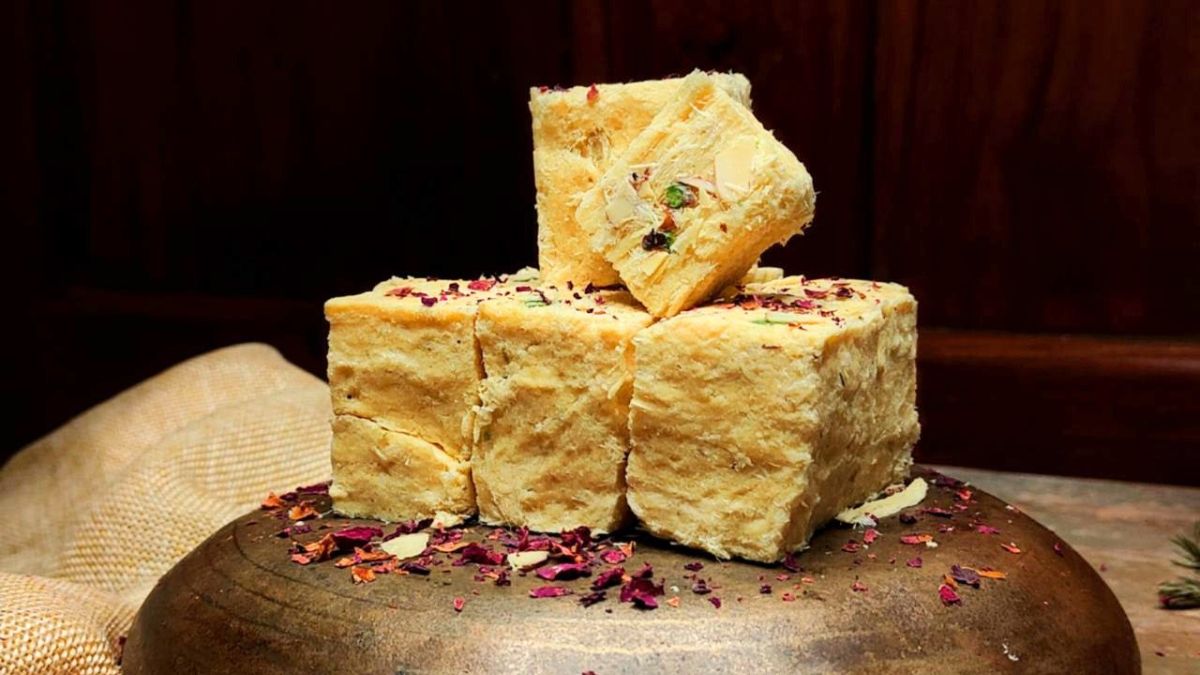
Soan papdi is not exactly a health food, but it does not need to be treated as a forbidden sweet either. It is usually made with besan (gram flour), maida, sugar and ghee or vegetable fat. The flours are roasted in fat, then combined with cooked sugar syrup and worked into the fine, flaky threads that give the sweet its distinctive texture. Cardamom and chopped nuts are common additions. Recipes and packaged versions vary, so the ingredient list matters.
A 2012 Consumer Voice test of seven packaged brands found approximately 37–40g of sugar and 21.67–27.86g of fat per 100g. That is a useful indication of how rich the sweet can be, but it is an old test, not a nutritional profile for every brand on the shelf today. Soan papdi is not deep-fried or soaked in syrup like gulab jamun, but it still contains plenty of sugar and fat. Its flaky texture can also make it easy to eat several pieces without noticing.
If you have IBS, the wheat flour and chickpea flour may matter: both can contribute fermentable carbohydrates that trigger symptoms in some people. Sugar-free versions may contain polyols such as maltitol, which can cause gas, bloating or loose stools in larger amounts. Some recipes also include milk, so check the label if you are lactose intolerant or avoid dairy. Traditional recipes often use ghee, which means the sweet is not automatically vegan.
So, can you enjoy it during Diwali? Yes. Choose a portion, put it on a plate, and check the ingredients and storage instructions on the box. It usually belongs in an airtight container in a cool, dry place, not automatically in the fridge.
What is soan papdi made of?
So, soan papdi kaise banti hai? The basic ingredients are besan, maida, sugar and ghee or vegetable fat. Cardamom gives it its familiar fragrance, while almonds, pistachios or other nuts may be added as a garnish.
The flour is roasted slowly in fat until the raw smell disappears. Separately, sugar is cooked with water into a thick syrup. The syrup is then combined with the flour mixture and worked, beaten or pulled until fine, threadlike flakes begin to form. The mixture is shaped, allowed to cool and cut into cubes or squares.
The precise method varies. Some recipes use a multi-thread sugar syrup and beat it into the flour mixture; others use a pulling-and-folding technique. The result is the same familiar flaky texture, but the recipe is not identical in every sweet shop or home kitchen.
And yes, soan papdi is made with besan, but usually not besan alone. Maida is also common. Packaged versions may use vegetable oils or fats instead of ghee, and some recipes include milk. That is why the ingredient list is worth a glance before you open the box.
Where does soan papdi come from?
Nobody has established a definitive birthplace for soan papdi. Maharashtra, Uttar Pradesh and Gujarat have all been suggested as possible origins.
There is also a Persian connection. Archaeologist and culinary anthropologist Kurush F. Dalal has described soan papdi as a Persian dish, linking its name to sohan pashmaki. The word sohan has Persian roots, while pashmaki is associated with threadlike sweets. This is an attributed food-history theory, rather than a settled account of where the Indian sweet was first made.
Its closest culinary relatives include Iran’s pashmak and Turkey’s pişmaniye, both made with fine, threadlike strands. China’s dragon’s beard candy has a similarly delicate, pulled-sugar appearance. They belong to a wider family of sweets that use stretching and pulling to create fine threads, though their ingredients and methods differ.
Why does everyone gift soan papdi at Diwali?
Because it is practical. Soan papdi is a relatively dry sweet, which makes it easier to pack and transport than many milk-based mithai. It is also widely available and can be bought in boxes of different sizes, making it a convenient gift for neighbours, colleagues and relatives.
Food historian and culinary anthropologist Kurush F. Dalal has pointed to its affordability, simple ingredients and ease of transport as reasons for its popularity. Its longer shelf life compared with many fresh milk sweets also makes it useful during the festive season.
And then there is the joke. The soan papdi box that gets passed from one home to another has become a Diwali meme of its own. The joke is familiar, but a fresh, well-packed box is still a perfectly good gift for someone who enjoys it.
How does soan papdi sit on your gut?
Soan papdi is not deep-fried or soaked in sugar syrup. But that does not make it light in nutritional terms. It contains sugar, flour and a substantial amount of fat, and a larger portion may leave you feeling full or heavy, particularly after a big festive meal.
Its flaky, airy texture can make portion size harder to judge. A piece breaks into delicate strands and seems to disappear quickly, so it is easy to reach for another before registering how much you have eaten.
There is another consideration if you have irritable bowel syndrome (IBS). Wheat and chickpea flour are among the ingredients Monash University identifies as potential sources of FODMAPs, fermentable carbohydrates that can trigger gas, bloating or changes in bowel habits in some people. The amount in a serving of soan papdi will depend on the recipe and portion size, so it is not possible to predict how everyone with IBS will respond.
Some people may also need to check for dairy. Certain recipes include milk, while others do not. Ghee is a dairy fat, but the presence of milk or milk solids is a separate ingredient question. If you are lactose intolerant, check the label or ask the sweet shop rather than assuming every version is suitable.
What should I check on a box of soan papdi?
The ingredient list and nutrition panel can tell you more than the front of the box. Look at these five things:
The fat. Soan papdi may be made with ghee, vegetable oil or vegetable fat. Some packaged versions use palm oil; others use different fats. If the label lists vanaspati or partially hydrogenated vegetable fat, take a closer look at the nutrition panel, including the trans-fat declaration. FSSAI limits industrial trans fatty acids to no more than 2% by mass of the total oils and fats in food products that use edible oils or fats as ingredients. The limit applies to the oils and fats in the product, not 2% of the finished sweet’s total weight.
The sugar. Sugar may be listed among the first ingredients. Use the nutrition panel’s per-100g figures to compare packaged products. The 2012 Consumer Voice test found 37.11–39.79g of sugar per 100g across the seven brands it examined. Treat that as a historical comparison, not a current market-wide figure.
Sugar-free and no-added-sugar versions. These may use polyols such as maltitol, sorbitol or isomalt. Polyols can cause gas, bloating and loose stools, particularly in larger amounts. FSSAI’s labelling regulations require packaged foods containing 10% or more polyols to carry the declaration: “Polyols may have laxative effect.” It is worth reading that warning before treating a sugar-free sweet as an unlimited option.
The date. Packaged boxes should carry their date and storage information. Shelf life varies by recipe, packaging and manufacturer, so do not assume every box will keep for six months. For loose sweets, FSSAI withdrew its earlier direction making best-before dates mandatory on trays and containers in November 2023. Shops may display these dates voluntarily; you can still ask when the sweet was made.
Nuts and dairy. Almonds and pistachios are common toppings. Check the ingredient and allergen declarations, including any “may contain” warning, if you have a nut allergy or need to avoid dairy.
Soan papdi vs other sweets: how do they compare?
The ingredients and preparation methods are more useful than trying to declare one sweet healthier than another.
- Soan papdi vs patisa: They belong to the same family, and the names are often used interchangeably. In some places, patisa is described as firmer and denser, while soan papdi is softer and flakier. The distinction is not consistent across regions or sweet shops.
- Soan papdi vs cotton candy: They may look similar, but they are not the same sweet. Cotton candy is spun sugar; soan papdi combines sugar threads with roasted flour and fat, making it a more substantial confection.
- Soan papdi vs Mysore pak: Both can contain besan, sugar and ghee, but Mysore pak is generally denser and richer in ghee. Soan papdi has a flaky texture. Neither is automatically the healthier choice; ingredients and portions matter.
- Soan papdi vs sutarfeni: Both have fine, threadlike strands, but the method is different. Sutarfeni is made by stretching wheat-flour dough into fine strands, gathering them into nests and frying them. Soan papdi gets its threads from a sugar-and-flour mixture.
- Soan papdi vs besan ladoo: Both can use gram flour, ghee and sugar. Besan ladoo is shaped into a dense ball, while soan papdi is pressed into flaky cubes or served as flakes. Their fat and sugar content will depend on the recipe and size of the serving.
Whichever you choose, the portion and the ingredients matter more than the name on the box.
Should soan papdi be kept in the fridge?
Usually, no. Soan papdi is a dry, flaky sweet, and moisture can make it soft and sticky. Keep an unopened box according to the manufacturer’s instructions. Once opened, transfer the sweet to a clean, airtight container and store it in a cool, dry place.
Some packaged products specifically say not to refrigerate. Follow the instructions on your own box rather than applying one rule to every brand or recipe. If the sweet develops an unusual smell, taste, appearance or texture, do not eat it or pass it on.
How can I enjoy soan papdi without overdoing it?
A few small habits can make festive eating easier to manage:
- Put a piece on a plate. Eating straight from the box makes it harder to keep track of how much you have had.
- Have it as part of a meal occasion. Choose a portion you want to enjoy instead of repeatedly picking at the box through the day.
- Share the extra boxes. If you have been gifted several, pass one on to someone who will enjoy it. Check the date and packaging first.
- Read the sugar-free label. A sweet made with polyols can still cause digestive symptoms in larger amounts. Sugar-free does not mean unlimited.
Who should be careful with soan papdi?
If you have diabetes, soan papdi still contains sugar and refined flour. Sugar-free versions may contain polyols, which can also cause digestive symptoms. Follow your doctor’s or dietitian’s advice on portions and suitable alternatives.
If you have IBS, wheat, chickpea flour and polyols in some sugar-free versions may trigger symptoms. Individual tolerance varies, and the ingredients and portion size matter. A dietitian can help you understand whether a low-FODMAP approach is appropriate for you; it is not a diet everyone with digestive symptoms needs to follow.
If you have a nut allergy, check the ingredients and “may contain” declaration carefully. Avoid products that contain the nut you are allergic to, and be mindful of cross-contact in mixed sweet boxes.
Sudden weight loss, blood in stool, severe or persistent pain, or difficulty swallowing need prompt medical attention. If symptoms continue, are severe, or keep coming back, speak to a doctor.
For children, during pregnancy, or for older adults, follow a doctor’s guidance before making changes to the diet.
Sources
Disclaimer
This article is for general information only and is not a substitute for medical advice, diagnosis or treatment. If you have diabetes, IBS, a food allergy, lactose intolerance or another digestive condition, speak to your doctor or dietitian about what is suitable for you. Do not make significant dietary changes based only on this article.
FAQs
Is soan papdi healthy?
It is mostly made from sugar, flour and fat, so it is best enjoyed as a sweet in a considered portion. It is not deep-fried or syrup-soaked, but it is still rich.
Is soan papdi made of besan?
Yes, besan is a common ingredient, but most recipes also use maida. The flours are roasted in ghee or vegetable fat and combined with cooked sugar syrup.
Are soan papdi and patisa the same?
They are closely related sweets, and the names are often used interchangeably. In some regions, patisa is described as firmer and denser than flaky soan papdi.
Is soan papdi the same as cotton candy?
No. Cotton candy is spun sugar. Soan papdi is made with sugar, roasted flour and fat, which gives it a flaky, threadlike texture.
Is soan papdi vegan?
Not always. Traditional recipes often use ghee, and some include milk. A version made with vegetable fat and no other animal-derived ingredients may be vegan, but check the full ingredient and allergen declarations.
Should soan papdi be kept in the fridge?
Usually not. Store it in an airtight container in a cool, dry place, and follow the manufacturer's instructions. Some packaged versions specifically say not to refrigerate.
What is soan papdi called in English?
There is no standard English name. It is often described as a flaky gram-flour sweet or compared with Indian candy floss because of its fine, threadlike texture.
Can people with diabetes eat soan papdi?
It contains sugar and refined flour, so people with diabetes should consider their overall carbohydrate intake and follow their doctor's or dietitian's advice. Sugar-free versions may still contain flour and polyols.