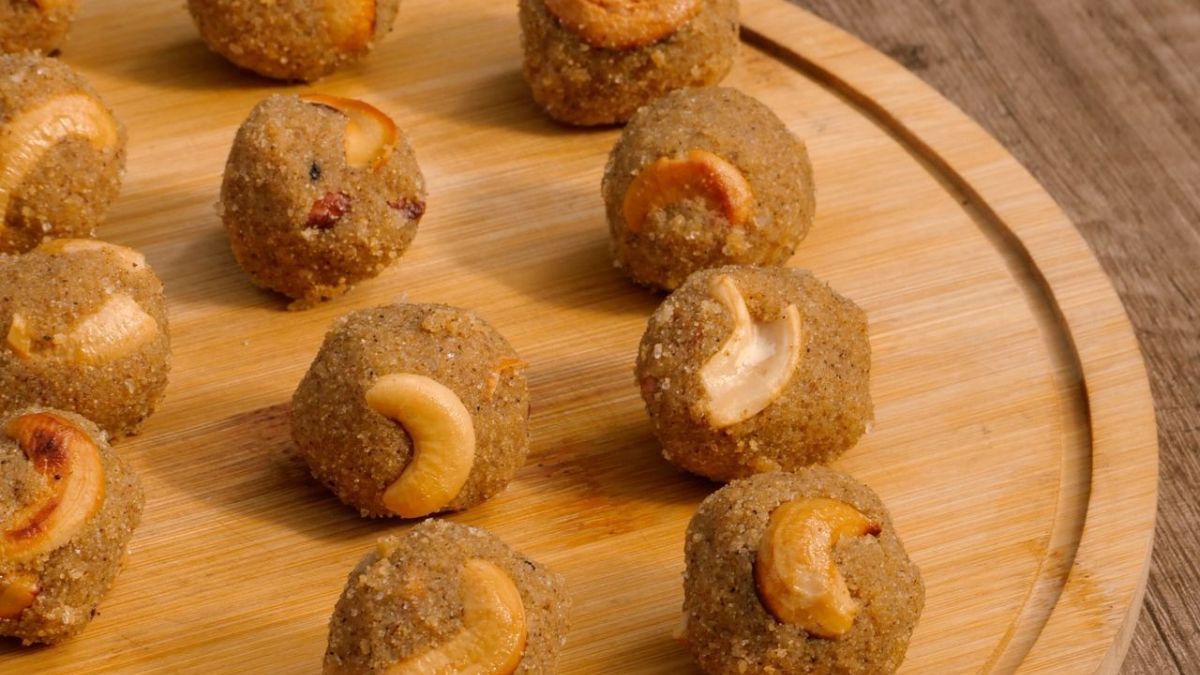
Quick Answer: Is besan ladoo healthy?
Besan ladoo can be part of a festive diet, but it is still a rich sweet. It is usually made by roasting gram flour (besan) in ghee, then mixing it with powdered sugar and cardamom before shaping the warm mixture into balls. Some recipes also include nuts or raisins.
Besan, made from chickpeas or chana dal, contributes some protein and fibre. The ghee adds fat, while sugar supplies most of the sweetness. Unlike motichoor or boondi ladoo, besan ladoo is generally made by roasting flour rather than deep-frying batter and soaking it in sugar syrup. That difference changes how the sweets are prepared; it does not automatically make besan ladoo a low-sugar or low-fat option.
It is not a constipation remedy, either. Although besan contains fibre, a ladoo is not a meaningful substitute for fibre-rich foods such as vegetables, fruit, whole grains and pulses. The British Dietetic Association’s 2025 guidance for adults with chronic constipation discusses options such as kiwifruit, prunes and psyllium—not sweets.
If you enjoy besan ladoo, a small portion can fit into a balanced festive meal. People with diabetes may need to account for its sugar content, while those who experience symptoms after eating chickpeas or other pulses may want to pay attention to their own tolerance. There is no universal portion that suits everyone.
For everyday gut health, the more useful habits are regular meals, enough fluids, a varied fibre intake and movement. Enjoy the ladoo for what it is: a traditional sweet, not a digestive fix.
What is besan ladoo made of?
At its simplest, besan ladoo uses four ingredients: besan, ghee, sugar and cardamom. The besan is roasted slowly in hot ghee, stirred over a low flame until it turns golden and smells nutty. This is the step every family seems to have an opinion about. Under-roasted besan can taste raw; over-roasted flour can turn bitter.
Once the mixture cools a little, powdered sugar and cardamom go in. The warm mixture is then pressed into balls, which firm up as they cool. Many cooks add chopped nuts or raisins.
Because the classic recipe does not usually need milk or khoya, besan ladoo is a drier sweet than many milk-based mithai. But it is not dairy-free: ghee is made from butter. Recipes also vary, so check the ingredient list if you have a dairy allergy or need to avoid a particular ingredient.
Where does besan ladoo come from?
There is no single, firmly established origin story for besan ladoo. The word ladoo covers a large family of Indian sweets, made with different flours, pulses, grains, nuts and sweeteners. Recipes change from one region and household to another.
The range is part of the appeal. Sesame, rice flour, wheat flour and roasted pulses all find their way into different kinds of ladoo. Dhenkanal Magji, a traditional sweet from Odisha, has a Geographical Indication (GI) registration. Tirupati’s famous temple laddu is another well-known example, with its own GI status and a distinct recipe.
Besan ladoo is one member of that much larger family. Its familiar combination of roasted gram flour, ghee and sugar is also what gives it its particular texture: firm enough to hold its shape, but crumbly when you bite into it.
How does besan ladoo sit on your gut?
Besan ladoo is dense and rich. It is not deep-fried, but the flour is roasted in ghee, and the finished sweet contains both fat and sugar. A larger portion may feel filling, especially after a substantial meal.
The besan matters, too. Gram flour is made from chickpeas, which belong to the pulse family. Pulses are valuable everyday foods, but they can cause gas in some people. Chickpea-based foods may also be difficult for some people with irritable bowel syndrome (IBS) to tolerate. That does not mean everyone with IBS needs to avoid besan, or that one ladoo will cause symptoms.
Your response can depend on portion size, the rest of the meal and your individual sensitivity. If chickpeas, chole or other pulses regularly leave you bloated, notice whether besan ladoo has a similar effect. If you have diagnosed IBS and are following a low-FODMAP plan, discuss suitable portions and ingredients with your dietitian rather than cutting out pulses on your own.
Is besan ladoo good for constipation?
No. Besan contains some fibre, but besan ladoo is primarily a sweet made with ghee and sugar. It is not a reliable way to increase your daily fibre intake, and it should not be treated as a remedy for constipation.
The British Dietetic Association’s 2025 evidence-based guidelines for adults with chronic constipation discuss dietary options such as kiwifruit, prunes, rye bread and psyllium. The evidence and recommendations differ by intervention, and what works can depend on the person.
If constipation is bothering you, everyday habits are a better place to start: include fibre-rich foods such as vegetables, fruit, whole grains and pulses; drink enough fluids; and stay active. Increase fibre gradually if you are not used to eating much of it, as a sudden increase can bring on bloating or gas.
A daily walk can also help keep bowel movements regular. If constipation persists, keeps returning or comes with other symptoms, speak to a doctor rather than relying on a particular food to fix it.
How does besan ladoo compare with other sweets?
The main differences are in the ingredients and preparation. They do not establish a universal health ranking.
- Besan ladoo vs motichoor and boondi ladoo: All three use besan, but the methods differ. Besan ladoo is made from flour roasted in ghee and mixed with sugar. Boondi ladoo uses small drops of besan batter that are fried and combined with sugar syrup; motichoor is made with finer boondi. Besan ladoo is not syrup-soaked, but it still contains plenty of ghee and sugar.
- Besan ladoo vs kaju katli: Kaju katli is made mainly with cashews and sugar, and is usually cut into thin pieces. Besan ladoo uses gram flour and ghee. Both are rich sweets, and serving sizes vary.
- Besan ladoo vs atta ladoo: Atta ladoo uses wheat flour instead of gram flour, usually with ghee and sugar or jaggery. Both are dense, flour-based sweets; the ingredients change the flavour and nutritional profile.
- Besan ladoo vs Mysore pak: Mysore pak is made with gram flour, sugar and a generous amount of ghee. Its texture and richness vary by recipe, so it is difficult to make a meaningful piece-for-piece comparison.
- Besan ladoo vs sunnundalu: These are not the same sweet. Sunnundalu, associated with Andhra Pradesh and Telangana, is generally made from roasted urad dal, ghee and jaggery or sugar. Besan ladoo uses gram flour instead.
Whichever one you choose, the portion and the rest of your meal matter more than a simple label of “healthier”.
How can I enjoy besan ladoo more lightly?
- Make them smaller. A walnut-sized ladoo gives you the flavour without turning one serving into a very large sweet.
- Have one as part of a meal. This can make it easier to enjoy a planned portion rather than picking at the tin throughout the day.
- Cut the sugar a little. You can experiment with a slightly less sweet batch. Swapping sugar for gur will not make it sugar-free; jaggery is still a form of sugar.
- Roast patiently, but use enough ghee. The besan needs enough fat to roast evenly. Adding much more than the recipe needs can make the mixture greasy.
- Add a few nuts or seeds if you like. They bring texture, but also add richness, so keep the overall portion in mind.
How should I buy and store besan ladoo?
Besan ladoo is generally less perishable than sweets made with fresh khoya or chhena, but it does not last indefinitely. FSSAI’s 2020 guidance note includes besan ladoo in an illustrative category of sweets with a shelf life of around 30 days from manufacture. This is a broad guide, not a guarantee for every recipe or batch; actual shelf life depends on ingredients, preparation, hygiene and storage.
At home, keep ladoos in a clean, dry, airtight container, away from heat and moisture. Follow the recipe’s storage instructions, and refrigerate them if the weather or storage conditions make that necessary. Refrigeration can make the ghee firm and change the texture, so allow the ladoos to come closer to room temperature before serving if you prefer them softer.
For shop-bought ladoos, check the best-before date and storage instructions on the pack. If buying loose sweets, ask when they were made and how they have been stored. Avoid sweets that smell stale or rancid, show signs of moisture or mould, or have been kept uncovered in unhygienic conditions.
Should anyone go easy on besan ladoo?
If you have diabetes, remember that besan ladoo contains added sugar even though the gram flour contributes some protein and fibre. Follow your doctor’s or dietitian’s advice on how to fit sweets into your eating plan.
If chickpeas or other pulses tend to trigger gas or bloating for you, start with a small portion or avoid the sweet if you know it does not suit you. People with IBS can have different food triggers, so there is no single rule that applies to everyone.
If constipation or bloating persists, keeps returning or is accompanied by blood in your stool, unexplained weight loss or significant abdominal pain, seek medical advice. Sudden or severe symptoms should be assessed promptly.
Sources
Disclaimer
This article is for general information only and is not a substitute for medical advice, diagnosis or treatment. If you have diabetes, IBS, persistent constipation or another digestive condition, consult your doctor or registered dietitian for advice suited to your needs.
FAQs
Is besan ladoo healthy?
It contains some protein and fibre from gram flour, but it is also rich in ghee and sugar. A small portion can fit into a festive diet.
Is besan ladoo good for constipation?
No. Its fibre content is modest. Fibre-rich foods, adequate fluids and physical activity are more useful; evidence-based options for chronic constipation include kiwifruit, prunes and psyllium.
Which is healthier, besan ladoo or motichoor ladoo?
They are made differently: besan ladoo uses roasted flour, while motichoor is made from fried boondi and sugar syrup. Neither is automatically a healthier choice; portion size matters.
What’s the difference between besan ladoo and boondi ladoo?
Besan ladoo is made from gram flour roasted in ghee and mixed with sugar. Boondi ladoo is made from small drops of besan batter that are fried and combined with sugar syrup.
Are besan ladoo and sunnundalu the same?
No. Sunnundalu is generally made with roasted urad dal, ghee and jaggery or sugar. Besan ladoo is made with gram flour.
Can people with diabetes eat besan ladoo?
It contains added sugar, so people with diabetes should follow their doctor’s or dietitian’s advice on whether and how much to have.