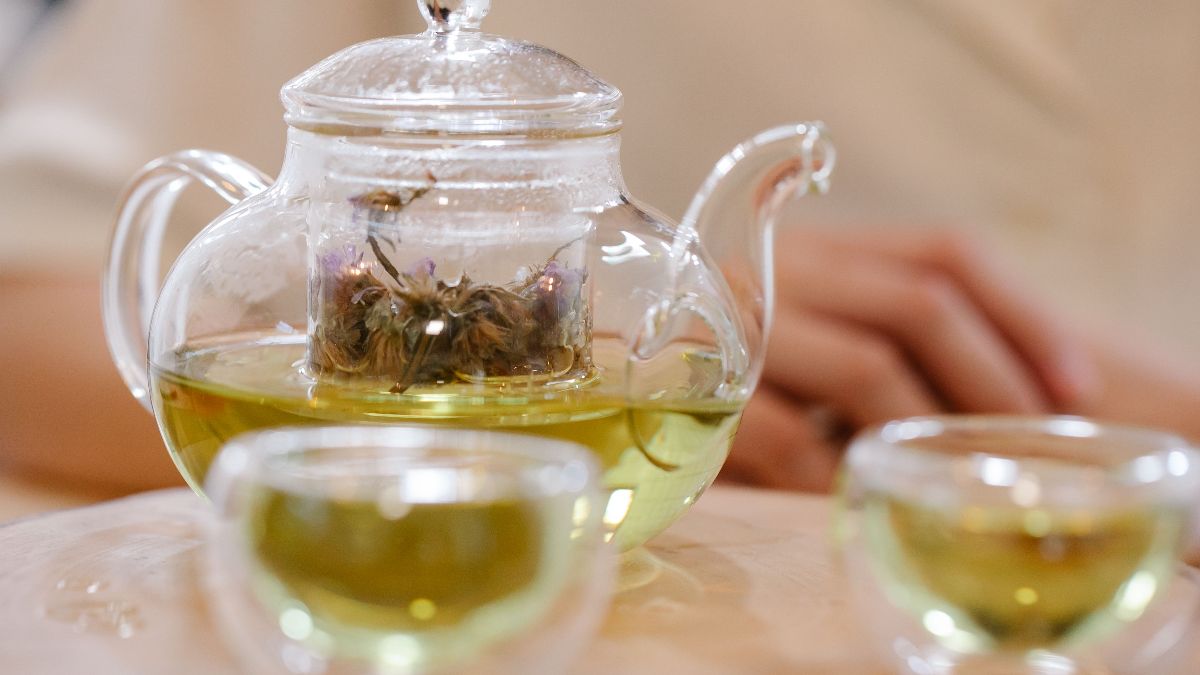
There is something reassuring about a simple cup of green tea. Although it is a comparatively newer presence in many Indian kitchens than masala chai, it has comfortably made room for itself between the tea jars and spice tins. It may be brewed after lunch, carried to the office desk or reached for in the hope of feeling a little lighter.
Its reputation, however, has become far bigger than the drink itself. Green tea is routinely promoted as “gut-friendly”, metabolism-boosting and capable of fixing bloating, constipation or acidity.
The reality is more interesting—and much less magical. Green tea contains polyphenols, particularly a group called catechins, as well as caffeine and other naturally occurring compounds. Some of these interact with the microorganisms living in the digestive tract. That does not mean one daily cup will transform your microbiome or cure digestive discomfort.
So, what actually happens when green tea meets your gut?
First, What Makes Green Tea Different?
Green tea comes from Camellia sinensis, the same plant used to make black and oolong tea. The difference lies mainly in how the leaves are processed. According to the US National Center for Complementary and Integrative Health, or NCCIH, green-tea leaves are steamed or pan-fired and dried without undergoing the same degree of oxidation used to produce black tea.
This helps green tea retain relatively high levels of catechins. Of these, epigallocatechin gallate, usually shortened to EGCG, has received the most scientific attention.
Catechins are plant compounds with antioxidant activity. That description is useful, but it is frequently stretched too far. Evidence that a compound can participate in antioxidant reactions does not prove that drinking a cup of green tea will automatically reduce inflammation, prevent disease or repair the gut.
Green tea is also more than a catechin delivery system. It contains caffeine, amino acids and several other compounds, and their quantities vary with the variety of tea, processing method and preparation. You are drinking a complex food—not consuming one isolated “gut-health ingredient”.
Your Gut Bacteria Do Get Involved
Only part of the catechins in green tea is absorbed in the upper digestive tract. Some travel farther into the intestine, where gut microorganisms can help break them down into smaller substances.
A review of this process describes a two-way relationship. Gut microorganisms metabolise catechins into compounds including phenolic acids and phenyl-γ-valerolactones. Researchers are investigating whether these metabolites have biological effects of their own. Green-tea compounds and their metabolites may, in turn, influence the environment in which intestinal microorganisms live.
That is scientifically interesting, but it is not the same as proving that green tea “balances” or “cleanses” the microbiome.
People also differ in the microorganisms they carry and in how they metabolise catechins. Diet, age, medicines, health conditions and many other factors shape the gut microbiome. The same cup may therefore be processed differently from one person to another.
What Do Human Studies Actually Show?
Much of the enthusiasm around green tea and the microbiome comes from laboratory, animal or mechanistic research. These studies can help researchers understand what might be happening, but they cannot by themselves tell us what a daily cup will do inside every human digestive system.
Human findings have been less consistent. In one randomised, placebo-controlled study, 58 adults took catechin- and caffeine-rich green-tea extract capsules for 12 weeks. Researchers found no significant change in the composition or diversity of their gut microbiota.
That single study does not prove that green tea has no relationship with gut microorganisms. It does show why sweeping claims are premature. It also tested concentrated capsules—not normally brewed tea.
A cup is a beverage. An extract is a supplement. The two should not be treated as interchangeable in either their effects or their risks.
Does Green Tea Help After A Heavy Meal?
After rice, dal, vegetables, a rich curry and perhaps something sweet, a warm cup can feel like a pleasant end to the meal. That sense of comfort is real. It does not mean the tea has instantly “digested” the food or cancelled out what you ate.
Unsweetened green tea is a low-calorie beverage, but it does not neutralise a heavy meal, block fat absorption or perform a digestive reset.
There is also a more practical reason to reconsider drinking it immediately after eating: tea can reduce the absorption of non-haem iron, the form of iron found in plant foods such as pulses, beans and leafy vegetables. This is especially relevant in diets that depend heavily on plant sources of iron.
The ICMR-National Institute of Nutrition’s Dietary Guidelines for Indians 2024 advise avoiding tea for at least an hour before, during or soon after a meal because it can make dietary iron less available. A controlled trial also found that leaving an hour between a meal and tea reduced its inhibitory effect on non-haem iron absorption.
This does not mean every healthy person must fear an occasional post-lunch cup. But if you have low iron levels, anaemia or a largely plant-based diet, drinking green tea between meals is a more sensible habit.
Green Tea Is Not The Same As Green Tea Extract
This distinction deserves repeating because it is frequently lost in wellness advice.
The NCCIH reports no general safety concerns for adults drinking green tea as a beverage, although it does contain caffeine. Concentrated green-tea extracts are a different matter. Reported side effects include nausea, constipation, abdominal discomfort and increased blood pressure. Uncommon cases of liver injury have also been associated mainly with extracts in tablets or capsules.
More catechins are not automatically better. Nor does the gut need to be flooded with concentrated compounds to become healthy.
If a product promises the effects of several cups in one capsule, that is not simply a more efficient version of tea. It is a supplement with a different dose and safety profile. People taking regular medication should discuss green-tea supplements with a healthcare professional, since concentrated products can interact with certain medicines.
What Does A Sensible Daily Cup Look Like?
Simplicity wins. Brew the leaves or tea bag according to the packet instructions. Water slightly below a vigorous boil and a shorter steep often produce a less bitter cup, although this is a matter of taste rather than health.
Green tea does not need sugar to work, nor does sweetening it make its catechins disappear. If you prefer it sweet, use a small amount and remember that honey and jaggery still count as free sugar. They are not nutritionally exempt because they appear more “natural” than refined sugar.
Fresh ginger, mint or lemon can be added for flavour, but they do not turn the cup into medicine. If you are prone to reflux, notice whether mint, lemon or caffeinated tea aggravates your symptoms.
Green tea also contains enough caffeine to disrupt sleep in some people. If you are sensitive to it, drink your cup earlier in the day. There is no universal ideal time—apart from leaving some distance from iron-rich meals if iron absorption is a concern.
When Green Tea May Not Feel Gut-Friendly
“Gut-friendly” is not a medical category, and no single beverage suits every digestive system.
One person may find green tea light and refreshing, while another develops nausea, heartburn or stomach irritation. Brewing it very strongly, drinking several cups or having it on an empty stomach may feel uncomfortable for some people. If reducing the strength or changing the timing does not help, there is no reason to force the habit.
Pregnant or breastfeeding people should account for green tea when monitoring their overall caffeine intake. Anyone taking medication or considering a concentrated extract should check with a qualified healthcare professional rather than assuming that a tea-based supplement is automatically harmless.
The Bottom Line
Green tea contains compounds that interact with the gut and are actively being studied. What researchers do not yet have is proof that an ordinary daily cup consistently transforms the human microbiome or treats common digestive symptoms.
Enjoy green tea because you like its flavour, ritual and gentle lift. Drink it between meals if iron absorption is a concern, keep added sugar modest and treat extracts as supplements rather than stronger cups of tea.
Your gut will benefit far more from a varied diet rich in vegetables, fruits, pulses, whole grains, nuts and seeds than from asking one beverage to do everything.
FAQs
Is green tea good for gut health?
Green tea contains catechins that interact with gut microorganisms, but human evidence does not show that an ordinary daily cup consistently improves or “balances” the microbiome. It is better viewed as one beverage within an overall varied diet.
Does green tea help digestion?
Some people find a warm cup pleasant after food, but green tea has not been shown to act as a general digestive treatment. It does not cancel out a heavy meal or perform a digestive reset.
Can green tea help with bloating or constipation?
There is not strong evidence that green tea reliably treats either bloating or constipation. If those symptoms are persistent, the underlying diet, fluid intake, activity and possible medical causes matter more than adding one beverage.
Should you drink green tea after meals?
If iron absorption is a concern, it is better not to drink tea immediately with or after an iron-rich meal. Leaving some distance between tea and meals is particularly relevant for people with low iron levels or diets heavily reliant on plant sources of iron.
Is green tea extract the same as drinking green tea?
No. Extracts contain much more concentrated doses of tea compounds and have a different safety profile. Reported adverse effects, including rare liver injury, are associated mainly with concentrated extracts rather than normally brewed tea.
Can green tea cause acidity?
It can in some people. Green tea contains caffeine and other compounds that may trigger nausea, reflux or stomach irritation, particularly when brewed strongly or consumed on an empty stomach.
This article provides general food and nutrition information and is not a substitute for personalised medical or dietary advice.